
Albuquerque Summer Home Maintenance Guide 2026: What High Desert Heat Does to Stucco, Flat Roofs, and Landscaping — and How to Protect Your Investment Before June
If you've lived in Albuquerque long enough to see a summer monsoon strip the paint off a poorly sealed stucco wall, you already know the drill. The high desert doesn't ease into summer — it arrives fast, dry, and unforgiving, usually sometime in late May when the wind picks up along the Paseo del Norte corridor and the Sandia Mountains turn that particular shade of amber that means the humidity has left the building.
This Albuquerque home maintenance summer 2026 guide is for homeowners who want to get ahead of the damage, not react to it in August when every contractor in the city is booked solid. Whether your home sits in the North Valley near the river bosque, up in Four Hills with views toward the mountains, or in one of the newer developments off Unser Boulevard, the same basic physics apply: UV radiation, thermal expansion, flash flooding, and months of near-zero humidity will test every exterior surface on your property.
Here's what to look at before June — and why it matters for your home's long-term value.
Albuquerque Home Maintenance Summer 2026: What the Heat Does to Stucco
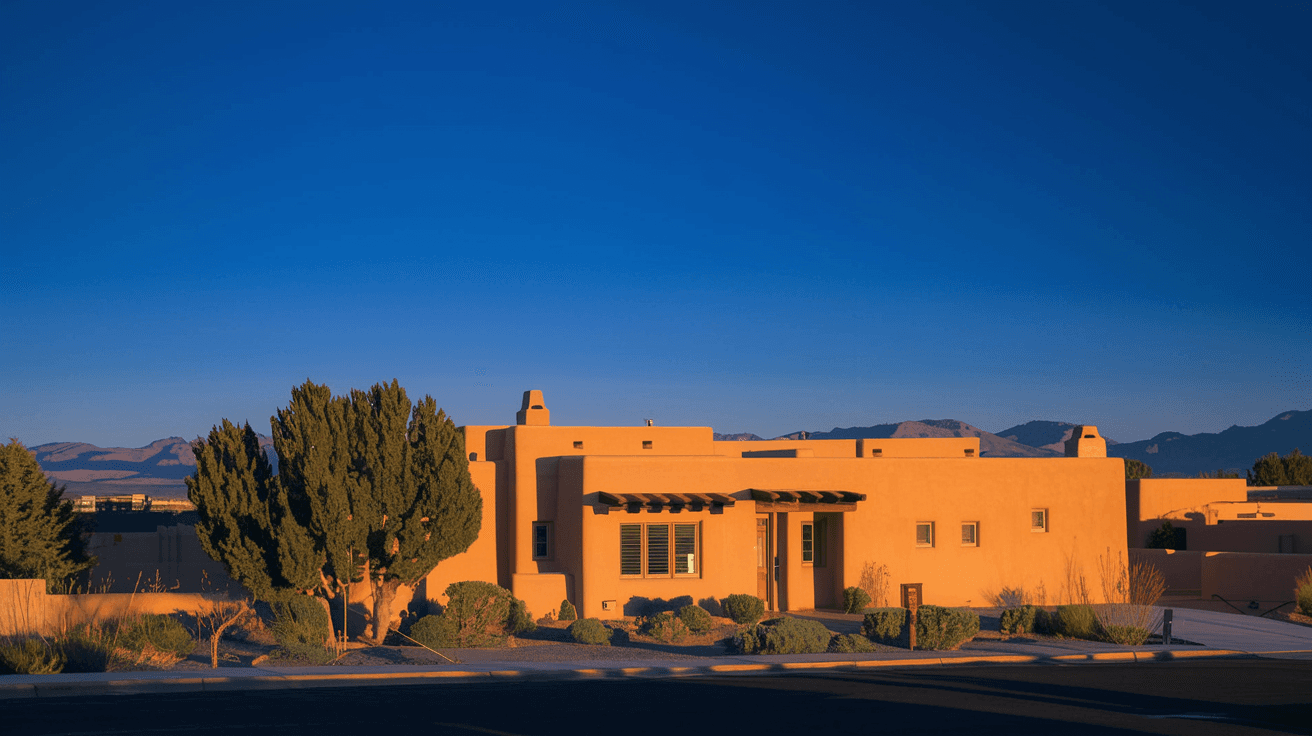
Stucco is the defining material of Albuquerque architecture. Drive through Nob Hill, the Huning Highland Historic District, or any neighborhood built in the last fifty years and you're looking at stucco in every direction. It's beautiful, it's traditional, and it is genuinely well-suited to the desert climate — but only when it's properly maintained.
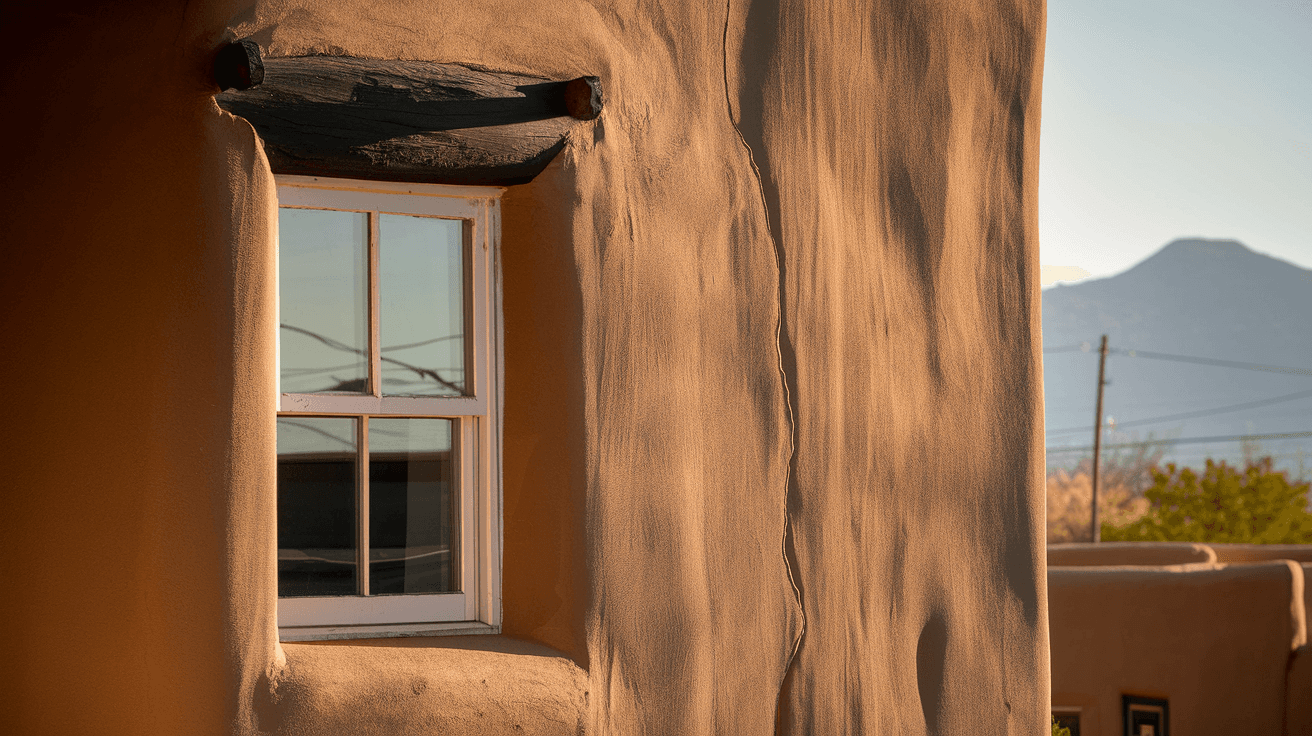
The problem is thermal cycling. Between January lows that dip below freezing and July highs that push past 95 degrees Fahrenheit, your stucco expands and contracts constantly. Over time, that movement creates hairline cracks, and hairline cracks are where water finds its way in during the monsoon season that typically kicks off in early July.
How to Inspect Stucco Before Summer
You don't need a contractor for the initial inspection. Walk the perimeter of your home with a cup of coffee on a calm morning and look for:
- •Hairline cracks running horizontally or diagonally from window and door corners
- •Staining or efflorescence — that white chalky residue that signals moisture has been moving through the wall
- •Soft or hollow-sounding sections when you tap the wall gently with your knuckles
- •Separation at transition points where stucco meets wood trim, window frames, or the foundation
- •Bubbling or delamination anywhere on the surface, which often indicates moisture trapped behind the finish coat
Small cracks under 1/16 of an inch wide can often be addressed with a quality elastomeric caulk and a fresh coat of exterior masonry paint. Anything wider, or any crack accompanied by soft backing material, needs a licensed stucco contractor before the monsoons arrive. The cost to re-stucco a section of wall is significantly less than the cost of remediating water-damaged framing behind it.
“"In Albuquerque, the monsoon season doesn't give you a warning. One afternoon in July, the sky opens up, and whatever gaps you left in your exterior envelope are going to find water. The time to seal them is April and May, not July 8th."
Flat Roof Maintenance Albuquerque: The Most Overlooked Summer Prep Task
Flat roofs are everywhere in Albuquerque. They're part of the Pueblo Revival and Spanish Colonial architectural traditions that define so much of the city's character, and they work well in a dry climate — right up until they don't. Flat roof maintenance in Albuquerque is one of the most common items we see deferred on home inspection reports, and it's one of the most consequential.
Here's the insider reality that a lot of people don't talk about: the UV index in Albuquerque is among the highest in the continental United States. At 5,300 feet elevation, the atmosphere is thinner, and ultraviolet radiation degrades roofing membranes, coatings, and sealants significantly faster than it does at sea level. That rolled roofing or elastomeric coating that was applied five years ago may look fine from the ground and be actively failing.
Flat Roof Inspection Checklist for New Mexico Homes
Before the first serious heat wave of summer, get on your roof safely or hire a roofing professional to assess the following:
- •Ponding water zones — areas where the roof surface has settled or where drainage is compromised. Even a few inches of standing water after a monsoon storm adds enormous weight and accelerates membrane failure
- •Condition of the roof coating — elastomeric coatings should be bright white and smooth. Yellowing, cracking, or areas where the coating has pulled away from the substrate are red flags
- •Parapet wall caps and coping — the horizontal surfaces at the top of your parapet walls are exposed on three sides and take tremendous abuse. Check for cracks, separation, and missing sealant
- •Roof penetrations — every pipe, vent, and HVAC unit that penetrates your flat roof is a potential leak point. The flashing around each one should be fully adhered with no lifting edges
- •Drain screens and scuppers — cottonwood season in Albuquerque is real, and the bosque along the Rio Grande sends fluff everywhere in May. Clear debris from all roof drains before monsoon season
If your flat roof coating is more than seven years old and hasn't been inspected, budget for a professional assessment now. A full recoat on an average Albuquerque home runs considerably less than a single interior water damage remediation job.
Desert Landscaping Maintenance Albuquerque: Protecting Your Xeriscape Before Summer Stress
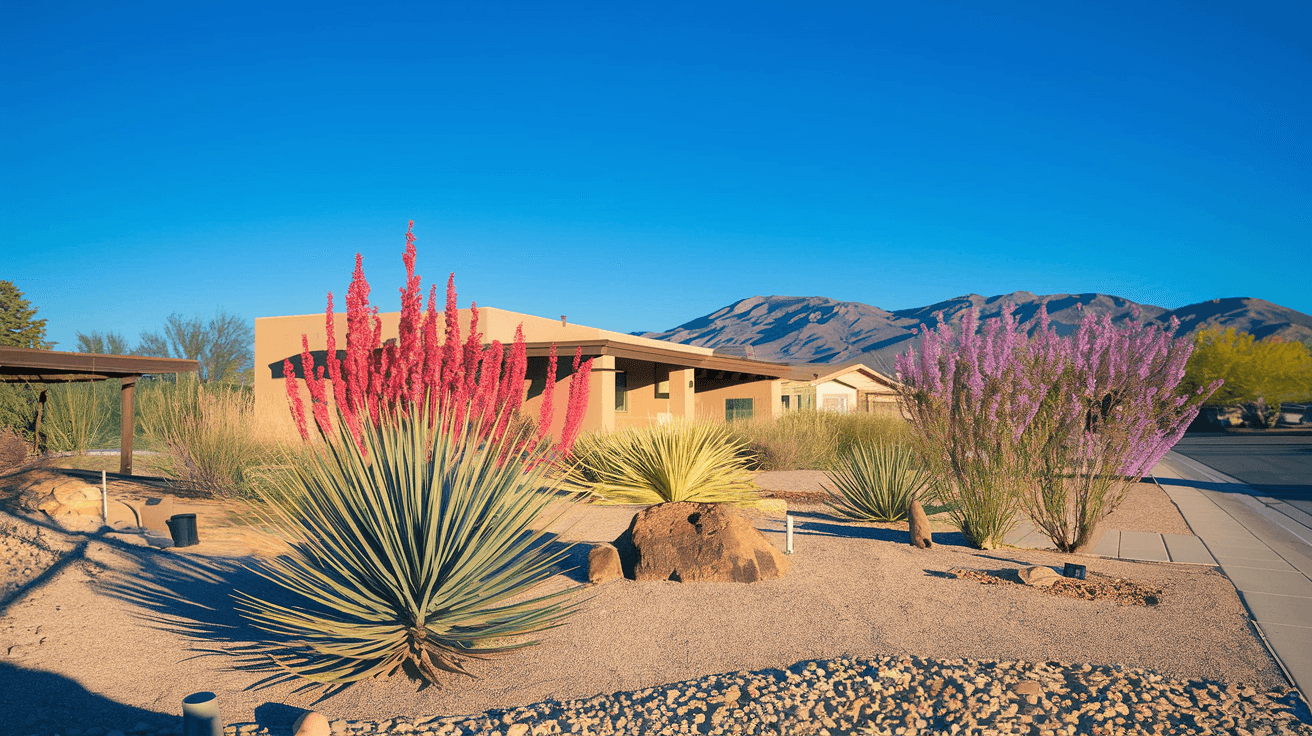
Albuquerque's desert landscaping and xeriscape culture is genuinely sophisticated. Head over to the ABQ BioPark Botanical Garden or drive through some of the older Rio Rancho neighborhoods that were xeriscaped in the 1990s, and you'll see mature desert landscapes that have been thriving with minimal water for decades. But even the toughest xeriscape needs attention before summer heat peaks.
The critical window is April through mid-May, before soil temperatures climb too high for transplanting or root work.
Pre-Summer Landscaping Tasks for Albuquerque Homeowners
- •Prune back your desert trees now — native trees like Desert Willow, Velvet Mesquite, and New Mexico Olive should be shaped before new growth hardens. Dead wood left on trees becomes a liability in the afternoon thunderstorms that roll through the East Mountains and drop into the city
- •Check your drip irrigation system thoroughly — UV degradation destroys drip emitters and tubing faster at Albuquerque's elevation than manufacturers' ratings suggest. Walk every line, check every emitter, and replace any tubing that has become brittle or cracked
- •Apply a 3-inch layer of decomposed granite or organic mulch around the base of all established plants. This reduces soil temperature, retains moisture, and dramatically reduces your irrigation demand in July and August
- •Divide and transplant any overcrowded perennials — Purple Coneflower, Red Yucca, and Autumn Sage all benefit from division every few years, and spring is the only safe window to do it before heat stress sets in
- •Treat for bark beetles and borers early — stressed trees in the urban forest along the Bosque and throughout the Heights neighborhoods are vulnerable. A preventive treatment applied in April is far more effective than a rescue treatment in August
“"The xeriscape that looks effortless in July was maintained carefully in April. There's no such thing as a zero-maintenance desert landscape — there's just well-timed maintenance."
New Mexico Home Maintenance Checklist Summer: Systems That Fail in the Heat
Beyond the big three of stucco, flat roofs, and landscaping, several home systems deserve attention specifically because of what New Mexico's summer climate does to them. This is your broader New Mexico home maintenance checklist for summer.
HVAC Systems in the High Desert
Your evaporative cooler — the swamp cooler that sits on top of probably half the flat roofs in Albuquerque — needs to be opened, cleaned, and serviced before May. Replace the cooling pads annually. Check the water distribution system for mineral buildup from Albuquerque's notoriously hard municipal water. If you're running a refrigerated air system, schedule your service call now, because every HVAC company in the city is slammed once the first 90-degree day hits.
Insider tip: Albuquerque's Water Authority water is genuinely hard, and mineral scale inside your evaporative cooler pads and distribution lines can reduce efficiency by 30 to 40 percent within a single season. A simple white vinegar flush of the distribution system in April makes a measurable difference in cooling performance all summer.
Exterior Wood and Window Seals
Wood elements on Albuquerque homes — porch vigas, window frames, garage doors, gates — can lose their protective finish in a single summer of intense UV exposure. Check all painted or stained wood surfaces for peeling, checking, or graying. A light sand and fresh coat of UV-resistant exterior finish in April extends the life of these elements by years.
Check every window and door seal while you're at it. The combination of dry winter air followed by monsoon humidity is uniquely hard on weatherstripping and caulk. Air infiltration in summer means your cooling system works harder and your energy bills climb.
Drainage and Grading Around the Foundation
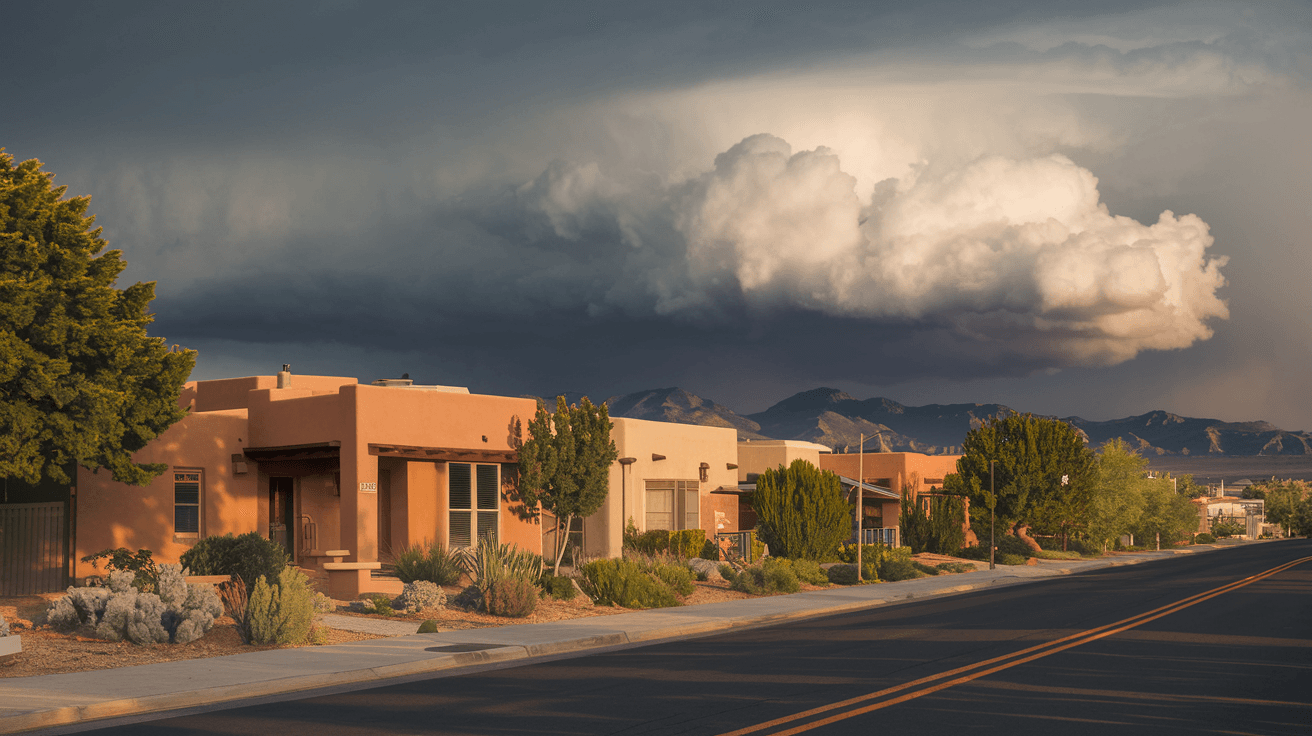
Albuquerque's monsoon storms are not gentle. The National Weather Service regularly records one-inch-per-hour rainfall events in July and August, and a flat or negative grade around your foundation can direct that water straight toward your stem wall. Walk the perimeter of your home after a spring rain and note any areas where water pools against the foundation. Adding soil or adjusting grading now is a low-cost fix that prevents expensive foundation and crawl space issues down the road.
What Desert Home Upkeep in Albuquerque Means for Your Home's Value
This isn't abstract. Desert home upkeep in Albuquerque has a direct and measurable relationship to what your home is worth when it's time to sell, refinance, or simply protect the equity you've built.
Homes that show deferred maintenance on stucco, roofing, and landscaping consistently appraise lower and receive fewer competitive offers than comparable properties that have been consistently maintained. Buyers in today's market are working with informed agents and experienced inspectors who know exactly what to look for. A fresh stucco repair, a recently recoated flat roof, and a healthy xeriscape tell a buyer that this home has been cared for — and that story is worth real money.
If you're thinking about listing your home in 2026, the Taylor Team at Berkshire Hathaway HomeServices would be glad to walk through your property and give you an honest, local perspective on what pre-listing maintenance will have the highest return. We know this market, these neighborhoods, and these homes because we live here too.
The high desert is a remarkable place to own a home. The sky, the light, the culture, the mountains visible from half the front porches in the city — there's nowhere quite like it. But the same climate that makes Albuquerque extraordinary also asks more of your home than most places do. A few focused weekends in April and May is all it takes to stay ahead of it, protect your investment, and enjoy a summer where the biggest thing you're worried about is whether the green chile at the Barelas Coffee House is as good as you remember.
It is. It always is.
Want more insider intel?
Subscribe to get market updates and new articles delivered to your inbox.