Albuquerque Housing Market Report: April 2026 — Median Price Hits $348,000 as Inventory Stays Tight
Albuquerque Housing Market April 2026: The Headline Story
The Albuquerque housing market entered spring 2026 with the same fundamental tension that has defined it for the past two years: more buyers than homes. The metro's median sale price landed at $348,000 in April, a 4.1% year-over-year increase that, while more measured than the double-digit surges of 2021 and 2022, represents sustained, structurally supported appreciation. This is not a market running on speculation. It is running on a shortage.
With only 1,380 active listings across the metro and a list-to-sale ratio of 98.5%, sellers are holding the cards — but not by a wide margin. Buyers who are prepared, pre-approved, and working with experienced local representation are still closing deals. The window to negotiate is narrow, averaging somewhere between zero and 36 hours on well-priced properties in the Northeast Heights or Taylor Ranch. In Corrales and High Desert, that window widens slightly, but the data still tells a story of constrained supply meeting steady demand.
What is driving that demand? Albuquerque's economic anchors are performing. Kirtland Air Force Base continues to generate consistent relocation traffic, Sandia National Laboratories has added technical staff through its ongoing federal contract expansions, and the state's film industry — now a genuine economic force along Albuquerque Studios' corridor near I-25 and Rio Bravo — continues to pull in mid-level production professionals who rent first and buy within 18 months. Intel's Rio Rancho operation, while not at peak hiring, has maintained its workforce. The University of New Mexico's medical complex remains one of the metro's largest employers. None of these engines are sputtering.
“"Albuquerque is not a boom-and-bust market. It is a slow-burn market. The same fundamentals that prevented catastrophic declines in 2023 are the same ones producing steady appreciation in 2026."
Albuquerque Housing Inventory: Supply Stays Stubbornly Low
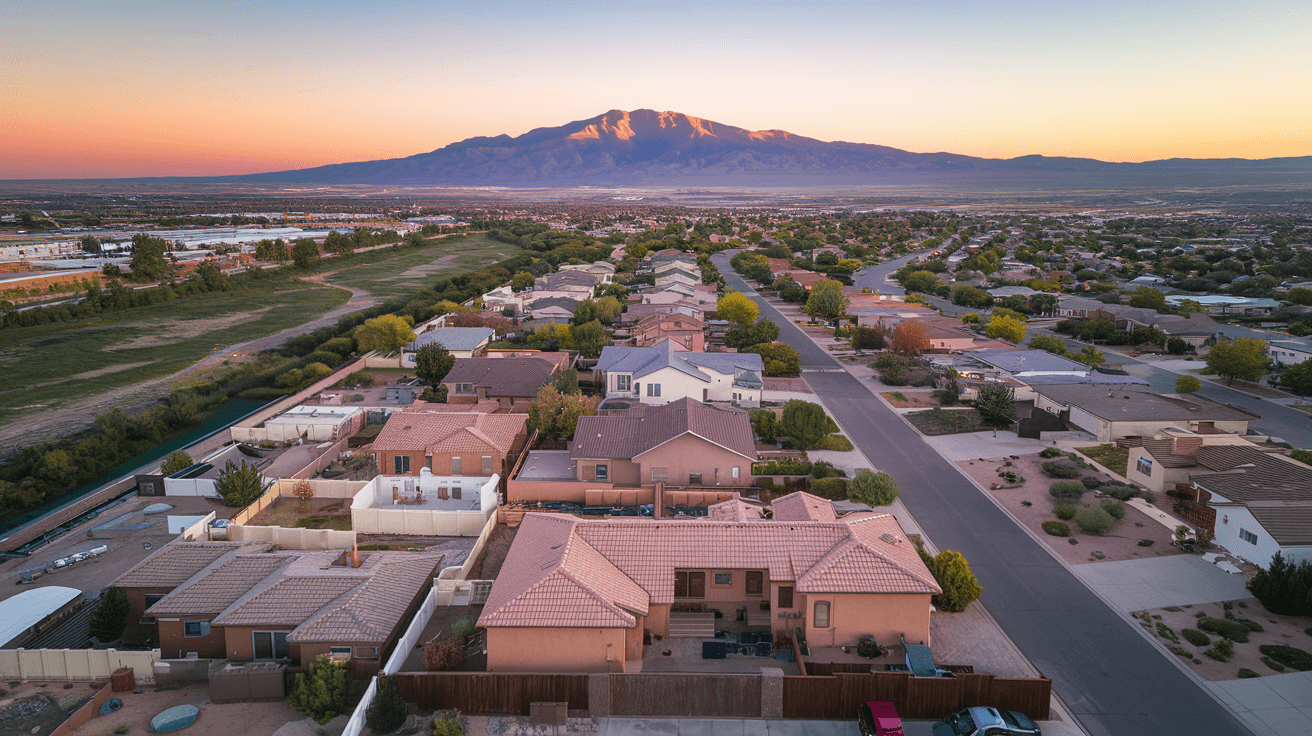
Two months of inventory is the number that defines everything else in this report. At 2.0 months of supply, Albuquerque remains firmly in seller's market territory — the conventional threshold for a balanced market sits at 4 to 6 months. That gap is not closing quickly.
April saw new listings tick upward as sellers who had been waiting for spring finally moved. Across the metro, new listing volume rose approximately 7% compared to March, a typical seasonal pattern as homeowners emerge from the holiday holding pattern. But closed sales volume absorbed that new supply almost as fast as it arrived. The net effect on active inventory was negligible.
Compared to April 2025, active listings are up modestly — roughly 8% year-over-year — which sounds encouraging until you realize that 2025's inventory levels were themselves historically low. The market is not loosening in any meaningful way for buyers. It is simply not getting tighter at the rate it was in 2022 and 2023.
What the Inventory Numbers Mean Practically
For a buyer targeting the $300,000 to $400,000 price range — the most active tier in the Albuquerque market — expect to encounter 3 to 6 competing offers on any home that is priced correctly and shows well. Homes in this range in the Northeast Heights, Taylor Ranch, and the southern Rio Rancho corridors near Unser Boulevard are often under contract within four to seven days of listing. Anything sitting beyond 21 days almost certainly has a condition issue, a pricing problem, or both.
The $500,000 and above segment is where inventory provides the most breathing room. Corrales, High Desert, and the custom-home pockets near Four Hills Village carry longer average days on market — 28 to 35 days — giving buyers more time to conduct due diligence and, in some cases, negotiate meaningful concessions on price or seller-paid closing costs.
Albuquerque Home Prices by Tier: Where Competition Is Hottest
The $348,000 metro median masks significant variation by price tier. Here is how April 2026 broke down across the four major segments:
$200,000 to $300,000: This tier is the most competitive and the most frustrating for first-time buyers. Inventory in this range is critically thin — many of the homes that do appear are in the South Valley, the International District near Kirtland's fence line, or older stock in the West Mesa that requires meaningful updating. Multiple-offer situations are nearly universal. Buyers in this tier should be prepared to move within 24 hours of a showing and should consider waiving minor contingencies where their risk tolerance allows.
$300,000 to $400,000: The sweet spot of the Albuquerque market and the most liquid price tier. Homes here turn over quickly, price per square foot averages approximately $195 to $215, and the buyer pool is deep — it includes move-up buyers, relocating professionals from Kirtland and Sandia Labs, and investors targeting long-term rental yields. This is where the 98.5% list-to-sale ratio is most consistently achieved, and often exceeded.
$400,000 to $500,000: Demand is solid but more selective. Buyers at this level are typically experienced, have specific requirements around schools, commute corridors, or lot size, and are less likely to panic-buy. Homes in Nob Hill, North Valley, and the higher-elevation pockets of the Northeast Heights dominate this tier. Average days on market sits closer to 18 to 22 days.
$500,000 and above: Corrales, High Desert, and the Four Hills area carry this segment. Appreciation is slower — roughly 1.8% to 2.1% year-over-year — and days on market stretch to 28 to 35 days. This is still a seller's market, but sellers who overprice relative to recent comps will sit. The luxury buyer in Albuquerque is sophisticated and has options.
Days on Market: 20 Days Is Not a Lot of Time
The metro-wide average of 20 days on market requires context. That average is dragged upward by the luxury segment and by properties with deferred maintenance or pricing issues. In the most active neighborhoods and price tiers, the real number is closer to 8 to 12 days from list date to accepted offer.
For buyers, 20 days on market means offer strategy has to be built before you walk through the door. Know your ceiling. Know whether you can write an escalation clause. Know whether your lender can provide a pre-approval letter specific to the property address within two hours of your request. These are not hypotheticals — they are the practical requirements of competing in the April 2026 Albuquerque market.
For sellers, 20 days also signals something important: if your home is sitting past day 21 without an offer, the market is telling you something. Either the price is wrong, the condition is wrong, or the marketing is wrong. In a market this tight, a properly prepared and priced home does not linger.
“"In the Northeast Heights, the window between 'just listed' and 'under contract' is often shorter than the time it takes to schedule a second showing."
Albuquerque Neighborhood Breakdown: April 2026 Data
Northeast Heights
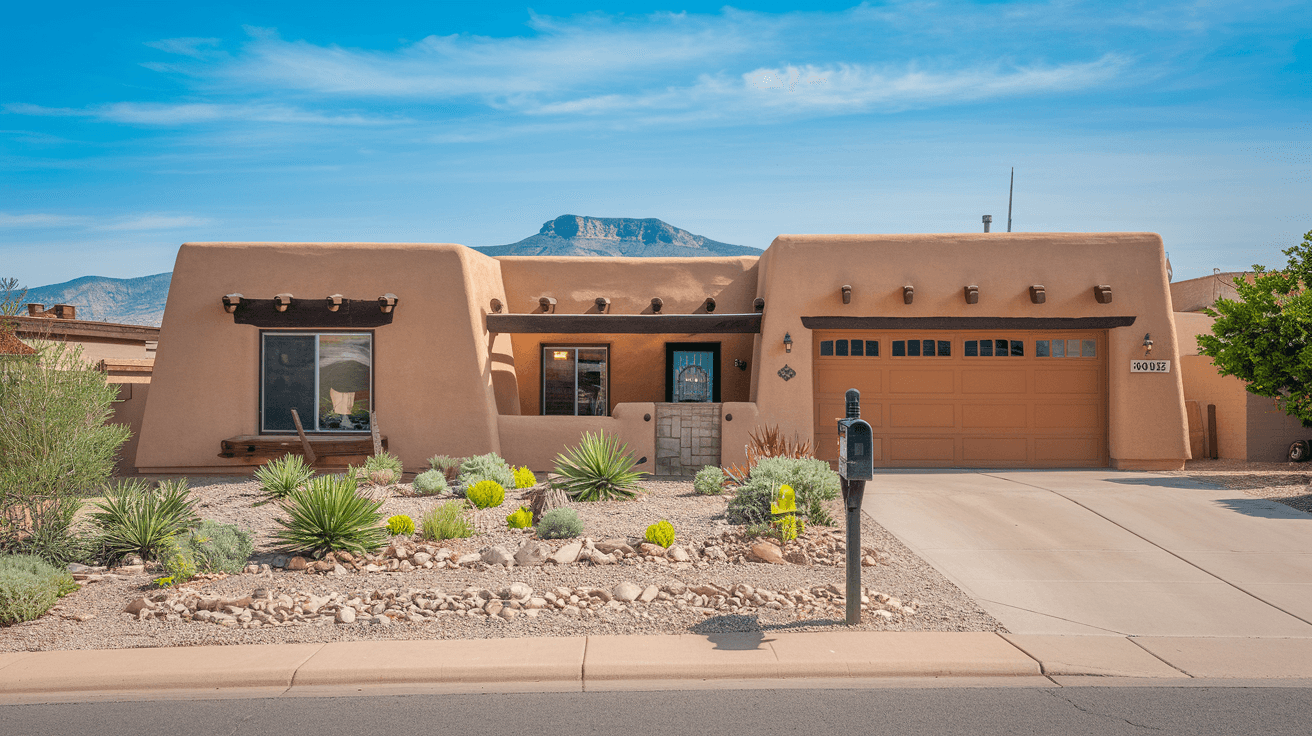
The Northeast Heights remains the metro's most active submarket by transaction volume. Median price: $324,000. Average days on market: 14. Year-over-year price change: +4.2%. The neighborhoods between Tramway and Wyoming, north of Menaul and south of Academy, are producing the highest turnover in the city. Schools in the Eldorado and La Cueva attendance zones continue to drive family demand. Expect multiple offers on anything under $350,000.
Nob Hill
Nob Hill's walkability premium — proximity to Central Avenue's restaurant corridor, the Nob Hill Shopping Center, and UNM — continues to support above-metro appreciation. Median price: $385,000. Average days on market: 18. Year-over-year price change: +3.5%. The bungalow and mid-century modern inventory here attracts buyers who want character over square footage. Renovation-ready properties are being absorbed quickly by buyers who understand the neighborhood's long-term trajectory.
North Valley
The North Valley's combination of irrigated lots, mature cottonwoods, and proximity to the Paseo del Bosque trail system commands a consistent premium. Median price: $420,000. Average days on market: 20. Year-over-year price change: +3.2%. Horse property and larger lot listings along Rio Grande Boulevard and Guadalupe Trail are seeing renewed interest from buyers priced out of Corrales.
Rio Rancho
Rio Rancho is the value play in the metro and it is no secret. Median price: $285,000. Average days on market: 16. Year-over-year price change: +4.8%. The strongest appreciation rate among the major submarkets reflects buyers migrating west across the Rio Grande in search of attainable pricing. The Unser corridor and the neighborhoods surrounding the Northern New Mexico Highlands University campus are particularly active. Intel's stabilized workforce provides an employment anchor that keeps demand consistent.
Corrales
Corrales operates on its own rhythm. Median price: $575,000. Average days on market: 28. Year-over-year price change: +2.1%. Inventory here is structurally limited — the village's development restrictions mean new supply is rare. When a well-maintained property on a large irrigated lot comes to market near Corrales Road, it draws buyers from across the metro and from out of state. The slower appreciation reflects the luxury segment's broader dynamics, not weakness in demand.
High Desert
High Desert's hillside custom homes above the Tramway corridor command the metro's highest price points outside of Corrales. Median price: $625,000. Average days on market: 32. Year-over-year price change: +1.8%. Views of the Rio Grande valley and proximity to the Sandia foothills trail system are the primary value drivers. Buyers here are typically deliberate, and sellers who price to recent comps rather than aspirational numbers are the ones closing.
Downtown / EDo (East Downtown)
The downtown and East Downtown corridor continues its slow but genuine transformation. Median price: $310,000. Average days on market: 24. Year-over-year price change: +3.8%. Condo and townhome inventory along Gold Avenue, Copper Avenue, and the streets surrounding the Albuquerque Museum is attracting younger professional buyers and empty-nesters who want walkability. The Rail Runner connection and the ongoing investment in the Kimo Theatre and Route 66 corridor are supporting long-term confidence.
Taylor Ranch
Taylor Ranch on the West Mesa delivers consistent value and consistent demand. Median price: $318,000. Average days on market: 15. Year-over-year price change: +4.0%. The neighborhood's access to Paseo del Norte, its newer housing stock compared to the Heights, and its price point relative to the east side continue to attract first-time buyers and young families. Competition here is fierce in the $280,000 to $340,000 band.
What April 2026 Means for Albuquerque Buyers and Sellers
If You Are Buying in Albuquerque Right Now
The most important thing a buyer can do in April 2026 is compress their decision timeline without compromising their due diligence. Those two goals are in tension, and navigating that tension is where experienced representation matters most.
Get fully underwritten — not just pre-qualified — before you make your first offer. In a market where sellers are receiving multiple offers within 72 hours, a fully underwritten approval letter signals to listing agents that your financing is not a risk. Pair that with a pre-approval letter that can be customized to a specific property address and price point on short notice.
On offer strategy: in the $300,000 to $400,000 range, expect to offer at or above list price. Escalation clauses are common and effective, but they need to be structured with a realistic cap and a clear increment. Waiving appraisal gaps up to a defined dollar amount — rather than waiving the appraisal contingency entirely — is a more defensible approach for buyers who need financing.
For buyers targeting Corrales, High Desert, or the North Valley above $450,000, the market offers more room to negotiate. Request a seller credit toward closing costs or a rate buydown. Sellers in this tier have been on market longer and are more likely to engage on terms.
If You Are Selling in Albuquerque Right Now
April is historically one of the two strongest months of the year to list in Albuquerque, alongside September. The combination of school-year-end timing, longer daylight hours, and the peak spring buyer pool makes this a favorable moment.
Pricing discipline is still essential. The 98.5% list-to-sale ratio sounds like sellers are giving up very little, and in most cases they are not — but that ratio applies to correctly priced homes. Overpriced listings in any tier are sitting, and a price reduction after 21 days carries a stigma that is difficult to overcome in a market where buyers are tracking DOM closely.
Invest in preparation. Professional photography, a pre-listing inspection to surface and address known issues, and staging — even minimal staging — meaningfully impact both offer speed and final sale price. Homes that show well are receiving offers within the first weekend. Homes that do not are becoming the cautionary comps that justify lower offers on the next property.
Looking Ahead: What to Expect in May and June 2026
Seasonal patterns suggest May and June will bring a modest increase in new listings as the school-year transition accelerates move-up activity. However, that new supply is unlikely to fundamentally shift the supply-demand balance. Inventory would need to reach approximately 2,800 to 3,200 active listings to approach a balanced market in the Albuquerque metro — roughly double current levels.
The interest rate environment remains the largest variable. The 30-year fixed rate has been hovering in the mid-to-high 6% range through early 2026. Any movement toward 6% or below would meaningfully expand the buyer pool, particularly in the $250,000 to $350,000 tier where affordability is most rate-sensitive. Conversely, a move above 7% would further compress transaction volume without materially reducing prices, given how supply-constrained the market remains.
Local economic factors to watch: Sandia National Laboratories' federal contract cycle typically generates a wave of relocation buyers in the May through August window. The film industry's production calendar — several major streaming productions are currently in pre-production at Albuquerque Studios — will add short-term rental pressure and some buyer activity from production staff considering permanent relocation. UNM's graduation season in May historically produces a wave of first-time buyer inquiries from graduate students and young faculty entering the market.
The bottom line for May 2026: expect prices to hold or nudge slightly higher, days on market to remain below 22 days metro-wide, and the competitive dynamics in the $300,000 to $400,000 tier to intensify modestly as the peak spring season arrives.
Key Takeaways: April 2026 Albuquerque Housing Market
- •Median price reached $348,000, a 4.1% year-over-year gain, reflecting sustained demand against structurally limited supply — not speculative inflation.
- •Active inventory of 1,380 homes and 2.0 months of supply keeps Albuquerque firmly in seller's market territory, with no meaningful loosening expected through summer 2026.
- •Rio Rancho led all submarkets in year-over-year appreciation at 4.8%, driven by value-seeking buyers migrating west and Intel's stable employment base near the Unser corridor.
- •Homes are averaging 20 days on market metro-wide, but in the Northeast Heights and Taylor Ranch, the real competitive window for buyers is closer to 8 to 12 days from list date.
- •The $300,000 to $400,000 price tier remains the most liquid and competitive segment, with list-to-sale ratios consistently at or above 98.5% and multiple-offer situations the norm on well-prepared listings.
Want more insider intel?
Subscribe to get market updates and new articles delivered to your inbox.