Albuquerque Housing Market Report: April 2026 — Days on Market Are Creeping Up. Here's What That Signals
Albuquerque Housing Market April 2026: The Headline Number and What's Behind It
The Albuquerque housing market entered April 2026 with a median home price of $385,000 — a 3.5% increase year-over-year that, on the surface, looks like business as usual. Prices are still climbing. Demand hasn't evaporated. But the market is sending a more nuanced signal that anyone thinking about buying or selling in the metro needs to understand: homes are sitting longer before they sell.
Average days on market reached 34 days in April, the highest monthly reading since February 2023 and a meaningful jump from the 24-day average recorded in April 2025. That single data point — more than any other in this month's report — tells you that the frenzied, offer-the-same-afternoon pace that defined 2022 and parts of 2023 has not returned with spring. Buyers have more time to think. Sellers have less room to be aggressive on price.
This is not a market in distress. With 3,200 active listings and 3.9 months of inventory, Albuquerque remains technically in seller's territory (six months is the textbook equilibrium). But the direction of travel matters as much as the snapshot. Inventory has been expanding since January, list-to-sale ratios have softened slightly to 97.8%, and the composition of demand has shifted in ways that are reshaping which neighborhoods are competitive and which are cooling.
The story of April 2026 is a market in transition — not from hot to cold, but from sprint to something closer to a sustainable jog.
Albuquerque Housing Inventory: Supply Is Building, But Unevenly
The inventory picture in April deserves careful reading. Active listings at 3,200 represent a 22% increase from April 2025, when the metro was operating with roughly 2,620 available homes. That sounds dramatic until you contextualize it: Albuquerque spent most of 2021 and 2022 with fewer than 1,000 active listings. We are nowhere near a buyer's market by historical standards.
What's changed is the pace of absorption. New listings in April came in at approximately 1,180, a healthy spring surge consistent with seasonal norms along the Rio Grande corridor. Closed sales, however, totaled around 960 transactions — enough to keep the market moving, but not enough to keep pace with the incoming supply. The result is a slow but steady accumulation of unsold inventory that is now pushing months of supply toward 4.0.
Where Listings Are Piling Up
The inventory buildup is not evenly distributed. The $400,000 to $500,000 price band is where the congestion is most visible. Homes in that range are taking an average of 41 days to sell — nearly double the pace of the sub-$300,000 segment. Sellers who stretched their pricing assumptions based on 2024 comps are finding that buyers in this bracket have options now, and they are using them.
The sub-$300,000 segment remains the tightest corner of the Albuquerque market. With under 1.8 months of supply in that tier, entry-level buyers — many of them first-timers priced out of the $350,000-plus range — are still competing in a way that resembles the conditions of two years ago. Multiple offers are not uncommon on well-conditioned homes in Rio Rancho and the South Valley priced under $285,000.
“"The market hasn't cooled uniformly — it's stratified. Under $300K still feels like 2022. Above $450K feels like 2019. Everything in between is negotiating its identity in real time."
Albuquerque Home Prices by Tier: Where Competition Is Hottest
The metro-wide median of $385,000 masks significant variation across price tiers. Here is how each segment performed in April:
$200,000 to $300,000: This tier saw the sharpest year-over-year price appreciation at 5.1%, driven by constrained supply and persistent demand from first-time buyers and investors. Average DOM in this range: 19 days. Homes here are still receiving multiple offers when priced accurately, particularly in established South Valley subdivisions and the older ranch-style neighborhoods along Coors Boulevard south of Montano.
$300,000 to $400,000: The metro's most active price band by transaction volume. Median prices here rose 3.8% year-over-year. Days on market averaged 28 days, reflecting a market that is competitive but no longer frantic. Buyers have a weekend to tour before writing. Sellers still have pricing power, but need to be within 2-3% of true market value to avoid extended sit time.
$400,000 to $500,000: This is where the market is most visibly recalibrating. Price growth slowed to 2.2% year-over-year, and average DOM stretched to 41 days. The list-to-sale ratio in this tier dropped to 96.4% — meaning sellers are, on average, accepting offers about $14,000 below list price. Buyers here have meaningful negotiating leverage for the first time in years.
$500,000 and above: The luxury and semi-luxury tier continues to operate on its own timeline. With DOM averaging 58 days and price growth of just 1.4% year-over-year, this segment reflects both a thinner buyer pool and the reality that upper-bracket buyers are more sensitive to mortgage rate fluctuations. The average price per square foot across the metro is $198, but in the $500K-plus tier, that figure climbs to $225-$265 depending on the neighborhood and finish level.
Albuquerque Days on Market: What 34 Days Is Actually Telling You
The headline shift in April 2026 is the days-on-market trend, and it is worth spending time on what this number actually communicates.
When DOM averages drop below 15 days — as they did during the peak frenzy of 2021 — buyers are operating in a fundamentally different market than when DOM averages 34 days. The difference is not just psychological. It changes offer strategy, contingency decisions, inspection timelines, and ultimately who wins.
At 34 days, the Albuquerque market is telling buyers three things:
First, you have time to be deliberate. You can schedule a second showing. You can have your inspector walk through before writing. You can get a full pre-approval rather than a pre-qualification letter. The penalty for taking 48 hours to make a decision has dropped substantially.
Second, the first price reduction is real information. When a home that has been sitting for 21-plus days drops its price, that is not a seller playing games — that is market feedback. In April, 18% of active listings experienced at least one price reduction, up from 11% in April 2025. Those reductions averaged $9,800. That is a meaningful number on a $385,000 home.
Third, the gap between aspirational pricing and transactable pricing is widening. The 97.8% list-to-sale ratio sounds high, but it is down from 99.1% in April 2025. For a $400,000 listing, that gap represents roughly $5,000 to $8,000 in additional negotiating room compared to a year ago.
“"Days on market is the market's honesty meter. When it rises, it means sellers are asking questions the market isn't ready to answer yet."
For sellers, the DOM trend is a clear signal: pricing within 1-2% of true market value is no longer optional. Overpricing by 5% and planning to negotiate down worked in 2022. In April 2026, it results in extended sit time, price reductions, and ultimately a lower final sale price than a well-priced listing would have generated on day one.
Albuquerque Neighborhood Breakdown: April 2026 Data by Area
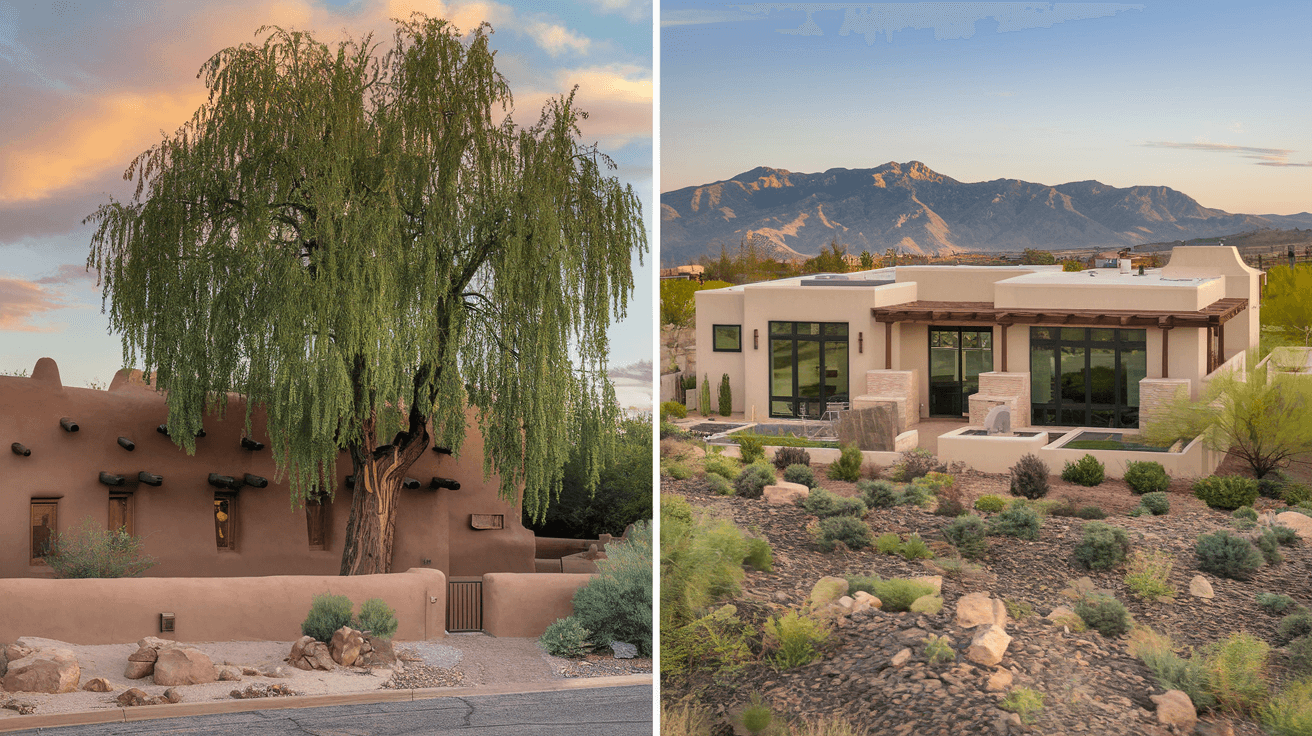
Albuquerque's neighborhoods are not a monolith, and the April data makes that clear. Here is a granular look at how each major submarket performed:
Northeast Heights
Median price: $338,000 | DOM: 28 days | YoY price change: +4.1%
The Heights remains one of the most transaction-active corridors in the metro, particularly in the Sandia Heights-adjacent neighborhoods east of Tramway and in the established subdivisions near Juan Tabo and Montgomery. Ranch-style homes in the $300,000-$360,000 range are moving consistently. The proximity to Sandia Labs and Kirtland AFB continues to drive steady demand from technical professionals who value the commute to the east side of the city.
Nob Hill
Median price: $395,000 | DOM: 31 days | YoY price change: +3.5%
Nob Hill's appeal to buyers who want walkability — to Central Avenue restaurants, the Nob Hill Business District, and Expo New Mexico — keeps demand stable, but the inventory of homes in this neighborhood is thin and the price points are increasingly testing buyer tolerance. Bungalows and mid-century homes that need work are sitting longer than turnkey properties. Updated homes within two blocks of Central are still generating competitive interest.
North Valley
Median price: $428,000 | DOM: 36 days | YoY price change: +2.9%
The North Valley's combination of irrigated lots, mature cottonwoods, and proximity to the bosque commands a premium that buyers continue to pay — but more slowly than a year ago. Larger adobe properties on acreage near Rio Grande Boulevard and Corrales Road are sitting in the 45-60 day range. Buyers in this area tend to be more deliberate, and the unique nature of each property makes comparable pricing genuinely difficult.
Rio Rancho
Median price: $298,000 | DOM: 22 days | YoY price change: +4.9%
Rio Rancho is the most competitive submarket in the metro in April 2026. The combination of newer construction, lower price points, and Intel's continued presence as an anchor employer keeps demand elevated. Homes in the $270,000-$320,000 range near Northern Boulevard and Unser are moving fastest. The city's growth along the Highway 528 corridor continues to attract buyers who want more square footage per dollar than Albuquerque proper can deliver.
Corrales
Median price: $589,000 | DOM: 52 days | YoY price change: +1.8%
Corrales operates at its own pace, and April was no different. The village's combination of agricultural land, equestrian properties, and custom homes along Corrales Road means every transaction is its own negotiation. Supply is thin — fewer than 40 active listings in the village at any given time — but so is the buyer pool. Sellers here need patience and realistic pricing anchored to recent comps, not wishful thinking about peak-2022 values.
High Desert
Median price: $648,000 | DOM: 61 days | YoY price change: +1.5%
High Desert continues to attract buyers who want Sandia Mountain views, proximity to the Elena Gallegos open space, and the architectural character of the gated community's custom builds. But at $648,000 median, this neighborhood is squarely in the rate-sensitive upper tier. Homes that are priced at or above $700,000 are experiencing extended market times. Well-maintained homes in the $580,000-$640,000 range are finding buyers, but the days of multiple offers in High Desert are firmly in the rearview mirror.
Downtown / EDo (East Downtown)
Median price: $342,000 | DOM: 38 days | YoY price change: +2.7%
The downtown and East Downtown corridor continues its slow but real transformation, anchored by the Kimo Theatre district, the Rail Yards Market, and ongoing mixed-use development along Central and Gold Avenues. Condos and smaller urban homes here appeal to a specific buyer profile — remote workers, UNM-affiliated professionals, and buyers who prioritize walkability over square footage. The inventory of quality product is limited, but so is the buyer pool willing to pay a premium for urban living in a city that remains fundamentally car-dependent.
Taylor Ranch
Median price: $355,000 | DOM: 26 days | YoY price change: +3.8%
Taylor Ranch on Albuquerque's west side continues to punch above its weight in terms of transaction velocity. The neighborhood's combination of good schools, proximity to Paseo del Norte, and mid-range price points make it a consistent performer. Homes here are well-maintained and tend to attract families relocating from other markets who want a turnkey product at a predictable price. April saw continued strength in the $330,000-$375,000 range.
What April 2026 Means for Albuquerque Buyers and Sellers

If You Are Buying in Albuquerque Right Now
April 2026 is the most buyer-friendly spring market Albuquerque has seen since 2019, and that is not a reason to be complacent — it is a reason to be strategic.
With 34 days on market and inventory building toward 4.0 months, you have leverage you did not have 18 months ago. Use it deliberately. Request inspections before submitting offers on homes that have been sitting for 21-plus days. Ask for seller concessions toward closing costs or rate buydowns — the 97.8% list-to-sale ratio means sellers are already expecting to give something back. In the $400,000-$500,000 tier specifically, you have room to negotiate.
That said, do not mistake a slower market for a soft one. Sub-$300,000 homes in Rio Rancho and South Albuquerque are still moving fast, and well-priced, move-in-ready homes anywhere in the metro are still generating competitive interest within the first week. Get your financing fully underwritten — not just pre-qualified — before you start touring. The buyers who lose out in April 2026 are the ones who are not ready to move when the right property appears.
Mortgage rates hovering in the 6.4-6.7% range (as of late April) remain the market's primary demand suppressor. Every 25-basis-point drop in rates historically unlocks a new cohort of Albuquerque buyers who have been waiting on the sidelines. If rates ease toward 6.0% by late summer, the window of buyer leverage you have right now will narrow quickly.
If You Are Selling in Albuquerque Right Now
The April data is not bad news for sellers — it is a recalibration notice. The market will still sell your home. It will just hold you more accountable to pricing discipline than it did in 2022 or early 2024.
Price at or within 1% of market value on day one. Homes that enter the market correctly priced are still selling in under three weeks and achieving close to full price. Homes that enter 4-5% above market are sitting through two or three price reductions and ultimately selling for less than a correctly priced listing would have generated at launch. The data on this is unambiguous.
Presentation matters more than it has in years. Buyers who have 34 days on average to make decisions are making more considered choices. Professional photography, clean staging, and functional updates (fresh paint, updated fixtures, clean landscaping) are not nice-to-haves — they are the difference between 18 days on market and 45.
If you are selling in the $500,000-plus range, budget for extended marketing time and be prepared to negotiate. If you are selling in the sub-$350,000 range in a strong submarket like Rio Rancho or Taylor Ranch, the market is still very much on your side.
Albuquerque Real Estate Outlook: What to Expect in May and June 2026
Spring is Albuquerque's most active selling season, and May and June historically bring the highest transaction volumes of the year. The question for 2026 is whether increased buyer activity will absorb the inventory that has been building since January, or whether supply continues to outpace demand.
Several local economic factors are worth watching closely:
Kirtland AFB and Sandia National Laboratories continue to be the metro's most reliable demand generators. The labs' ongoing expansion in quantum computing and nuclear security research is attracting mid-to-senior level technical talent from out of state — buyers who typically enter the $380,000-$550,000 range and tend to move with urgency due to relocation timelines. This pipeline has been consistent and shows no sign of slowing.
Intel's Rio Rancho facility remains a critical anchor for the west side market. Any news regarding capacity expansion or workforce changes at the fab would have immediate ripple effects on Rio Rancho pricing and absorption.
The New Mexico film industry, which has been operating at near-capacity levels with productions at Albuquerque Studios and Garson Studios, continues to bring above-average income earners into the rental and purchase markets in the Nob Hill, Downtown, and Northeast Heights corridors.
UNM's spring enrollment cycle will drive some apartment and condo activity near the university, but the for-sale market in that corridor is more influenced by the broader rate environment than by academic calendars.
If mortgage rates remain in the 6.4-6.7% range through May, expect inventory to continue building modestly and days on market to stabilize in the 32-36 day range. A meaningful rate drop — 25 basis points or more — could compress DOM back toward the mid-20s by June as sidelined buyers re-enter. The seasonal tailwind of spring activity should support stable or modestly higher prices through the summer, with the $385,000 median likely to test $390,000 by July if demand holds.
Key Takeaways: Albuquerque Housing Market April 2026
- •Days on market hit 34 days in April 2026, the highest reading since early 2023 and a clear signal that buyers have regained deliberation time — particularly in the $400,000-$500,000 tier where DOM averaged 41 days and list-to-sale ratios slipped to 96.4%.
- •The metro median price held at $385,000, up 3.5% year-over-year, but price growth is decelerating in upper price tiers while the sub-$300,000 segment continues to appreciate at 5.1% annually with under 1.8 months of supply.
- •Active listings reached 3,200 — a 22% increase from April 2025 — pushing months of inventory to 3.9, the loosest supply reading in over two years, though still technically a seller's market by conventional measures.
- •Rio Rancho remains the metro's most competitive submarket, with a $298,000 median, 22-day average DOM, and 4.9% year-over-year appreciation driven by Intel's anchor employment and the price-per-square-foot advantage over Albuquerque proper.
- •18% of active listings saw at least one price reduction in April, averaging $9,800 per reduction — sellers who price accurately from day one are still achieving near-full-price offers within three weeks, while overpriced listings are sitting and ultimately selling for less than a disciplined launch would have delivered.
Want more insider intel?
Subscribe to get market updates and new articles delivered to your inbox.