Albuquerque Housing Market Report: April 2026 — Median Price Holds at $385K as Rate Optimism Stirs Spring Demand
Albuquerque Housing Market April 2026: Rate Optimism Meets a Constrained Inventory Reality
The Albuquerque housing market entered April 2026 with something it has not had in over a year: momentum with a reason behind it. The metro's median home price landed at $385,000, unchanged from March but representing a 3.5% gain year-over-year — a number that tells a story of steady, sustainable appreciation rather than the volatile swings that defined 2022 and 2023. What is driving that stability is a convergence of two forces: a buyer pool that spent most of 2025 waiting on the sidelines and is now cautiously re-engaging, and a supply side that simply has not caught up to demand.
The Federal Reserve's signaling in late Q1 2026 that rate cuts could materialize by mid-summer did not just move bond markets — it moved Albuquerque buyers. Mortgage applications in the metro area ticked upward through March and accelerated into April. That translated directly into foot traffic at open houses along Montgomery Boulevard, on the tree-lined streets of the North Valley, and in the newer subdivisions pushing west of Unser. The buyers are back, but they are not reckless. They are rate-sensitive, data-aware, and strategic. Sellers who understand that will win this spring. Those who do not will sit.
Active listings across the metro stand at 3,200, and months of supply sits at 3.9 — technically still a seller's market by conventional definition (anything below 5-6 months favors sellers), though the gap between buyer demand and available inventory has narrowed slightly compared to the 3.2-month readings we saw in early 2025. The list-to-sale price ratio of 97.8% tells you that buyers are not rolling over, but sellers are not getting the 102% fantasy numbers of the pandemic era either. This is a negotiating market — tight, but not frenzied.
Albuquerque Housing Inventory: Supply Is Loosening, But Not Fast Enough
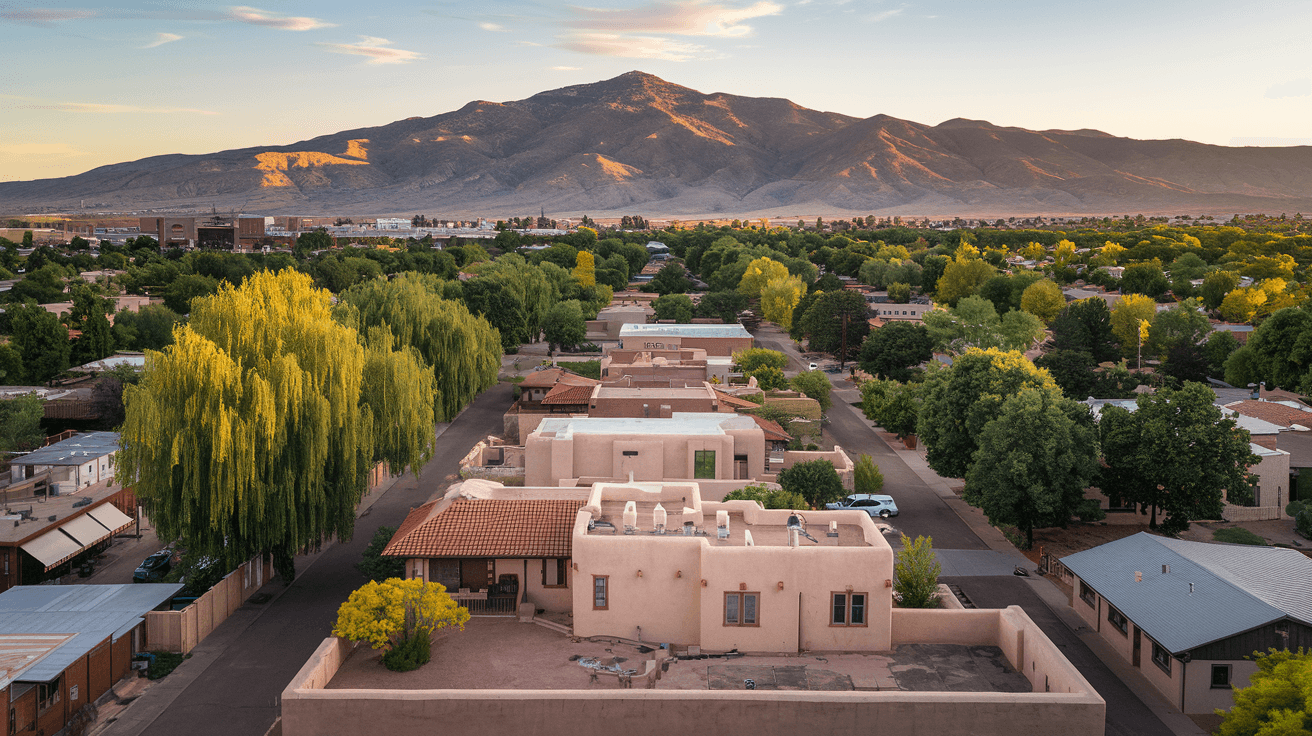
Inventory movement in April deserves careful reading. New listings coming onto the market rose approximately 7% compared to March, a seasonal pattern consistent with every spring cycle this market has seen since 2018. Sellers who hibernated through the winter are listing. But closed sales are accelerating at a comparable pace, which means the net inventory gain is modest at best.
Compared to April 2025, active listings are up roughly 12% year-over-year — a meaningful improvement for buyers who spent last spring competing over a pool of barely 2,850 active listings. That additional inventory has taken some of the panic out of the market. You no longer need to waive every contingency on a house you saw for 20 minutes. But you still need to move with purpose.
What the Numbers Say About Supply Tiers
The inventory story is not uniform across price points, and that distinction matters enormously for both buyers and sellers:
- •
$200,000 to $300,000: This tier remains the most starved for supply in the entire metro. Homes priced here — largely in the South Valley, parts of the International District, and older Rio Rancho subdivisions — are moving in under 21 days on average. Multiple-offer situations are still routine. Buyers in this range need pre-approval letters that are current within 30 days and should be prepared to move on the same day a listing hits.
- •
$300,000 to $400,000: The heart of the Albuquerque market. This is where the Northeast Heights, Taylor Ranch, and mid-tier Rio Rancho inventory lives. Inventory has improved modestly, but demand has also increased as rate-sensitive buyers who were priced out of this tier a year ago find themselves back in qualifying range. Competition is real but manageable.
- •
$400,000 to $500,000: A balanced zone. Buyers have options, sellers still have leverage, but neither side is desperate. Homes that show well and price correctly are selling. Overpriced listings are sitting.
- •
$500,000 and above: The luxury and semi-luxury segment — Corrales acreage, High Desert custom builds, and the upper end of the North Valley — has seen days on market extend meaningfully. Buyers in this range are the most rate-sensitive of all, and the uncertainty around the Fed's timeline has kept some of them cautious. Sellers here need patience and precision pricing.
Albuquerque Home Prices: Where Appreciation Is Happening and Where It Has Stalled
The metro-wide median of $385,000 masks significant variation at the neighborhood level. Price per square foot across the metro is averaging approximately $198, up from roughly $191 a year ago — a 3.7% gain that closely tracks the overall median appreciation.
The price appreciation story in April 2026 is fundamentally a story about the middle of the market. The $300,000 to $450,000 range is where demand is most concentrated, where Sandia Labs engineers, Kirtland AFB families, and UNM medical staff are actively buying. That demand concentration is pushing prices upward in the neighborhoods that serve those buyers most directly.
At the top end, appreciation has softened. High Desert and Corrales are still posting positive year-over-year gains, but the pace has decelerated compared to 2024. Sellers in those neighborhoods who purchased in 2020 or 2021 still have substantial equity — but they should not expect 2022-era bidding wars.
“"The buyers who came back to the Albuquerque market in April 2026 are not the same buyers we saw in 2021. They have done the math on carrying costs, they know their walk-away number, and they are not afraid to use it. Sellers who respect that reality are closing deals. Those who are chasing 2021 comps are not."
Albuquerque Days on Market: What 34 Days Actually Means for Offer Strategy
The metro average of 34 days on market is the number that most directly guides offer strategy, and it requires context to be useful. That 34-day average is pulled upward significantly by the luxury segment and by overpriced listings that sit and eventually take price reductions. The median days on market — a more useful measure — is closer to 24 days for homes priced correctly in the $300,000 to $450,000 range.
For buyers, this means: if a home has been on the market for more than 30 days and has not taken a price reduction, there is almost always a reason. Either it was overpriced to begin with, has a condition issue, or is in a less-competitive micro-location. That is not always a problem — sometimes it is an opportunity. But go in with eyes open.
For sellers, the implication is direct: homes that are priced at or slightly below the most recent comparable sales are generating showing activity within the first 72 hours and offers within the first two weeks. Homes that are priced at what the seller hopes the market will bear are sitting.
Albuquerque Neighborhood-by-Neighborhood Breakdown: April 2026
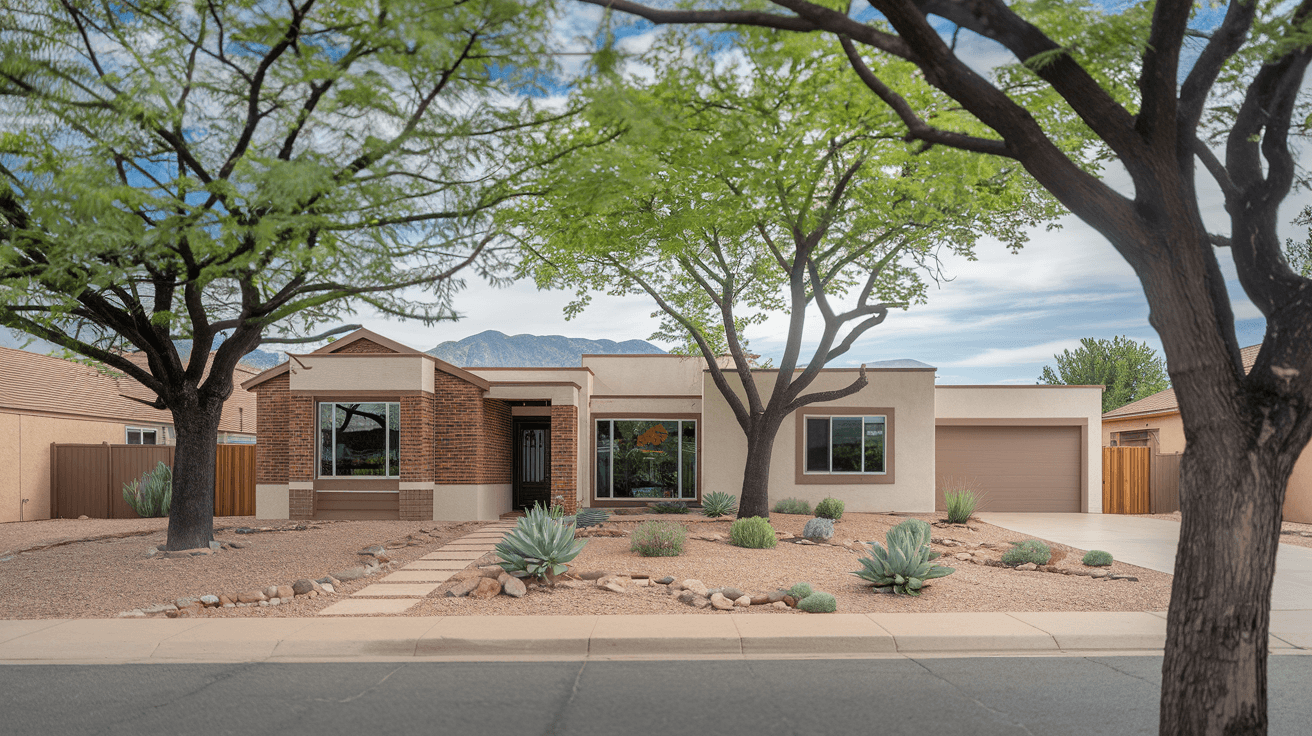
The neighborhood-level data is where the real story of the Albuquerque market lives. Here is what April 2026 looks like across the key corridors:
Northeast Heights
Median Price: $338,000 | Days on Market: 19 | Year-over-Year Price Change: +4.8%
The Northeast Heights continues to be the most active submarket in the metro by transaction volume. The combination of established neighborhoods, good school options, and proximity to both Kirtland AFB and the Sandia Labs corridor on Eubank makes this area perpetually in demand. Homes on the east side of the Heights — particularly in the Glenwood Hills and Four Hills Village areas near the Juan Tabo foothills — are moving the fastest. The 4.8% year-over-year gain is the strongest in the metro for this price range.
Nob Hill
Median Price: $398,000 | Days on Market: 22 | Year-over-Year Price Change: +3.5%
Nob Hill's appeal has not changed — walkability to Central Avenue's restaurant corridor, the proximity to UNM, and the architectural character of the 1930s-1950s housing stock keep this neighborhood on the radar of buyers who could afford the suburbs but actively choose not to live there. Turnover is modest because owners tend to hold. When something comes on the market near Carlisle and Lead or on the streets north of Lomas, it draws attention quickly.
North Valley
Median Price: $445,000 | Days on Market: 26 | Year-over-Year Price Change: +3.1%
The North Valley remains one of Albuquerque's most distinctive submarkets — irrigated agricultural land, mature cottonwoods, horses, and custom homes on larger lots along the Rio Grande. Inventory here is thin by nature; the land base is finite. The 26-day average DOM reflects both the longer decision cycle for buyers at this price point and the deliberate pace of a neighborhood where most sellers are not in a hurry.
Rio Rancho
Median Price: $312,000 | Days on Market: 20 | Year-over-Year Price Change: +5.1%
Rio Rancho is the affordability pressure valve for the metro, and it is working overtime in April 2026. The 5.1% year-over-year appreciation is the strongest in the broader market, driven by buyers who are being priced out of comparable Albuquerque neighborhoods and finding that the drive down NM-528 to Intel's Rio Rancho campus or the commute down Paseo del Norte is a trade-off worth making. New construction activity in the Mariposa and Lomas Encantadas communities is adding supply, but demand is absorbing it quickly.
Corrales
Median Price: $598,000 | Days on Market: 41 | Year-over-Year Price Change: +2.2%
Corrales is a market unto itself. The village's strict land-use regulations, the preserved agricultural character along Corrales Road, and the mountain views from the west mesa bench create a product that simply does not exist anywhere else in the metro. At $598,000 median and 41 days on market, this is a patient buyer's game. Sellers here need to price with discipline — the buyer pool is smaller, more deliberate, and fully capable of walking away.
High Desert
Median Price: $648,000 | Days on Market: 47 | Year-over-Year Price Change: +1.9%
High Desert, the planned community nestled against the Sandia foothills east of Tramway, continues to attract buyers seeking the combination of dramatic mountain proximity, custom architecture, and the trail access that the Elena Gallegos open space provides. The 47-day average DOM is the longest of any tracked submarket, but that reflects the price point and buyer profile more than any weakness in demand. When a well-priced High Desert home hits the market, it finds its buyer.
Downtown / EDo (East Downtown)
Median Price: $295,000 | Days on Market: 29 | Year-over-Year Price Change: +2.8%
The Downtown and East Downtown corridor — running from the Alvarado Transportation Center east through the EDo arts district toward the Barelas neighborhood — remains a market in transition. Condo and townhome product dominates here, and the buyer profile skews heavily toward first-time buyers, investors, and UNM-affiliated households. The 2.8% year-over-year gain is respectable but trails the metro average, reflecting ongoing concerns about urban amenity development and the pace of Downtown's commercial revival.
Taylor Ranch
Median Price: $355,000 | Days on Market: 21 | Year-over-Year Price Change: +4.1%
Taylor Ranch, the established westside neighborhood along Montano Road west of Coors, is punching above its weight in April 2026. The 21-day average DOM and 4.1% year-over-year appreciation reflect a neighborhood that offers strong value relative to comparable east-side inventory. Families priced out of the Northeast Heights are discovering that Taylor Ranch's parks, the proximity to the Rio Grande Nature Center, and the westside school options represent a genuine alternative. Expect continued appreciation pressure here through the summer.
What the April 2026 Albuquerque Market Means for Buyers and Sellers
If You Are Buying in Albuquerque Right Now
The window that opened in late 2025 — when rate fears kept buyers away and inventory quietly built — has partially closed. You are not back to the panic of 2021, but you are also not shopping in a buyer's market. Here is what the data says you should do:
Get pre-approved, not pre-qualified. With a 97.8% list-to-sale ratio, sellers are not entertaining offers from buyers who cannot demonstrate real purchasing power. A pre-qualification letter is table stakes. A full credit-reviewed pre-approval from a local lender who can close in 21 days is a competitive advantage.
Target the $300,000 to $400,000 range with speed, not desperation. This is the most competitive tier, but it is not irrational. Homes that have been on the market for more than 28 days in this range often have a negotiable seller. Homes that just listed need a same-week decision.
Do not wait for rate cuts to materialize. The buyers who are waiting for a 5.5% rate before they buy are competing against the buyers who are already in the market. When rates drop, demand spikes and prices follow. The math of buying today and refinancing later is worth running with your lender.
If You Are Selling in Albuquerque Right Now
Spring 2026 is a seller's market — but it is a disciplined seller's market. The buyers in this market have done their homework, and they will not be talked into overpaying.
Price to the most recent closed comps, not the most optimistic active listings. Active listings are not comps. Closed sales from the last 60 days are comps. Sellers who price 3-5% above the most recent closed comparable are finding themselves with showings that do not convert to offers.
Presentation is doing more work than it has in years. With buyers having more options than they did in 2024, the homes that photograph beautifully and show impeccably are the ones generating multiple offers. Professional staging, fresh exterior paint, and landscaping that reflects New Mexico's xeriscape aesthetic are returning real dollars at closing.
The first 14 days are everything. Albuquerque buyers are watching new listings in real time. If your home does not generate meaningful activity in the first two weeks, the market is telling you something about your price. Listen early rather than late.
“"In a market where the list-to-sale ratio is 97.8%, the gap between a well-priced listing and an overpriced one is not measured in dollars — it is measured in months. Price it right on day one."
What to Expect in the Albuquerque Market: May and Summer 2026
Seasonal patterns in Albuquerque are consistent and predictable: May and June represent the peak of listing activity and buyer engagement before the summer heat and monsoon season slow foot traffic in July and August. That means the next 60 days are the most consequential of the year for both buyers and sellers.
On the rate front, the Federal Reserve's trajectory remains the single largest external variable. If the anticipated mid-summer cut materializes, expect a demand surge that tightens inventory further and puts upward pressure on the $300,000 to $450,000 tier specifically. Buyers who are in contract now or who close in May will have bought ahead of that demand wave.
Locally, the economic fundamentals that underpin Albuquerque real estate remain intact. Sandia National Laboratories continues to expand its workforce under multi-year federal contracts, with hiring concentrated in engineering and cybersecurity — buyers who typically target the $375,000 to $550,000 range. Kirtland Air Force Base PCS season runs April through July, injecting a reliable cohort of motivated buyers into the market on a predictable schedule. Intel's Rio Rancho facility has stabilized after 2024's operational adjustments and is not generating the workforce displacement concerns that briefly softened the northwest corridor. New Mexico's film industry, anchored by Netflix's Albuquerque Studios and the tax credit environment that keeps productions here, continues to generate above-median household incomes among a buyer demographic that tends to favor Nob Hill, EDo, and the North Valley.
UNM's spring graduation cycle in May historically generates a modest uptick in condo and entry-level single-family demand as graduate students and young faculty make housing decisions for the following academic year.
The most likely scenario for May 2026: median price nudges toward $388,000 to $392,000, days on market holds in the low 30s, and inventory remains tight enough to sustain the seller's advantage — but not so tight that buyers abandon the market. The balanced tension between those two forces is what makes this a functional, healthy market rather than a speculative one.
Key Takeaways: Albuquerque Real Estate Market April 2026
- •Median price holds at $385,000, up 3.5% year-over-year, reflecting steady appreciation driven by constrained supply and recovering buyer demand — not speculative pressure.
- •Rio Rancho leads all tracked submarkets with 5.1% year-over-year appreciation, as affordability-driven migration from Albuquerque proper continues to absorb new construction inventory faster than it is built.
- •At 3.9 months of supply, Albuquerque remains a seller's market, but the 12% year-over-year inventory increase gives buyers more options than they had in spring 2025 — particularly in the $400,000-plus range.
- •Homes priced correctly in the $300,000 to $400,000 tier are selling in 19-22 days on average, requiring buyers to have financing fully in order and be prepared to make same-week decisions on competitive properties.
- •The Federal Reserve rate outlook is the primary market catalyst to watch: a confirmed mid-2026 cut would likely compress already-tight inventory in the sub-$450,000 tier and push the metro median toward $395,000 or higher by Q3 2026.
Want more insider intel?
Subscribe to get market updates and new articles delivered to your inbox.