Albuquerque Housing Market Report: August 2026 — First-Time Buyer Activity Below $350K as Rate Buydown Programs, Builder Incentives, and MFA Resources Collide in the Metro's Most Competitive Entry-Level Price Band
Albuquerque Housing Market Report: August 2026 — First-Time Buyer Activity Below $350K as Rate Buydown Programs, Builder Incentives, and MFA Resources Collide in the Metro's Most Competitive Entry-Level Price Band
Albuquerque Real Estate Market Overview: August 2026
The Albuquerque housing market entered August 2026 in a state that veteran observers here would recognize as a managed tension — not the frenzied multiple-offer chaos of 2021 and 2022, but not the hesitant standoff of late 2023 either. The metro's median home price settled at $385,000, up 3.5% year-over-year, a pace that reflects sustained demand without the speculative overheat that burned buyers in prior cycles.
What makes this August genuinely interesting is not the headline number. It is the story happening below it. The sub-$350,000 price band — the segment where Kirtland AFB airmen, UNM staff, and young professionals from the East Downtown creative economy are trying to plant roots — has become a collision zone. New Mexico Mortgage Finance Authority programs, lender-paid rate buydown products from local credit unions and national mortgage banks, and aggressive builder incentives from Rio Rancho subdivisions off Unser Boulevard are all targeting the same buyer demographic simultaneously. The result is a price tier that is simultaneously more accessible than it was eighteen months ago and more competitive than any other segment in the metro.
Above $500,000, the market is quieter. Corrales acreage properties and High Desert custom homes are moving, but they are moving on the seller's timeline, not the buyer's panic. That bifurcation — a hot bottom, a patient top — defines the Albuquerque real estate market as summer closes.
Active listings stand at 3,850, months of inventory at 3.9, and the list-to-sale ratio holds at 97.1%. None of those numbers scream crisis in either direction. They describe a market that is working, slowly rebalancing, and rewarding preparation over impulse.
Albuquerque Housing Inventory: Supply and Demand Dynamics
Inventory is the variable that explains almost everything else happening in this market right now.
The metro closed July 2026 with approximately 3,720 active listings. August's 3,850 active listings represents a month-over-month increase of roughly 3.5%, which sounds modest but is meaningful context. A year ago in August 2025, active listings hovered near 3,100. The year-over-year inventory gain of approximately 24% has provided genuine relief to buyers who spent 2024 watching homes disappear before they could schedule a showing.
That said, 3.9 months of inventory still places Albuquerque firmly in seller's market territory. The traditional threshold for a balanced market is 5 to 6 months. The city has not crossed that line since the pandemic-era demand surge reshaped the local housing stock calculus.
New listings coming to market in August tracked at approximately 1,050 — a seasonal uptick consistent with the late-summer pattern that local agents recognize every year. Families trying to relocate before school starts at Albuquerque Academy, Eldorado High, or Rio Rancho High tend to list and close on compressed timelines, generating a burst of August activity that typically fades by mid-September.
Closed sales for August came in near 890, which means the market absorbed the majority of new supply without accumulating a significant backlog. The gap between new listings and closed sales — roughly 160 units — added modestly to the active inventory count, explaining the slight month-over-month build.
The critical dynamic to watch is whether that inventory build continues into September and October. In 2024, a similar late-summer inventory increase stalled in October as sellers pulled listings rather than accept price reductions heading into the holiday slowdown. If that pattern repeats, buyers who are sitting on the fence waiting for more supply may find themselves back in a tighter market by November.
Albuquerque Home Prices by Tier: Where Competition Is Hottest
The Sub-$350K Battleground
The $200,000 to $350,000 price tier is where the August 2026 story lives. Homes in this range — think 1970s ranch-styles in the International District near Central and Wyoming, three-bedroom colonials in the South Valley off Rio Bravo, and smaller new builds in Rio Rancho's newer subdivisions — are moving at an average of 24 days on market, the fastest velocity of any price segment in the metro.
The convergence of financing tools in this tier is unprecedented by recent Albuquerque standards. The New Mexico MFA's FirstHome and NextHome programs are providing down payment assistance of up to $15,000 for qualifying buyers, effectively lowering the cash-to-close barrier that has kept many renters on the sideline. Simultaneously, several national builders with active Rio Rancho projects near Unser and Southern are offering 2-1 temporary rate buydowns — dropping the effective first-year rate by 200 basis points — as a closing incentive. When a buyer can combine MFA down payment assistance with a builder buydown and land a payment that pencils against their current rent, the motivation to act becomes very concrete.
The practical consequence: well-priced homes in this tier that show cleanly are still receiving multiple offers. Not the seven-offer situations of 2022, but two to four competitive offers within the first weekend remains common at properties priced accurately below $325,000.
The $350K to $500K Middle Market
The $350,000 to $500,000 range represents the metro's largest volume segment by transaction count and is experiencing the most nuanced conditions. The median price in this tier sits near $415,000, up approximately 2.8% year-over-year — healthy appreciation but softer than the entry-level segment above.
Days on market in this range average 38 days, giving buyers meaningful time to conduct due diligence, request inspections, and negotiate without the artificial urgency that defined the pandemic market. The list-to-sale ratio here drops to approximately 96.3%, meaning sellers are conceding about $15,000 on a $400,000 home on average — a meaningful shift from the over-ask closings that characterized 2022 and early 2023.
The $500K and Above Luxury Segment
Above $500,000, the Albuquerque market is operating on entirely different physics. Active listings in this tier have increased 31% year-over-year, creating genuine buyer optionality that simply did not exist two years ago. Average days on market stretch to 62 days, and price reductions on listings that have sat beyond 45 days are common.
This is not a distressed segment — it is a patient one. High Desert custom homes backing to the Elena Gallegos open space, Corrales properties with irrigated acreage along the bosque, and the newer construction in gated communities near Tramway and Academy are all selling, but sellers who price aggressively are learning that the buyers in this tier have alternatives and are using them.
“"The sub-$350K segment in Albuquerque right now is where three different tailwinds — MFA assistance, builder buydowns, and rate normalization — are all hitting simultaneously. Buyers who understand how to layer these tools are finding genuine opportunity. Buyers who don't are watching homes disappear and wondering why."
Albuquerque Days on Market: What Offer Strategy Looks Like Right Now
The metro-wide average of 34 days on market is up from 28 days in August 2025, and that single data point carries significant strategic implications for both buyers and sellers.
For buyers, the extra six days of average market time means the reflexive same-day offer is no longer always necessary. At price points above $400,000, taking 48 to 72 hours to review disclosures, drive the neighborhood at different times of day, and have a preliminary conversation with a contractor is now a viable strategy without automatically losing the home. That was not true in 2022.
Below $325,000, however, the calculus is different. Homes in the Huning Highland area near the Rail Trail, solid three-bedrooms in Taylor Ranch off Montano, and anything clean and updated in the Northeast Heights below $300,000 are still generating weekend showing traffic that converts quickly. Buyers in this tier who are not pre-approved and ready to submit within 24 to 48 hours of a showing are regularly watching homes go under contract before their second visit.
The 97.1% list-to-sale ratio tells a precise story about negotiating room. On a $385,000 home, buyers are on average paying approximately $373,000 — about $12,000 under list. That gap is almost entirely concentrated in the middle and upper price tiers. In the entry-level segment, the ratio is closer to 99%, meaning the negotiating room is minimal and the price is largely what the price is.
Albuquerque Neighborhood Breakdown: August 2026 Market Data
Northeast Heights
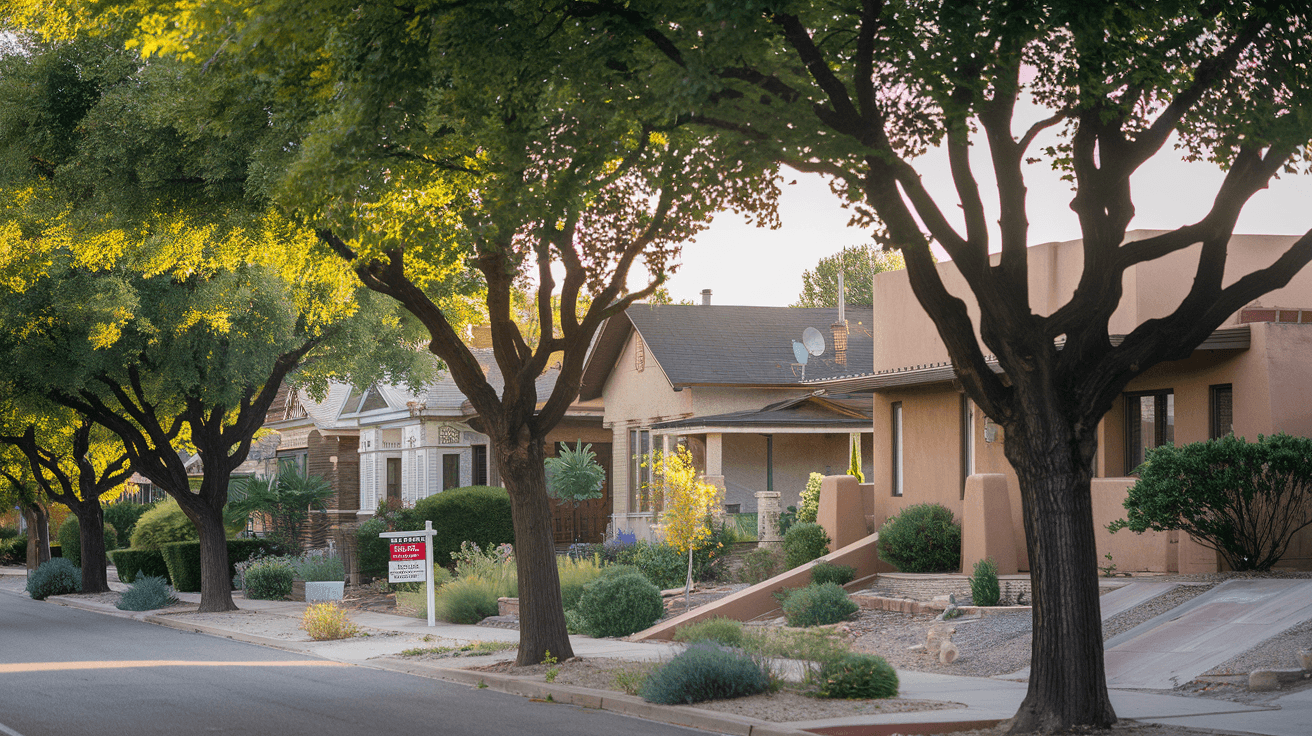
The Northeast Heights — the broad residential swath running roughly from Menaul to Paseo del Norte between Eubank and the Sandia foothills — remains the metro's highest-volume submarket. Median price: $342,000. Average days on market: 28. Year-over-year price change: +4.1%.
The Heights is benefiting disproportionately from the MFA program activity because its price point sits squarely in the sweet spot of eligibility thresholds. The older ranch-style inventory near Wyoming and Candelaria, in particular, is attracting first-time buyers who are willing to trade cosmetic updates for the established neighborhood bones and proximity to Uptown employment.
Nob Hill
Nob Hill, anchored by the Central Avenue commercial corridor between Girard and Washington, continues to command a premium for its walkability and architectural character. Median price: $398,000. Average days on market: 31. Year-over-year price change: +3.2%.
The Nob Hill buyer profile has shifted subtly in 2026. Remote workers from coastal markets, drawn by Albuquerque's cost-of-living differential, have been a consistent presence. The neighborhood's 1940s and 1950s bungalow stock is increasingly being purchased as primary residences rather than rentals, a trend that is slowly tightening owner-occupant inventory.
North Valley
The North Valley, stretching along the Rio Grande bosque from Alameda down through Los Ranchos de Albuquerque, operates as a separate micro-market defined by irrigated lots, mature cottonwoods, and a buyer profile that prioritizes land and character over square footage. Median price: $447,000. Average days on market: 42. Year-over-year price change: +2.7%.
Inventory here is genuinely constrained by the physical boundaries of the valley floor, and properties with acequia water rights command a premium that does not show up cleanly in aggregate data. Well-maintained North Valley properties are still selling above $500,000 regularly; the median is pulled down by smaller, older homes on the valley's eastern edge.
Rio Rancho
Rio Rancho is the market's relief valve and its most dynamic story in August 2026. Median price: $318,000. Average days on market: 26. Year-over-year price change: +5.2%.
The builder activity off Unser Boulevard, particularly in the northern sections near the Intel campus and the newer commercial development around Northern Boulevard, is absorbing significant first-time buyer demand. The combination of new construction warranties, builder-paid buydowns, and prices that remain accessible relative to the Albuquerque proper market has made Rio Rancho the destination of choice for buyers who prioritize payment certainty over location prestige.
The Intel facility's continued operations and the associated supplier and contractor employment base provide a demand floor that insulates Rio Rancho from the cyclical softness that affects purely residential markets.
Corrales
Corrales, the agricultural village north of Rio Rancho along the Rio Grande, continues to operate as one of the metro's most desirable and supply-constrained submarkets. Median price: $598,000. Average days on market: 58. Year-over-year price change: +1.9%.
The Corrales market is defined by scarcity. New construction is severely limited by zoning and the village's deliberate growth constraints. When a well-maintained property with horse facilities or bosque access comes to market on Corrales Road or one of its lateral acequias, it draws qualified buyers from the entire metro. The slower days-on-market figure reflects price, not lack of interest.
High Desert
High Desert, the planned community in the Northeast Heights foothills near Tramway and Academy, serves the metro's move-up and executive buyer segment. Median price: $652,000. Average days on market: 65. Year-over-year price change: +1.6%.
The views of the Sandia Mountains and the proximity to the Elena Gallegos trail system justify the premium for buyers in this segment. The slowdown in price appreciation reflects the broader luxury market dynamic rather than any weakness specific to High Desert — buyers at this price point are simply taking their time, and sellers who recognize that are pricing and staging accordingly.
Downtown / EDo (East Downtown)
The Downtown and East Downtown corridor, running from the Alvarado Transportation Center east toward the Huning Highland Historic District, is the metro's most character-rich and data-complicated submarket. Median price: $362,000. Average days on market: 35. Year-over-year price change: +3.8%.
The Rail Trail's continued development as a recreational and commercial spine has been a consistent price driver in EDo. The historic district's bungalow inventory, particularly the blocks near Silver and Gold south of Central, is attracting buyers who want urban walkability without the coastal price tag. The film industry's ongoing Albuquerque presence — production activity at Albuquerque Studios continues to employ a significant creative-class workforce — provides a buyer pool that specifically values this neighborhood's aesthetic.
Taylor Ranch
Taylor Ranch, the established neighborhood on Albuquerque's West Side anchored by Montano Road and the Paseo del Norte interchange, represents the metro's best value proposition for families seeking larger square footage. Median price: $334,000. Average days on market: 30. Year-over-year price change: +3.6%.
Four-bedroom homes with two-car garages in Taylor Ranch are regularly trading below $360,000, a price point that is increasingly rare in the Northeast Heights for comparable square footage. The neighborhood's access to the Paseo del Norte corridor, Rio Rancho employment, and the Cottonwood Mall commercial district makes it a practical choice for dual-income households optimizing for space per dollar.
Buyer and Seller Strategies for the August 2026 Albuquerque Market
If You Are Buying in Albuquerque Right Now
The single most important action a buyer can take in this market is understanding the full toolkit before making an offer. The convergence of MFA down payment assistance, lender buydown products, and builder incentives means that the effective cost of homeownership in the sub-$350,000 tier is meaningfully lower than the sticker price suggests — but only if you know how to access those tools.
Get fully underwritten pre-approval, not just pre-qualification. In a market where the list-to-sale ratio is 97.1% and entry-level homes are still receiving multiple offers, a conditional pre-qualification letter is a liability. Sellers and their agents in this market can distinguish between a buyer who has been through full underwriting and one who has a quick-close estimate from an online lender.
For buyers targeting the Northeast Heights, Taylor Ranch, or Rio Rancho below $350,000: be prepared to move within 48 hours of identifying a target property. Have your inspection contingency timeline pre-negotiated with your agent. Know your walk-away number before you write the offer.
For buyers in the $400,000 to $600,000 range: the market is giving you time you did not have two years ago. Use it. Request the seller's disclosure, review HOA documents if applicable, and do not let artificial urgency override due diligence on a transaction this size.
If You Are Selling in Albuquerque Right Now
Pricing strategy in August 2026 requires more precision than it did in 2022, when almost any number worked. The 97.1% list-to-sale ratio means overpriced listings are sitting, and in a market with 24% more inventory than a year ago, buyers have real alternatives.
Homes priced within 2% of accurate market value are selling in under 30 days. Homes priced 5% or more above market value are accumulating days on market and ultimately selling below where they would have closed if priced correctly from day one. The data on this is consistent across all price tiers.
Presentation matters more in this market than it has in recent years. Buyers who are stretching financially to reach the $350,000 to $420,000 range — and many of them are — are looking for homes they can move into without immediate capital expenditure. Fresh paint, functional HVAC, and clean landscaping are not optional upgrades; they are the baseline expectation for achieving list price.
“"Sellers who priced accurately and prepared their homes well in August 2026 averaged 28 days to contract. Sellers who tested the market at aspirational prices averaged 61 days — and most of them closed below where they would have landed with a realistic opening price."
Albuquerque Real Estate Outlook: What to Expect in September and October 2026
Several converging factors will shape the Albuquerque housing market as summer gives way to fall.
Interest rate environment: The Federal Reserve's posture through mid-2026 has kept 30-year conventional rates in the mid-to-upper 6% range, with occasional dips toward 6.3% on favorable economic data. Any movement below 6.25% would likely trigger a meaningful buyer response in the entry-level segment, as the payment impact on a $300,000 mortgage is approximately $45 per month for every quarter-point reduction. Watch the September Fed meeting closely.
Seasonal inventory patterns: Albuquerque historically sees new listing volume drop 15 to 20% between August and October as the school-year transition demand fades. If that seasonal contraction materializes in 2026, the current inventory build will reverse, and the buyers who waited for more supply will find themselves back in a tighter market.
Local economic drivers: Sandia National Laboratories' fiscal year activity and Kirtland AFB's ongoing operational footprint continue to provide a stable employment base that insulates Albuquerque from the cyclical volatility affecting more economically concentrated metros. The film industry's Albuquerque presence, anchored by Albuquerque Studios and the state's competitive production tax credit, has shown resilience through the industry's broader recalibration. These fundamentals are not glamorous, but they are why Albuquerque's housing market does not behave like Las Vegas or Phoenix.
Builder activity: New construction permits in Rio Rancho and the city's Northwest Mesa are tracking approximately 8% above 2025 levels. If that inventory reaches completion on schedule in Q4 2026, it will provide meaningful relief to the sub-$350,000 segment — but builder timelines in the current construction environment carry a 60 to 90 day uncertainty band.
The most likely scenario for September and October: modest inventory contraction, stable pricing, and continued competition in the entry-level tier. A rate improvement of 25 basis points or more could meaningfully accelerate activity before the holiday slowdown.
Key Takeaways: Albuquerque Housing Market August 2026
- •The metro median of $385,000 represents a 3.5% year-over-year gain, a pace that reflects genuine demand without speculative excess — Albuquerque's appreciation is slow and steady by design, not by accident.
- •The sub-$350,000 price tier is the most competitive segment in the metro, with average days on market near 24 days and list-to-sale ratios approaching 99%; buyers here need full underwriting, clear offer strategy, and readiness to move within 48 hours.
- •New Mexico MFA down payment assistance programs are actively shaping first-time buyer behavior in the Northeast Heights, Taylor Ranch, and Rio Rancho, effectively lowering cash-to-close barriers and driving volume in a segment that would otherwise be constrained by savings gaps.
- •Rio Rancho posted the strongest year-over-year price appreciation in the metro at 5.2%, driven by builder activity near Intel and Unser, new-construction warranties, and buydown incentives that are attracting buyers priced out of comparable Albuquerque proper inventory.
- •Inventory at 3,850 active listings and 3.9 months of supply is 24% above year-ago levels but still well below the 5 to 6 months that would constitute a balanced market — sellers retain structural leverage, but the days of automatic over-ask pricing without preparation are over.
Want more insider intel?
Subscribe to get market updates and new articles delivered to your inbox.