Albuquerque Housing Market Report: June 2026 — Seller Concessions Are Back: How Closing Cost Credits and Rate Buydowns Are Reshaping Deals Across ABQ Price Bands
Albuquerque Housing Market June 2026: The Concession Economy Arrives
The headline number for June 2026 is $385,000 — Albuquerque's metro-wide median home price, representing a 3.5% year-over-year gain that looks modest on paper but tells a more complicated story when you dig into how those deals are actually closing. Because in June 2026, the price on the sign and the net cost to the buyer are increasingly two different numbers.
Seller concessions — closing cost credits, temporary and permanent rate buydowns, and prepaid HOA fees — have moved from occasional negotiating tactic to standard feature of the Albuquerque transaction landscape. Based on closed sales data through the end of June, approximately 1 in 3 residential closings in the metro included some form of seller-paid concession, a figure that was closer to 1 in 8 during the frenzied spring of 2022. That shift is not a sign of collapse. It is a sign of normalization, and for buyers who have been sitting on the sidelines waiting for prices to drop, it represents real purchasing power that never shows up in the median price chart.
What is driving this? Inventory has been building steadily since late 2024. Active listings across the metro stand at 3,850, a figure that represents the highest June inventory count since 2018. With 4.9 months of supply — the threshold most economists define as a balanced market sits at 5 to 6 months — Albuquerque has effectively crossed from seller's territory into genuinely balanced conditions. Sellers who priced correctly and marketed aggressively are still doing well. Those who priced to 2023 comps and waited are the ones writing concession checks at the closing table.
Albuquerque Housing Inventory: Supply Is Building, But Not Flooding
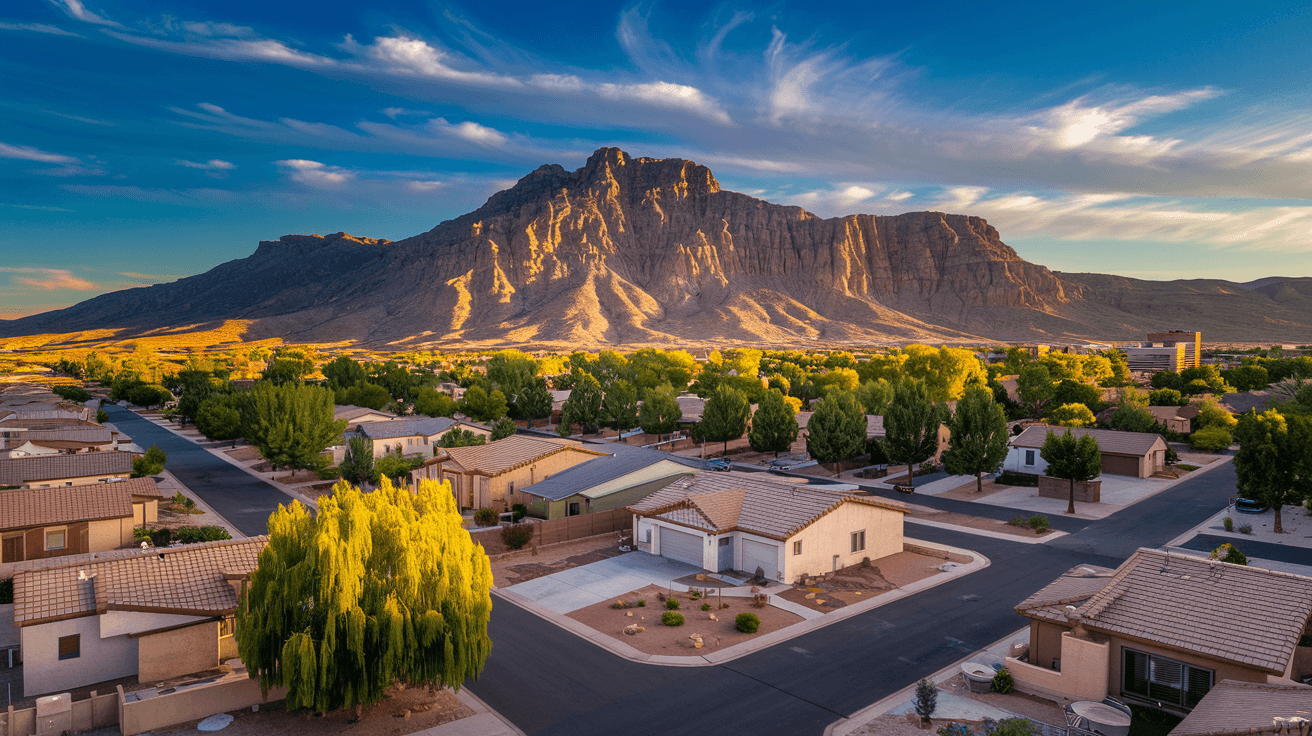
The inventory story in June 2026 is one of gradual accumulation rather than sudden surge. New listings coming to market in June totaled approximately 1,340, while closed sales came in at 1,020 — a gap that added roughly 320 net listings to the active pool over the month. That is meaningful but not dramatic. For context, at the peak of the 2022 seller's market, closed sales were outpacing new listings by more than 200 units per month in the opposite direction.
Month-Over-Month and Year-Over-Year Inventory Comparison
Active listings at the end of June 2026 sit 18.4% higher than June 2025 and 34.2% above June 2024. The pace of that accumulation has actually moderated compared to what we saw during the winter months, when rate-sensitive buyers largely stepped out of the market between November and February. The spring selling season — which in Albuquerque typically runs from late February through early June, driven by the academic calendar at UNM and relocation cycles tied to Kirtland Air Force Base and Sandia National Laboratories — absorbed a meaningful chunk of that inventory buildup.
Months of supply by price band tells the most actionable story:
- •$200,000 to $300,000: 2.8 months — still lean, still competitive
- •$300,000 to $400,000: 4.2 months — balanced, concessions common
- •$400,000 to $500,000: 5.7 months — buyers have clear leverage
- •$500,000 and above: 8.1 months — a buyer's market by any definition
The entry-level segment, particularly homes priced below $280,000 in Rio Rancho and the South Valley, continues to behave like a seller's market because supply there has never adequately recovered. The luxury and move-up segments above $500,000 — think High Desert custom builds, Corrales horse properties, and the newer construction along Paseo del Norte near Rust Medical — are where sellers are getting the most creative with concessions.
Albuquerque Home Prices by Tier: Where Values Are Holding and Where They Are Softening
The $300,000 to $400,000 Band: The Market's Engine
The metro median of $385,000 lands squarely in the most active price band, and that is not coincidental. The $300,000 to $400,000 range accounts for roughly 38% of all closed transactions in June, making it the segment that most accurately reflects the overall market's health. Median price per square foot across the metro came in at $196, up from $189 a year ago — a 3.7% increase that tracks closely with the overall appreciation figure.
Within this band, the concession picture is nuanced. Sellers are offering credits, but buyers are not always using them the way sellers expect. Rather than simply taking closing cost assistance to reduce out-of-pocket expenses at closing, a growing number of buyers are directing those funds toward permanent rate buydowns — paying discount points to reduce their mortgage rate for the life of the loan. At current rate levels, a 1-point buydown on a $370,000 loan saves a buyer approximately $215 per month, which is a more compelling value proposition than a $3,700 credit toward title fees.
Above $500,000: Concessions as the New Normal
In the $500,000-plus segment, the average concession amount in June transactions was approximately $12,400, or roughly 2.1% of the median sale price in that tier. High Desert properties along the foothills of the Sandias — particularly the custom homes in gated communities off Tramway Boulevard northeast of Montgomery — are sitting an average of 47 days before going under contract, and virtually every one of those deals includes some form of seller contribution.
“"The sellers winning in today's ABQ market are not the ones refusing to negotiate. They are the ones who priced right from day one and then used a well-structured concession to get a buyer off the fence — often by solving the rate problem rather than the price problem."
The Entry-Level Floor: $200,000 to $300,000
Below $300,000, the calculus is entirely different. There are simply not enough homes in this range relative to demand, and that has been true for five consecutive years. First-time buyers, many of them connected to the University of New Mexico, Kirtland AFB, or the growing film production workforce based out of Albuquerque Studios on Edith Boulevard, are competing aggressively for this inventory. Multiple-offer situations remain common here, and sellers in this band are rarely offering concessions because they do not need to.
Albuquerque Days on Market: What 34 Days Means for Your Offer Strategy
The metro-wide average of 34 days on market in June 2026 is up from 27 days in June 2025 and 19 days in June 2024, representing a meaningful deceleration in the pace of sales. But that average obscures a tale of two markets that buyers and their agents need to understand before writing an offer.
Homes priced correctly in desirable, supply-constrained neighborhoods are still moving in 10 to 18 days. Homes that are overpriced, dated, or located in areas with higher inventory are sitting for 45 to 75 days — and those are the properties generating the concession headlines. The strategic implication for buyers is significant: if a home has been on the market for more than 30 days in the current environment, the seller's motivation has almost certainly increased, and a well-structured offer that asks for a rate buydown or closing cost contribution is likely to find a receptive audience.
For sellers, the DOM data is a warning sign that needs to be heeded at the time of listing, not after 45 days of price reductions. Homes that come to market correctly priced — based on actual June 2026 comps, not 2024 peaks — are still achieving 97.8% of list price at closing. That is a healthy ratio. The problem is that list price has to be the right price to begin with.
Albuquerque Neighborhood-by-Neighborhood Breakdown: June 2026 Data
Northeast Heights
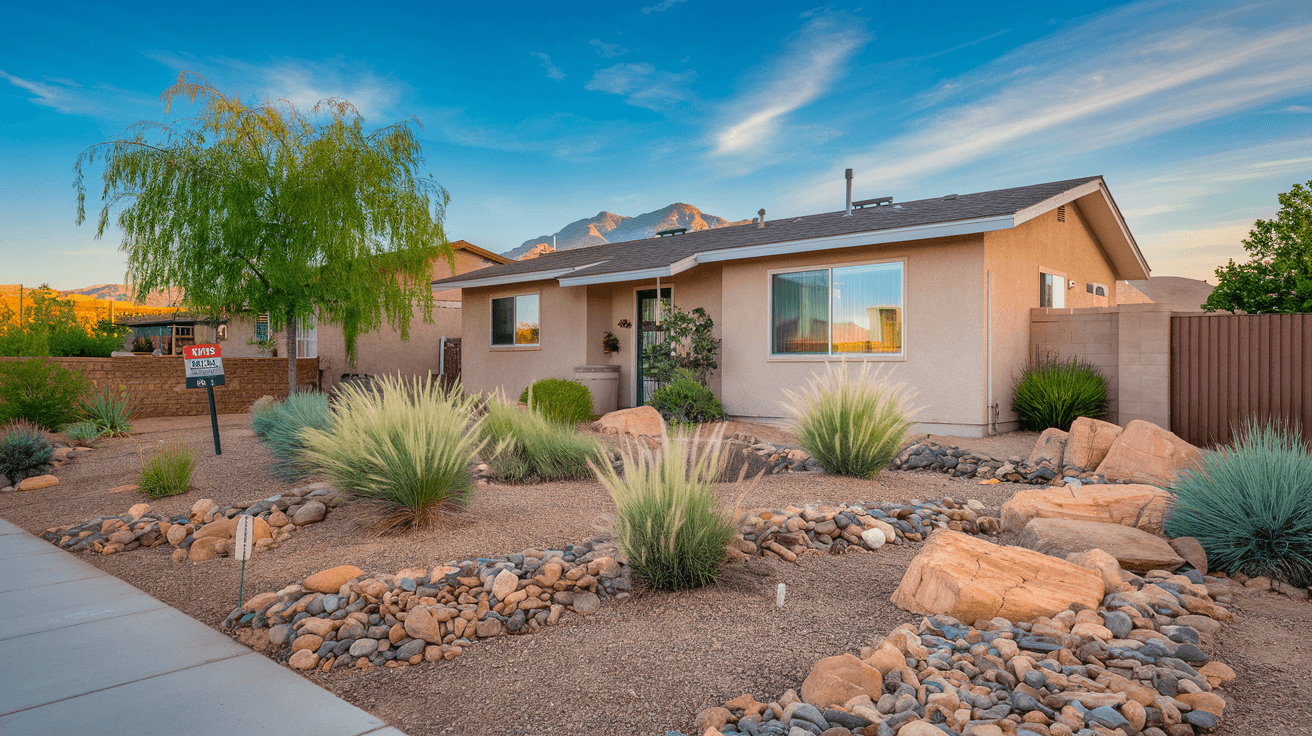
The Heights corridor — spanning from Candelaria Road north to Paseo del Norte, and from Eubank Boulevard west toward Wyoming — remains one of the most consistently liquid submarkets in the metro. Median price: $342,000. Average DOM: 28 days. Year-over-year price change: +4.1%. The relatively affordable price point combined with proximity to Kirtland AFB and the Presbyterian Hospital complex on Kaseman drives steady demand. Concessions appear in roughly 25% of transactions here, typically modest closing cost credits rather than full rate buydowns.
Nob Hill and the UNM Corridor
The blocks surrounding Central Avenue from Washington Street east through the Nob Hill commercial district continue to attract buyers drawn to walkability, the Nob Hill restaurant row, and proximity to UNM. Median price: $398,000. Average DOM: 31 days. Year-over-year price change: +3.8%. The inventory of well-preserved mid-century homes here is limited, which keeps values relatively stable. The challenge is that many of these properties require updating, and buyers are increasingly factoring renovation costs into their offer calculations.
North Valley
The North Valley — the cottonwood-lined corridor running along the Rio Grande from Montano Road north through Los Ranchos — is where Albuquerque's character lives. Adobe compounds, irrigated horse lots, and mature landscape command a premium that has held up well. Median price: $447,000. Average DOM: 38 days. Year-over-year price change: +2.9%. The slowdown in DOM compared to prior years reflects the higher price point hitting affordability ceilings for local buyers, but out-of-state relocators — particularly from California and Texas — continue to find the North Valley compelling on a relative value basis.
Rio Rancho
Albuquerque's northwestern neighbor continues to punch above its weight as a value destination. Median price: $318,000. Average DOM: 24 days. Year-over-year price change: +5.2%. Intel's presence on the West Mesa, combined with significant new construction activity in the Mariposa and Lomas Verdes subdivisions, keeps demand elevated. Rio Rancho is also the metro area's most active market for new construction, where builders are offering factory-rate buydowns that are effectively competing with resale inventory.
Corrales
The Village of Corrales — that narrow, agricultural strip along the Rio Grande between Rio Rancho and the North Valley — occupies its own micromarket defined by limited supply and high desirability. Median price: $612,000. Average DOM: 52 days. Year-over-year price change: +1.4%. The slower appreciation and longer DOM reflect the luxury market dynamics described above. Properties here are unique by definition, which means pricing is an art rather than a science, and overpricing is punished quickly by a small buyer pool.
High Desert
The gated and custom-home communities tucked against the western face of the Sandia Mountains — accessed primarily from Tramway Boulevard and Juan Tabo — represent Albuquerque's most supply-burdened luxury submarket right now. Median price: $658,000. Average DOM: 51 days. Year-over-year price change: +1.1%. With 8-plus months of supply in this segment, sellers are offering the largest concession packages in the metro. Rate buydowns of 1.5 to 2 points, combined with closing cost credits and home warranty packages, are becoming table stakes for High Desert listings that want to close before the summer heat peaks.
Downtown and EDo (East Downtown)
The Downtown core and the East Downtown arts district — bounded roughly by the Rail Runner station, the Kimo Theatre, and the emerging development along Coal and Gold Avenues — continues its slow but real revitalization story. Median price: $287,000. Average DOM: 41 days. Year-over-year price change: +2.3%. The condo and townhome product that dominates this submarket appeals to a narrow buyer profile, and the HOA cost burden in many Downtown buildings adds friction to the affordability calculation.
Taylor Ranch
The established west-side neighborhood of Taylor Ranch — north of Paseo del Norte, west of Coors Boulevard — offers suburban value that has attracted consistent demand from growing families priced out of the Heights. Median price: $355,000. Average DOM: 26 days. Year-over-year price change: +3.6%. Taylor Ranch sits in the sweet spot of the concession economy: enough supply that buyers can negotiate, but enough demand that sellers are not desperate. The typical deal here involves a $5,000 to $8,000 closing cost credit, which both parties treat as a price reduction with better tax optics.
What June 2026 Means If You Are Buying or Selling in Albuquerque
If You Are a Buyer
June 2026 is the most favorable buying environment Albuquerque has offered since the pre-pandemic market of 2019. The key insight is this: do not negotiate just on price. In many cases, asking a seller to reduce their list price triggers psychological resistance and can kill a deal. Asking for a $10,000 credit toward a rate buydown or closing costs accomplishes the same economic outcome with far less friction.
Get pre-approved and understand your buydown math before you write your first offer. At current rate levels, a 2-1 temporary buydown — where your rate is reduced by 2 points in year one and 1 point in year two — costs roughly 2.5% of the loan amount and can be funded entirely by seller concessions on most properties in the $350,000 to $500,000 range. That is a meaningful payment reduction during the period when you are most likely to have moving and renovation expenses.
In neighborhoods where inventory exceeds 5 months of supply — the $400,000-plus segments of High Desert, Corrales, and the upper North Valley — you have time. Do not manufacture urgency that does not exist. Inspect thoroughly, negotiate confidently, and use the DOM data to calibrate your opening offer.
“"In a market where 1 in 3 deals includes a seller concession, the buyers who do not ask for one are leaving real money on the table. The concession is there. You just have to know to request it."
If You Are a Seller
The sellers succeeding in June 2026 share three characteristics: they priced at market from day one, they invested in presentation (professional photography, pre-listing inspection, fresh landscaping in the xeriscape-friendly style that Albuquerque buyers expect), and they came to the table with a concession strategy rather than waiting to be asked.
Proactively offering a $8,000 to $12,000 rate buydown credit in your listing marketing is now a legitimate differentiation strategy. It signals to buyers that you understand the market, reduces the adversarial negotiation dynamic, and often results in a faster close at a higher net price than a reactive price reduction would have achieved. A $10,000 price reduction reduces your proceeds by $10,000. A $10,000 rate buydown credit does the same thing economically but may be the difference between a buyer qualifying for the loan and not qualifying.
If your home has been on the market for more than 21 days without an accepted offer, do not wait. Either reprice or proactively offer a concession package. The data is clear: every week a home sits on the market in June correlates with a lower final sale price, and that relationship steepens significantly after the 30-day mark.
Albuquerque Real Estate Outlook: What to Expect in July and August 2026
The seasonal pattern for Albuquerque real estate is well-established: the spring selling season peaks in May and June, followed by a modest summer slowdown as triple-digit temperatures and family vacation schedules reduce showings. July and August typically see a 8 to 12% reduction in closed sales volume relative to June, with inventory continuing to build modestly.
Several local economic factors are worth watching through the second half of 2026:
Sandia National Laboratories and Kirtland AFB continue to be the metro's most reliable demand anchors. The ongoing federal investment in nuclear security and defense technology means a steady flow of high-income relocators — engineers, scientists, and military personnel — entering the market on 12 to 18 month assignment cycles. This cohort skews toward the $380,000 to $550,000 price range and is typically rate-sensitive but not price-sensitive, making them ideal candidates for rate buydown concessions.
Intel's New Mexico operations on the West Mesa have stabilized after a period of uncertainty, and any announced capacity expansion would meaningfully accelerate Rio Rancho demand. Monitor that story through the summer.
The New Mexico film industry, centered on Albuquerque Studios and the surrounding production infrastructure near I-25 and Broadway, continues to attract crew and production personnel who are renting rather than buying — but that renter pool eventually converts to buyers, and it is contributing to demand pressure in the Nob Hill, EDo, and South Broadway corridors.
Interest rates remain the largest single variable. If the Federal Reserve delivers the rate cut that futures markets are currently pricing for September 2026, the Albuquerque market could see a meaningful demand surge heading into fall — compressing inventory and potentially reversing some of the concession trends described in this report. Sellers who are on the fence about timing should note that the fall market following a rate cut is typically the most competitive window of the year for buyers.
Key Takeaways: Albuquerque Housing Market June 2026
- •Median price held at $385,000, up 3.5% year-over-year, but seller concessions averaging $8,000 to $12,000 in the $400,000-plus segment mean the true net cost to buyers is declining in real terms across the upper price bands.
- •Inventory at 3,850 active listings and 4.9 months of supply has effectively moved the metro into balanced market territory for the first time since 2019, with the $400,000-plus segment already a buyer's market by conventional inventory measures.
- •Homes are averaging 34 days on market metro-wide, but correctly priced properties in Northeast Heights, Rio Rancho, and Taylor Ranch are still clearing in under 28 days — the DOM divergence between priced-right and overpriced homes is the widest it has been in six years.
- •Rio Rancho leads the metro in year-over-year appreciation at 5.2%, driven by new construction activity, Intel employment stability, and the value gap versus comparable Albuquerque neighborhoods that continues to attract first-time and move-up buyers from the East Side.
- •The rate buydown concession is the defining deal structure of mid-2026: buyers who understand how to request and deploy a seller-funded 2-1 buydown or permanent discount point credit are achieving effective mortgage rates meaningfully below the market rate, representing the most significant buyer opportunity in the current environment.
Want more insider intel?
Subscribe to get market updates and new articles delivered to your inbox.