Albuquerque Housing Market Report: June 2026 — Healthcare and Tech Job Growth Pushes Median Price to $385,000 as Buyer Demographics Shift Across the Metro
Albuquerque Housing Market June 2026: A City Being Quietly Rewired by Its Own Economy
The most important thing to understand about the albuquerque housing market june 2026 is that the story behind the numbers is more interesting than the numbers themselves. The metro median home price of $385,000 represents a 3.5% year-over-year increase — steady, not spectacular. But the composition of who is buying, where they are buying, and why they are moving to Albuquerque at all has shifted meaningfully over the past 18 months in ways that have direct consequences for how homes are priced, how fast they move, and what neighborhoods are absorbing the most demand pressure.
Sandia National Laboratories added approximately 400 net new positions in its quantum computing and nuclear security divisions between January and May of this year. Presbyterian Healthcare Services broke ground on its second outpatient surgery center in the Northeast Heights in March. Lovelace Health System continues to expand its employed physician network. The University of New Mexico Health Sciences Center is in active recruitment mode for specialists. Collectively, these employers are producing a buyer cohort that did not exist in Albuquerque at this scale five years ago: dual-income professional households earning between $140,000 and $220,000 annually, often relocating from Denver, Phoenix, or the Bay Area, with down payment savings intact and a strong preference for move-in-ready homes in the $350,000 to $500,000 range.
That is not a coincidence. That is a structural shift. And it is visible in the data.
Active listings stand at 3,850 across the metro. Months of inventory is 3.9, which sits in the zone that real estate economists classify as a mild seller's market — not the frenzied sub-two-month environment of 2021 and 2022, but far from the balanced six-month threshold that gives buyers genuine leverage. The list-to-sale ratio of 97.8% confirms that sellers who price correctly are receiving near-asking offers with regularity. The days of buyers submitting lowball offers and watching sellers blink first are not the norm in this market.
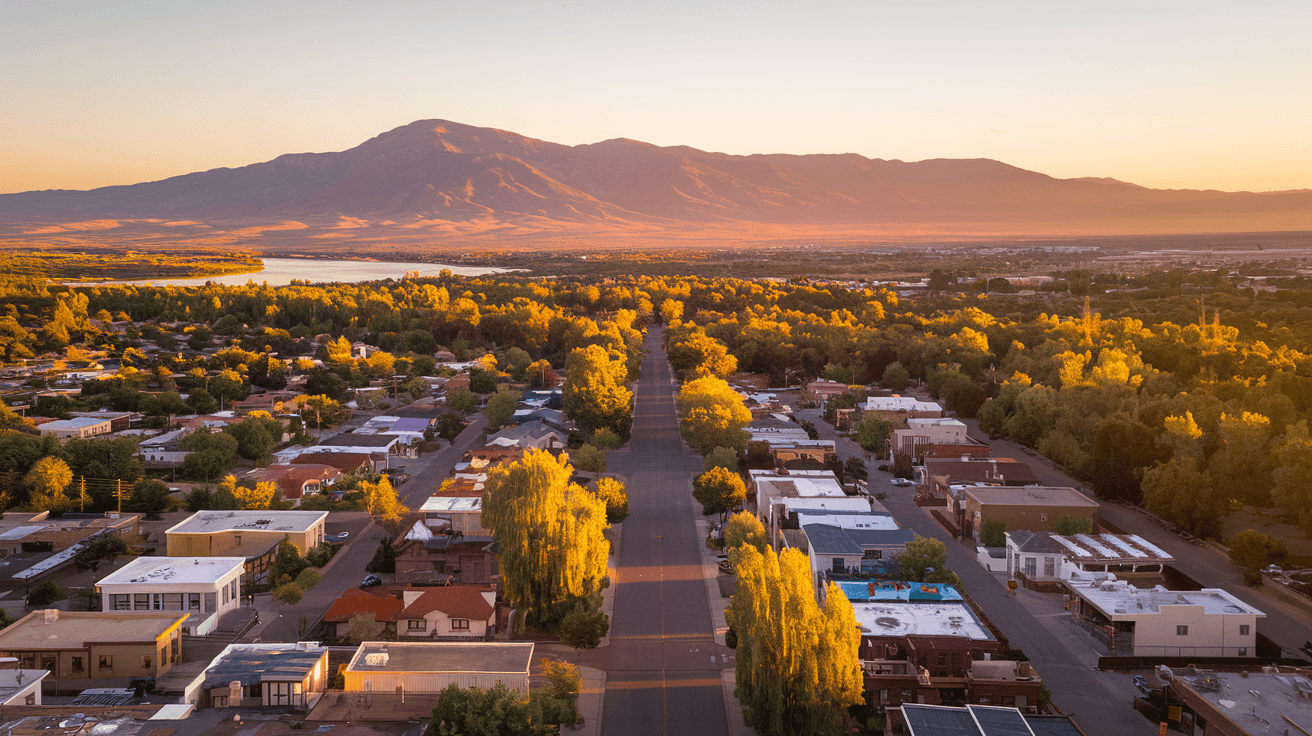
Albuquerque Housing Inventory: Tightening in the Middle, Loosening at the Top
The inventory picture in June 2026 is more nuanced than the headline figure suggests. The 3,850 active listings represent a modest increase of approximately 4.2% from May's count, which is typical seasonal behavior as sellers who held back through the winter finally list. Year-over-year, however, active listings are down roughly 8.1% from June 2025, when the market was processing the aftermath of mortgage rate volatility.
New listings added in June came in at approximately 1,140, while closed sales for the month totaled around 985. That gap — more new supply entering than leaving — is what pushed inventory slightly higher month-over-month. But the absorption rate tells a different story depending on which price segment you examine.
Supply Breakdown by Price Tier
In the $200,000 to $300,000 range, inventory is critically thin. There are fewer than 380 active listings across the entire metro in this tier, and homes that are priced accurately and show well are routinely going under contract within 10 to 14 days. This segment is being squeezed from both directions: first-time buyers competing with investors, and the simple math that new construction in Albuquerque cannot be delivered profitably at these price points given current land and labor costs.
The $300,000 to $400,000 tier is where the market is most active and most competitive. This range captures the bulk of the new professional buyer cohort described above, and it also aligns with what a household earning $130,000 to $160,000 can qualify for at current 30-year fixed rates hovering near 6.4%. Approximately 1,240 active listings fall into this range, but they are moving fast. Average days on market in this tier is running closer to 22 days, well below the metro average.
The $400,000 to $500,000 segment has seen the most meaningful inventory increase year-over-year, up approximately 14% from June 2025. This reflects both new construction deliveries in areas like Mariposa in Rio Rancho and Cabezon, as well as existing homeowners in neighborhoods like Taylor Ranch and the Northeast Heights who have benefited from appreciation and are now listing at prices that reflect it. Buyers in this range have slightly more negotiating room than they did a year ago, though not dramatically so.
Above $500,000, the market behaves differently. Inventory is adequate, days on market stretch longer, and the buyer pool is narrower. Corrales and High Desert dominate this tier, and those markets have their own rhythms.
Albuquerque Home Prices: Where the Appreciation Is Concentrating
The metro average sale price in June 2026 is approximately $412,000, which sits above the median and reflects the upward pull of luxury transactions in High Desert, Corrales, and select custom home sales in the Four Hills area near Juan Tabo. Price per square foot metro-wide is running at approximately $198, up from $187 in June 2025 — a 5.9% increase that is actually more telling than the median price movement because it controls for home size mix.
“The buyers driving June's market are not speculative investors flipping contracts. They are physicians, engineers, and cybersecurity analysts who have chosen Albuquerque deliberately — for the cost of living relative to their salaries, the outdoor access, and a quality of life that Denver stopped offering at twice the price.
The price appreciation story in 2026 is concentrated in the $320,000 to $420,000 range, where demand is most acute and supply is most constrained. Sellers in this band are seeing the strongest outcomes. Above $600,000, appreciation has moderated to the low single digits, and sellers need to be more precise about condition, staging, and pricing strategy.
Days on Market: What 34 Days Actually Means for Offer Strategy
The metro average of 34 days on market is a figure that requires interpretation, not just citation. It is being dragged upward by the luxury tier and by a subset of overpriced listings that sit and eventually reduce. The median days on market — a more useful figure — is closer to 24 days, and for well-prepared homes in the $300,000 to $450,000 range in desirable neighborhoods, the real number is often 10 to 18 days.
For buyers, this has a direct strategic implication: the window between a home appearing on the MLS and the deadline for a competitive offer is measured in days, not weeks. Buyers working with an agent who is monitoring new listings in real time and who has financing fully pre-approved — not just pre-qualified — are the ones writing contracts. Buyers who need three weekends to think about it are consistently losing.
The acceleration is most pronounced in the Northeast Heights corridors along Montgomery and Academy, in the Taylor Ranch area near Paseo del Norte, and in the established Rio Rancho neighborhoods closest to the Intel campus on Rio Rancho Boulevard. These are the zones where the new professional buyer cohort is concentrating, and their urgency is real.
Albuquerque Neighborhood Breakdown: June 2026 Data by Area
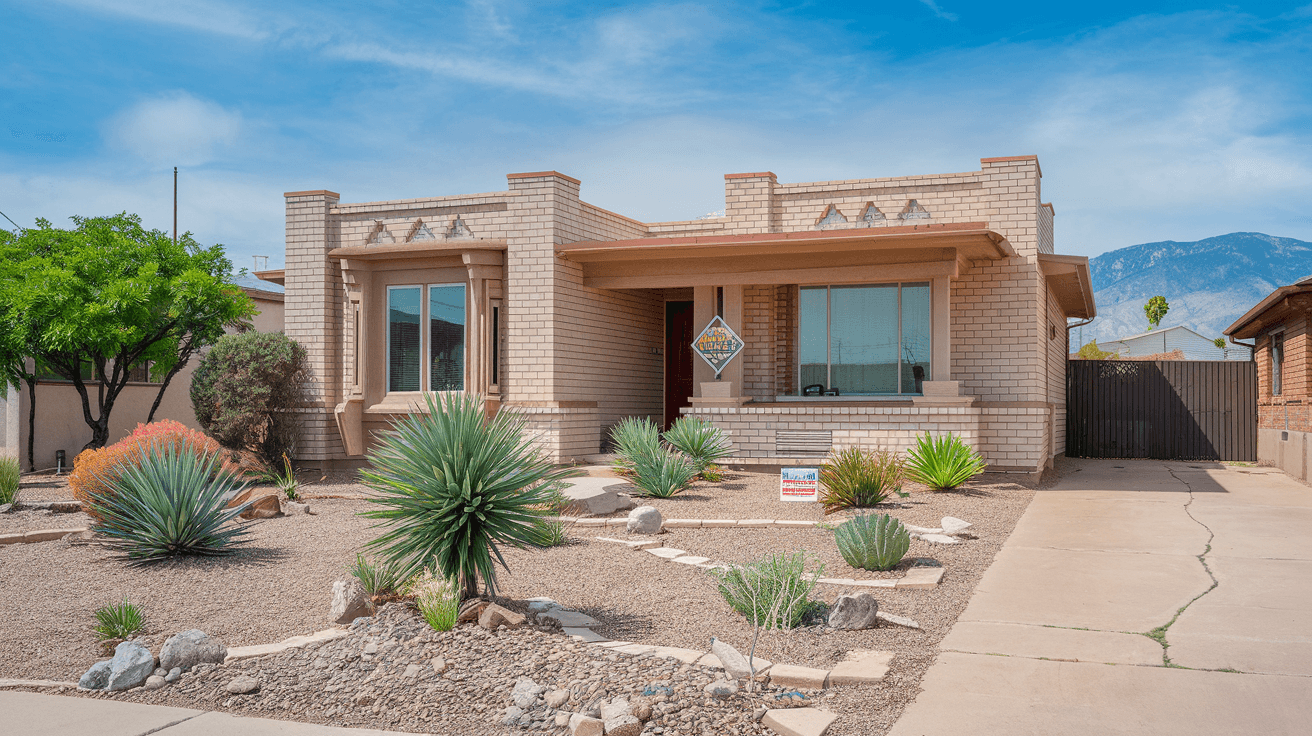
Northeast Heights
Median sale price: $338,000 | Average DOM: 19 days | YoY price change: +4.8%
The Northeast Heights remains the engine of Albuquerque's mid-market. The combination of established schools, proximity to Presbyterian and Lovelace hospital campuses, and relatively predictable neighborhood character continues to attract the healthcare worker buyer cohort specifically. Homes along the Eubank and Wyoming corridors between Menaul and Montgomery are moving briskly. The 4.8% year-over-year appreciation is the strongest of any established neighborhood in the metro.
Nob Hill
Median sale price: $385,000 | Average DOM: 27 days | YoY price change: +3.5%
Nob Hill's appeal is lifestyle-driven, and it attracts a buyer who values walkability to Central Avenue's restaurant corridor and proximity to UNM. The median price here matches the metro exactly, which is somewhat misleading — the range is wide, from smaller bungalows in the low $300,000s to renovated craftsman homes pushing $550,000 near Morningside. Days on market are slightly longer than the metro median, reflecting a more discerning and patient buyer pool.
North Valley
Median sale price: $448,000 | Average DOM: 31 days | YoY price change: +2.9%
The North Valley's acequias, cottonwood canopy, and agricultural roots make it unlike anywhere else in the metro, and its buyer pool reflects that uniqueness. Demand is steady but not frenzied. Larger lots, older homes that often need updating, and a more complex due diligence process — wells, septic systems, acequia rights — mean buyers move more deliberately. The 2.9% appreciation is respectable for a market where inventory is relatively stable.
Rio Rancho
Median sale price: $312,000 | Average DOM: 21 days | YoY price change: +5.2%
Rio Rancho is the most interesting story in the metro right now. The Intel fab on Rio Rancho Boulevard has been in an active hiring phase for its advanced packaging operations, and that employment anchor is producing genuine demand for homes in the $270,000 to $360,000 range. The 5.2% year-over-year appreciation is the strongest in the metro, and the 21-day average DOM reflects a buyer pool that is moving with conviction. New construction in Mariposa and Cabezon is absorbing some demand, but resale inventory is thin.
Corrales
Median sale price: $598,000 | Average DOM: 44 days | YoY price change: +2.3%
Corrales operates on its own timeline. The village's one-road-in, one-road-out geography along Corrales Road creates a natural inventory cap, and the buyer who wants an acre-plus lot with mountain views and horse privileges is a specific individual. Appreciation here is modest in percentage terms but meaningful in absolute dollars. Sellers who overprice relative to recent comps will sit; those who price correctly are still finding qualified buyers within six weeks.
High Desert
Median sale price: $672,000 | Average DOM: 51 days | YoY price change: +1.9%
High Desert's gated enclaves above the Tramway corridor represent Albuquerque's most consistent luxury market. The views of the city basin from these hillside homes are irreplaceable, and the Sandia Mountain backdrop commands a premium that does not exist anywhere else in the state. The 51-day DOM reflects the reality of a narrow buyer pool at this price point, not a distressed market. Sellers here need patience and a pricing strategy anchored to the most recent six months of comparable sales, not the optimism of 2022.
Downtown / EDo (East Downtown)
Median sale price: $298,000 | Average DOM: 38 days | YoY price change: +3.1%
The EDo corridor between the Rail Runner station and the Kimo Theatre district continues its slow but genuine revitalization. Condo and townhome inventory dominates this market, and the buyer profile skews younger and more likely to be a UNM graduate student, a film industry worker based near the Albuquerque Studios complex on Arno, or a remote worker who chose Albuquerque for its affordability relative to coastal markets. The 38-day DOM reflects a market that is active but not breathless.
Taylor Ranch
Median sale price: $362,000 | Average DOM: 20 days | YoY price change: +4.1%
Taylor Ranch, anchored by the Paseo del Norte interchange and the shopping infrastructure along Coors Boulevard, has emerged as one of the metro's most competitive mid-market neighborhoods. Its relative affordability compared to the Northeast Heights, combined with newer home stock from the 1990s and early 2000s, makes it a primary target for the dual-income professional household. The 20-day DOM and 4.1% appreciation reflect genuine demand.
What This Market Means If You Are Buying or Selling in Albuquerque Right Now
For Buyers in the Albuquerque Real Estate Market
The single most important thing a buyer can do in June 2026 is close the gap between interest and action. The market is not punishing buyers the way 2021 was — you are unlikely to face 15 competing offers on a standard Northeast Heights ranch home — but the competitive core of this market, the $300,000 to $420,000 range in established neighborhoods, still rewards speed and preparation.
Get fully underwritten pre-approval, not just a pre-qualification letter. Know your walk-away number before you write the offer, not during the inspection period. And understand that the 97.8% list-to-sale ratio means sellers are not leaving significant money on the table — the era of offering 5% below list and expecting a counter is largely over in this segment.
For buyers targeting the $200,000 to $300,000 range, the conversation is harder. Inventory is genuinely scarce, and the competition from investors — particularly in Rio Rancho and the South Valley — is real. FHA buyers in this range need an agent who understands how to write a competitive offer structure that does not disadvantage them relative to conventional financing.
For Sellers in the Albuquerque Real Estate Market
If you own a well-maintained home in the $300,000 to $450,000 range in the Northeast Heights, Taylor Ranch, or Rio Rancho, June and July remain excellent months to sell. Demand is seasonally strong, the buyer pool is active, and your competition — other listings — has not yet overwhelmed demand.
The caution for sellers in 2026 is overconfidence in pricing. The 3.9 months of inventory is a seller's market, but it is not the zero-inventory environment of 2022. Homes that are priced more than 3% to 4% above recent comparable sales are sitting, accumulating days on market, and eventually reducing. A price reduction is the most expensive marketing mistake a seller can make because it signals to buyers that something is wrong, even when nothing is.
Condition still matters enormously. The new professional buyer cohort entering Albuquerque from larger metros has high expectations for finish quality and is less willing to take on deferred maintenance than local move-up buyers who understand the market's quirks.
“In a market where the median home sells in 24 days and the list-to-sale ratio is 97.8%, the difference between a great outcome and a frustrating one almost always comes down to preparation — for buyers, that means financing; for sellers, that means pricing and condition.
Looking Ahead: What to Expect in Albuquerque's Housing Market Through Summer 2026
Several converging factors will shape the albuquerque real estate market through the remainder of the summer.
Interest rates remain the dominant variable. The 30-year fixed rate near 6.4% has been relatively stable since March, and that stability has allowed buyers to plan and commit. Any meaningful movement above 6.75% would compress the buyer pool in the $350,000 to $450,000 range, where affordability is already stretched for households at the lower end of the professional income band.
Kirtland Air Force Base continues to be a steady demand anchor. The base's population of active-duty personnel, civilian contractors, and Department of Energy employees tied to Sandia Labs creates a consistent stream of buyers — many using VA loans — who are largely rate-insensitive compared to conventional buyers. This cohort is a stabilizing force in the Southeast Heights and South Valley markets.
The film industry tied to Albuquerque Studios and Netflix's Albuquerque production hub has been in an active hiring phase following a period of contraction. Production crew members and post-production workers are a growing segment of the renter-to-buyer pipeline in the EDo and Nob Hill areas.
Seasonal patterns suggest that new listing volume will peak in July before beginning a gradual decline through August and September. Buyers who are frustrated by June's competition may find slightly more breathing room in August, when seller motivation often increases among those who listed in spring and have not yet closed.
The structural story — healthcare and tech employment growth producing a more affluent and more mobile buyer base — is not a one-month phenomenon. It is a multi-year trend that is likely to continue pushing albuquerque home prices modestly higher through the end of 2026, absent a significant macroeconomic disruption.
Key Takeaways: Albuquerque Housing Market June 2026
- •Median price reached $385,000, a 3.5% year-over-year gain, with price per square foot up 5.9% to $198 — a more precise indicator of underlying appreciation pressure across the metro.
- •Rio Rancho leads all neighborhoods with 5.2% year-over-year appreciation and a 21-day average DOM, driven directly by Intel's hiring activity and critically thin resale inventory in the $270,000 to $360,000 range.
- •The $300,000 to $400,000 price tier is the most competitive segment in the market, with an effective median DOM of approximately 22 days and a buyer pool that includes a growing cohort of healthcare and technology professionals relocating from higher-cost metros.
- •Inventory at 3.9 months remains in seller's market territory, but the gap between new listings (approximately 1,140 in June) and closed sales (approximately 985) means supply is modestly rebuilding — sellers who overprice will feel this more acutely in August and September.
- •The list-to-sale ratio of 97.8% confirms that correctly priced homes are selling near asking, making pre-listing pricing strategy the single highest-leverage decision a seller will make in this market.
Want more insider intel?
Subscribe to get market updates and new articles delivered to your inbox.