Albuquerque Housing Market Report: June 2026 — Days on Market Drop Below 18 as Summer Seller Momentum Builds Across the $350K to $500K Price Band
Albuquerque Housing Market June 2026: The Summer Momentum Story
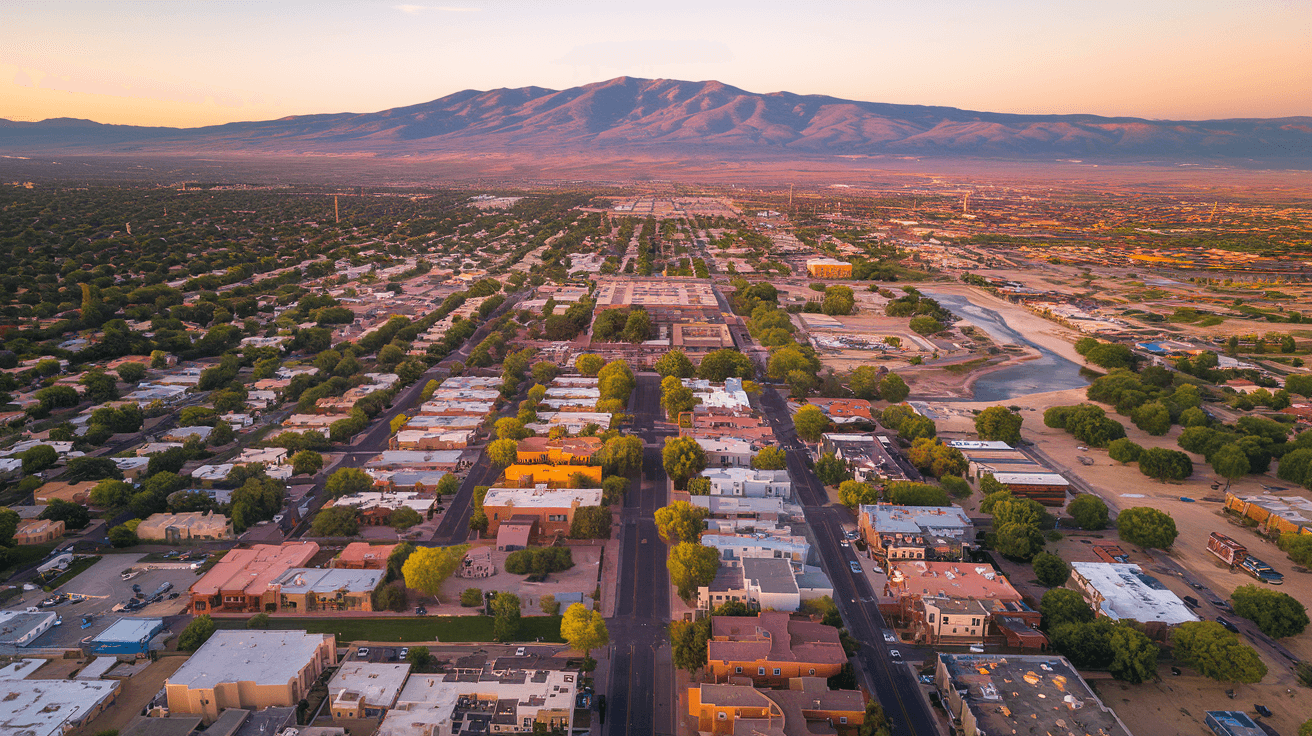
The Albuquerque real estate market entered June 2026 with the kind of quiet confidence that experienced local agents recognize immediately — not the frenzied bidding wars of 2021 and 2022, but a steady, data-supported seller's market where preparation and pricing still determine outcomes. The metro-wide median sale price landed at $385,000, a 3.5% increase year-over-year, and the headline that matters most to anyone writing an offer right now: average days on market fell to 17.4 days in the $350,000–$500,000 price band, the segment driving the majority of June transaction volume.
This is not a market running on speculation. The Albuquerque economy continues to benefit from a diversified employment base anchored by Kirtland Air Force Base, Sandia National Laboratories, and a film production industry that has quietly become one of the most consistent drivers of professional household formation in the city. Those employment pillars create a buyer pool that is less sensitive to mortgage rate fluctuations than coastal markets and more focused on long-term residency — which is exactly the kind of demand that produces durable price appreciation rather than volatile swings.
The story of June 2026 is the $350K–$500K band. This is where inventory is thinnest, where move-up buyers from the $250K–$350K tier are competing with first-time buyers who have saved aggressively, and where the list-to-sale ratio of 97.8% tells you that sellers are not leaving money on the table when they price correctly.
Albuquerque Housing Inventory: Supply Tightens Heading Into Peak Summer
Active Listings and Months of Supply
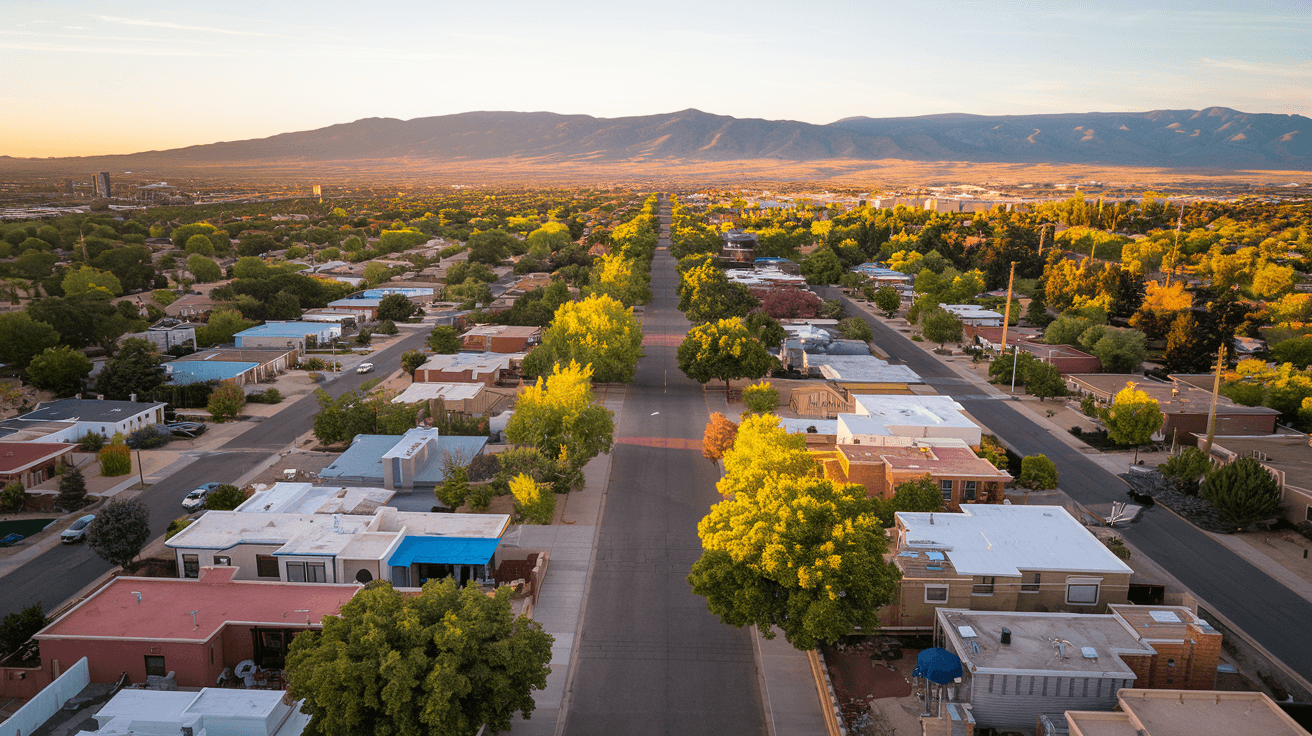
As of June 2026, the Albuquerque metro carried 3,850 active listings across all price tiers, translating to 3.9 months of supply — a figure that sits squarely in seller's market territory but has been edging higher since the February 2026 low of approximately 3.2 months. That slight inventory expansion is not a warning sign; it is a healthy normalization that gives buyers marginally more options without fundamentally shifting negotiating leverage toward them.
New listings coming to market in June tracked at approximately 1,140 units, while closed sales reached 970. The gap between new listings and closings is narrowing compared to the same period in 2025, when new listings were running nearly 18% above closed sales. Today that spread is closer to 17.5%, which means absorption is keeping pace with supply additions more efficiently than a year ago.
For context, a balanced market in Albuquerque historically sits around 5.5 to 6 months of supply. At 3.9 months, the metro remains meaningfully undersupplied, particularly in the $300,000–$500,000 range where demand from Sandia Labs contractors, KAFB civilian employees, and UNM Medical School faculty is most concentrated.
Inventory by Price Tier
The inventory picture changes dramatically depending on which price tier you examine. Homes priced below $300,000 represent less than 19% of active listings — a dramatic compression from 2019 when that tier accounted for nearly 40% of available inventory. The $300,000–$400,000 range holds the largest share of active listings at roughly 31%, followed by $400,000–$500,000 at 24%. Above $500,000, inventory is more plentiful in relative terms, with months of supply in the $600,000-plus tier approaching 6.5 months in some neighborhoods.
The practical implication: if you are a buyer with a budget under $400,000, you are competing for a shrinking pool of homes. If you are a seller in that range, the market is working for you.
Albuquerque Home Prices: Median, Average, and Price Per Square Foot Trends
The metro-wide median sale price of $385,000 in June 2026 represents the fourth consecutive month of year-over-year appreciation above 3%, a streak that began when the Federal Reserve's rate posture stabilized in late 2025 and buyer demand returned with renewed conviction in early spring.
The average sale price — which is more sensitive to high-end transactions — came in at approximately $421,500 in June, reflecting elevated activity in the $500,000–$750,000 range in neighborhoods like High Desert and Corrales. The spread between median and average has widened slightly compared to June 2025, suggesting the luxury segment is contributing more meaningfully to overall volume than it was twelve months ago.
Price per square foot across the metro averaged $198 in June, up from $191 in June 2025. In the most competitive ZIP codes — 87106 (Nob Hill/UNM area) and 87111 (Far Northeast Heights near Tramway) — price per square foot regularly exceeds $210 on updated properties, and well-staged homes on larger lots near the Sandia foothills have traded above $225 per square foot.
Price Tier Performance: Where Competition Is Hottest
$200,000–$300,000: This tier is nearly a ghost market for traditional resale inventory. What exists here skews toward homes needing cosmetic or mechanical updates, condos in the International District or near CNM, and occasional estate sales. Multiple-offer situations remain common on anything move-in ready. Year-over-year appreciation in this tier: approximately 4.1%.
$300,000–$400,000: The engine of the Albuquerque market. Homes in this range in neighborhoods like Four Hills, Taylor Ranch, and the established blocks of the Northeast Heights are moving in under 20 days. Buyers who delay decisions by even 48 hours are routinely finding themselves locked out. Appreciation: 3.8% year-over-year.
$400,000–$500,000: June's breakout tier. Days on market in this range compressed to a 14-month low of 17.4 days, and list-to-sale ratios here averaged 98.6% — the highest of any price band. Move-up buyers from the $300K tier, combined with relocating professionals from the tech and defense sectors, are creating genuine competition for updated 3- and 4-bedroom homes in this range. Appreciation: 4.3% year-over-year.
$500,000 and above: A more deliberate market. Buyers at this level typically have more flexibility, and sellers need to invest in presentation and accurate pricing. Appreciation has moderated to approximately 2.2% year-over-year, and days on market average 38 days metro-wide above the $500K threshold.
“"The $400,000–$500,000 band is where June 2026 told its most important story. Seventeen-day average days on market in that price range means buyers need to be pre-approved, decisive, and working with an agent who can move fast. This is not a market that rewards hesitation."
Days on Market: What the June 2026 Data Tells Buyers About Offer Strategy
The metro-wide average days on market of 31 days is a useful headline number, but it obscures the urgency that exists in specific price tiers and neighborhoods. Aggregate DOM is pulled higher by the slower-moving luxury and distressed segments; strip those out and the picture sharpens considerably.
In the $350,000–$500,000 band, DOM averaged 17.4 days in June — down from 22.1 days in April and 24.8 days in February. That compression is consistent with seasonal patterns (Albuquerque's market typically accelerates from April through July as families time moves around the school calendar), but the magnitude of the drop is sharper than the five-year seasonal average would predict.
For buyers, a 17-day DOM environment carries specific tactical implications. Homes that are correctly priced and well-presented are receiving offers within the first weekend of listing in many cases. Waiving inspection contingencies remains risky and is not universally necessary, but buyers who build in flexibility on closing timelines — particularly accommodating seller leaseback arrangements of 30 to 45 days — are winning offers at or near list price without escalating into territory that creates appraisal risk.
For sellers, the data supports confident pricing within 1% to 2% of comparable sales. Homes that are priced aggressively above the market are still sitting — the 31-day metro average tells that story. The market rewards accuracy, not wishful pricing.
Albuquerque Neighborhood Breakdown: June 2026 Data by Area
Northeast Heights
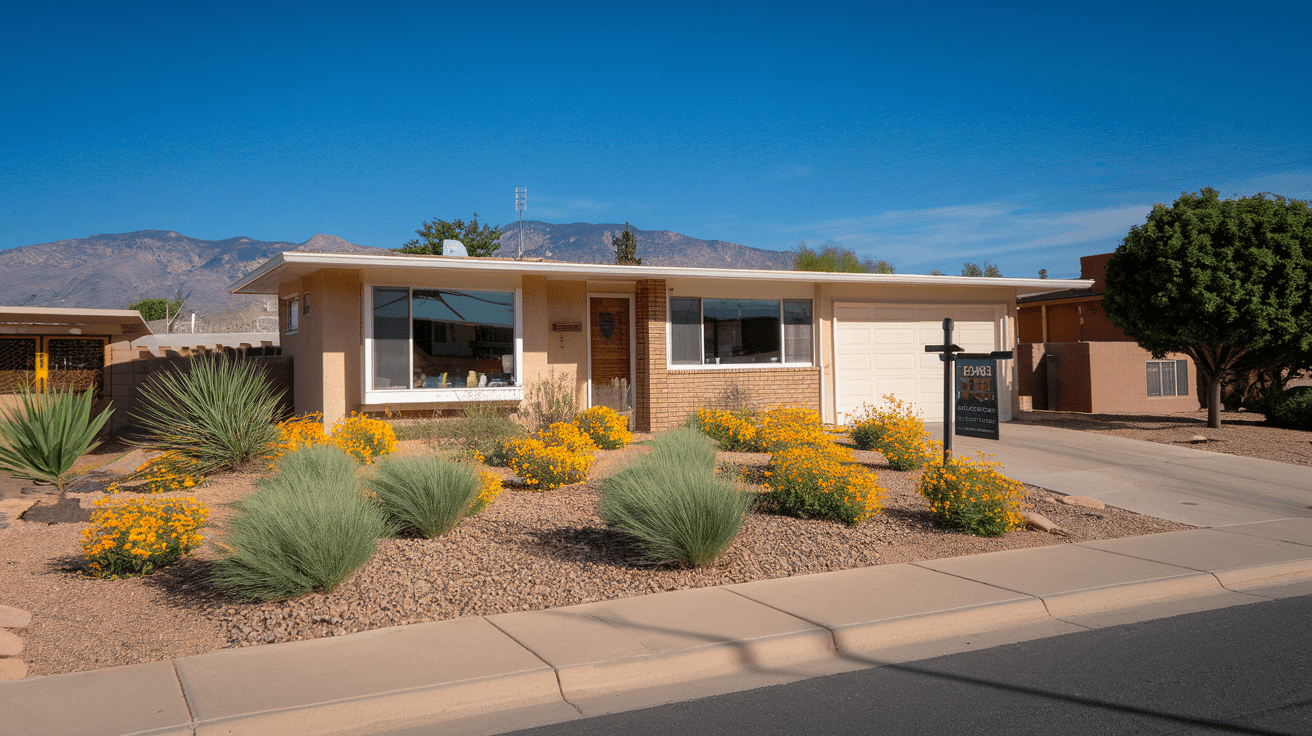
The Northeast Heights — bounded roughly by Tramway to the east, Montgomery to the north, Louisiana to the west, and Central to the south — remains the workhorse of Albuquerque real estate volume. Median sale price: $341,000. Average DOM: 15 days. Year-over-year price change: +4.4%. The blocks between Eubank and Tramway, particularly in the 87111 ZIP code, are seeing the most activity, with updated ranch homes and split-levels moving quickly to buyers who value proximity to the Sandia foothills trail system and the Paseo del Norte corridor.
Nob Hill
Albuquerque's most walkable urban neighborhood, anchored by Central Avenue between Carlisle and Washington, continues to attract buyers who want character, density, and proximity to the Nob Hill restaurant and retail district. Median sale price: $392,000. Average DOM: 19 days. Year-over-year price change: +3.6%. The inventory of bungalows and craftsman homes between Silver and Lead avenues is extremely limited; when one comes to market in good condition, it rarely lasts a full week.
North Valley
The North Valley — the agricultural corridor running along the Rio Grande north of Candelaria — offers a lifestyle that is genuinely unlike anywhere else in the metro. Acequia-irrigated lots, mature cottonwoods, and proximity to the Bosque trail system command a premium that is holding steady. Median sale price: $428,000. Average DOM: 22 days. Year-over-year price change: +3.3%. Larger agricultural parcels and equestrian properties are taking longer, but sub-2,500 square foot homes on standard lots are moving in line with metro averages.
Rio Rancho
Rio Rancho continues to absorb demand from buyers priced out of Albuquerque proper, and the city's own employment base — anchored by Presbyterian Rust Medical Center and a growing professional services sector along Southern Boulevard — is generating organic demand independent of Albuquerque spillover. Median sale price: $318,000. Average DOM: 16 days. Year-over-year price change: +5.1%. The Lomas Verdes and Cabezon neighborhoods are particularly active, with new construction from DR Horton and Pulte competing effectively with resale inventory.
Corrales
Corrales, the independent village sandwiched between Rio Rancho and the North Valley along the Rio Grande bosque, attracts a specific buyer: someone who values privacy, land, and a semi-rural aesthetic within 20 minutes of Kirtland AFB or Sandia Labs. Median sale price: $598,000. Average DOM: 31 days. Year-over-year price change: +2.3%. Inventory here is always limited — fewer than 40 active listings typically at any point — and the buyer pool is patient and specific. Homes on Corrales Road with irrigation rights and detached casitas are the most sought-after and least frequently available.
High Desert
The High Desert subdivision in the Far Northeast Heights, perched above the city near the Sandia Mountains Open Space, is Albuquerque's most consistently desirable luxury enclave. Median sale price: $648,000. Average DOM: 35 days. Year-over-year price change: +1.9%. The slower appreciation reflects the moderation across the broader luxury tier, but demand from Sandia Labs senior staff and defense contractors remains the steady underpinning of this market. Views, custom architecture, and access to the Elena Gallegos Open Space are the primary value drivers.
Downtown Albuquerque / EDo (East Downtown)
The Downtown and EDo corridor — roughly the area between the Rail Runner depot, the Kimo Theatre, and the east side of the railroad tracks — is the market's most interesting narrative. Loft conversions, adaptive reuse projects, and new infill construction are creating a small but growing inventory of urban product. Median sale price: $287,000. Average DOM: 28 days. Year-over-year price change: +5.8%. The appreciation rate is the highest of any submarket we track, driven by limited supply and increasing interest from remote workers and arts-community buyers drawn to the proximity of the National Hispanic Cultural Center and the Railyard district.
Taylor Ranch
Taylor Ranch, the established westside neighborhood along Coors Boulevard north of Montaño, offers some of the best value-per-square-foot in the metro for families prioritizing school access and neighborhood stability. Median sale price: $349,000. Average DOM: 18 days. Year-over-year price change: +3.9%. The combination of larger lot sizes, good APS school access, and reasonable commute times to both the Cottonwood Mall employment corridor and the Journal Center office park keeps demand consistent through seasonal cycles.
What June 2026 Means for Albuquerque Buyers and Sellers
If You Are Buying in Albuquerque Right Now
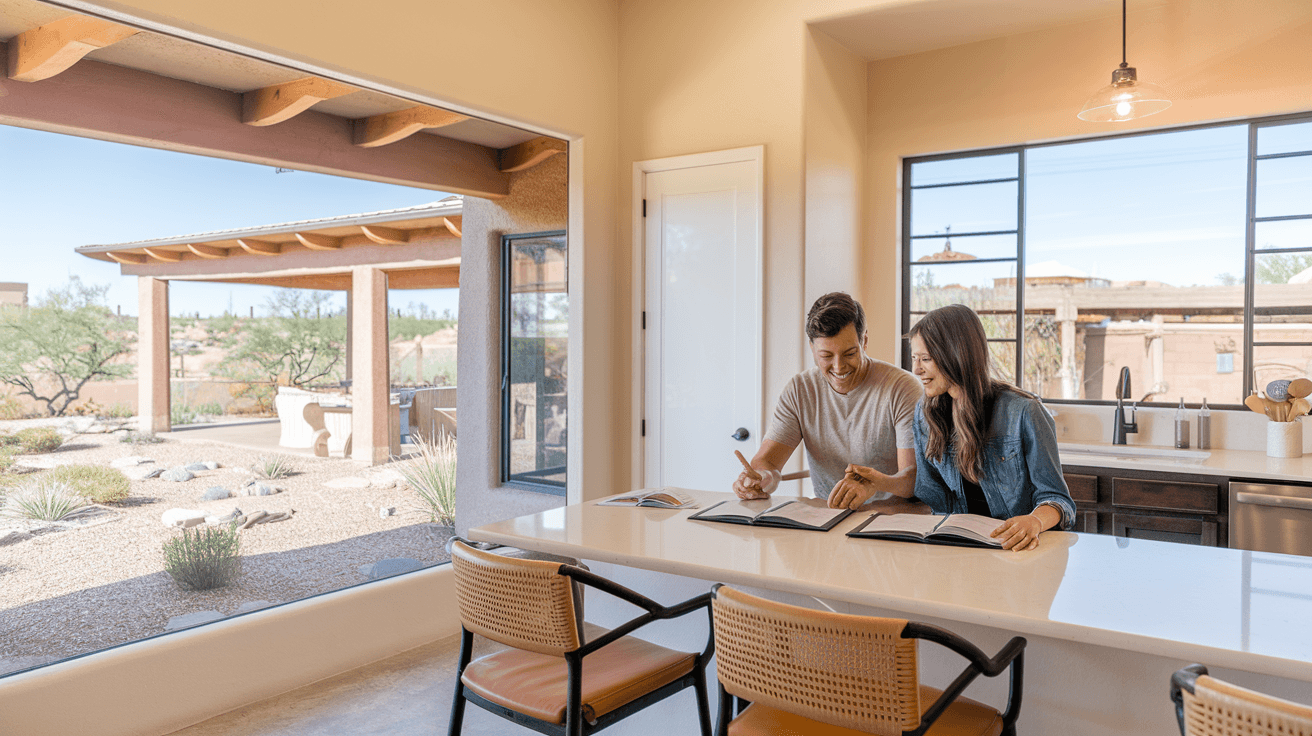
The June 2026 market demands preparation that most buyers underestimate until they lose their first offer. Mortgage pre-approval is not optional — it is the entry ticket. But beyond that, buyers need to understand that the homes worth buying in the $350,000–$500,000 range are being toured within 24 to 48 hours of listing and are receiving offers before the first weekend is over in many cases.
Specific strategic guidance for June buyers: First, define your non-negotiables and let go of your preferences. The difference between a deal and no deal in this market is often the willingness to accept a slightly different floor plan or a lot that faces east instead of west. Second, ask your agent about homes that have had a price reduction — these represent sellers who initially mispriced and are now motivated, and they often present better negotiating conditions than fresh listings. Third, in the $400K–$500K band specifically, consider writing a clean offer at list price with a short inspection period rather than going under list with an escalation clause; sellers in this range are receiving enough activity that they value simplicity over complexity.
“"In a 17-day market, the buyers who win are not necessarily the ones with the most money. They are the ones who have done their homework, trust their agent's judgment, and make decisions without manufactured urgency — but with genuine urgency."
If You Are Selling in Albuquerque Right Now
June is statistically one of the two or three best months of the year to list in Albuquerque, and the 2026 data supports that seasonal pattern. The buyers are active, motivated, and — in the right price range — competitive with each other.
Pricing discipline remains the single most important factor in outcomes. Homes that come to market within 1% to 2% of comparable sales are closing in under three weeks and at 97.8% of list price. Homes that are priced 4% to 6% above comps are sitting for 45 to 60 days and ultimately selling for less than they would have at a correct initial price — a pattern we have seen repeatedly in every neighborhood from Taylor Ranch to High Desert.
Presentation matters more than sellers typically expect in a market where buyers have even modest alternatives. Professional photography, decluttered interiors, and fresh landscaping — particularly critical in Albuquerque's high-desert climate where curb appeal can deteriorate quickly without attention — consistently produce faster sales and higher net proceeds.
Albuquerque Real Estate Outlook: What to Expect in July and August 2026
The seasonal pattern for Albuquerque real estate is well-established: activity peaks in June and July, begins to moderate in August as the monsoon season shifts outdoor routines, and then experiences a secondary uptick in September before the traditional fall slowdown. Based on current inventory trajectory, demand indicators, and the broader interest rate environment, here is what the data suggests for the next 60 days.
Interest rates remain the critical variable. The 30-year fixed rate has been hovering in the 6.4% to 6.7% range through mid-2026, a level that has clearly not suppressed Albuquerque demand the way many analysts predicted. The city's below-national-average home prices mean that even at current rates, monthly payments on a median-priced home are manageable for dual-income households in the $100,000–$140,000 income range — which describes a large portion of the Sandia Labs, Kirtland, and UNMH workforce.
Local employment continues to support the market's foundation. Sandia National Laboratories' ongoing expansion of its quantum computing and nuclear security divisions is generating high-wage job creation that directly feeds the $400,000–$600,000 buyer pool. The New Mexico film industry, centered on Albuquerque Studios and the Garson Studios facility at CNM, is in the middle of a production cycle that typically brings 2,000 to 3,000 temporary and permanent workers into the metro — a meaningful source of short-term rental demand and, for longer-term crew members, purchase activity.
Intel's Rio Rancho operations have stabilized after the capacity adjustments of late 2024 and 2025, and the facility's workforce is once again a reliable contributor to Rio Rancho and Northwest Albuquerque purchase demand. Any expansion announcement from Intel would be a meaningful demand catalyst for the $280,000–$380,000 price tier.
Expect median prices to hold in the $383,000–$390,000 range through July and August, with potential for a slight softening in August as the seasonal slowdown begins. Days on market are likely to tick up modestly — perhaps to the 20 to 22 day range metro-wide — as the urgency of the school-calendar buying cycle passes. Sellers who have been waiting should understand that the window of peak summer demand is open now and will begin to narrow by mid-August.
Key Takeaways: Albuquerque Housing Market June 2026
- •Days on market in the $350K–$500K price band compressed to 17.4 days in June, the lowest reading in 14 months, signaling that buyers in this tier must be pre-approved and decisive — offers need to be ready within 24 to 48 hours of a target home hitting the market.
- •The metro-wide median sale price of $385,000 represents 3.5% year-over-year appreciation, a pace that reflects genuine demand fundamentals rather than speculative pressure, underpinned by stable employment at Sandia Labs, Kirtland AFB, and a growing film production sector.
- •Downtown/EDo posted the highest year-over-year price appreciation of any tracked submarket at 5.8%, driven by limited urban inventory and increasing buyer interest in walkable, character-rich neighborhoods near the Railyard and National Hispanic Cultural Center.
- •Rio Rancho's 5.1% year-over-year price gain makes it the strongest-appreciating suburban submarket in the metro, with the Lomas Verdes and Cabezon neighborhoods absorbing demand from buyers priced out of Albuquerque proper while also generating organic local demand.
- •At 3.9 months of supply, Albuquerque remains meaningfully below the 5.5-month balanced-market threshold, and with new listings and closed sales running within 17.5% of each other, there is no near-term catalyst for a significant inventory surge that would shift leverage toward buyers.
Want more insider intel?
Subscribe to get market updates and new articles delivered to your inbox.