Albuquerque Housing Market Report: May 2026 — How New Mexico's Job Market Is Quietly Reshaping Who Buys Homes in ABQ
Albuquerque Housing Market May 2026: The Headline Number and What It Actually Means
The Albuquerque metro median home price landed at $385,000 in April 2026, a 3.5% increase year-over-year and a figure that continues to reflect steady, if unspectacular, appreciation in a market that has largely avoided the volatility plaguing coastal metros. But the headline number alone misses the more compelling story unfolding across this city.
What the data shows — when you look past the median and into the employment trends, the buyer demographics, and the neighborhood-level price movements — is that Albuquerque is in the middle of a quiet but consequential economic transition. The buyers showing up to open houses in the Northeast Heights and making offers on North Valley adobes are increasingly not retirees from California or entry-level buyers stretching into their first purchase. They are engineers, federal contractors, defense technology workers, and film industry professionals whose household incomes are meaningfully higher than the Albuquerque median — and whose purchasing behavior is reshaping demand in ways that traditional seasonal patterns do not fully explain.
Sandia National Laboratories continues to expand its workforce as federal investment in nuclear security and quantum computing accelerates. Kirtland Air Force Base remains one of the largest employers in the state, and its civilian contractor ecosystem has grown substantially over the past 18 months. Meanwhile, New Mexico's film production tax credit program — one of the most competitive in the country — has kept Albuquerque Studios and the broader production corridor along the South Valley humming with activity. These are not minimum-wage jobs. They are $80,000-to-$150,000 positions held by people who want to own homes, and they are landing in a market with 3.9 months of inventory and a list-to-sale ratio of 97.8%.
That combination — rising incomes among a specific buyer cohort, constrained supply, and a market that has not overbuilt — is the structural force underneath April's numbers.
Albuquerque Housing Inventory: Supply Tightens Heading Into Summer
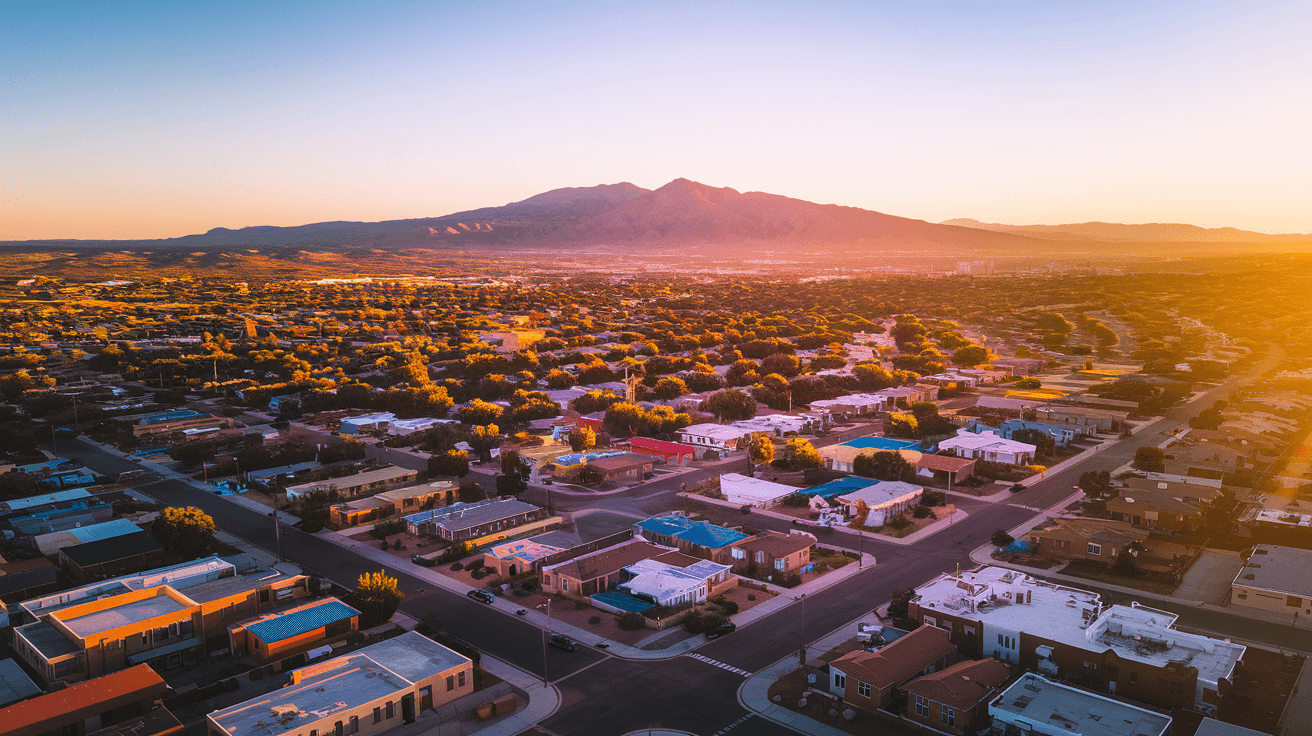
At 3,200 active listings across the metro, Albuquerque's inventory picture is more complicated than the raw number suggests. On the surface, 3,200 active listings sounds like meaningful supply. In context, it represents a market that remains structurally undersupplied relative to qualified demand.
Months of inventory at 3.9 places Albuquerque firmly in seller's market territory by conventional measures — a balanced market typically requires 5 to 6 months of supply. More telling is the trend line. Inventory has been contracting on a month-over-month basis since January, driven by a combination of new listings that are being absorbed quickly and a persistent reluctance among existing homeowners to list properties they purchased or refinanced at sub-4% rates.
The rate-lock effect is real and measurable in this market. A significant portion of Albuquerque homeowners are sitting on mortgages in the 2.75% to 3.5% range from 2020 and 2021. With current 30-year fixed rates hovering in the mid-6% range, the monthly payment differential on a $385,000 home is substantial enough to keep many would-be sellers on the sidelines. This is suppressing the move-up market in particular — the $350,000 to $500,000 tier where inventory is thinnest and competition is most intense.
New listings coming to market in April were absorbed at a healthy pace, with closed sales tracking closely with new supply. The pipeline is not backing up. What it is doing is staying lean, which means buyers entering the market in May and June should expect to compete.
Compared to April 2025, active listings are up modestly — approximately 8% — but that year-over-year comparison flatters the inventory picture. The 2025 spring market was itself undersupplied, and the marginal increase in listings has not meaningfully shifted negotiating leverage toward buyers.
Albuquerque Home Prices by Tier: Where the Competition Is Hottest
The metro-wide median of $385,000 obscures significant variation across price tiers, and understanding where the friction points are matters enormously to both buyers planning their search and sellers calibrating their list price.
The $200,000 to $300,000 Tier
This segment has effectively become the most contested battlefield in the Albuquerque market, driven largely by first-time buyers, investors, and the workforce housing demand that Sandia Labs and Kirtland contractor positions generate at the entry level. Homes priced under $280,000 in livable condition — particularly in the Northeast Heights south of Candelaria, in Taylor Ranch, and in the older Rio Rancho subdivisions near Unser Boulevard — are generating multiple offers within the first weekend of listing. Price per square foot in this tier has risen approximately 5.1% year-over-year, outpacing the broader market.
The $300,000 to $400,000 Tier
This is where the Albuquerque market does the most volume, and it is also where the buyer profile shift is most visible. The $300,000-to-$400,000 range is being targeted by dual-income households, federal employees, and relocating professionals who have done the math on what their budget buys in Albuquerque versus Phoenix, Denver, or Austin. The answer — a well-maintained three-bedroom with a yard, a two-car garage, and a view of the Sandias — is a compelling pitch, and the data confirms they are acting on it. Days on market in this tier average 28, compared to the metro-wide 34, indicating above-average velocity.
The $400,000 to $500,000 Tier
The move-up market is where rate-lock suppression is most acutely felt. Inventory in this range is thin, demand from established professionals and government employees is consistent, and homes that are well-presented and correctly priced are moving. Homes that are overpriced or need significant work are sitting. The spread between well-positioned and poorly-positioned listings in this tier is wider than in lower price bands — expect 30 to 45 days on market depending on condition and location.
The $500,000 and Above Tier
The luxury and premium segment — concentrated in High Desert, Corrales, parts of the North Valley, and the foothills east of Tramway — is performing steadily but not dramatically. Price appreciation in this tier has moderated to approximately 2.1% to 2.5% year-over-year, as the pool of qualified buyers is smaller and more deliberate. These buyers are not rate-sensitive in the same way entry-level buyers are, but they are value-sensitive, and overpricing remains the primary reason listings in this tier linger.
“"The Albuquerque market in April 2026 is not one market — it is four distinct markets stacked inside a single metro, each with its own supply constraints, buyer profile, and competitive dynamics. Treating them as interchangeable is the fastest way to misprice a listing or lose a home you wanted to buy."
Days on Market: What 34 Days Tells Buyers About Offer Strategy
At 34 days on market metro-wide, Albuquerque homes are selling at a pace that demands buyer preparation but does not require panic. That number, however, requires interpretation.
The metro average is being pulled upward by the luxury tier and by listings with condition or pricing issues that extend their time on market. In the most competitive price bands and neighborhoods, the effective decision window for buyers is far shorter. Homes in the Northeast Heights priced correctly between $300,000 and $380,000 are routinely going under contract within 7 to 14 days. In Nob Hill, where inventory is structurally scarce and buyer demand is fueled by proximity to Central Avenue, UNM, and the Nob Hill restaurant and retail corridor, well-priced properties are seeing offers within the first week.
For buyers, the practical implication is this: if you are not pre-approved with a lender, you are not a buyer in this market — you are a spectator. The 97.8% list-to-sale ratio confirms that sellers are not negotiating significantly off asking price. Buyers who arrive at showings without financing in order and a clear sense of their walk-away number will consistently lose to buyers who have done that preparation.
For homes that have been on market longer than 45 days, there is often a reason — and buyers should investigate it rather than assume they have found hidden value. Condition issues, HOA complications, and title problems are more common explanations than seller flexibility on price.
Albuquerque Neighborhood Breakdown: April 2026 Data
Northeast Heights
Median Price: $370,000 | Days on Market: 26 | YoY Price Change: +4.2%
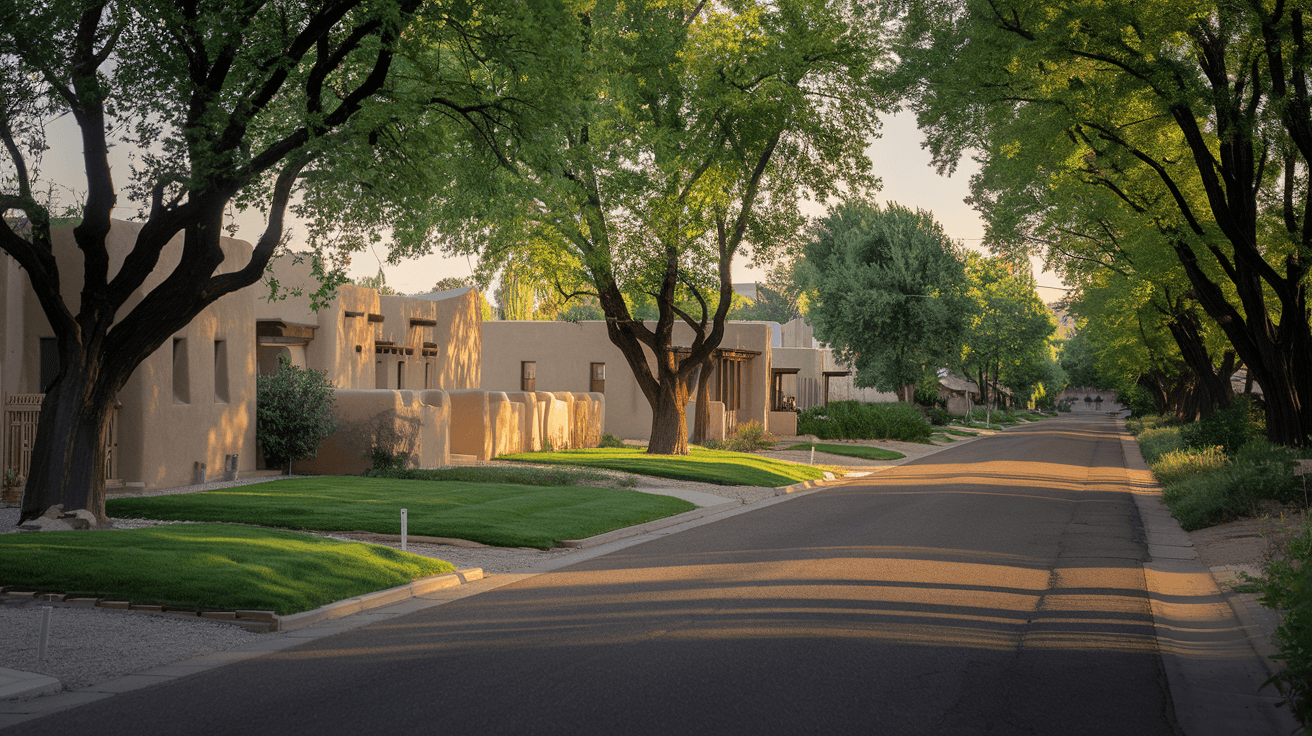
The Northeast Heights remains the workhorse of the Albuquerque market — high volume, consistent demand, and the broadest range of buyers. From the older ranch-style homes near Wyoming and Menaul to the larger two-story properties approaching the Foothills, this area is absorbing buyers across multiple income brackets. The proximity to Uptown, Presbyterian Hospital, and the Paseo del Norte corridor makes it attractive to healthcare workers and UNM-affiliated professionals. Inventory is tightest in the $310,000-to-$380,000 range.
Nob Hill
Median Price: $385,000 | Days on Market: 29 | YoY Price Change: +3.5%
Nob Hill's appeal is durable and demographic-specific. Buyers here are prioritizing walkability, character, and proximity to the Central Avenue corridor — Tractor Brewing, Zinc Wine Bar, the Guild Cinema — over square footage. Bungalows and mid-century ranches in the streets south of Central between Carlisle and Washington are selling quickly when priced to reflect their condition. The neighborhood's price appreciation has tracked almost exactly with the metro median, suggesting it is neither overheating nor underperforming.
North Valley
Median Price: $435,000 | Days on Market: 31 | YoY Price Change: +3.2%
The North Valley continues to command a premium driven by lot size, mature landscaping, irrigated land, and the irreplaceable quality of life along the Rio Grande bosque. Buyers here are typically established households trading up, out-of-state buyers who have researched the area extensively, and professionals from the Sandia Labs and federal contractor ecosystem who want space and privacy. Inventory is chronically thin — there simply are not many North Valley properties, and the ones that come to market generate genuine interest.
Rio Rancho
Median Price: $320,000 | Days on Market: 24 | YoY Price Change: +4.8%
Rio Rancho is the fastest-appreciating submarket in the metro on a percentage basis, and the driver is straightforward: it offers the most home for the dollar within commuting distance of Albuquerque's major employment centers. The Intel campus, while operating at reduced capacity relative to its peak, still anchors a technology-adjacent workforce. The newer subdivisions near Lomas Encantadas and the established neighborhoods around Northern Boulevard are drawing buyers who have been priced out of comparable Northeast Heights inventory. At 4.8% year-over-year appreciation, Rio Rancho is outpacing the metro by more than a full percentage point.
Corrales
Median Price: $595,000 | Days on Market: 38 | YoY Price Change: +2.1%
Corrales operates on its own timeline. The village's strict zoning, limited inventory, and distinctive character — horse properties, acequias, organic farms, and the Corrales Road corridor of studios and galleries — mean that buyers are self-selecting and patient. Appreciation is moderate because the entry price is already high and the buyer pool is deliberately small. Homes here sell when they are priced correctly and marketed to the specific buyer who wants this lifestyle. That buyer exists, but they cannot be rushed.
High Desert
Median Price: $650,000 | Days on Market: 42 | YoY Price Change: +1.8%
High Desert's foothills location, HOA-managed common areas, and proximity to the Elena Gallegos Open Space make it one of Albuquerque's most consistently desirable upper-tier neighborhoods. Appreciation has moderated to 1.8% year-over-year, which reflects the luxury market's broader caution rather than any weakness specific to High Desert. Buyers here are deliberate, well-capitalized, and focused on long-term value. Sellers who resist the temptation to overprice will find a receptive market.
Downtown / EDo (East Downtown)
Median Price: $310,000 | Days on Market: 36 | YoY Price Change: +3.8%
The Downtown and East Downtown corridor continues its slow but real revitalization, anchored by the Albuquerque Rail Yards development, the Isotopes Park district, and the ongoing investment along Gold and Central. Condo and townhome buyers here are often young professionals, UNM graduate students, and buyers prioritizing urban amenity access over square footage. The 3.8% year-over-year appreciation suggests the market is taking this neighborhood's trajectory seriously.
Taylor Ranch
Median Price: $345,000 | Days on Market: 27 | YoY Price Change: +4.0%
Taylor Ranch is a quiet overperformer. Its location on the West Side near Paseo del Norte, access to the Journal Center employment corridor, and well-maintained subdivision stock make it a consistent draw for families and first-time buyers. At $345,000 median and 27 days on market, it is moving faster than the metro average and appreciating at a rate that rewards early entry.
What This Market Means If You Are Buying or Selling in Albuquerque Right Now

For Buyers
The Albuquerque market in April 2026 rewards preparation and penalizes hesitation. With 3.9 months of inventory and a list-to-sale ratio of 97.8%, you are not in a position to lowball or delay. Here is what the data says you should do:
Get fully pre-approved — not pre-qualified — before you schedule a single showing. Understand the difference between the neighborhoods you are considering, because a 34-day average market includes some sub-markets where you have 10 days and others where you have 40. In the Northeast Heights and Rio Rancho under $380,000, treat every listing as if it will go under contract this weekend. In High Desert and Corrales, you have more time but less room to negotiate on price because sellers in those markets are not distressed.
If you are targeting the $300,000-to-$400,000 range, be ready to write a competitive offer the same day you tour a home you want. Escalation clauses remain a useful tool in multi-offer situations, but they need to be structured carefully — consult with your agent before you use one.
For Sellers
You are in an advantageous position, but the market will not excuse overpricing. The 97.8% list-to-sale ratio tells you that well-priced homes are selling close to ask — it does not tell you that overpriced homes are selling at a premium. Homes that come to market above their defensible value are sitting, accumulating days on market, and ultimately selling for less than they would have if priced correctly from day one.
Presentation matters more than it did three years ago. Buyers in the current rate environment are more value-conscious than the 2021 frenzy suggested. A home that is clean, decluttered, and professionally photographed will outperform a comparable home that is not — consistently and measurably.
Timing your list for late April through mid-June captures the peak of Albuquerque's seasonal demand curve. The window is open now.
“"In the Albuquerque market, the difference between a home that sells in 12 days and one that sits for 60 is rarely location — it is pricing discipline and presentation quality. The data on list-to-sale ratios makes this clear every single month."
Looking Ahead: What to Expect in the Albuquerque Market Through Summer 2026
Several converging factors will shape the Albuquerque housing market through the summer months, and they point in different directions depending on the price tier.
Interest rates remain the dominant macro variable. The Federal Reserve's posture through mid-2026 has kept 30-year fixed rates in the mid-6% range, and absent a significant policy shift or economic shock, rates are unlikely to move dramatically in either direction before fall. This keeps the rate-lock effect in place, suppressing move-up inventory and maintaining the structural undersupply that has characterized this market for the past two years.
Local employment is the tailwind that sets Albuquerque apart from comparable secondary markets. Sandia National Laboratories' expansion in quantum information science and microelectronics research is attracting credentialed professionals who need housing. The Department of Energy's continued investment in the Kirtland complex supports a contractor ecosystem that generates consistent homebuying demand. UNM's research enterprise, while not a growth engine in the same sense, provides baseline stability. And the film industry — with productions cycling through Albuquerque Studios and the surrounding infrastructure on a near-continuous basis — contributes a steady stream of higher-income temporary and permanent residents who enter the rental and ownership markets.
Seasonal patterns suggest May and June will see the highest new listing volume of the year, which will provide some relief to buyers who have been competing in a thin inventory environment. However, demand historically peaks in the same window, so the net effect on competitive pressure is likely to be modest. Buyers should not expect a meaningful shift in leverage before September.
New construction in Rio Rancho and the Far Northwest mesa continues to add supply at the entry and mid-tier levels, which is a meaningful pressure valve for buyers who cannot find resale inventory in their price range. Builders in this market are offering rate buydowns and incentive packages that are worth evaluating — in some cases, the effective rate on a new construction purchase compares favorably to the resale market.
Key Takeaways: Albuquerque Real Estate Market, April 2026
- •The median home price of $385,000 represents 3.5% year-over-year appreciation — steady, sustainable growth that reflects genuine demand rather than speculative pressure, and positions Albuquerque favorably against overheated Sun Belt metros that are now correcting.
- •Rio Rancho is the metro's fastest-appreciating submarket at 4.8% year-over-year, driven by value-seeking buyers priced out of comparable Northeast Heights inventory and a technology-adjacent workforce that is growing despite Intel's reduced local footprint.
- •At 3.9 months of inventory and a 97.8% list-to-sale ratio, this remains a seller's market — but sellers who overprice are being punished with extended days on market and ultimate sale prices below what disciplined pricing would have achieved.
- •The buyer profile in Albuquerque is shifting — Sandia Labs, Kirtland AFB contractors, and film industry professionals are entering the market with higher household incomes than the historical ABQ buyer, driving demand in the $350,000-to-$500,000 tier and sustaining price appreciation despite rate headwinds.
- •Buyers who are not fully pre-approved and offer-ready are not competitive in the Northeast Heights, Taylor Ranch, or Rio Rancho sub-markets under $400,000, where effective decision windows of 7 to 14 days are the norm, not the exception.
Want more insider intel?
Subscribe to get market updates and new articles delivered to your inbox.