Albuquerque Housing Market Report: May 2026 — ABQ Holds Steady at $385K as Southwest Buyers Weigh Their Options
Albuquerque Housing Market Report: May 2026 — ABQ Holds Steady at $385K as Southwest Buyers Weigh Their Options
Published by The Taylor Team | Berkshire Hathaway HomeServices | May 2026
Albuquerque Real Estate Market Overview: April 2026 by the Numbers
The Albuquerque housing market entered spring 2026 at a measured pace — not the frenzied sprint of 2021 and 2022, not the stall of late 2023, but something more deliberate and, frankly, more sustainable. The metro median home price settled at $385,000 in April 2026, representing a 3.5% year-over-year gain and a modest uptick from March's $378,500. That headline number tells only part of the story.
What is actually moving this market is a quiet but meaningful shift in buyer geography. Relocation inquiries tracked through Berkshire Hathaway HomeServices offices across the Southwest show Albuquerque drawing increased attention from buyers priced out of the Phoenix metro, where the median has pushed past $445,000, and from remote workers reconsidering Denver's $575,000-plus price points against New Mexico's cost-of-living profile. When a buyer can get a three-bedroom, two-bath home on Lomas Boulevard's eastern corridor for $340,000 — a price point that buys a two-bedroom condo in Scottsdale — the math becomes compelling quickly.
At the same time, Albuquerque sellers are navigating a market that has loosened just enough to matter. Active listings reached 2,850 in April, up from 2,340 a year ago, giving buyers more selection than they have seen in over three years. Homes are averaging 32 days on market, and the list-to-sale ratio sits at 97.8% — meaning sellers are getting close to asking price, but the days of automatic 3% overbids on everything from Taylor Ranch to Corrales are largely behind us.
This is a market that rewards preparation on both sides of the transaction. The buyers who win are the ones who understand which neighborhoods are still moving fast. The sellers who win are the ones who price with precision rather than optimism.
Albuquerque Housing Inventory: Is the Market Finally Loosening?
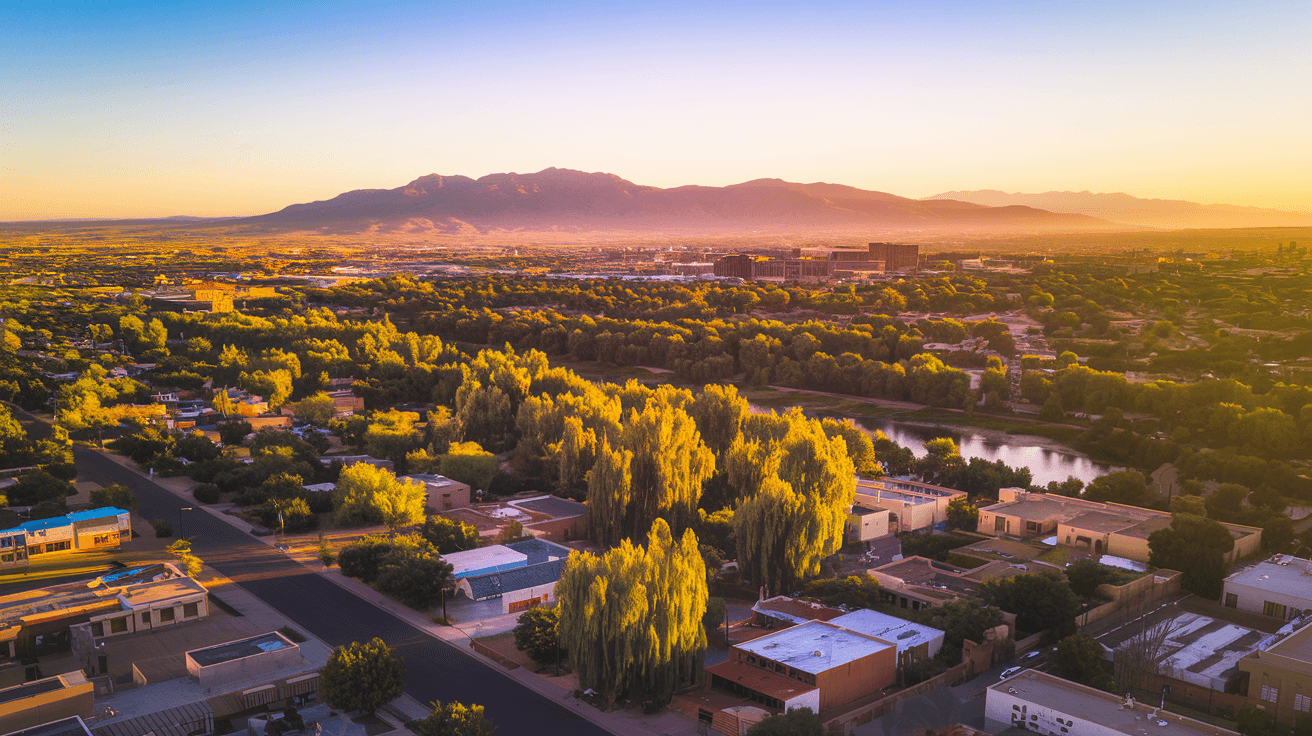
The inventory picture in April 2026 is the most significant structural shift in the albuquerque real estate market since rates first spiked in 2022. Months of supply reached 3.7 — up from 2.1 months in April 2025 and 1.4 months at the peak of the seller's market in spring 2022. That number does not yet signal a buyer's market (the traditional threshold is six months), but it signals something important: buyers have options again.
New Listings vs. Closed Sales
New listings in April came in at approximately 1,180, a 14% increase over the same month last year. Closed sales reached 770, which tracks closely with April 2025's 748. The spread between new listings and closings is what is building inventory, and that spread has been widening since January.
Why are more sellers listing now? Several factors are converging. The lock-in effect — where homeowners with 3% mortgages refused to sell into a 7% rate environment — is gradually loosening as life events (job changes, family growth, retirement) override the financial calculus of staying put. Additionally, Kirtland Air Force Base's spring PCS (Permanent Change of Station) season is adding a reliable cohort of motivated sellers to the Northeast Heights and South Valley markets each April and May.
The practical implication for buyers: you are no longer walking into a listing on Tramway Boulevard and finding eight offers on day two. You may still find two or three on a well-priced property in a hot neighborhood, but the era of waiving every contingency just to compete is over for most price points.
Albuquerque Home Prices by Tier: Where Is the Competition Hottest?
The metro median masks significant variation across price tiers. Here is where the real story lives.
$200,000 to $300,000
This tier is the most competitive in the entire metro and has been for 18 months. Homes in this range are averaging 19 days on market, and multiple-offer situations remain common, particularly in the South Valley, the International District along Central Avenue east of Louisiana, and older Rio Rancho subdivisions. First-time buyers and investors are competing for the same limited supply, and FHA loan activity in this tier is running at the highest level since 2020. If you are a buyer here, pre-approval is not optional — it is the minimum entry requirement.
$300,000 to $400,000
The $300,000 to $400,000 tier is where Albuquerque's volume lives, accounting for roughly 38% of all closed sales in April. Median days on market here sits at 28 days, and the list-to-sale ratio holds near 98.2%. Neighborhoods like the Northeast Heights around Montgomery and Wyoming, and established Taylor Ranch subdivisions off Paseo del Norte, are the workhorses of this segment. Buyers here have slightly more negotiating room than a year ago but should not mistake a slower pace for a soft market — well-priced homes still move.
$400,000 to $500,000
This tier has softened the most on a relative basis. Days on market average 38, and sellers in this range are seeing slightly more price reductions than in 2025. The Nob Hill and Ridgecrest corridors, along with newer construction in the Far Northeast Heights near the Sandia foothills, populate this range. Buyers here have real negotiating leverage for the first time in years.
$500,000 and Above
The luxury segment above $500,000 is functioning almost as a separate market. Median days on market exceed 52, and months of inventory in this tier approaches 6.5 — genuinely balanced to buyer-favoring conditions. Corrales acreage properties, High Desert custom homes with mountain views, and the handful of estate properties in the North Valley that come to market each spring are all sitting longer. Sellers in this tier who priced aggressively in 2024 are finding the market less forgiving in 2026.
“"At $385,000, Albuquerque is not cheap by New Mexico standards. But compared to every other major Southwest metro, it remains the most compelling value proposition on the map — and buyers from Phoenix and Denver are starting to notice."
Days on Market Analysis: What Offer Strategy Should You Use?
The metro average of 32 days on market tells buyers that the window between listing and accepted offer has widened meaningfully from the 14-day averages of 2022. But averages can deceive. The distribution is bimodal: properties priced correctly in desirable neighborhoods are still going under contract in under two weeks, while overpriced listings or homes with condition issues are dragging the average upward by sitting for 60, 90, or even 120 days.
For buyers, this bifurcation demands a clear-eyed offer strategy. On a home that has been on the market for fewer than 10 days in Northeast Heights or Nob Hill, come in at or near list price with clean terms. On a listing that has been sitting for 45 days in the $450,000 range with no price reductions, you have standing to open at 3% to 4% below list and negotiate from there.
The 97.8% list-to-sale ratio confirms that sellers are not capitulating dramatically — but they are negotiating. Inspection objections are being addressed again. Seller concessions toward closing costs, which virtually disappeared in 2021 and 2022, are reappearing in roughly 22% of transactions above $400,000.
Albuquerque Neighborhood Breakdown: April 2026 Data
Neighborhood-level data is where generalized market reports fail buyers and sellers. Here is what the numbers actually show across Albuquerque's key submarkets.
Northeast Heights
Median Price: $332,000 | Days on Market: 21 | YoY Price Change: +4.1%
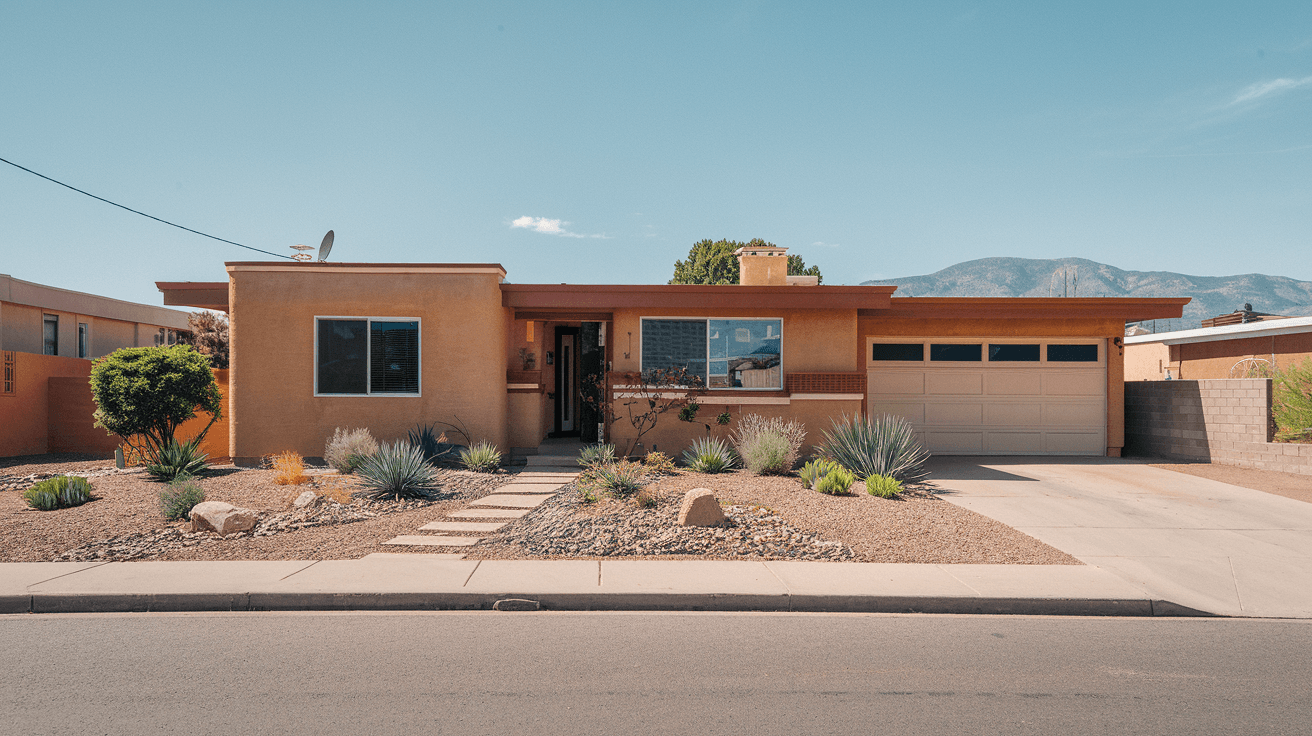
The Northeast Heights — bounded roughly by Menaul to the south, Tramway to the east, and Academy to the north — remains the market's engine room. Inventory here is tighter than the metro average, and the proximity to Sandia National Laboratories and Kirtland AFB drives steady demand from professional buyers with household incomes above the metro median. The Hoffmantown and Four Hills pockets near Juan Tabo are seeing the most activity in the $290,000 to $360,000 range.
Nob Hill
Median Price: $398,000 | Days on Market: 26 | YoY Price Change: +3.8%
Nob Hill's walkability to Central Avenue's restaurant corridor, the Nob Hill Shopping Center, and the Marble Brewery district continues to command a premium. The neighborhood attracts UNM faculty, young professionals, and buyers relocating from more urban metros who want density and character. Bungalows and Spanish Pueblo Revival homes on tree-lined streets between Lead and Coal are moving well. The sub-$375,000 inventory here is thin.
North Valley
Median Price: $435,000 | Days on Market: 29 | YoY Price Change: +3.3%
The North Valley's agricultural character — the acequias, the cottonwood bosque along the Rio Grande, the horse properties between Rio Grande Boulevard and Fourth Street — creates a genuinely irreplaceable product. Buyers here are often making a lifestyle decision as much as a financial one. Inventory is limited by geography and zoning, which provides a floor for values even when the broader market softens.
Rio Rancho
Median Price: $298,000 | Days on Market: 24 | YoY Price Change: +5.1%
Rio Rancho continues to be the most active submarket by volume in the greater metro area. Intel's Río Rancho campus, while operating at reduced capacity relative to its peak, still anchors significant employment, and the city's newer infrastructure and larger lot sizes attract families. The 5.1% year-over-year price appreciation in Rio Rancho outpaces the metro median, reflecting strong demand in the $260,000 to $330,000 range that dominates the city's inventory.
Corrales
Median Price: $612,000 | Days on Market: 44 | YoY Price Change: +2.3%
Corrales is its own micromarket. Buyers here are not cross-shopping with Northeast Heights — they are buying a specific lifestyle: larger lots, agricultural zoning, views of the Sandia and Jemez mountains, and a village pace that no subdivision can replicate. The slower days on market reflect the price point and the buyer profile, not weakness in demand. Properties priced accurately in the $550,000 to $650,000 range are finding buyers; those testing $750,000 and above are waiting longer.
High Desert
Median Price: $648,000 | Days on Market: 49 | YoY Price Change: +1.9%
High Desert, the master-planned community tucked against the Sandia foothills off Tramway, is the metro's premier luxury enclave within city limits. The combination of hiking trail access, architectural standards, and mountain views supports values well above the metro median. The slower pace here is structural — High Desert was never a high-volume market — and the modest year-over-year appreciation reflects the broader softening at the $500,000-plus tier.
Downtown / EDo (East Downtown)
Median Price: $312,000 | Days on Market: 35 | YoY Price Change: +2.7%
The Downtown and EDo corridor — roughly the area between the train depot, the Albuquerque Museum, and the stretch of Central through the Barelas neighborhood — remains a work in progress. The Albuquerque Rapid Transit (ART) corridor has not delivered the transformative commercial revival its proponents projected, but residential demand from buyers who want urban proximity at a discount to Nob Hill is real. Condos and townhomes near the Rail Yards and the KiMo Theatre district are finding buyers, particularly in the $280,000 to $340,000 range.
Taylor Ranch
Median Price: $358,000 | Days on Market: 27 | YoY Price Change: +3.6%
Taylor Ranch, the large planned community off Paseo del Norte on Albuquerque's West Side, offers some of the best value in the metro for families who need good schools, newer construction, and freeway access. The neighborhood's inventory is healthy without being oversupplied, and the price-per-square-foot here — averaging around $178 — is among the most competitive in the city for move-in-ready homes.
Albuquerque vs. Southwest Cities: How Does ABQ Stack Up?
One of the defining features of the April 2026 Albuquerque market is the growing awareness among out-of-state buyers that New Mexico's largest city offers a value proposition that is increasingly rare in the Southwest.
Phoenix metro median: approximately $447,000. The Valley of the Sun's rapid appreciation during the pandemic years has made entry-level homeownership significantly harder, and inventory there has swelled to over five months, creating pockets of genuine price softness in outer suburbs like Queen Creek and Buckeye.
Denver metro median: approximately $578,000. Colorado's altitude premium is well-documented. Remote workers who relocated to Denver between 2020 and 2022 are now encountering a market where their equity gains are offset by the cost of trading up.
Las Vegas median: approximately $418,000. Vegas has recovered strongly from its 2022 to 2023 correction, but affordability relative to local incomes remains strained.
Tucson median: approximately $338,000. Tucson is Albuquerque's closest competitor on value, and the two markets are genuinely comparable for buyers weighing southern Arizona against New Mexico. Albuquerque's stronger employment base — anchored by Sandia National Laboratories, Kirtland AFB, UNM Health Sciences, and the state government — gives it an edge in income stability.
Against this backdrop, Albuquerque at $385,000 looks like relative value — particularly for buyers bringing equity from higher-cost markets.
“"The buyers who are getting the best deals in Albuquerque right now are not the ones waiting for prices to drop. They are the ones who understand which neighborhoods still have urgency and which ones have given them room to negotiate."
Buyer and Seller Strategy: What the April 2026 Data Means for You
If You Are Buying in Albuquerque Right Now
The strategic window for buyers has improved meaningfully from 2022 and 2023, but this is not a market to approach casually. Here is what the data demands of serious buyers.
Get fully underwritten, not just pre-approved. With a 97.8% list-to-sale ratio and multiple offers still occurring on well-priced properties under $375,000, sellers are evaluating financing certainty alongside price. A full underwriting commitment letter from your lender is a competitive differentiator.
Know your tier's dynamics. Below $300,000, move fast and come in strong. Between $300,000 and $400,000, you have modest negotiating room but should not lowball. Above $450,000, the data supports a more patient, strategic approach — sellers in this tier are negotiating.
Target days-on-market outliers. Homes sitting at 45 days or more in the $400,000 to $550,000 range are where buyer leverage is highest right now. Many of these listings have motivated sellers who overpriced at launch and are now realistic.
Factor in the rate environment. With 30-year fixed rates currently hovering in the mid-6% range, your purchasing power is approximately 18% lower than it was in 2021. Run the numbers on total monthly cost, not just purchase price, and build in rate sensitivity.
If You Are Selling in Albuquerque Right Now
The sellers who are winning in April 2026 share one characteristic: they priced based on comparable sales from the last 60 days, not on what their neighbor's house sold for in the fall of 2024.
Condition is no longer forgivable. In 2021, buyers overlooked deferred maintenance because they had no choice. Today, with 2,850 active listings on the market, buyers have options. Pre-listing inspections, fresh interior paint, and addressed mechanical issues are table stakes in the $350,000 and above range.
The first 14 days are everything. Homes that go under contract in the first two weeks sell for an average of 99.4% of list price in the current Albuquerque market. Homes that sit past 30 days are averaging 96.1% of list. Pricing correctly at launch is worth far more than negotiating room you build in by starting high.
Staging matters more than it did. With buyers having more choices, first impressions — including online photography — are filtering decisions before a single showing happens. Professional photography and at minimum a consultation with a staging professional are no longer optional for homes above $350,000.
Albuquerque Housing Market Outlook: What to Expect in May and June 2026
Seasonal patterns in Albuquerque real estate are fairly consistent: the late spring surge in listings typically peaks in May and early June, with buyer activity remaining strong through the Balloon Fiesta setup period in early October before cooling in November. Based on current trajectory, here is what the data suggests for the coming 60 days.
Inventory will continue to build modestly. Expect active listings to reach approximately 3,000 to 3,100 by the end of May as spring sellers enter the market. This is not a flood — it is a gradual normalization that will give buyers more options without fundamentally shifting pricing power.
Median price is likely to hold between $385,000 and $392,000. The spring selling season typically produces the year's highest median prices, and there is no macro catalyst on the immediate horizon that would push prices meaningfully lower. Upward pressure from limited new construction and steady population growth will offset any softening from higher inventory.
Local employment anchors demand. Sandia National Laboratories' continued expansion under its National Nuclear Security Administration contracts, Kirtland AFB's stable operational footprint, and UNM Health Sciences' role as the region's largest healthcare employer collectively provide a demand floor that markets without institutional employment anchors simply do not have. New Mexico's film industry — which has made Albuquerque and Santa Fe among the most active production markets in the country — continues to bring high-earning transplants to the metro.
Watch the $300,000 to $375,000 tier. This is where the market's health is most legible. If days on market in this range start climbing past 35, it signals broader softening. If they hold under 30, the market is absorbing new supply without difficulty. Based on April's data, we are comfortably in the latter camp.
Interest rates remain the wild card. Any movement in the 10-year Treasury yield — driven by Federal Reserve policy signals, inflation data, or global credit market shifts — will have an outsized effect on the $350,000 to $500,000 buyer pool, which is the most rate-sensitive segment of the Albuquerque market.
Key Takeaways: Albuquerque Housing Market May 2026
- •The metro median price of $385,000 represents a 3.5% year-over-year gain, a pace that signals healthy appreciation without the overheating risk that destabilized markets like Phoenix and Boise in 2022 and 2023.
- •At 3.7 months of supply, inventory has nearly doubled from its 2022 low of 1.4 months, giving buyers meaningful negotiating leverage above $400,000 while sub-$300,000 properties remain highly competitive with average days on market under 20 days.
- •Rio Rancho leads the metro in year-over-year price appreciation at 5.1%, driven by strong family demand in the $260,000 to $330,000 range and limited new construction relative to population growth.
- •The 97.8% list-to-sale ratio confirms that sellers are still receiving near-asking prices overall, but the distribution matters — homes priced correctly in the first 14 days are achieving 99.4% of list, while 30-plus-day listings are averaging 96.1%.
- •Albuquerque's $385,000 median compares favorably to Phoenix ($447,000), Denver ($578,000), and Las Vegas ($418,000), positioning the metro as the Southwest's most credible value market for buyers relocating from higher-cost cities — a trend that is visibly accelerating in spring 2026 relocation data.
Want more insider intel?
Subscribe to get market updates and new articles delivered to your inbox.