Albuquerque Housing Market Report: May 2026 — New Construction vs. Resale: Where the Price Gap Has Narrowed and What That Means for Buyers Comparing Options This Spring
Albuquerque Housing Market May 2026: The New Construction vs. Resale Equation Has Changed
For most of the past decade, the choice between a new construction home in Rio Rancho's Mariposa subdivision or a resale ranch in the Northeast Heights was largely a financial no-brainer — new construction carried a meaningful premium, sometimes 15 to 20 percent above comparable resale square footage, and buyers paid for the privilege of untouched countertops and a builder warranty. That calculus is shifting in meaningful ways as of May 2026.
Albuquerque's metro median home price sits at $385,000, a 3.5% year-over-year increase that marks the fourteenth consecutive month of positive price appreciation, but at a pace that has moderated considerably from the 8 to 10 percent surges of 2022 and 2023. What the headline number obscures is where that appreciation is concentrated and, critically, where new construction builders have been forced to compete directly with resale inventory for the first time since rates began their climb.
With 3,850 active listings across the metro, 3.9 months of supply, and an average of 31 days on market, Albuquerque remains a seller's market by conventional definition — but only barely. The list-to-sale ratio of 98.1% tells you that buyers are negotiating, that not every home is receiving offers above asking, and that the spring market of 2026 rewards preparation over panic.
The story this month is not simply about price. It is about the convergence of two inventory streams — builder product and existing homes — that are now priced within striking distance of each other in several key corridors, and what that means for buyers who have been sitting on the sidelines waiting for clarity.
Albuquerque Housing Inventory and Supply Dynamics: May 2026
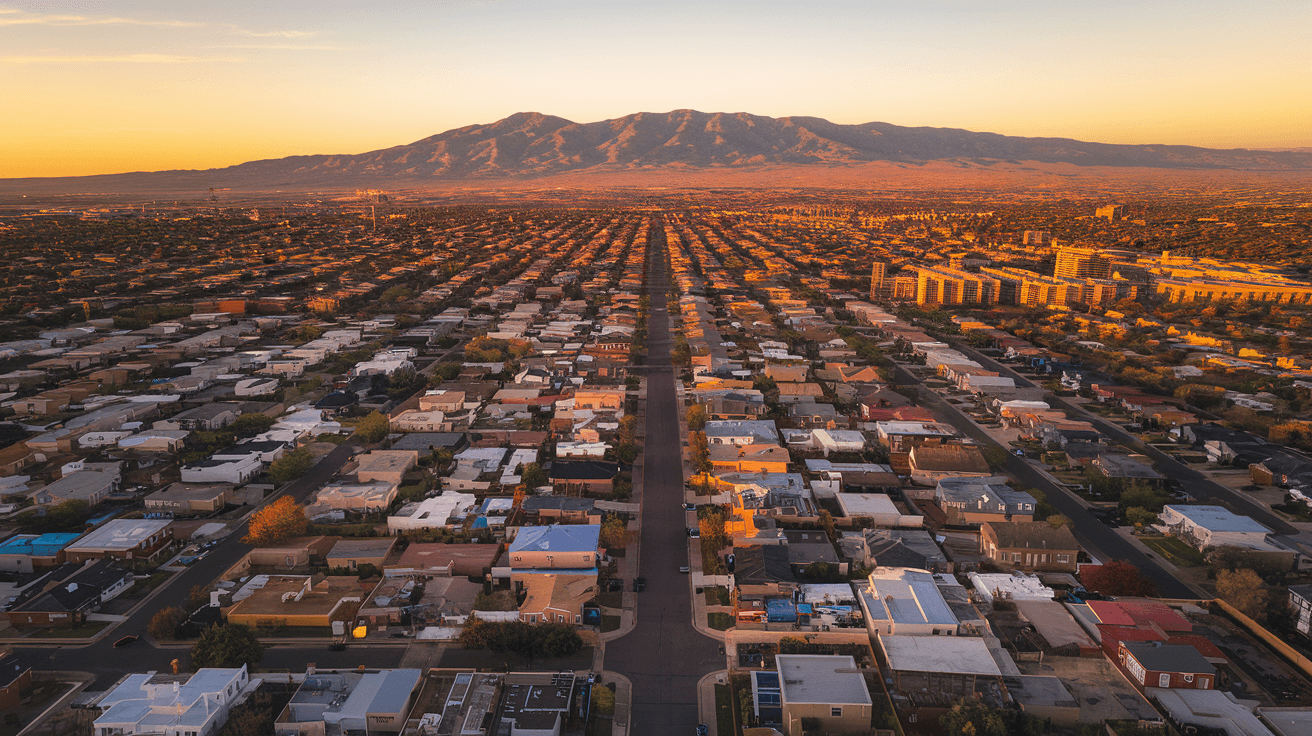
The inventory picture in May 2026 is more nuanced than the raw listing count suggests. The 3,850 active listings represent a 14% increase from May 2025, when the metro was operating closer to 3,380 active units. That sounds like relief for buyers, and in some price tiers it genuinely is. But the distribution of that inventory is uneven in ways that matter enormously depending on what you are shopping for.
Below $350,000, supply remains critically constrained. Homes in the $275,000 to $350,000 band — which encompasses much of the Northeast Heights, Taylor Ranch, and the more affordable pockets of the South Valley — are turning in under 21 days on average, with competitive offer situations still common on well-maintained, move-in-ready product. This is the tier where the resale market is tightest and where new construction has essentially vacated: builders in Albuquerque proper cannot profitably deliver at those price points given current land and labor costs.
Above $400,000, the dynamic inverts. Active listings in the $400,000 to $550,000 range have grown 22% year-over-year, and this is precisely the band where new construction and resale are now competing directly. A buyer considering a new 2,200-square-foot home in Summergate or the newer phases of Lomas Tramway can now find resale homes of comparable size in High Desert or the upper Northeast Heights within $15,000 to $25,000 of the builder's base price — a gap that closes further once you factor in builder incentives and rate buydowns that have become standard practice.
New listings came in at approximately 1,180 for May, against closed sales of roughly 960, producing a slight accumulation of inventory at the top of the market. This is not a flood — it is a measured loosening that gives buyers in the mid-to-upper price tiers genuine leverage for the first time in several years.
“"The months-of-supply figure at 3.9 masks a two-speed market: below $350K, it still feels like 2021. Above $450K, buyers are finally getting phone calls returned the same day."
Albuquerque Home Price Analysis by Tier: Where Competition Is Hottest
Breaking the market into price tiers reveals where the action is concentrated and where the new construction versus resale comparison becomes most relevant.
$200,000 to $300,000
This tier is effectively a resale-only conversation. Builder activity at this price point in Albuquerque is minimal, confined largely to a handful of smaller infill projects and entry-level attached product near Central Avenue. Median price in this tier: $268,000, up 5.1% year-over-year. Days on market average 18 days, the tightest in the metro. Buyers here should expect to move quickly, have financing locked, and be prepared to waive minor contingencies on properties with clean inspection histories.
$300,000 to $400,000
The most active tier by transaction volume, accounting for roughly 38% of all closed sales in May. Median price: $347,000, up 4.2% year-over-year. This is where the Northeast Heights, Taylor Ranch, and Rio Rancho's established subdivisions dominate. New construction enters this conversation in Rio Rancho's northern corridors, where some builder base prices have been reduced or held flat since late 2025 to move inventory. Average DOM sits at 26 days, and the list-to-sale ratio in this tier is 98.7% — meaning sellers are still largely getting what they ask.
$400,000 to $500,000
This is where the new construction versus resale comparison becomes most analytically interesting. Median price: $447,000, up 3.1% year-over-year — the slowest appreciation of any tier. Builders in the Lomas Tramway corridor, parts of Rio Rancho's Mariposa, and the newer phases along Paseo del Norte are pricing into this range with 1,800 to 2,400 square foot product. Resale competition in Nob Hill, North Valley, and the lower end of High Desert is now within the same band. Average DOM in this tier has stretched to 34 days, and buyers are successfully negotiating closing cost credits and price reductions on both builder and resale product.
$500,000 and Above
Median price: $612,000, up just 1.9% year-over-year, the softest appreciation in the metro. Corrales, High Desert, and the upper foothills neighborhoods anchor this tier. Inventory has grown meaningfully, DOM averages 47 days, and this is the segment where buyers have the most negotiating room. New construction at this level is largely custom or semi-custom, and the comparison to resale is less direct — but the principle holds: builders are more flexible than they have been in years.
Days on Market and Offer Strategy: What the Speed of Sales Tells Buyers
At 31 days average across the metro, Albuquerque's pace of sales has moderated from the frenetic 17 to 19 day averages of 2022, but it has not settled into the leisurely 60-plus day territory that would signal a buyer's market. What it signals is a market that rewards preparation.
For buyers, the practical implication is this: if you are shopping below $350,000, treat the market as competitive. Have your pre-approval letter current, know your walk-away number before you walk through the door, and do not assume that a home sitting for 10 days has a problem — it may simply have been priced slightly above the immediate pool of qualified buyers and be ready for a conversation.
Above $400,000, the calculus shifts. Homes in this range that have been sitting 30 to 45 days are increasingly open to negotiation. The 31-day average is being pulled upward by slower movement at the top, which means the median-tier buyer is still operating in a faster environment than the headline suggests.
New construction buyers face a different timeline dynamic entirely. Builder contracts typically involve longer close windows — 30 to 90 days for spec homes, potentially six to twelve months for to-be-built product — and the negotiation happens at contract, not at the appraisal. Builders in the current environment are offering mortgage rate buydowns of 50 to 100 basis points on their preferred lender programs, closing cost contributions of $5,000 to $15,000, and in some cases free upgrades on flooring, appliances, and landscaping. These incentives effectively narrow the true cost gap with resale even further than the sticker prices suggest.
Albuquerque Neighborhood-by-Neighborhood Breakdown: May 2026
Northeast Heights
The workhorse of the Albuquerque resale market continues to perform with quiet consistency. Median price: $338,000, up 4.4% year-over-year. Average DOM: 22 days. The stretch of Tramway Boulevard from Comanche to Montgomery remains one of the most reliably liquid corridors in the city — homes here are priced accessibly relative to their square footage, draw buyers from across the metro, and benefit from proximity to Kirtland AFB and Sandia Labs employment. Inventory is lean, and well-priced product under $360,000 is still generating multiple offers.
Nob Hill
The Central Avenue corridor and the blocks radiating north and south from Nob Hill's commercial spine tell a story of sustained demand from a specific buyer profile: urban buyers, UNM-adjacent professionals, and renovation-minded purchasers who want walkability and character. Median price: $392,000, up 3.5% year-over-year. DOM: 28 days. The premium here is for older adobe and territorial architecture, and buyers are still paying it — though not as reflexively as two years ago.
North Valley
The North Valley's combination of mature cottonwoods, acreage parcels along the Rio Grande bosque, and proximity to Balloon Fiesta Park gives it a character no new construction community can replicate. Median price: $435,000, up 3.2% year-over-year. DOM: 33 days. Irrigation rights, ditch maintenance, and older infrastructure add complexity to transactions here, but the lifestyle premium is real and the buyer pool is committed.
Rio Rancho
Rio Rancho is where the new construction versus resale conversation is most direct and most financially consequential. Median price: $312,000, up 4.9% year-over-year — the strongest appreciation in the metro and a reflection of continued migration from Albuquerque proper driven by value. DOM: 24 days. Builder spec inventory in Mariposa and the Cabezon area is being absorbed steadily, and the rate buydown programs from D.R. Horton and LGI Homes are keeping entry-level buyers in the market despite the rate environment. For buyers with flexibility on commute, Rio Rancho remains the clearest path to homeownership under $330,000.
Corrales
Corrales operates as its own micro-market, largely insulated from the competitive pressures of the broader metro by its agricultural zoning, strict density limits, and limited resale turnover. Median price: $582,000, up 2.0% year-over-year. DOM: 41 days. There is no meaningful new construction competition here — the village's land use regulations effectively preclude it — and buyers are purchasing a lifestyle as much as a home. Patience is required; the right property in Corrales can sit for six to eight weeks without reflecting any fundamental weakness.
High Desert
The foothills neighborhood east of Tramway, with its mountain views and proximity to Elena Gallegos Open Space, continues to attract the upper-income professional buyer, particularly those connected to Sandia National Laboratories. Median price: $648,000, up 1.7% year-over-year. DOM: 44 days. Appreciation has softened at this price point, and sellers who priced aggressively in late 2025 have been forced to reduce. Buyers in High Desert have more room to negotiate than at any point in the past four years.
Downtown and EDo (East Downtown)
The area bounded roughly by I-25, Coal Avenue, Lomas, and the rail yards continues its slow but genuine transformation. Median price: $298,000, up 3.8% year-over-year. DOM: 36 days. Condo and townhome product dominates here, and the buyer profile skews younger and more rate-sensitive than any other submarket. The film industry's continued presence at Albuquerque Studios has added a modest but real renter-to-buyer pipeline in this corridor.
Taylor Ranch
Located on the West Side along Paseo del Norte, Taylor Ranch offers established infrastructure, good schools, and pricing that bridges the gap between Rio Rancho affordability and Albuquerque convenience. Median price: $358,000, up 4.1% year-over-year. DOM: 25 days. New construction is creeping closer via the Lomas Tramway and Paseo del Norte corridors, creating genuine comparison opportunities for buyers who have flexibility on exact location.
What This Market Means for Albuquerque Buyers and Sellers in May 2026
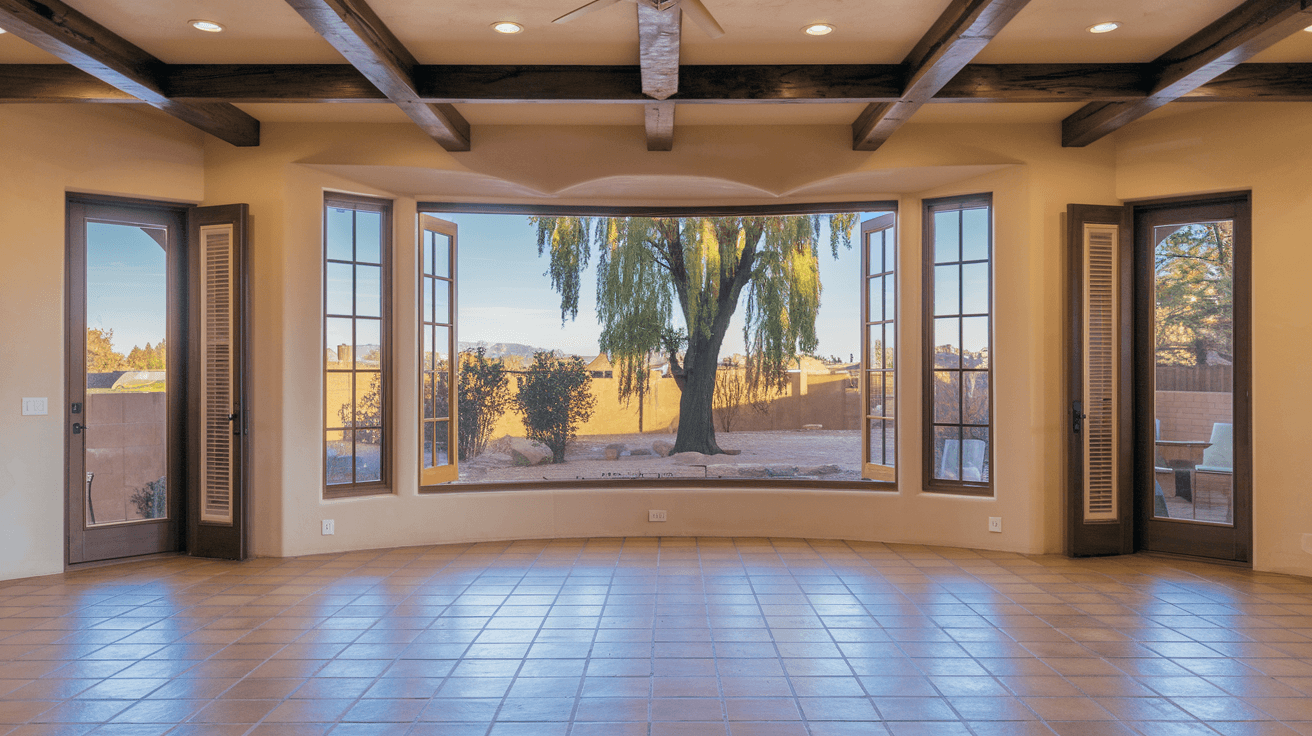
For Buyers: The New Construction Math Has Changed
The single most important analytical shift for buyers in May 2026 is that the new construction premium has compressed significantly in the $380,000 to $500,000 range. Where builders once commanded a 12 to 18 percent premium over comparable resale square footage, that gap has narrowed to 4 to 8 percent in several corridors — and when you layer in builder incentives, the effective gap can approach zero or even invert.
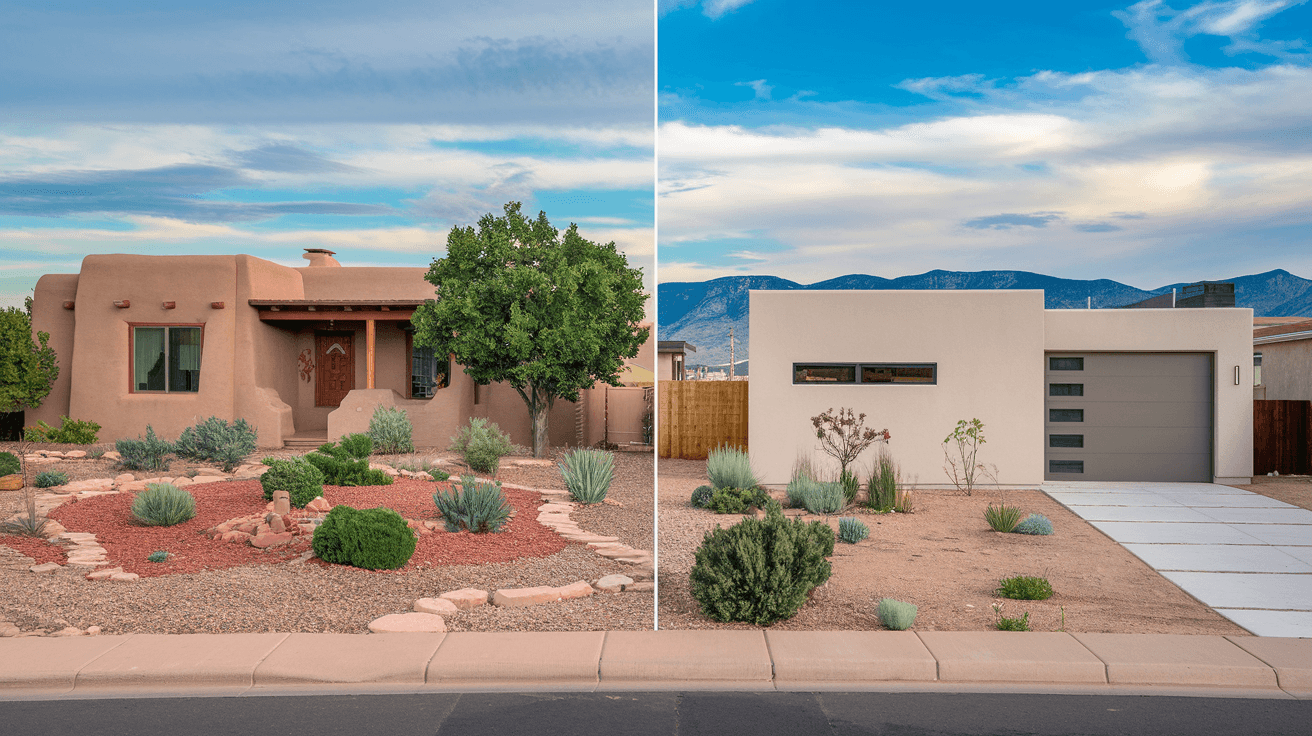
This creates a genuine decision framework. A resale home in the Northeast Heights at $420,000 offers established landscaping, mature neighborhood infrastructure, and often more square footage per dollar. A new construction home in the same price range in Rio Rancho or along the Paseo del Norte corridor offers a builder warranty, modern mechanical systems, energy efficiency, and — critically — the ability to negotiate incentives that a resale seller typically cannot match.
The actionable advice for buyers: Run the full cost comparison, not just the sticker price. Factor in the builder's rate buydown against your current pre-approval rate. Factor in the cost of landscaping and window coverings that new construction does not include. Factor in HOA fees, which are more common in new communities. And factor in commute time and the value of established neighborhood amenities. When you run those numbers honestly, the right answer will often be clear — but it is rarely obvious from the list price alone.
Below $350,000, none of this applies. Move quickly, come prepared, and do not let perfect be the enemy of good.
For Sellers: Pricing Precision Matters More Than It Did
The 98.1% list-to-sale ratio is still favorable to sellers, but it is no longer the 101 to 103 percent environment of 2022. Homes that are priced accurately for their condition and location are selling. Homes that are priced with 2022 optimism are sitting, accumulating days on market, and eventually reducing.
“"The sellers who are winning in May 2026 are the ones who priced to the current market on day one, not the ones who tested the ceiling and paid for it in carrying costs and stigma."
If you are considering listing in the $400,000 to $550,000 range, understand that your competition now includes new construction with builder incentives. Your home's condition, updates, and presentation matter more than they did when buyers had fewer options. Professional photography, pre-listing inspections, and accurate pricing are not optional in this environment — they are the difference between a clean 25-day sale and a 60-day price reduction cycle.
Albuquerque Real Estate Outlook: What to Expect in June and Summer 2026
Several local and macro factors will shape the Albuquerque market through summer 2026.
Interest rates remain the dominant variable. The 30-year fixed rate has been oscillating between 6.4 and 6.9 percent since January, and there is no credible near-term catalyst for a significant decline. This rate environment is now the baseline, not an aberration, and both buyers and sellers are adjusting their behavior accordingly. The rate buydown programs from builders will continue to be a meaningful competitive tool.
Local employment remains a stabilizing force that distinguishes Albuquerque from more rate-sensitive metros. Kirtland Air Force Base and Sandia National Laboratories collectively employ over 20,000 workers in the metro, providing a steady demand floor that is largely insensitive to rate cycles. Intel's continued operations at Rio Rancho, though at reduced capacity from peak years, still anchors the West Side employment base. The New Mexico film industry, which generated over $900 million in direct spending statewide in 2025, continues to bring relocated production workers into the Albuquerque rental and purchase market.
Seasonal patterns favor continued activity through June and into early July before the traditional summer slowdown. Expect new listing volume to remain elevated — historically, May and June represent the peak of new listing activity in Albuquerque — which will keep inventory at or above current levels through mid-summer. This is generally good news for buyers who have been frustrated by limited choices.
New construction pipeline will continue to add product in Rio Rancho, the Lomas Tramway corridor, and the southern mesa areas near Isleta Boulevard. Builders who overextended on land acquisition in 2024 are now motivated to move spec inventory, and incentive programs are unlikely to disappear before year-end.
The most likely scenario for June 2026: median prices hold near $385,000 to $390,000, inventory edges slightly higher, and days on market stabilizes in the 29 to 33 day range. The market is not accelerating and it is not correcting — it is finding a durable equilibrium.
Key Takeaways: Albuquerque Housing Market May 2026
- •The new construction premium has compressed to 4 to 8 percent in the $380,000 to $500,000 range, the narrowest gap in three years, making a direct cost comparison between builder product and resale essential before any purchase decision in that tier.
- •The metro median of $385,000 reflects a two-speed market: homes below $350,000 are still moving in under 22 days with competitive offer dynamics, while homes above $450,000 are averaging 40-plus days and responding to negotiation.
- •Rio Rancho's 4.9% year-over-year price appreciation is the strongest in the metro, driven by continued value migration from Albuquerque proper and active builder incentive programs that are keeping entry-level buyers in the market.
- •Builder incentives — rate buydowns of 50 to 100 basis points and closing cost contributions of $5,000 to $15,000 — are effectively narrowing the true cost gap with resale further than sticker prices indicate, and buyers should model the full cost of ownership, not just the purchase price.
- •Sellers in the $400,000 to $550,000 range now face direct competition from new construction with builder incentives; accurate day-one pricing, strong presentation, and pre-listing preparation are no longer optional in a market where buyers have genuine alternatives.
Want more insider intel?
Subscribe to get market updates and new articles delivered to your inbox.