
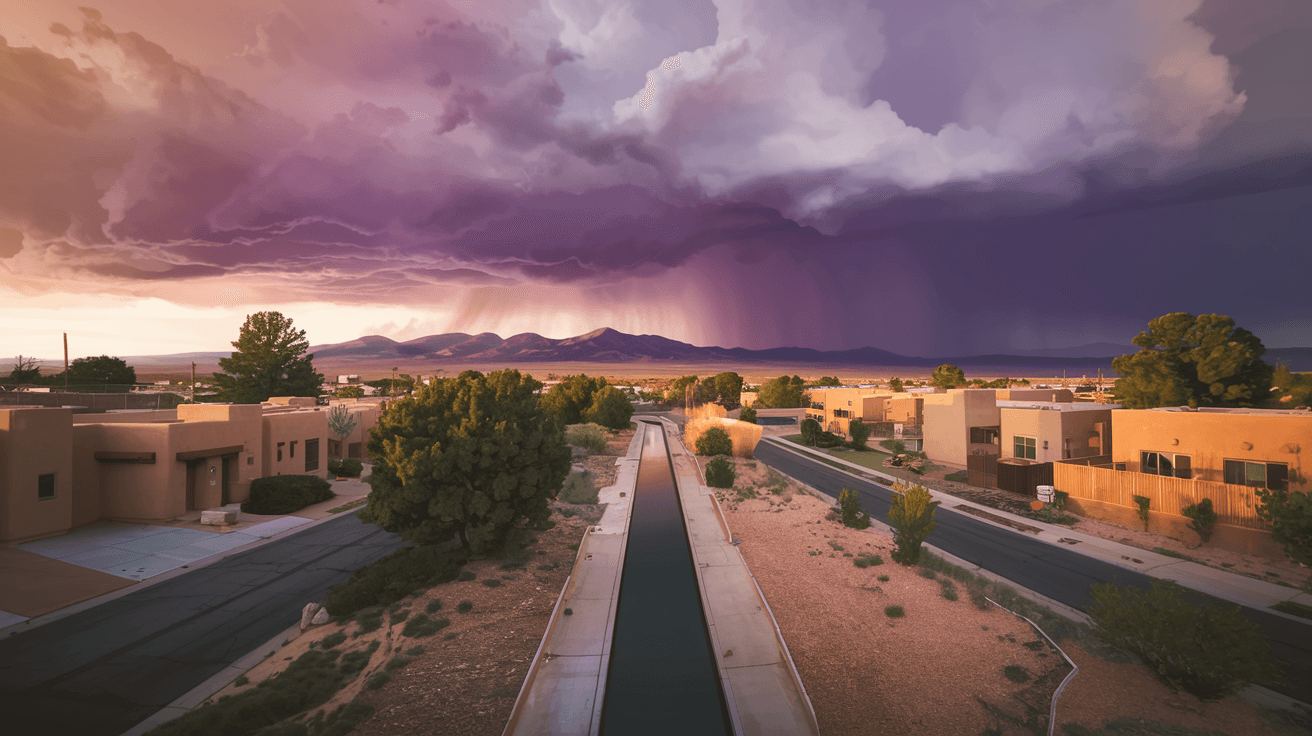
Albuquerque Monsoon Home Maintenance 2026: Flash Flood Zones, Flat Roof Drainage, Adobe Wicking, and Insurance Gaps Before August Hits
If you've lived in Albuquerque long enough to watch a July afternoon go from blinding sunshine to a wall of brown water rushing down Tijeras Arroyo, you already understand what monsoon season means for your home. For everyone else, especially folks who relocated from the Pacific Northwest or the Midwest where rain falls gently and predictably, the New Mexico monsoon is a genuinely different animal.
Albuquerque monsoon home maintenance isn't a weekend checklist item you can skip. It's the difference between a dry crawl space in September and a $40,000 remediation bill. The storms that roll in from the south and southeast between late June and mid-September don't mess around. They drop an inch of rain in twenty minutes on ground that's been baking at 95 degrees for two months. The soil can't absorb it fast enough. Water goes sideways, not down, and it finds every gap, crack, and low point your property has.
This guide covers the four things that catch Albuquerque homeowners and buyers off guard every single year: flash flood zone exposure, flat roof drainage failure, adobe wall moisture wicking, and insurance coverage gaps. Get ahead of all four before August, and you'll sleep through the thunder.
Flash Flood Zone Albuquerque Homes: How to Know If You're Actually at Risk
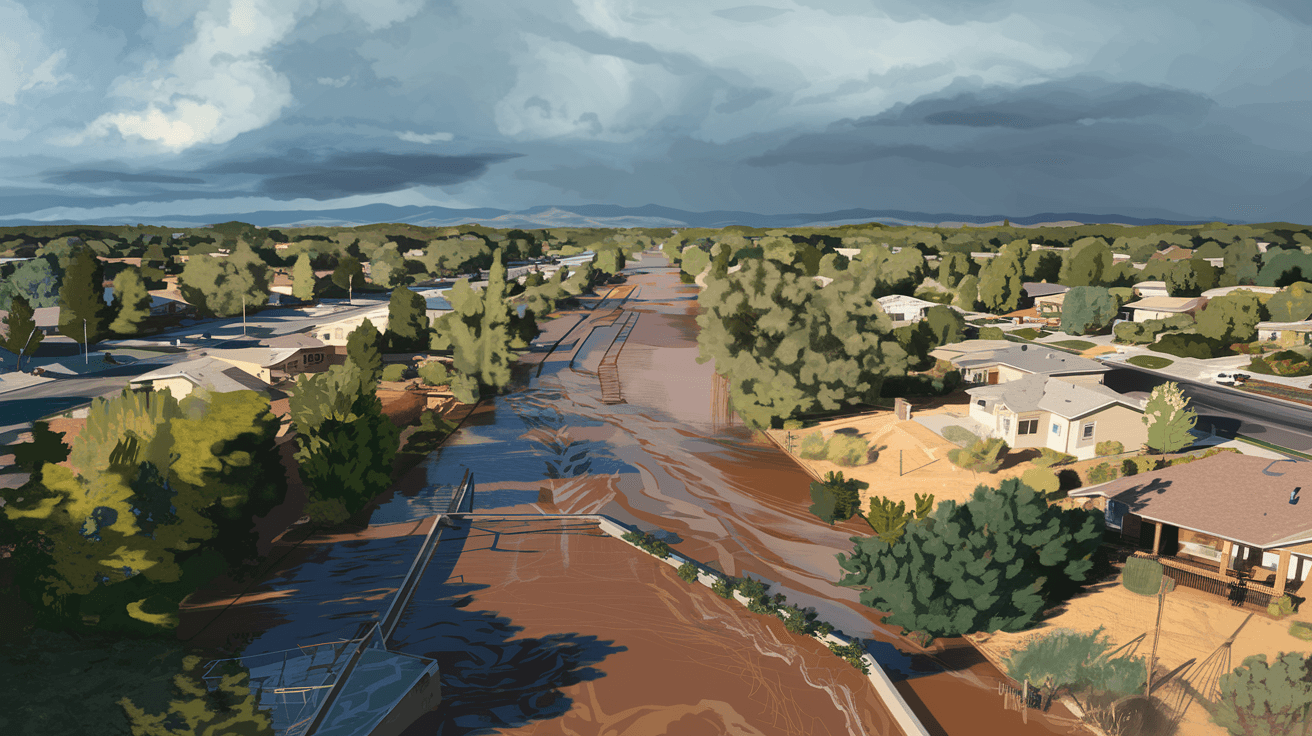
The Rio Grande is the obvious flood concern most people think of, but the real flash flood danger in Albuquerque is the arroyo system that threads through every neighborhood from the West Mesa to the Foothills. The North Diversion Channel, the Embudo Channel, the Arroyo del Oso corridor near Balloon Fiesta Park, the arroyos cutting through the South Valley along Isleta Boulevard, all of these carry runoff that can rise from dry sand to a four-foot torrent in under thirty minutes.
FEMA flood zone designations are the starting point, but they're not the whole picture. Albuquerque has done significant arroyo channelization work over the decades, and some areas that were once high-risk have been re-mapped. Others haven't been updated since the early 2000s. The City of Albuquerque's Open Space and Stormwater departments maintain their own mapping resources, and the Bernalillo County Flood Control Authority publishes data that sometimes differs from FEMA's official panels.
Before you buy a home near any arroyo, or if you already own one and haven't checked recently, here's what to verify:
- •Pull the current FEMA Flood Insurance Rate Map panel for your specific parcel, not just the neighborhood
- •Check whether the property has had a Letter of Map Amendment (LOMA) filed, which can remove individual lots from flood zones even when neighbors remain in them
- •Walk the property line and look for any concrete-lined channel, earthen berm, or detention basin nearby, these are clues about historical flood engineering
- •Ask the seller or listing agent for any drainage studies or flood certificates completed during previous ownership
- •Drive the street during or immediately after a heavy rain if you're still in due diligence, you'll see exactly where water collects
Neighborhoods along the Paseo del Norte and Alameda corridors, parts of the North Valley near Rio Grande Boulevard, and anything backing up to an unimproved arroyo in the Four Hills area deserve extra scrutiny. This isn't fear-mongering. It's just geography.
Flat Roof Drainage New Mexico: The One System That Fails Every August
Flat roofs are everywhere in Albuquerque, and for good reason. They're architecturally tied to Pueblo Revival and contemporary adobe construction, they perform well in a dry climate, and they're relatively easy to maintain when maintained correctly. The operative word is correctly.
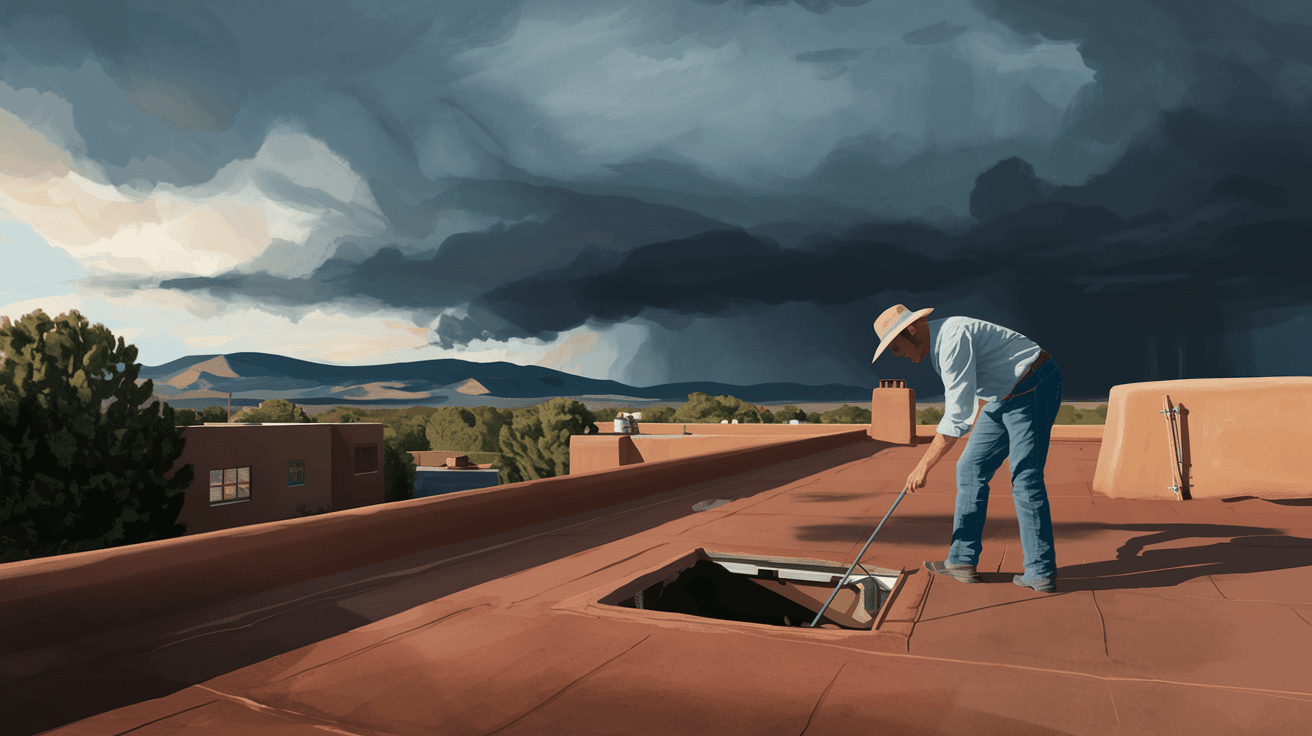
Flat roof drainage in New Mexico depends almost entirely on scuppers and drains that are clear, properly sloped, and sealed at the membrane. When those three things are true, a flat roof handles monsoon rain just fine. When even one is off, you get ponding water, and ponding water is the beginning of the end.
“A scupper clogged with two seasons of cottonwood fluff and dried tumbleweeds can turn a three-inch rainstorm into a roof pond that weighs tens of thousands of pounds. That weight alone can compromise the parapet walls and the structural deck beneath.
Here's the pre-monsoon flat roof checklist every Albuquerque homeowner should run through by the end of June:
- •Clear all scuppers and interior drains completely, not just the visible opening but the full throat
- •Inspect the roofing membrane (usually TPO, modified bitumen, or built-up gravel) for bubbling, cracking at seams, or separation near parapet walls
- •Check parapet wall caps for cracked caulk or missing sections, water enters here and travels down inside the wall assembly
- •Verify that the roof surface has a positive slope toward drains, even a quarter-inch per foot matters enormously
- •Look at the interior ceilings on the top floor for any ghost staining, water rings, or soft drywall from last season
If you're buying a home with a flat roof and the inspection report is vague about drainage slope or membrane condition, push for a dedicated roofing inspection from a contractor who specializes in low-slope systems. A general home inspector may not get up there with the tools needed to assess ponding risk accurately.
Adobe Wall Moisture Wicking: What Buyers of Historic and Pueblo-Style Homes Must Understand
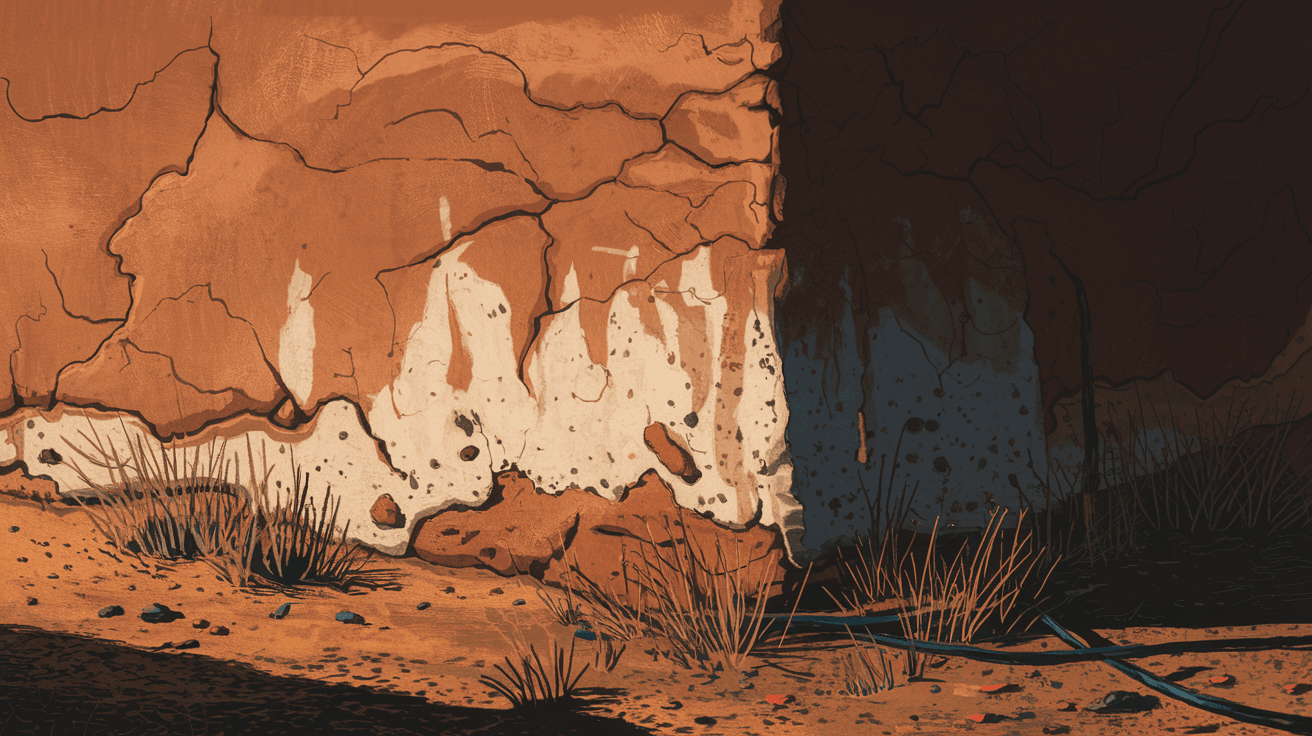
Adobe is one of the most beautiful and thermally efficient building materials on earth, and it has one significant vulnerability: it absorbs moisture. Adobe wall wicking happens when water at grade level, whether from rain splash, soil saturation, or irrigation overspray, contacts the base of an adobe wall and travels upward through capillary action.
This is not a defect. It's the nature of earthen construction. The original builders of Albuquerque's Old Town neighborhood and the historic South Valley understood this and built accordingly, with wide roof overhangs, raised stem walls, and strategic drainage away from foundations. Many renovations and additions over the decades have compromised those original design principles.
“Adobe that stays wet through monsoon season and then freezes in December and January is adobe that is actively spalling, cracking, and losing mass. By the time the damage is visible from the street, it's already significant.
For buyers considering any historic adobe, territorial adobe, or newer Pueblo-style stucco-over-frame construction in neighborhoods like Barelas, Los Ranchos, or the Huning Highlands area, watch for:
- •Efflorescence (white salt deposits) on the lower two feet of exterior walls, a sign of repeated wicking cycles
- •Stucco delamination at the base of walls, especially on north-facing elevations that stay damp longer
- •Soil grade that slopes toward the foundation rather than away from it
- •Drip edge gaps where roof overhangs don't extend far enough to keep rain off the wall base
- •Interior baseboard dampness or paint bubbling on rooms that share an exterior wall
The insider tip that most buyers never hear: check the condition of the portal columns on any home with a traditional covered porch. Column bases sitting directly on a concrete slab without a metal standoff are almost always wicking. It's a small detail that tells you a lot about how the rest of the home was maintained.
Albuquerque Monsoon Home Maintenance: Insurance Gaps That Cost Owners Every Year
This is the part of the conversation that most real estate agents skip because it feels like it belongs to the insurance agent. But after you've watched a buyer close on a beautiful home in the North Valley in May and then call in a panic in August because their homeowner's policy doesn't cover the water that came in through the back door, you learn to have this conversation upfront.
Standard homeowner's insurance policies in New Mexico do not cover flood damage. Full stop. The water that comes in from a flash flood, an overflowing arroyo, or surface runoff during a monsoon event is considered flood, not a covered peril, regardless of how it entered the home.
Flood insurance through the National Flood Insurance Program (NFIP) or a private flood carrier is a separate policy. It has a standard 30-day waiting period before coverage begins, which means buying it in late July when you hear the first thunder of the season is already too late for that storm cycle.
Beyond flood, there are other gaps worth auditing before monsoon season:
- •Sewer and drain backup coverage is often a rider, not standard, and monsoon-overwhelmed municipal systems back up into homes regularly in older Albuquerque neighborhoods with aging infrastructure
- •Roof ponding damage may be excluded if the insurer determines it resulted from lack of maintenance, which is why the flat roof checklist above matters for claims, not just prevention
- •Detached structure coverage for casitas, guest houses, and the accessory dwelling units that are increasingly common in Albuquerque's older neighborhoods may be capped at 10% of the main dwelling value, often not enough
- •Landscaping and hardscape damage from erosion or flooding is typically not covered at all
Call your insurance agent before July. Ask specifically about flood, sewer backup, and your current replacement cost valuation. Construction costs in Albuquerque have shifted significantly since 2022, and policies that were adequate then may be undervalued now.
Pre-Monsoon Home Maintenance Timeline for Albuquerque Homeowners
If you want a practical framework, here's how to stage your Albuquerque monsoon home maintenance through the spring and early summer:
April and May:
- •Schedule roofing inspection and any membrane repairs
- •Regrade soil away from foundation where needed
- •Extend downspouts at least six feet from the foundation
June:
- •Clear all roof drains, scuppers, and gutters completely
- •Inspect and reseal any parapet wall caps or coping
- •Verify flood insurance is in place or initiate purchase (remember the 30-day wait)
- •Audit homeowner's policy for sewer backup and replacement cost accuracy
Early July:
- •Walk your property perimeter after the first light rain to see where water actually moves
- •Check window and door weatherstripping on any openings that face south or southeast, the direction most monsoon storms approach from
- •Confirm that any landscaping installed over the winter or spring hasn't redirected drainage toward the house
If you're in the middle of buying a home right now and the inspection is coming up, ask your agent to specifically request documentation on drainage improvements, roof maintenance history, and any prior flood or water damage claims. The Taylor Team runs through this kind of targeted due diligence on every transaction we're part of, because Albuquerque's climate makes it non-negotiable. If you have questions about what to look for in a specific neighborhood or property, reach out and we're happy to walk through it with you.
Monsoon season in Albuquerque is also genuinely one of the most beautiful times of year here. The afternoon clouds that build over the Sandias, the smell of wet creosote after the first big storm, the way the light goes golden just before the rain hits Central Avenue. None of that requires a maintenance checklist. But the home you're standing in when you watch all of it does.
Get the maintenance right before August, and the monsoon becomes what it's supposed to be: a relief after the long dry spring, not a source of dread.
Want more insider intel?
Subscribe to get market updates and new articles delivered to your inbox.