
Albuquerque Monsoon Season Homes: What Buyers Need to Know Before Moving Here in Summer 2026
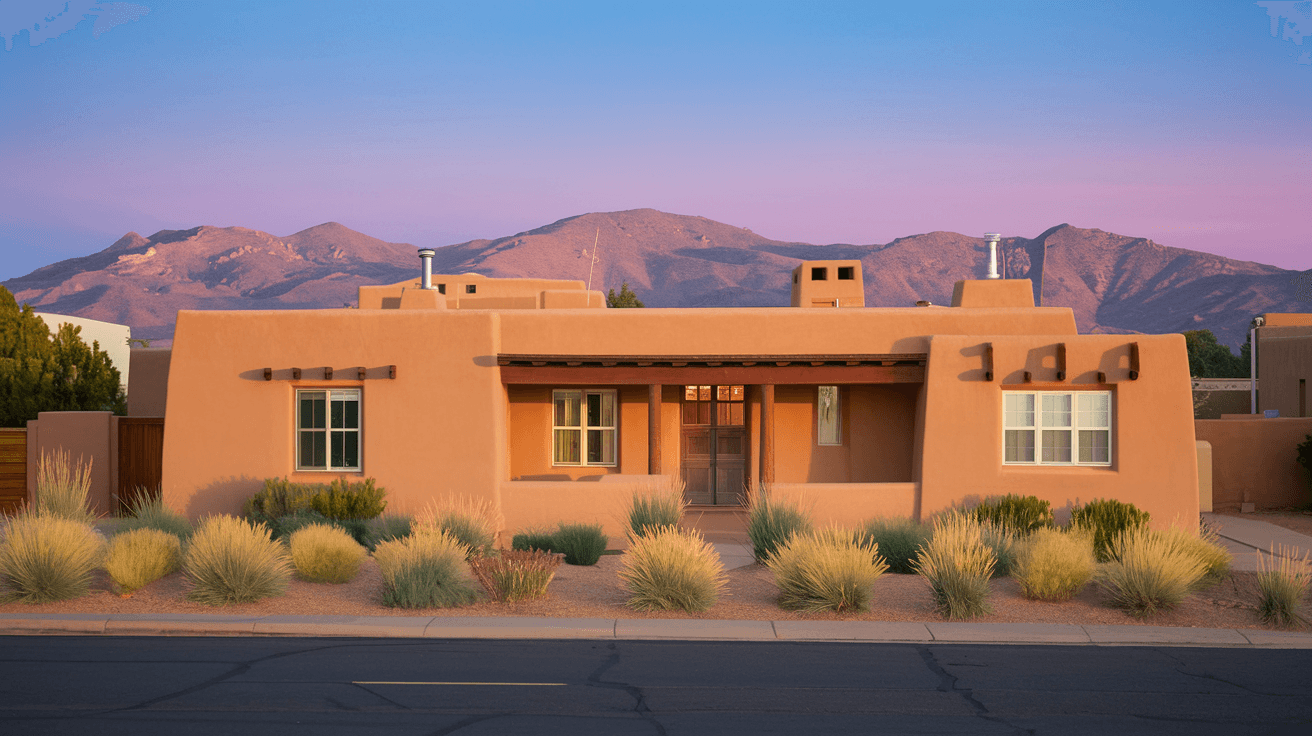
If you have spent any time researching summer living in Albuquerque NM, you have probably seen the stock photos: blue skies, the Sandia Mountains glowing pink at sunset, maybe a hot air balloon drifting over the Rio Grande. All of that is real. But summer here has a whole other dimension that most relocation guides gloss over, and if you are buying a home in 2026, you need the full picture before you sign anything.
We are talking about Albuquerque monsoon season — the dramatic, beautiful, occasionally destructive weather pattern that reshapes daily life from roughly July through mid-September every single year. Understanding it is not just a lifestyle consideration. It directly affects which homes hold their value, which neighborhoods flood, and what your backyard is actually going to feel like on a Tuesday afternoon in August.
Albuquerque Monsoon Season Homes: How the Weather Actually Works
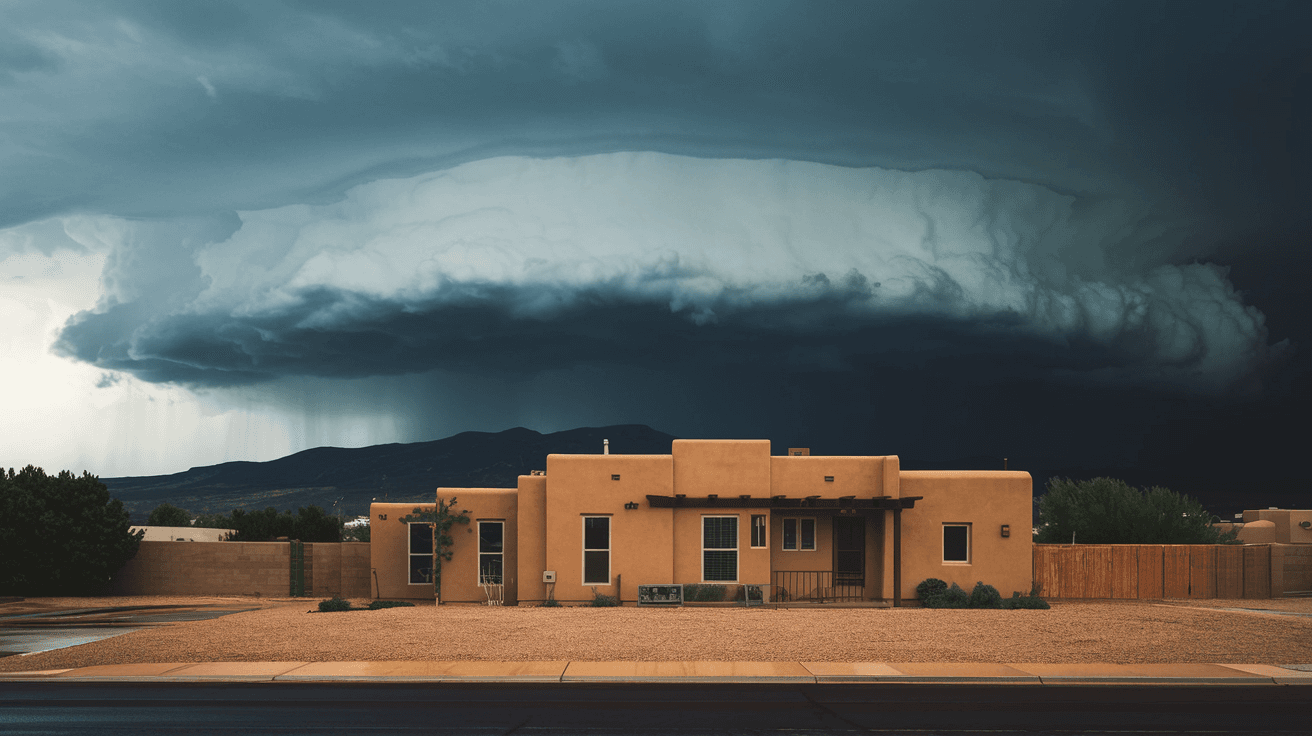
The North American Monsoon is not a tropical storm system. It does not arrive with days of warning or sustained rainfall. What happens in Albuquerque is more theatrical than that. Mornings are typically clear and warm, sometimes already hitting the mid-80s by 10 a.m. By early afternoon, you watch towering cumulus clouds build over the Manzano Mountains to the east or push up from the south. By 3 or 4 p.m., the sky can go from brilliant blue to charcoal gray in under an hour.
Then it rains. Hard. Sometimes for 20 minutes, sometimes for two hours. The arroyos — those dry, sandy channels that cut through neighborhoods all over the city — fill fast. The smell of wet creosote hits the air, and for about 45 minutes after the storm passes, Albuquerque smells better than anywhere on earth.
“"The monsoon is not something you endure in Albuquerque. It is something you learn to love. But your home needs to be ready for it before you do."
For buyers looking at Albuquerque monsoon season homes, the key questions are about drainage, roof condition, and arroyo proximity. Homes near the North Diversion Channel, the Embudo Channel, or any of the smaller arroyos threading through the South Valley and the Heights need to be evaluated carefully. The City of Albuquerque's arroyo system is actually well-engineered for flood control, but individual lots and older properties do not always drain the way they should.
What to look for in a monsoon-ready home:
- •Positive grading that slopes water away from the foundation
- •A roof that has been inspected within the last two years — flat roofs common in traditional adobe and pueblo-style homes need particular attention
- •Functional scuppers and drains on flat or low-slope roofs
- •No signs of efflorescence (white mineral staining) on stucco exterior walls, which can indicate water intrusion
- •Gutters and downspouts that direct water well away from the foundation
- •Landscaping that does not trap water against the house
Summer Heat in Albuquerque: What the Numbers Actually Feel Like
People hear "desert" and assume Albuquerque summers are brutal in the Phoenix sense. They are not. Albuquerque sits at roughly 5,300 feet elevation, which makes a significant difference. June is the hottest and driest month — temperatures regularly hit 95 to 100 degrees before the monsoon arrives — but the low humidity means that shade and a light breeze actually feel comfortable. You can sit on a covered patio at noon in June and be genuinely fine.
July and August, once the monsoon pattern establishes, bring afternoon humidity spikes that can make it feel muggier than you expect. It is still nothing like Houston or Miami, but if you are coming from Denver or the Pacific Northwest, the combination of afternoon heat and sudden humidity during a storm can catch you off guard.
Albuquerque weather summer 2026 buyers should also know that nighttime temperatures drop considerably. Even in peak summer, lows regularly fall into the 60s. This is one of Albuquerque's most underrated qualities — you can sleep with the windows open almost every night of the year.
Neighborhood Microclimates Matter More Than You Think
Not all of Albuquerque summers the same. The North Valley, with its mature cottonwood canopy along the bosque and the Rio Grande, runs noticeably cooler than the West Mesa or the far Northeast Heights. Areas like Los Ranchos de Albuquerque and the stretch along Rio Grande Boulevard feel almost lush in July compared to the more exposed high desert neighborhoods near Paseo del Norte and Coors.
The East Mountains — Tijeras, Edgewood, Cedar Crest — are a different world entirely. If you are open to commuting via I-40, those communities sit at 6,500 to 7,000 feet and feel dramatically cooler all summer long. Monsoon storms are more frequent and more intense up there, but so is the relief they bring.
Backyard Culture in Albuquerque: Why Outdoor Space Drives Home Value
Here is something that does not make it into enough real estate conversations: in Albuquerque, the backyard is a primary living space, not an afterthought. From April through October, people cook, eat, entertain, and just exist outside. The culture here is deeply oriented around outdoor space in a way that shapes what buyers actually use their homes for.
“"A covered patio in Albuquerque is not a luxury feature. It is the difference between a home you love and a home you tolerate."
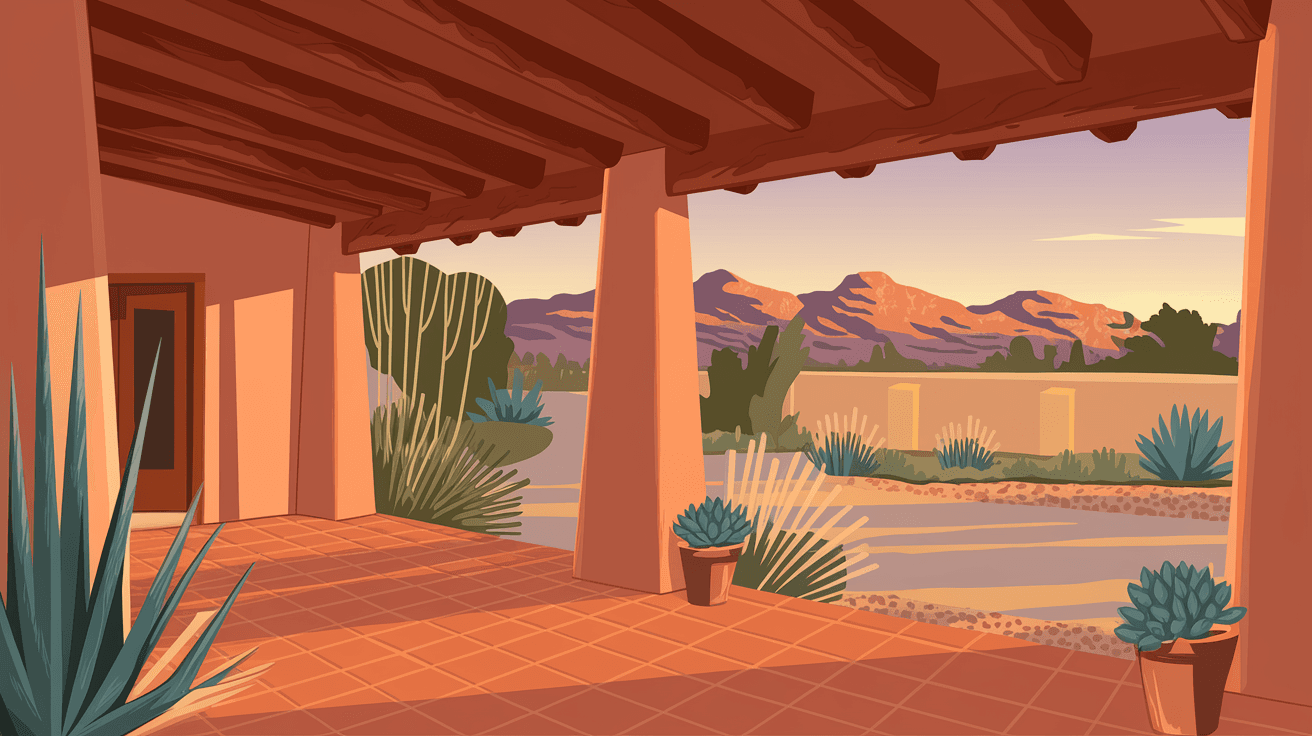
A covered portal — the traditional New Mexican term for a covered outdoor living area, usually running along the back of the house — is one of the most valuable features you can have going into summer. It gives you shade during the hottest part of the afternoon and shelter during monsoon storms while still letting you watch the show. Homes with well-designed portals on Albuquerque's established streets, like those in the Huning Highland historic district, Ridgecrest, or the streets around Nob Hill, command real premiums because buyers understand what they are getting.
Backyard features that matter most for Albuquerque summers:
- •Covered portal or patio oriented to catch afternoon shade
- •Drip irrigation system — hand-watering in July heat is not sustainable
- •Xeriscape or low-water landscaping that thrives without constant attention
- •Outdoor kitchen or at minimum a gas line stubout for grilling
- •Privacy walls or fencing — the traditional stucco courtyard wall is both functional and beautiful
- •Evaporative cooler or central AC (both are common; know which you have and what it costs to run)
What Buyers Should Inspect Specifically for Monsoon Readiness
A standard home inspection covers the basics, but if you are buying in Albuquerque and planning to be here through your first monsoon season, push your inspector to go deeper on a few specific things.
Roof systems deserve serious attention. Pueblo and territorial-style homes with flat or low-slope roofs use a built-up roofing or modified bitumen system that has a finite lifespan. Ask when it was last recoated or replaced. A roof that is 10 or more years old without maintenance is a liability heading into July.
Stucco condition is equally important. Traditional three-coat stucco over masonry is remarkably durable, but synthetic stucco (EIFS) on wood-frame homes can trap moisture in ways that cause serious structural damage over time. Know what your exterior walls are made of.
Drainage and grading should be walked during or immediately after a rain if at all possible. Ask your agent to schedule a second walkthrough during a monsoon storm if timing allows. You will learn more about a property in 20 minutes of heavy rain than in any inspection report.
The Insider Tip Most Buyers Never Hear
Here is something only people who have actually lived through an Albuquerque monsoon season tend to know: check the orientation of the garage. Afternoon monsoon storms in Albuquerque come predominantly from the south and southwest. A garage door facing south or west that does not have a proper overhang will take the full force of wind-driven rain. It sounds minor until you have standing water in your garage and a car that sat in it all night. When you are touring homes in July or August, look at which direction the garage faces and whether there is any protective overhang above the door.
If you are seriously considering a move to Albuquerque in 2026, connecting with The Taylor Team early in your search gives you access to neighborhood-by-neighborhood knowledge that no online listing can provide. Knowing which blocks near Lomas flood every August, which parts of the Heights have the best portal exposure, and which older neighborhoods have drainage infrastructure that actually works — that is the kind of context that changes what you buy.
Summer Lifestyle in Albuquerque: What the Season Actually Offers
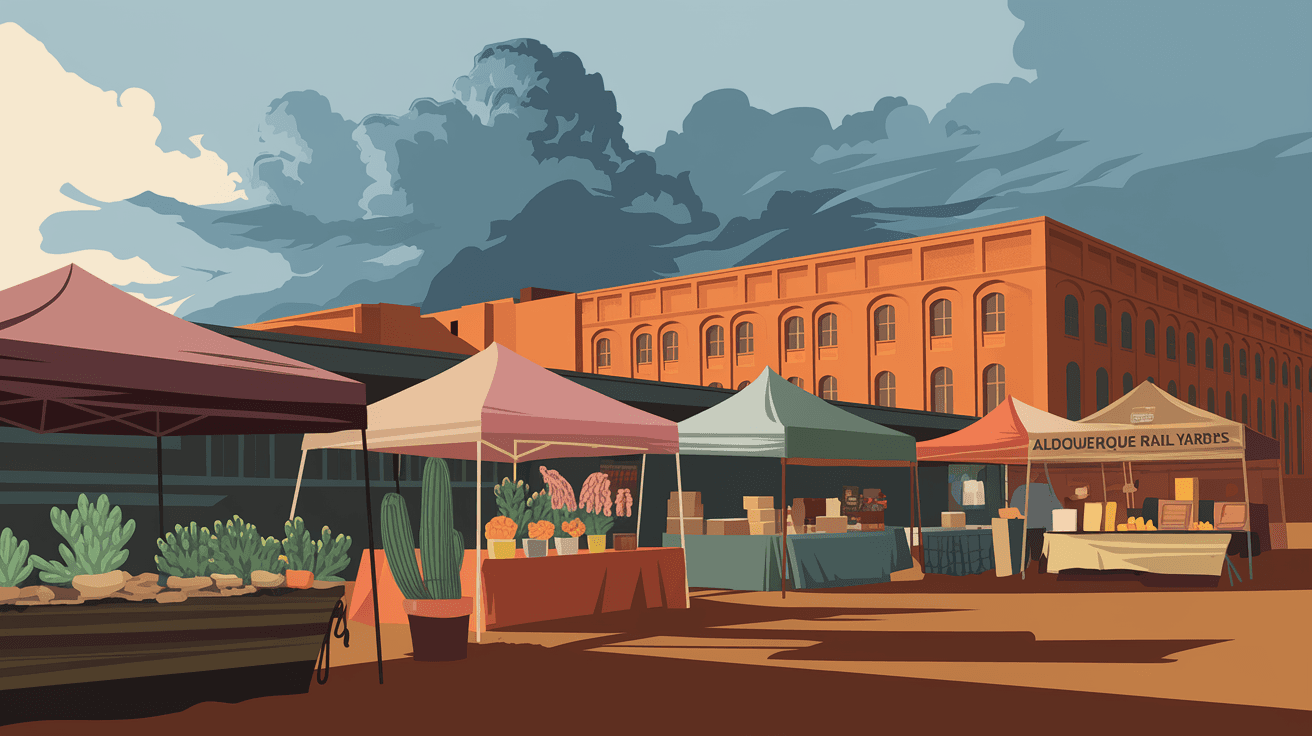
Beyond the weather logistics, summer living in Albuquerque NM has a rhythm that is genuinely hard to replicate anywhere else. The Balloon Fiesta grounds along Alameda sit quiet in summer, but the bosque trails along the Rio Grande are full of people at dawn before the heat builds. Gruet Winery on Pan American hosts evening events when the air finally cools. The Saturday farmers market at the Rail Yards in Barelas runs through September and is one of the best in the Southwest.
Green chile season begins in late August, and if you have never stood in a parking lot on Isleta Boulevard watching someone hand-roast chiles in a rotating drum while the smoke drifts across the street, you have not experienced Albuquerque summer. The smell alone will tell you why people stay here.
The Old Town plaza area and the streets around Central Avenue through Nob Hill come alive on summer evenings when temperatures drop and people emerge. Restaurants spill onto patios. The Sandia Mountains catch the last light and go through their famous sequence from orange to pink to purple. It is the kind of evening that makes you understand, viscerally, why people move here and never leave.
Summer in Albuquerque rewards people who come prepared and punishes those who do not do their homework. The monsoon is real, the heat is manageable, and the lifestyle is genuinely exceptional — but the home you buy needs to be built for this specific climate. Take the drainage seriously. Prioritize outdoor living space. Understand the difference between a home that handles July well and one that makes it miserable.
When you are ready to start that search, The Taylor Team at Berkshire Hathaway HomeServices knows these neighborhoods, these streets, and these seasonal realities in a way that makes a real difference in finding the right fit.
Want more insider intel?
Subscribe to get market updates and new articles delivered to your inbox.