Albuquerque Multi-Family Investment in 2026: Duplex and Triplex Cap Rates by Quadrant, Where Cash Flow Still Works, and What the South Valley and Barelas Corridors Are Returning
If you have been watching the Albuquerque real estate market for any length of time, you already know it does not behave like Phoenix or Denver. It moves on its own rhythm, shaped by the university, Kirtland Air Force Base, Sandia National Labs, and a rental population that is deeply rooted in place. That combination makes multi-family investment in Albuquerque 2026 a conversation worth having carefully, with real numbers and real neighborhood context, not just a generic spreadsheet someone built from Zillow data.
The metro median home price sits at $401,000 right now, with active listings hovering around 102 and a list-to-sale ratio of 98.3 percent. That is not a buyer's market. But the multi-family side of the ledger tells a different story depending on which quadrant you are looking at, and some of the best opportunities right now are in places that long-time Albuquerqueans have known about for years.
Multi-Family Investment Albuquerque 2026: The Quadrant-by-Quadrant Breakdown
Albuquerque is genuinely a city of four quadrants, and locals actually use that language. When someone says they found a triplex in the NE Heights, that means something different from a duplex off Isleta Boulevard in the South Valley. The rents, the tenant pool, the purchase price, and the cap rate all shift meaningfully depending on where Central Avenue bisects your deal.
Northeast Heights Duplexes and Triplexes
The Northeast Heights, roughly the area above Central and east of Louisiana, has long been the "safe" choice for investors who want stable tenants and lower vacancy. Properties near Tramway or up toward the foothills move quickly. Days on market across the metro average 29 days right now, and well-priced multi-family in the Heights moves even faster than that.
The tradeoff is compression on the cap rate side. Duplex cap rates in the Northeast Heights are generally running in the 5.0 to 6.2 percent range in 2026, depending on condition and unit mix. A two-bedroom/two-bedroom duplex near Wyoming and Montgomery might pencil at 5.5 percent if you buy right. That is not exciting cash flow, but it is stable, and appreciation has been consistent in that corridor.
Triplexes are harder to find up here. When they do come to market, they tend to be older stock, sometimes 1960s construction, and the value-add play is real if you have the patience for a renovation.
Northwest Albuquerque Multi-Family Opportunities
The Northwest side, particularly the area around Paseo del Norte and Coors, has seen significant residential growth over the last decade. Multi-family here is a mixed bag. You have newer construction that does not cash flow particularly well at current prices, and you have pockets of older stock closer to the river that can actually surprise you.
Cap rates on the Northwest side tend to range from 5.5 to 6.8 percent, with the higher end of that range reserved for properties that need work or are on the less desirable streets closer to the rail yard industrial areas. Tenant demand is solid because of proximity to Presbyterian Rust Medical Center and the retail corridors on Coors.
Southeast Albuquerque Rental Properties
The Southeast quadrant, from the International District down toward Gibson and the areas surrounding Kirtland AFB, is where you start to see cap rates climb into territory that actually moves the needle. Multi-family investment in Albuquerque's Southeast quadrant can return 6.5 to 8.0 percent cap rates on the right asset, and military-adjacent rentals near Kirtland tend to have lower vacancy because of BAH-supported tenants.
The International District specifically, the stretch of Central east of Carlisle and west of Tramway, carries a reputation that some investors use as an excuse to avoid it entirely. That is a mistake. Rents have been rising there, the city has invested in the corridor, and a well-managed duplex or triplex in that area can outperform a pristine property in the Heights on a cash-on-cash basis by a meaningful margin.
South Valley Investment Property Albuquerque: The Real Numbers
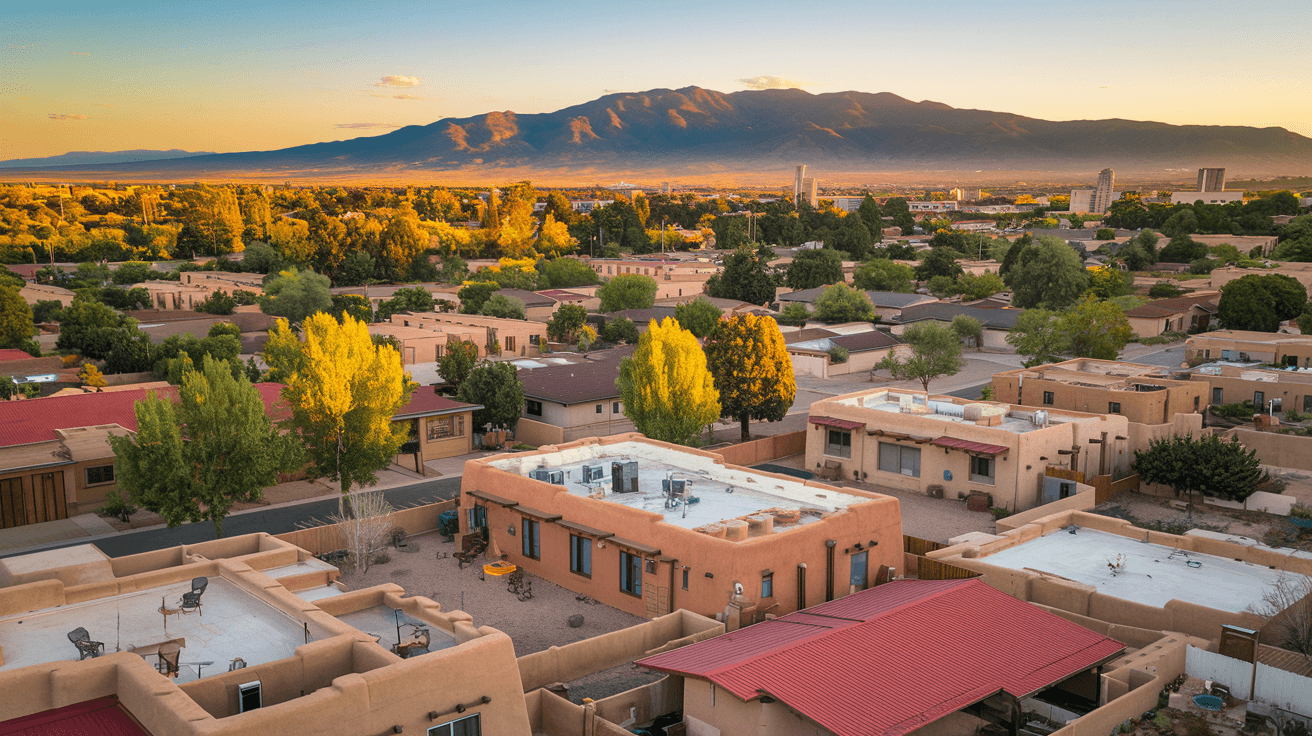
This is where the conversation gets genuinely interesting for investors who are willing to do their homework. The South Valley is not a neighborhood in the traditional sense. It is an unincorporated area of Bernalillo County, which means different tax structures, different zoning rules, and a different regulatory environment than properties inside Albuquerque city limits. That distinction matters enormously when you are running your pro forma.
The median home price in the South Valley sits around $268,000, which is dramatically below the metro median of $401,000. That gap is where cash flow lives.
“The South Valley has been an insider's market for multi-family investors for years. The price-to-rent ratio here is one of the most favorable in the entire metro, and that is not changing anytime soon.
A duplex in the South Valley, say near Isleta Boulevard south of Bridge, might be acquirable in the $320,000 to $380,000 range depending on condition and unit size. Current market rents for two-bedroom units in this corridor are running $1,050 to $1,250 per month per unit. Run those numbers with a standard expense ratio and a reasonable financing assumption, and you are looking at cap rates in the 7.0 to 8.5 percent range. That is real cash flow in a market where genuine cash flow has become increasingly difficult to find.
What Investors Need to Know About South Valley Zoning
Here is the insider tip that separates people who actually invest in the South Valley from people who just talk about it: because much of the South Valley sits in unincorporated Bernalillo County rather than within Albuquerque city limits, the zoning and permitting process runs through the county, not the city. That means the Bernalillo County Planning Department, not the City of Albuquerque Development Services, is your contact for ADU additions, unit conversions, and any value-add work that requires permits.
The county has been more permissive in some respects than the city, particularly around accessory dwelling units on larger lots. If you find a South Valley property with a half-acre or more, the ADU conversation is absolutely worth having with a county planner before you close. An additional unit on a property you already own is the fastest path to a cap rate that looks like the old days.
The school district picture here runs through APS, with Rio Grande High School serving much of the area. That context matters for your tenant demographic and for understanding the community fabric. The South Valley has deep cultural roots, strong ties to the acequia system that still runs through parts of the neighborhood, and a tenant population that tends toward longer tenancies than you see in transient-heavy areas near UNM.
Barelas Corridor Multi-Family Investment in Albuquerque 2026
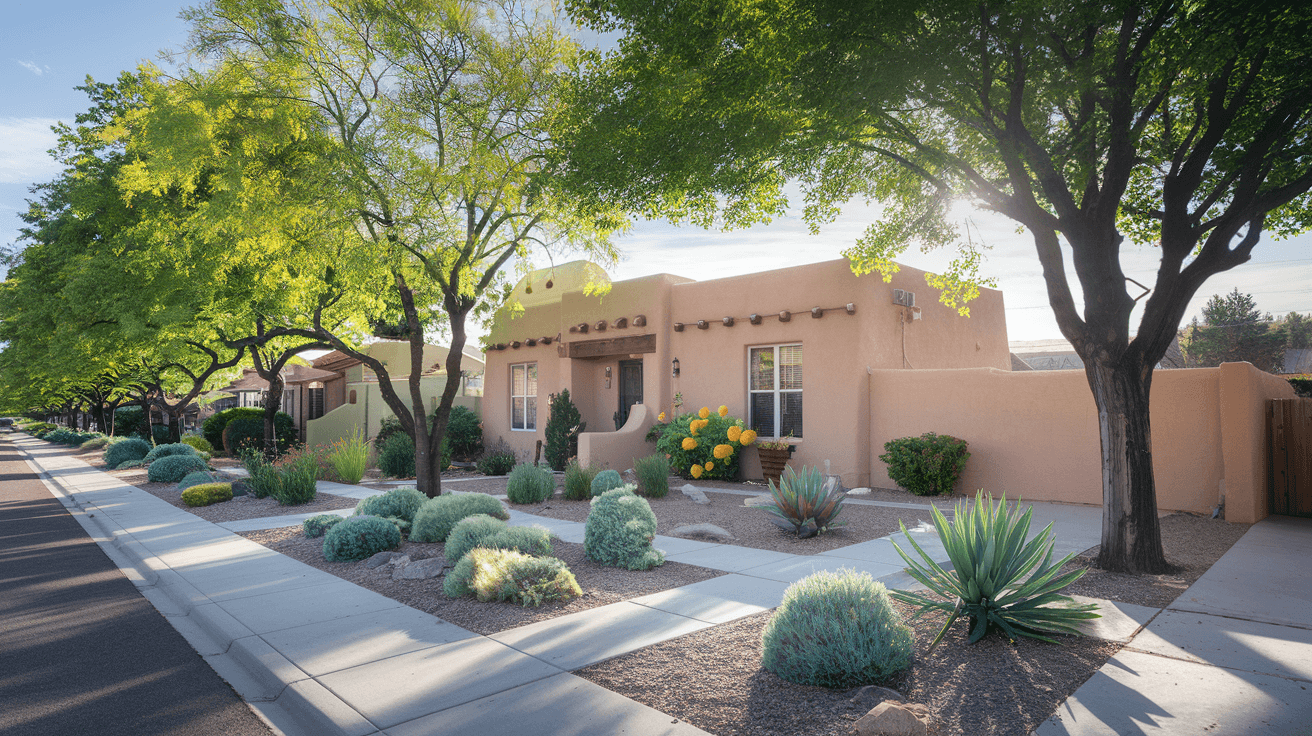
If the South Valley is the steady earner, Barelas is the one that keeps showing up in conversations among investors who are paying attention. Barelas sits just south of Downtown, bordered roughly by the Rio Grande on the west and the rail yards on the east. It is one of Albuquerque's oldest neighborhoods, with a history that goes back centuries, and it has been quietly changing for the better over the last several years.
The presence of the National Hispanic Cultural Center on Fourth Street has anchored a cultural identity for the neighborhood that drives genuine community investment. Barelas Coffee House on Fourth has been a neighborhood institution for decades, and the kind of place where you can read the neighborhood's pulse just by sitting at the counter for an hour.
Multi-family properties in Barelas are still priced below the metro median in most cases, with duplexes in the $280,000 to $360,000 range depending on condition and proximity to the NHCC and the Barelas-South Broadway transit corridor. Cap rates here are running 6.8 to 8.2 percent on well-purchased assets, with the higher end achievable on properties that need cosmetic or light mechanical work.
What makes Barelas particularly interesting right now is the trajectory. The Rail Yards Market, the ongoing investment in the Downtown/EDo corridor to the north, and the steady improvement in the Fourth Street corridor have all been nudging values upward. Investors who bought in Barelas four or five years ago have seen both appreciation and strong rent growth. The question for 2026 is whether the remaining value-add opportunities justify the purchase price, and in many cases, they still do.
Barelas Rental Market Dynamics
Tenant demand in Barelas skews toward long-term renters, working families, and a growing cohort of young professionals who want walkability to Downtown without paying Downtown prices. The Albuquerque Rapid Transit line runs along Central, which is the northern boundary of the neighborhood, giving tenants transit access that matters to a growing segment of the rental market.
Vacancy in well-managed Barelas rentals has been consistently low, often under five percent for landlords who maintain their properties and price competitively. With only 3.92 months of inventory across the broader metro market, the pressure on the rental side is not letting up. Renters who cannot find or afford to buy are staying renters longer, and that dynamic supports the multi-family investor thesis across the board.
Where Multi-Family Investment in Albuquerque 2026 Still Makes Sense: A Practical Summary
Pulling this all together, here is how the landscape looks for someone seriously evaluating a duplex or triplex purchase in Albuquerque right now:
- •Northeast Heights: Cap rates 5.0 to 6.2 percent, stable tenants, lower cash flow but strong appreciation history
- •Northwest Albuquerque: Cap rates 5.5 to 6.8 percent, solid demand near medical and retail corridors, newer stock underperforms on cash flow
- •Southeast/International District: Cap rates 6.5 to 8.0 percent, military-adjacent demand, higher management intensity but better returns
- •South Valley: Cap rates 7.0 to 8.5 percent, below-median purchase prices, county zoning creates ADU opportunities, strong long-term tenancy
- •Barelas: Cap rates 6.8 to 8.2 percent, cultural anchor, transit access, appreciation trajectory still intact
“In a market where the list-to-sale ratio is sitting at 98.3 percent and inventory is measured in weeks rather than months, finding a multi-family property that actually cash flows requires knowing which streets to focus on before you start searching.
The properties that check all the boxes, good bones, reasonable price, strong rent-to-value ratio, and a manageable tenant situation, are moving fast. Twenty-nine days on market is the average across all property types, and the well-priced multi-family deals are often gone before that average is reached. Showing up with pre-approval, a clear investment thesis, and a team that knows these neighborhoods is not optional at this point.
If you are evaluating a specific duplex or triplex in any of these corridors and want a realistic read on what the numbers actually look like, the Taylor Team works with multi-family investors across all four quadrants and the South Valley every week. A conversation now, before you are under contract and running out of due diligence time, is worth a lot more than a rushed analysis after you are already in escrow.
The Albuquerque multi-family market in 2026 is not easy, but it is far from impossible. The investors who are finding real cash flow are the ones who have moved past the idea that any neighborhood will work and have gotten specific about corridors, price points, and the operational realities of managing property in different parts of the city. The South Valley and Barelas are not secrets, but they are still misunderstood by enough of the market that the opportunity remains real for buyers who are willing to do the work.
Want more insider intel?
Subscribe to get market updates and new articles delivered to your inbox.