Albuquerque Multi-Family Investment 2026: Duplex and Triplex Inventory by Quadrant, Cap Rate Benchmarks, and Why the South Valley and North Valley Are Outperforming the Metro Average
If you have been watching the Albuquerque multi-family investment 2026 landscape and wondering where the real opportunity sits, you are not alone. Investors from Denver, Phoenix, and even out-of-state markets are circling this city with serious intent. And honestly, they should be. But knowing that Albuquerque is a good market is table stakes at this point. What actually matters is knowing which quadrant of the city gives you the best spread between acquisition cost and rent income, and why two of the city's most culturally rooted neighborhoods are quietly running circles around the metro average.
This is not a pitch. It is what we are seeing on the ground, walking these streets, writing offers, and talking to landlords who have held these properties for decades and are finally ready to pass the keys.
Albuquerque Multi-Family Market Conditions Heading Into 2026
The metro median home price is sitting at $385,000, which sounds steep until you realize that a well-maintained duplex in Albuquerque's South Valley can still be acquired well below that number. With active listings around 3,850 and months of inventory at 3.9, this is not a buyer's market in the traditional sense, but it is not the feeding frenzy of 2021 either. You have time to think. Not a lot of time, but enough.
Average days on market have settled at 34 days metro-wide, and the list-to-sale ratio is holding at 97.1%. That last number is important for multi-family buyers because it tells you that sellers are not desperate, but they are negotiating. There is room to work.
For duplex for sale Albuquerque searches, inventory is tighter than the overall market suggests. True income-producing two-to-four unit properties represent a small slice of those 3,850 active listings. When a well-priced duplex hits the MLS near Isleta Boulevard or off of Rio Bravo, it moves. We are talking days, not weeks, in the right price band.
What Investors Are Actually Buying Right Now
The profile of the active multi-family buyer in Albuquerque right now skews toward:
- •First-time investors using house-hacking strategies, living in one unit and renting the other
- •Out-of-state 1031 exchange buyers rolling equity out of pricier California and Colorado markets
- •Local owner-operators who already have one rental and are expanding their portfolio deliberately
- •Buyers specifically targeting duplexes and triplexes because four-unit and above properties trigger commercial lending requirements
That last point matters more than people realize. Staying under four units keeps you in conventional financing territory, which means lower rates, easier qualification, and faster closes. A triplex with strong rents and a conventional loan can pencil out in ways that a five-unit with commercial debt simply cannot right now.
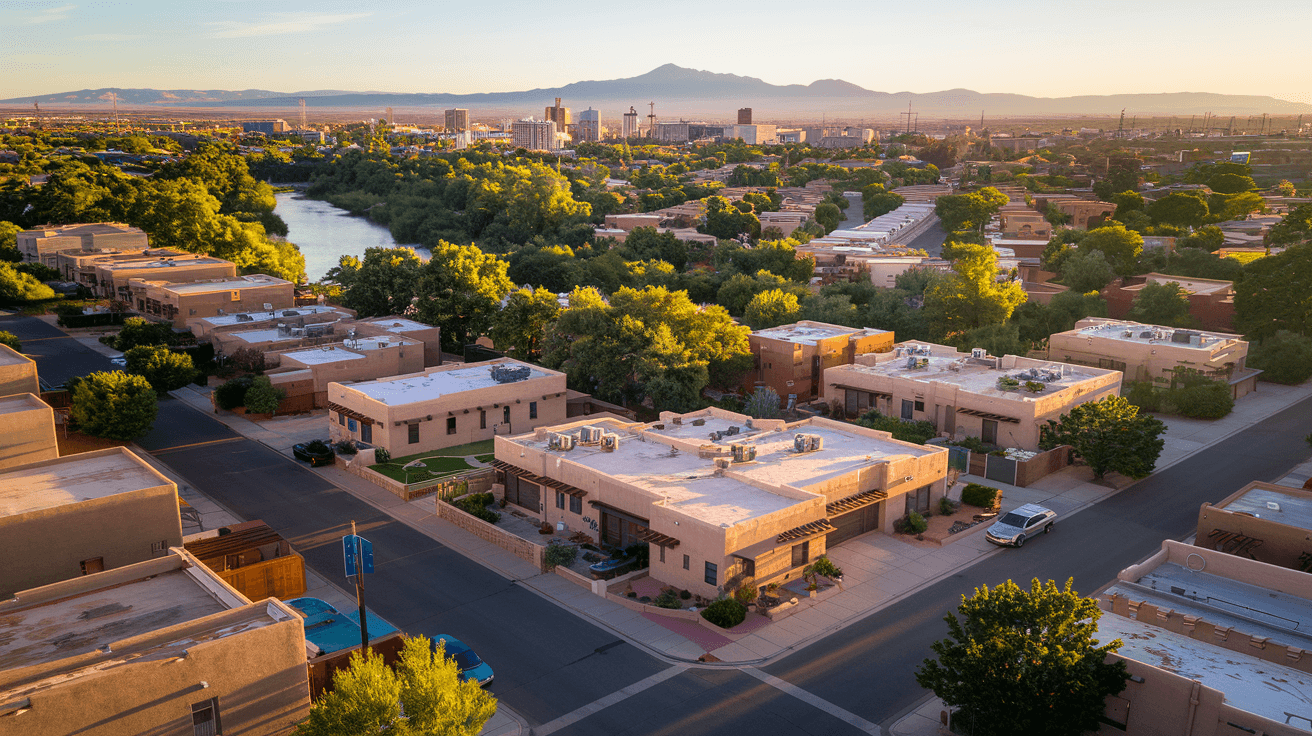
Duplex and Triplex Inventory by Albuquerque Quadrant
Albuquerque is naturally divided into four quadrants by Central Avenue running east-west and the rail corridor running roughly north-south. Each quadrant has a distinct character, a distinct price point, and a very different cap rate story.
Northeast Heights (NE Quadrant)
The Northeast Heights, from the neighborhoods around Candelaria up through Montgomery and into the Foothills, carries the highest acquisition costs in the city. You are looking at median duplex prices in the $380,000 to $480,000 range for anything in decent condition. Rents are solid, particularly near UNM's north satellite campuses and the Presbyterian and Lovelace hospital corridors, but the spread is thin. Cap rates in the NE quadrant typically land between 4.5% and 5.8%, which is not bad nationally but is the weakest in the Albuquerque metro when you factor in what you are leaving on the table compared to the South and North Valleys.
The upside here is appreciation. Properties near the Sandia Foothills hold value exceptionally well. If your strategy is long-term wealth building over cash flow, the NE quadrant has merit. If you need the property to cash flow from day one, keep reading.
Southeast (SE Quadrant)
The Southeast, particularly the areas around Kirtland Air Force Base and the neighborhoods threading between Gibson Boulevard and Zuni Road, offers a mixed picture. Military tenant demand keeps vacancy low and creates a reliable renter pool, and properties near the base trade at reasonable prices. Cap rates here run 5.5% to 6.5% depending on condition and distance to the base.
The challenge is inventory. True multi-family properties in the SE come up infrequently, and when they do, the condition range is wide. Buyers need to budget for deferred maintenance more aggressively here than in other quadrants.
Northwest (NW Quadrant)
The Northwest, anchored by the Cottonwood area and spreading out toward Unser Boulevard and the newer Rio Rancho border neighborhoods, is primarily single-family suburban development. Multi-family inventory here is genuinely scarce, and what exists tends to be small apartment complexes rather than the duplex and triplex product that most investors are targeting. If you are set on the NW quadrant, you may be waiting a long time for the right property to surface.
Southwest (SW Quadrant) and the South Valley
This is where the conversation gets interesting.
“"The South Valley is not a hidden gem anymore among serious investors, but it is still priced like one. That window does not stay open forever."
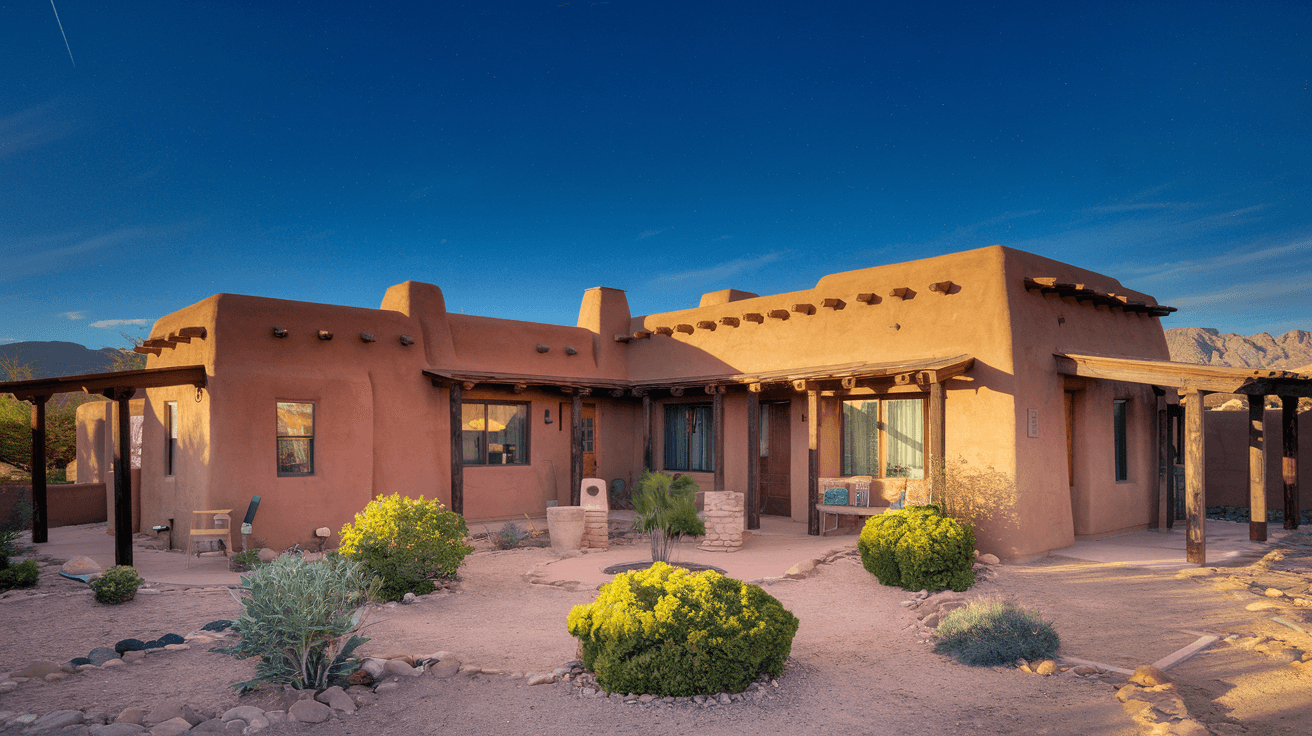
The South Valley, which sits largely outside Albuquerque city limits in Bernalillo County but is served by APS schools including Rio Grande High School, has a median price point around $268,000. For multi-family properties specifically, you can still find duplexes in the $220,000 to $310,000 range that generate combined rents of $2,200 to $2,800 per month. Run those numbers and you are looking at gross cap rates approaching 7% to 8.5% on well-maintained properties, which is genuinely exceptional in this rate environment.
The South Valley along Isleta Boulevard has a character that longtime Albuquerque residents understand intuitively. The farms, the acequias, the generations of families who have lived here since before Albuquerque was Albuquerque. That rootedness creates tenant stability that you simply do not find in transient suburban markets. Renters here stay. Turnover costs are real money, and lower turnover is a direct line to better net operating income.
North Valley Cap Rates and Why They Are Outperforming
The North Valley is the other story worth telling. Stretching from the north end of Old Town up through Los Ranchos de Albuquerque and into the Corrales Road corridor, the North Valley has long been known as Albuquerque's most desirable semi-rural enclave. Large lots, cottonwood bosque, horses in backyards, and the kind of quiet that you do not associate with a city of 560,000 people.
What is happening here for Albuquerque multi-family investment 2026 specifically is a generational transfer of property. Families who have owned duplexes and small multi-family compounds here for 30 or 40 years are selling. These properties rarely hit the open market in polished condition, but the fundamentals are outstanding.
Cap rates in the North Valley are running 6.2% to 7.5% for properties that are properly evaluated. Rents have caught up significantly in the last three years as the neighborhood's desirability has increased, while acquisition prices have not yet fully reflected that rent growth. That lag is the opportunity.
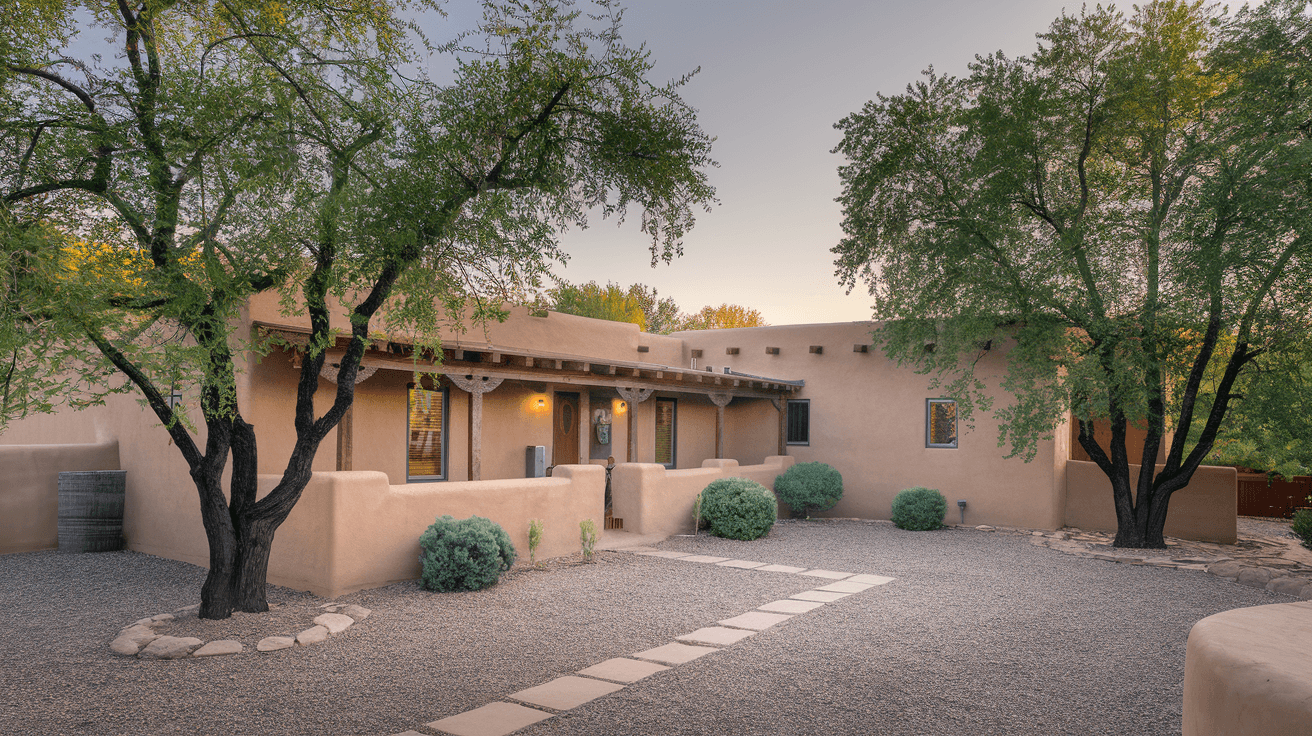
The insider tip that most out-of-state investors miss: the North Valley has a significant number of compound-style properties where a main house and a casita or guest house sit on the same parcel. These are not always listed as duplexes, but they function as income properties when configured correctly. If you know what to look for in the county assessor records and you understand how Bernalillo County handles accessory dwelling unit permitting, you can find properties that are effectively functioning as two-unit rentals but priced as single-family homes. That spread in valuation is where the real arbitrage lives.
Understanding Albuquerque Rental Property Cap Rate Benchmarks
Let's be direct about Albuquerque rental property cap rate expectations in 2026, because there is a lot of wishful thinking in this conversation nationally.
A realistic cap rate benchmark framework for Albuquerque multi-family looks like this:
- •Below 5%: You are overpaying or the property has significant upside that is not yet realized. Proceed with clear eyes.
- •5% to 6%: Market rate for stabilized, well-located properties in the NE quadrant and higher-demand corridors. Acceptable if appreciation is part of the thesis.
- •6% to 7%: Strong for Albuquerque. This is where the South Valley and North Valley currently live for quality properties.
- •7% to 8.5%: Excellent. These exist, but they require local knowledge, speed, and often some tolerance for cosmetic or deferred maintenance work.
- •Above 8.5%: Treat with serious skepticism. Either the rents are not verified, the condition is worse than it looks, or the location has a problem that the cap rate is compensating for.
The net operating income calculation matters more than the gross cap rate, and Albuquerque investors sometimes get burned by not accounting properly for property management (typically 8% to 10% of collected rents locally), vacancy (budget 7% to 8% for conservative underwriting), and the ongoing maintenance reality of older adobe and stucco construction.
What to Look for When Evaluating a Duplex for Sale in Albuquerque
Buying a duplex for sale in Albuquerque is different from buying one in Phoenix or Denver in ways that matter to your bottom line.
First, adobe and stucco construction requires specific inspection expertise. A general home inspector who primarily works single-family suburban construction may miss moisture intrusion patterns in older adobe walls that can cost $15,000 to $40,000 to properly remediate. Ask for an inspector with specific experience in older Albuquerque construction.
Second, water rights and irrigation laterals are relevant in the South Valley and North Valley in ways that can affect both property value and utility costs. Some properties along the acequia system have senior water rights that add real value. Others have irrigation assessments that add to carrying costs. Know which you are buying.
Third, the tenant-in-place situation deserves careful review. New Mexico has specific landlord-tenant statutes, and inherited tenants come with inherited lease terms. This is not necessarily bad, but you need to underwrite it accurately. A tenant paying $850 per month in a unit that rents for $1,100 at market rate represents a real opportunity, but also a timeline to manage.
Fourth, Albuquerque has a specific rental registration requirement through the city. If you are buying within city limits, confirm the property is registered or factor registration and any required inspections into your acquisition costs and timeline.
“"The best multi-family deals in Albuquerque in 2026 are not going to be found by someone refreshing Zillow from out of state. They are going to go to people who have relationships on the ground."
Why 2026 Is Still a Reasonable Entry Point for Albuquerque Multi-Family
Some markets nationally have run so hard that the math simply does not work anymore for income-producing property. Albuquerque is not that market.
The fundamentals holding this market steady are real:
- •Population growth driven by remote workers from higher-cost metros who have discovered that Albuquerque's quality of life is genuinely exceptional
- •Kirtland Air Force Base and Sandia National Laboratories providing a stable, high-income employment base that is not subject to tech layoff cycles
- •UNM and CNM enrollment creating consistent rental demand in specific corridors that does not fluctuate with the broader economy
- •Infrastructure investment along the Central Avenue corridor and into the South Valley through ongoing city and county programs
- •Rent growth that has outpaced national averages in recent years while acquisition prices have moderated from their 2022 peak
The 3.9 months of inventory and 34-day average days on market tell you this is a balanced market, not a buyer's bonanza. But balanced markets are where disciplined investors do their best work. You are not competing with 22 offers. You are competing with three or four, and the one who wins is usually the one who came prepared with accurate local comps, a clear financing structure, and an agent who can communicate credibly to a seller's representative.
If you are seriously evaluating Albuquerque multi-family investment in 2026 and want to talk through specific properties or quadrants in more detail, the Taylor Team at Berkshire Hathaway HomeServices works with both local and out-of-state investors regularly. We know which streets are performing and which ones look good on paper but have vacancy challenges that do not show up in the listing description.
The South Valley and North Valley are outperforming right now for reasons that are structural, not accidental. Lower acquisition costs, stronger rent-to-price ratios, and tenant stability rooted in community rather than convenience. Those are durable advantages. The investors who recognized them three years ago are sitting on meaningful equity gains. The investors who recognize them today still have a reasonable window, though it is narrowing as more buyers figure out what locals have known for a while.
Albuquerque rewards the patient and the informed. That combination, as it turns out, describes most of the serious investors who have done well here.
Want more insider intel?
Subscribe to get market updates and new articles delivered to your inbox.