Is Buying a Rental Property in Albuquerque Still Worth It in 2026? A Realistic Look at the Numbers
If you have been watching Albuquerque real estate from the sidelines, wondering whether the window for Albuquerque rental property investment 2026 has already closed, the honest answer is: it depends on what you buy, where you buy it, and whether your numbers actually pencil out. The city is not the sleeper market it was in 2018, but it is also not Phoenix or Austin, where investors got priced into negative cash flow years ago. There is still real money to be made here, and real mistakes to avoid.
Let's talk about what the market actually looks like right now and whether it makes sense for you to pull the trigger.
Albuquerque Rental Property Investment 2026: What the Market Data Is Telling You
The metro median home price is sitting at $445,000, which feels like a long way from the $200,000 range that made ABQ a darling of the BRRRR crowd a decade ago. Properties are moving fast, averaging just 22 days on market, and sellers are getting close to everything they ask for, with a list-to-sale ratio of 98.5%. There are only about 48 active listings competing for buyer attention at any given moment, which translates to roughly 2.7 months of inventory. That is still a seller's market, full stop.
What that means for investors is that the days of lowballing a duplex off Central and walking away with instant equity are mostly gone. You have to be strategic, move quickly, and know your numbers cold before you even schedule a showing.
But here is what the raw data does not tell you: Albuquerque's rental demand is structurally strong in a way that a lot of Sun Belt cities are not. UNM brings a constant rotation of graduate students, medical residents, and faculty who rent for two to four years and then move on. Kirtland Air Force Base and Sandia National Laboratories create a steady pipeline of relocating professionals who often prefer renting for the first year in a new city. The city's large healthcare sector, anchored by Presbyterian and UNM Hospital, generates consistent demand from traveling nurses and early-career medical workers.
That demand does not evaporate when the national market softens. It just keeps showing up.
How to Actually Run the Numbers on a Buy Rental Property Albuquerque Deal
This is where a lot of aspiring landlords go wrong. They fall in love with a property, run optimistic numbers, and end up owning a very expensive headache. So let's walk through what a realistic deal might look like in today's market.
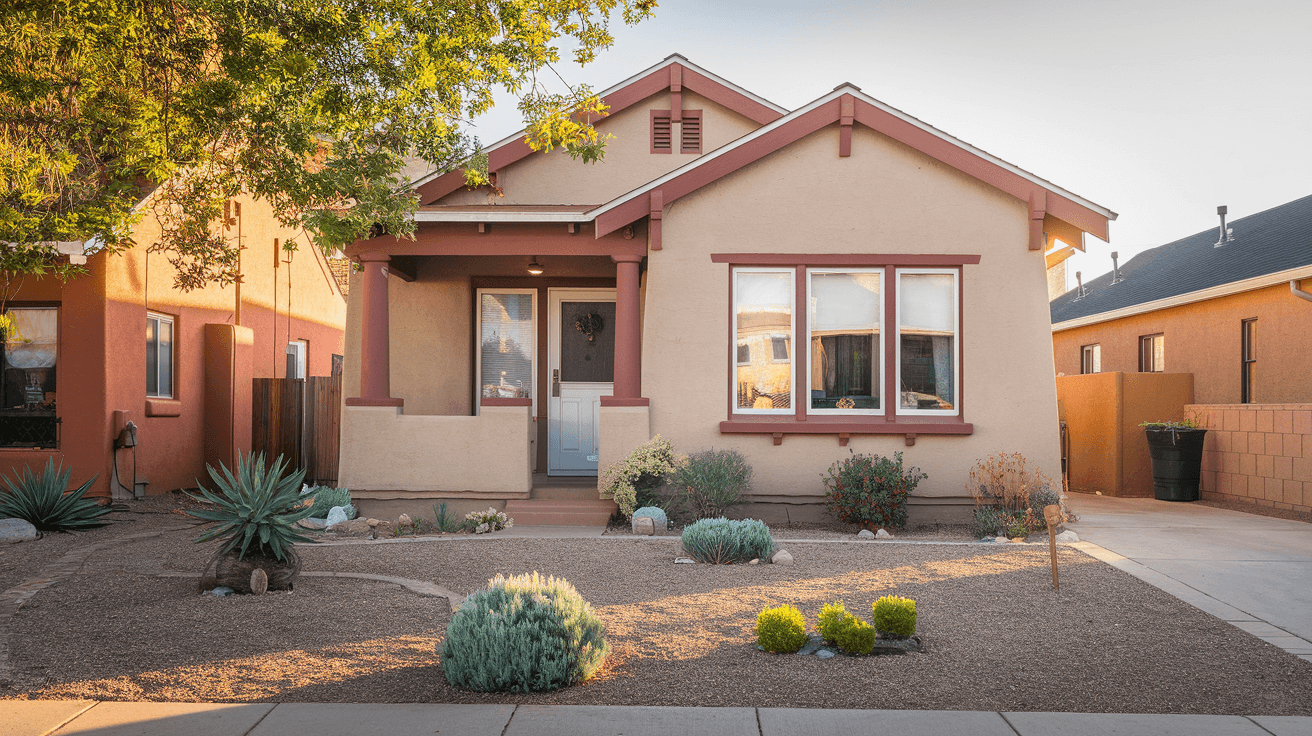
Assume you are buying a three-bedroom, two-bath home in a solid midtown neighborhood for around $350,000, which is below the metro median and still findable if you are working with someone who knows where to look. You put 25 percent down (the standard for investment properties), so your down payment is $87,500. At current rates, your principal and interest payment on the remaining $262,500 is roughly $1,750 to $1,850 a month depending on your rate.
Now add the full cost stack:
- •Mortgage (P&I): approximately $1,800
- •Property taxes: roughly $175 to $225 per month (New Mexico's effective rate is relatively landlord-friendly)
- •Insurance: $100 to $150 per month for a standard landlord policy
- •Property management (if you use one): 8 to 10 percent of collected rent
- •Vacancy reserve: budget for one month empty per year, spread across 12 months
- •Maintenance reserve: 1 percent of purchase price annually, or about $290 per month
Your total monthly expense load lands somewhere between $2,500 and $2,800 before you collect a single dollar in rent.
So what can you charge? A well-maintained three-bedroom in a neighborhood like Ridgecrest, the Journal Center area, or near Paseo del Norte is realistically renting for $1,800 to $2,200 per month right now, depending on condition and finishes. At the high end of rent and the low end of expenses, you are roughly breaking even or slightly positive. At the low end of rent with full expenses, you are subsidizing your tenant's housing.
That is the honest reality of buying at full retail in a $350,000 to $400,000 price point. Cash flow is thin. You are largely betting on appreciation and equity paydown over a five to ten year hold.
“The investors making real money on Albuquerque rental property investment in 2026 are not finding deals on Zillow. They are buying properties that need work, have title complications, or are coming from estates and divorces where the sellers prioritize speed over price.
Where the Better Deals Are Still Hiding
The investors who are genuinely winning right now are doing one of three things:
- •Buying small multifamily (duplexes and fourplexes) where the rent-to-price ratio is more favorable than single-family
- •Targeting value-add properties in neighborhoods like the International District, South Valley, or Barelas where prices are lower and rents are catching up
- •House hacking, meaning they live in one unit of a duplex and rent the other, which dramatically changes the financing and cash flow equation
The Southeast Heights, particularly pockets around Louisiana and Gibson, still has older single-family homes in the $250,000 to $310,000 range that can generate $1,400 to $1,600 in rent. The numbers work better there, though you need to price in older roofs, evaporative coolers that need replacement, and the occasional plumbing surprise in a home built in the 1960s.
Nob Hill Rental Property: Premium Prices, Premium Tenants
If you have been watching Nob Hill specifically, the neighborhood median sits right at $444,633, essentially matching the metro median despite being one of the most walkable and desirable zip codes in the city. The stretch of Central between Girard and Washington, with Quirky Nob Hill staples like Duran's Pharmacy counter, Marble Brewery, and the Nob Hill Shopping Center anchoring foot traffic, draws renters who genuinely want to live car-light in Albuquerque.
Tenants in Nob Hill tend to be young professionals, UNM affiliates, and long-term ABQ residents who are priced out of buying but committed to the neighborhood. Turnover is lower than you might expect. When someone lands a rental on Morningside or Monte Vista, they tend to stay.
The catch is that you are paying Nob Hill prices. A two-bedroom bungalow on a walkable block will cost you $380,000 to $440,000, and you might get $1,600 to $1,900 in rent. The cash flow math is similar to what we outlined above: thin to neutral at purchase, but the appreciation trajectory in Nob Hill has been reliable over the past decade, and the tenant quality tends to be strong.
The schools in the area fall under APS, with Highland Elementary feeding into Wilson Middle School and Highland High School. For investors targeting families, that is worth knowing when you are setting expectations about your tenant pool.
Albuquerque Landlord Cash Flow 2026: The Honest Projections
So what does Albuquerque landlord cash flow 2026 actually look like across different strategies? Here is a realistic breakdown by approach:
Single-Family Buy and Hold (Full Retail Purchase)
- •Best case: $100 to $300 per month positive cash flow after all expenses
- •Most likely case: Breakeven to slightly negative on cash flow, with equity building through appreciation and loan paydown
- •Primary return driver: Appreciation, which has averaged 6 to 8 percent annually in ABQ over the past five years
- •Who this works for: Investors with long time horizons (7 to 10 years) who are not dependent on monthly cash flow
Value-Add Single-Family
- •Purchase price: $200,000 to $280,000 for a distressed property
- •Rehab budget: $30,000 to $60,000 to bring to market-ready condition
- •Post-rehab value: $290,000 to $360,000 (creating equity at acquisition)
- •Rent potential: $1,500 to $1,800
- •Cash flow: $200 to $500 per month positive, depending on rehab quality and financing structure
- •Who this works for: Investors with contractor relationships, cash reserves, and patience for a 90 to 120 day project
Small Multifamily (Duplex or Triplex)
- •Purchase price range in ABQ: $380,000 to $550,000 for a well-located duplex
- •Combined rent potential: $2,800 to $3,400 per month
- •Cash flow: Often $300 to $700 per month positive after expenses
- •Additional benefit: One vacancy does not kill you the way it does with single-family
- •Who this works for: Investors willing to manage two or more tenant relationships and deal with shared systems like roofs and HVAC
“If you are expecting Albuquerque rental property investment in 2026 to generate the kind of cash flow you read about in 2015 blog posts, you are going to be disappointed. The market has matured. But that does not mean it is broken. It means you have to be smarter about the entry point.
The Insider Tip Most Out-of-Town Investors Miss
Here is something that only comes from actually living and working in this market: properties near the Rapid Ride transit corridors on Central Avenue rent faster and hold tenants longer than comparable homes just a few blocks off the route. ABQ Ride's Rapid Ride service has genuinely changed commuting patterns for a segment of the renter population, particularly younger renters who are deliberately car-free or car-light. A house on Mulberry or Morningside, within a five-minute walk of a Rapid Ride stop, will lease in days, not weeks, and you will see fewer vacancy gaps over the life of your hold. Most out-of-town investors buying from a spreadsheet have no idea this dynamic exists.
What to Watch for in the Albuquerque Rental Market Through 2026
A few factors will shape how this market moves over the next 12 to 18 months:
- •Interest rate movement: Even a half-point drop in rates meaningfully changes cash flow math on a $350,000 purchase. Watch the Fed carefully.
- •New apartment supply: Several larger multifamily projects have been in the pipeline along the Paseo del Norte and I-25 corridor. If those deliver, they could soften rents in the $1,200 to $1,600 range.
- •UNM enrollment trends: The university has been working to stabilize and grow enrollment after pandemic dips. A stronger UNM means stronger near-campus rental demand.
- •City of Albuquerque landlord regulations: There has been ongoing conversation at the city council level about renter protections. Nothing dramatic has passed yet, but it is worth monitoring if you are buying in the city limits.
- •Insurance costs: Like much of the country, property insurance in New Mexico has crept up. Get a quote before you close, not after.
Is Buying a Rental Property in Albuquerque the Right Move for You?
The answer is probably yes if you are buying a value-add property or small multifamily with realistic numbers, planning to hold for at least seven years, and have cash reserves to handle the unexpected. Albuquerque is not going to make you rich overnight, but it is a stable, demand-supported market with a growing economy and a tenant base that is not going anywhere.
The answer is probably no if you are expecting strong monthly cash flow from a retail purchase at current prices, planning to flip in two years, or buying based on optimistic rent projections without actually checking what comparable units are leasing for right now.
The Taylor Team works with investors across Albuquerque every week, and the conversations that go best are the ones where someone comes in with clear goals, a realistic budget, and an openness to looking at neighborhoods they had not originally considered. If you are thinking about buying a rental property in Albuquerque and want someone to run the actual numbers with you on specific properties, that is exactly the kind of conversation we are built for. Reach out and let's take a look at what is actually available and what it will realistically produce.
The market here rewards people who do their homework and move with confidence. It has a way of humbling people who move on hype. Come in prepared, and Albuquerque will treat you well.
Want more insider intel?
Subscribe to get market updates and new articles delivered to your inbox.