
Albuquerque Short Term Rental Investment 2026: Which Neighborhoods Allow Airbnb, What Gross Yields Look Like, and Whether the Numbers Still Make Sense
If you've been watching Albuquerque real estate and wondering whether an Albuquerque short term rental investment in 2026 still pencils out, you're not alone. We field this question constantly, usually from people who've driven through Nob Hill on a Friday night, watched the crowd spilling out of Zendo Coffee and onto Central, and thought: someone is making money off these visitors. Sometimes they are. Sometimes they're bleeding cash and don't know it yet. This post is the honest version of that conversation.
Albuquerque sits in a genuinely interesting position right now. The metro median home price is hovering around $385,000, inventory has loosened up to about 4.1 months, and the average home is selling in 31 days at 97.8% of list price. That's not a panicked seller's market, but it's not a buyer's paradise either. It's a market where a smart short-term rental acquisition is still possible, but the margin for error has shrunk. You need to know the rules, know the neighborhoods, and know your actual numbers before you make a move.
Albuquerque Airbnb Regulations 2026: What the City Actually Requires
This is where a lot of out-of-state investors get tripped up, and honestly where some local buyers stumble too. Albuquerque has had a short-term rental ordinance on the books since 2020, and the city has continued to refine enforcement. As of 2026, here's the framework you're operating inside.
Albuquerque requires all short-term rental operators to obtain a Short-Term Rental Certificate from the city's Planning Department. The application process involves proof of ownership or authorization from the owner, a valid City of Albuquerque business registration, and a certificate of occupancy for the property. There's also an annual renewal requirement, so this isn't a one-and-done paperwork situation.
The city distinguishes between two types of short-term rentals:
- •Owner-occupied STRs: The host lives on the property as their primary residence and rents out a portion or the whole home while away
- •Non-owner-occupied STRs: Investment properties where the owner does not live on site
Non-owner-occupied short-term rentals face more scrutiny, including neighborhood notification requirements and, in some zones, outright prohibition. This matters enormously when you're shopping for an Albuquerque investment property Airbnb setup, because a house that looks perfect on Zillow might sit in a zone that won't allow non-owner STR operation.
The city also enforces noise ordinances, occupancy limits, and parking requirements that vary by neighborhood. Repeat violations can result in certificate revocation. The enforcement mechanism has teeth now in a way it didn't five years ago.
“"The single biggest mistake we see investors make is buying first and checking the zoning second. In Albuquerque, that order of operations can cost you everything."
Albuquerque Neighborhoods Where Short-Term Rentals Actually Work in 2026
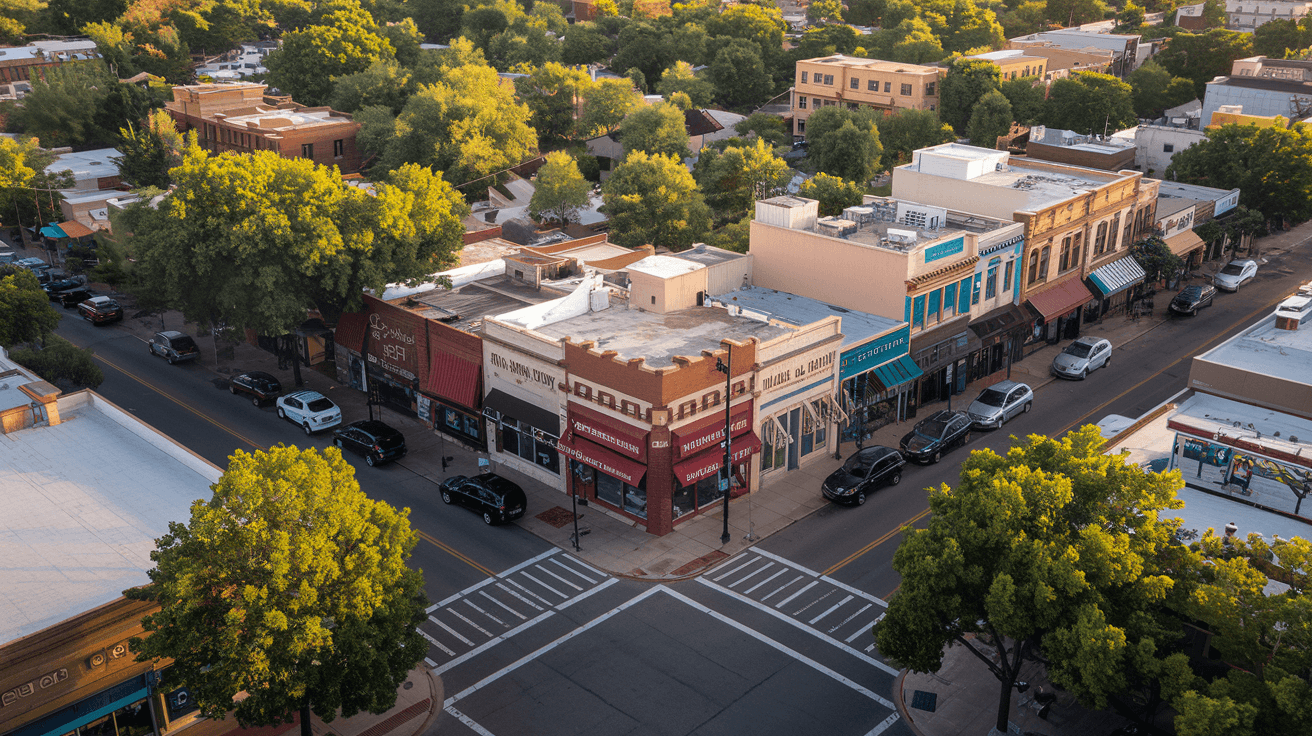
Not every neighborhood is created equal for Airbnb Albuquerque regulations 2026 compliance or guest demand. Here's how we think about the map.
Nob Hill
If you want walkability and built-in demand, Nob Hill is the conversation starter. Median prices here sit around $395,000, which is right at the metro median, but the rental premium for a well-appointed Nob Hill Airbnb is real. You've got Nob Hill Bar and Grill, Casa de Benavidez nearby, the Route 66 nostalgia draw, and proximity to UNM that generates a steady stream of visiting faculty, parents, and conference attendees.
The zoning picture in Nob Hill is mixed. The Central Avenue corridor is zoned for commercial and mixed-use activity, which generally supports STR operation. Side streets in the residential interior require closer inspection. A craftsman bungalow two blocks off Central might be in an R-1 zone that restricts non-owner STRs. Pull the zoning before you fall in love with the hardwood floors.
The school district here is APS, serving Highland Elementary, Wilson Middle, and Highland High. That matters if you're considering a longer-term exit strategy that includes a family buyer.
Old Town and the Rio Grande Corridor
Old Town is Albuquerque's most recognizable tourist destination, and the demand signal for STRs in and around the plaza is strong. Visitors coming for the Balloon Fiesta, the Indian Pueblo Cultural Center, or the Albuquerque Museum want to walk out their door and be in the experience. Supply in Old Town is constrained by the historic overlay district, which limits what you can do with a property structurally, but that same constraint suppresses competition.
The Rio Grande corridor heading north toward Corrales picks up a different guest profile: cyclists using the Paseo del Bosque Trail, birders at the Rio Grande Nature Center, and people who want quiet and cottonwood trees instead of Central Avenue noise. Prices are more variable here, and some parcels straddle city and county jurisdiction, so the regulatory picture requires extra due diligence.
Downtown and EDo (East Downtown)
The EDo neighborhood has been quietly building a hospitality ecosystem around the KiMo Theatre, Meow Wolf's Albuquerque location, and the cluster of bars and restaurants along Gold and Silver. For a short-term rental targeting the arts-and-culture visitor, this area has genuine appeal. Prices are lower than Nob Hill, which helps your yield math, but property condition varies dramatically block by block. Know what you're buying.
Uptown and Midtown
Uptown doesn't carry the romantic appeal of Nob Hill or Old Town, but it's functional. Proximity to Kirtland Air Force Base generates TDY (temporary duty) demand that is remarkably stable. Military travelers often book for 30 days or more, which in some configurations shifts the property out of short-term rental classification entirely and into medium-term territory. That can actually simplify your regulatory burden while maintaining strong occupancy.
How to Calculate Gross Yield on an Albuquerque Short Term Rental
Let's talk numbers, because this is where the coffee conversation gets real.
Gross yield is simply your annual gross rental revenue divided by your purchase price. It doesn't account for expenses, vacancy, or management fees, but it's the starting benchmark.
For a Nob Hill property at $395,000, you need to know what comparable Airbnbs in that zip code are actually earning, not what the listing claims. Tools like AirDNA and Rabbu give you historical revenue data by market. In Albuquerque's stronger STR zip codes, a well-managed 2-bedroom unit might generate $38,000 to $52,000 in gross annual revenue depending on seasonality and quality of listing.
Running that math:
- •Purchase price: $395,000
- •Gross annual revenue (midpoint): $45,000
- •Gross yield: approximately 11.4%
That sounds attractive. Here's where investors need to pump the brakes and get honest about expenses:
- •Property management fees (typically 20-30% of revenue for STR management)
- •Platform fees (Airbnb takes roughly 3% from hosts)
- •Cleaning costs (higher per-stay than long-term rentals)
- •Utilities, which you're covering as the host
- •Furnishing and ongoing replacement (budget 1-2% of purchase price annually)
- •Insurance (STR-specific coverage costs more than standard homeowner's policy)
- •Property taxes and HOA fees if applicable
- •Mortgage debt service if financed
After a realistic expense load, net operating income on that same property might land between $22,000 and $30,000 annually. Your net yield drops to the 5.5-7.6% range. That's still competitive with long-term rentals in Albuquerque, but it's not the slam dunk the gross number suggests.

Albuquerque's Balloon Fiesta Effect and Seasonal Demand Patterns
Here's the insider piece that shapes your underwriting more than any other single variable: Balloon Fiesta.
The Albuquerque International Balloon Fiesta runs for nine days every October and draws somewhere north of 800,000 attendees to the metro. Hotel inventory gets absorbed weeks in advance. Short-term rental hosts who are positioned correctly, meaning close to Balloon Fiesta Park on the north end of the city or anywhere with rooftop or open-sky views, can charge rates during those nine days that represent a meaningful percentage of their entire annual revenue.
We've talked to hosts who generate 15-20% of their annual gross revenue in that single October window. That's not a rounding error. It's a structural feature of the Albuquerque STR market that you won't find modeled accurately in national STR data platforms, because the spike is so concentrated and so local.
The flip side: January and February are slow. The Sandia Mountains are beautiful in winter, but Albuquerque doesn't draw the ski volume that Taos or Santa Fe captures. Build realistic winter vacancy into your model. A property that's 78% occupied annually might be running at 45% occupancy in January and 95% in October. Your cash flow management needs to reflect that.
Other demand drivers worth knowing:
- •Gathering of Nations Powwow every April, one of the largest Native American cultural events in North America
- •Albuquerque Comic Con and other convention traffic at the Albuquerque Convention Center
- •UNM graduation weekends in May
- •Breaking Bad and Better Call Saul tourism, which is real and ongoing, concentrated around filming locations in the South Valley and Albuquerque's Southeast
- •Film industry production stays, as New Mexico's tax credit program keeps Albuquerque stages busy
“"Albuquerque's STR market rewards hosts who understand the city's event calendar. The investors who treat it like a passive set-it-and-forget-it play are usually the ones who sell in year two."
Whether the Numbers Still Make Sense for Albuquerque Short Term Rental Investment in 2026
Honestly? It depends on what you're comparing it to and what your goals are.
If you're comparing a short-term rental to leaving money in a savings account, the numbers make sense. If you're comparing it to a passive long-term rental with a property management company handling everything, the math is closer than it looks once you account for the active management demands of a well-run Airbnb.
The Albuquerque short term rental investment in 2026 case is strongest when:
- •You buy in a zone that clearly permits non-owner STR operation
- •The property is within 10-15 minutes of either Balloon Fiesta Park, Old Town, or a major demand generator
- •You have a management system in place before you close, not after
- •Your debt service is manageable enough that a slow January doesn't create a cash crisis
- •You've priced in the regulatory compliance costs, including the city certificate, business registration, and any required inspections
The case gets weaker when:
- •You're buying at the top of the price range hoping appreciation bails out weak cash flow
- •The property requires significant renovation before it can generate revenue
- •You're in a neighborhood where STR enforcement is actively increasing
- •You're assuming Balloon Fiesta rates every weekend of the year
With active listings around 3,200 and the market sitting at 4.1 months of inventory, there are genuine opportunities to find the right property without overpaying. The 31-day average days on market means you're not in a situation where you have to waive every contingency to compete. You have room to do your due diligence.
If you're seriously evaluating an Albuquerque investment property Airbnb purchase this year, the smartest first call you can make is to an agent who works this market every day and can pull actual comp data, walk you through the zoning map, and help you model realistic revenue before you're emotionally attached to a property. That's exactly what we do at The Taylor Team. Reach out and let's start with the numbers.
The short-term rental opportunity in Albuquerque is real, but it's not automatic. The city's growth, its cultural calendar, and its position as a film and tourism destination create genuine demand. The investors who will do well here in 2026 are the ones who go in with clear eyes, realistic projections, and a property that's actually permitted for what they want to do with it. That's a smaller subset of the available inventory than most people realize, which means finding it requires knowing where to look.
Want more insider intel?
Subscribe to get market updates and new articles delivered to your inbox.