Buying a Fixer-Upper in Albuquerque in 2026: Renovation Loans, Best Neighborhoods for ARV Margins, and What 203k and HomeStyle Actually Cover
There is a certain kind of buyer who walks into a 1950s adobe on Girard and sees not the peeling paint or the avocado-green tile, but the original hardwood underneath, the thick walls that stay cool in July, and the bones that just do not exist in new construction. If that is you, Albuquerque in 2026 is genuinely one of the better places in the Southwest to be buying a fixer-upper. The math can work here in ways it simply cannot in Phoenix or Denver anymore.
But the math only works if you understand your financing options before you fall in love with a property, and if you know which neighborhoods actually reward the sweat equity you are about to pour in. This is not a conversation about flipping houses on HGTV. This is about real streets, real loan programs, and real after-repair values in a city where the median home price sits at $385,000 and inventory is moving fast, averaging just 34 days on market.
Why Buying a Fixer-Upper in Albuquerque Makes Sense Right Now
With only 3.9 months of inventory across the metro and a list-to-sale ratio of 97.8%, move-in-ready homes in Albuquerque are competitive. Buyers are routinely paying near full asking price on updated properties. That pressure actually creates opportunity in the distressed and cosmetic-fixer segment, where fewer buyers are willing to deal with the complexity of renovation financing.
When most buyers scroll past a listing because it needs a new roof and a kitchen gut, you have less competition. And in established Albuquerque neighborhoods, where lot sizes are generous and the architectural character is genuinely irreplaceable, the spread between purchase price and after-repair value (ARV) can be meaningful.
The key is not overpaying for the project property in the first place. With 3,850 active listings across the metro right now, there is enough selection that you do not have to settle for a bad deal just because you want a project. Take your time, run your numbers, and know your loan program before you write an offer.
“"The buyers who do best on Albuquerque fixer-uppers are the ones who treat the renovation loan like a second negotiation. They know exactly what the finished product is worth before they ever close on the purchase."
Renovation Loan Options for Albuquerque Buyers in 2026
This is where most buyers get overwhelmed, and honestly, it is because the mortgage industry does a poor job of explaining these products in plain language. There are two primary renovation loan programs worth knowing if you are buying a fixer-upper in Albuquerque: the FHA 203(k) and the Fannie Mae HomeStyle. They are different animals, and the right one depends entirely on your situation.
FHA 203(k) Loan: What It Actually Covers in New Mexico
The FHA 203(k) loan is a government-backed mortgage that wraps your purchase price and renovation costs into a single loan. In New Mexico, you will find lenders who offer both the Standard 203(k) and the Limited 203(k), sometimes called the Streamline.
The Limited version caps renovation funds at $35,000 and is designed for cosmetic work: new flooring, paint, appliances, HVAC replacement, roofing repairs, window replacements. If the house needs a new kitchen and some mechanical updates but the structure is sound, this is often the cleaner path.
The Standard 203(k) has no hard cap on renovation costs (beyond the FHA loan limits for Bernalillo County, which adjust annually), and it covers structural repairs, room additions, foundation work, and full gut renovations. It requires a HUD-approved 203(k) consultant to sign off on the scope of work, which adds a layer to the process but also protects you from contractors who low-ball estimates.
What the 203(k) does NOT cover:
- •Luxury items like swimming pools, outdoor kitchens, or tennis courts
- •Work that will not be completed within the required timeline (typically six months)
- •Properties that cannot be occupied during renovation under certain conditions
- •Pure investment properties, since this is an owner-occupant program
The FHA down payment requirement of 3.5% makes this accessible for buyers who want to preserve cash for the renovation process itself, which is a real consideration when you are managing contractors and unexpected costs.
Fannie Mae HomeStyle Renovation Loan
The HomeStyle loan is the conventional counterpart, and it has some meaningful advantages for the right buyer. It allows renovation costs up to 75% of the property's completed appraised value, which on a strong ARV property in Albuquerque can give you significantly more renovation budget than the 203(k).
HomeStyle also allows a broader range of improvements:
- •Luxury upgrades that 203(k) excludes
- •Accessory dwelling unit (ADU) construction, which is increasingly relevant in ABQ given the city's ADU-friendly zoning updates
- •Landscaping and outdoor living improvements
- •Work on investment properties (up to four units, though owner-occupancy rules apply for certain down payment tiers)
The trade-off is that HomeStyle requires a minimum 620 credit score and conventional down payment levels, typically 5% for primary residences. The process also involves submitting contractor bids and an approved renovation plan before closing, so the timeline to close is longer than a standard purchase.
Local insider tip: Several New Mexico-based lenders who handle these programs have established relationships with Albuquerque's HUD-approved 203(k) consultants, which can meaningfully speed up the approval process. Ask your lender specifically whether they have a preferred consultant they work with regularly, because a consultant who already knows the local contractor landscape is worth their weight in gold when you are trying to close on a fixer on Edith before someone else does.
Which Albuquerque Neighborhoods Have the Strongest ARV Margins
Not every fixer-upper is created equal, and location still determines whether your renovation budget translates into real equity or just a nicer house you overpaid for. In Albuquerque, the neighborhoods with the strongest ARV margins share a few characteristics: walkability, architectural character that buyers pay a premium for, proximity to employment centers or amenities, and a ceiling price that is meaningfully higher than the distressed entry point.
Nob Hill and the University Area
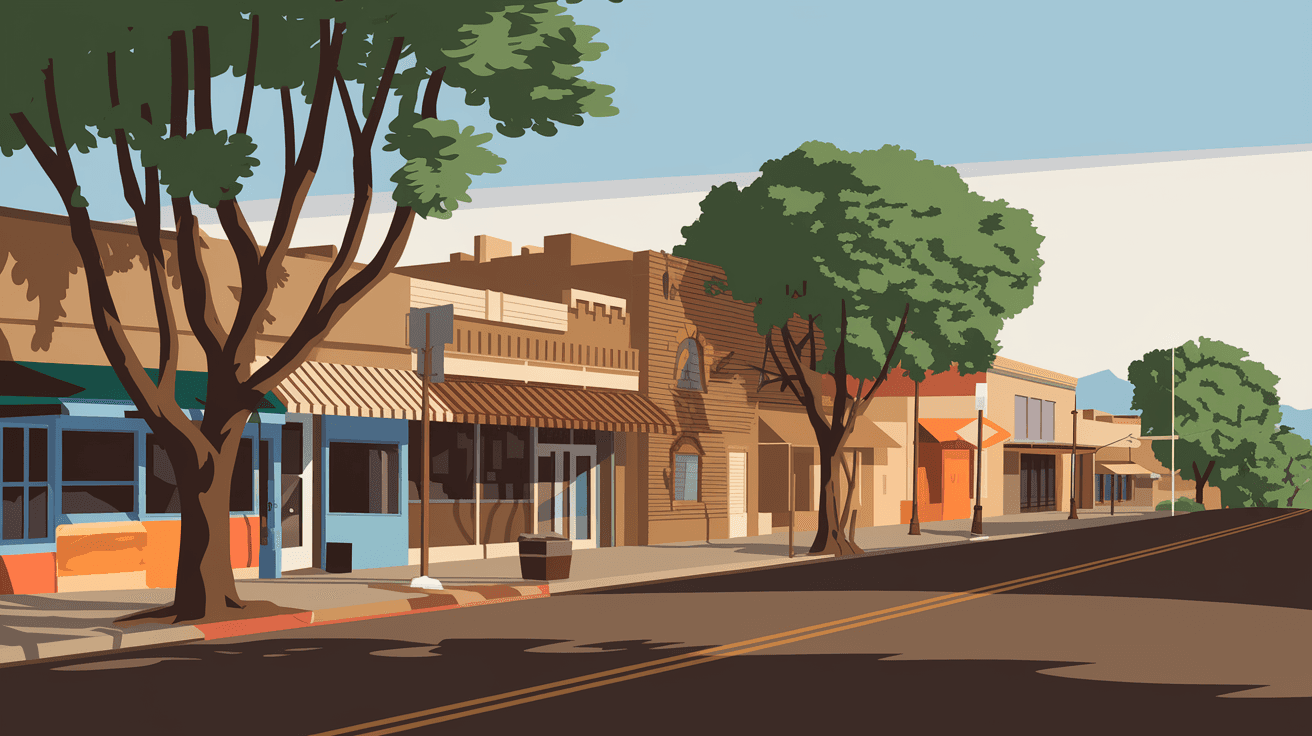
Nob Hill is the clearest example of a neighborhood where buying a fixer-upper in Albuquerque can produce real results. The median price here sits around $368,000, but updated, well-finished homes on the better streets routinely clear $420,000 to $450,000 and occasionally higher on larger lots.
The neighborhood's walkability is a genuine asset. Buyers who want to walk to Zendo Coffee, Tractor Brewing, or Nob Hill Bar and Grill will pay for the privilege, and that buyer pool is deep enough to support strong ARV numbers. The APS school assignments for this area include Wilson Middle and Highland High, which matters to the family buyer segment.
The housing stock here is predominantly 1940s through 1960s construction, meaning you will encounter original hardwood floors, plaster walls, and flat or low-pitched rooflines. The bones are often excellent. The systems are often tired. That gap is where the opportunity lives.
Challenges to know going in:
- •Lot coverage and setback rules can limit additions
- •Some blocks have alley-access garages that complicate renovation scopes
- •The neighborhood's popularity means even distressed listings are priced accordingly
Barelas and the South Valley Adjacent Areas
Barelas, just south of Downtown along the Rio Grande, is one of Albuquerque's oldest neighborhoods and one of the most underappreciated by buyers who do not know the city well. The National Hispanic Cultural Center anchors the southern end. The Barelas Coffee House has been there since 1978 and is not going anywhere.
Fixer-uppers here can still be found at entry points in the $180,000 to $250,000 range, with ARVs on fully renovated comparable properties pushing $320,000 to $360,000 as the neighborhood continues to attract younger buyers priced out of Nob Hill. The margin potential is real, but so is the work required, since many properties here need full system replacements.
Downtown Adjacent: EDo and the Eastern Downtown Corridor
The East Downtown (EDo) area has been in various stages of revitalization for years, and 2026 finds it in a more stable position than it was half a decade ago. The proximity to the Rail Trail, the Albuquerque BioPark, and the emerging restaurant scene on Gold and Silver makes this area compelling for buyers who want urban walkability.
ARV margins here depend heavily on the specific block and the quality of the finished product. Buyers who do a half-renovation get half the return. Buyers who commit to a full, thoughtful renovation consistent with the neighborhood's historic character tend to see the strongest results.
“"In Albuquerque's historic neighborhoods, the renovation has to respect what is already there. Buyers who slap modern farmhouse finishes on a 1920s Pueblo Revival and expect top-dollar ARV are usually disappointed."
What to Expect From the 203k and HomeStyle Process Timeline in New Mexico
Both programs require more runway than a standard purchase, and that is worth understanding before you start making offers. Here is a realistic picture of what the process looks like from offer to keys.
For the Limited 203(k):
- •Contractor bids and scope of work submitted within 2 weeks of acceptance
- •Appraisal ordered based on completed value
- •Typical close: 45 to 60 days from acceptance
For the Standard 203(k):
- •HUD consultant engaged immediately after acceptance
- •Consultant inspection and work write-up: 1 to 2 weeks
- •Appraisal and underwriting: add another 2 to 3 weeks
- •Typical close: 60 to 75 days from acceptance
For HomeStyle:
- •Contractor bids and renovation plan required before underwriting
- •Appraisal based on as-completed value
- •Typical close: 45 to 60 days, though complex scopes can push longer
Sellers on distressed properties in Albuquerque are often more willing to accommodate longer close timelines than sellers of move-in-ready homes, which works in your favor. Make sure your offer addresses the timeline honestly, and consider including an explanation letter with your offer so the seller understands what renovation financing involves.
Working With the Right Team Before You Make an Offer
The biggest mistake buyers make with fixer-uppers is falling in love with a property before they have the right people around them. Before you write your first offer on a project home, you need three conversations: one with a lender who has closed renovation loans in New Mexico specifically, one with a contractor who can give you a reliable rough estimate before you are under contract, and one with a real estate agent who knows how to structure an offer on a distressed property and read the ARV numbers honestly.
The Taylor Team works in these neighborhoods every week. We know which streets in Nob Hill have the ceiling prices that justify a full renovation, which Barelas blocks are trending, and which properties look like deals but have title or structural issues that will eat your margin. If you are serious about buying a fixer-upper in Albuquerque, reach out before you start scrolling listings. The conversation before the search is usually the most valuable one.
The renovation loan programs available in 2026 are genuinely useful tools, but they reward buyers who do their homework. Know your program, know your neighborhood, and know your numbers. Albuquerque's older housing stock is full of properties with great bones waiting for the right buyer to bring them back. The opportunity is real. The process just takes a little more preparation than a standard purchase, and that preparation is exactly what separates the buyers who build real equity from the ones who end up with a renovation they cannot afford to finish.
Want more insider intel?
Subscribe to get market updates and new articles delivered to your inbox.