Buying a Home Near the Rio Grande Bosque in Albuquerque: What Corrales, North Valley, and South Valley Buyers Are Paying for Trail Access, Flood Zone Considerations, and Agricultural Zoning in 2026
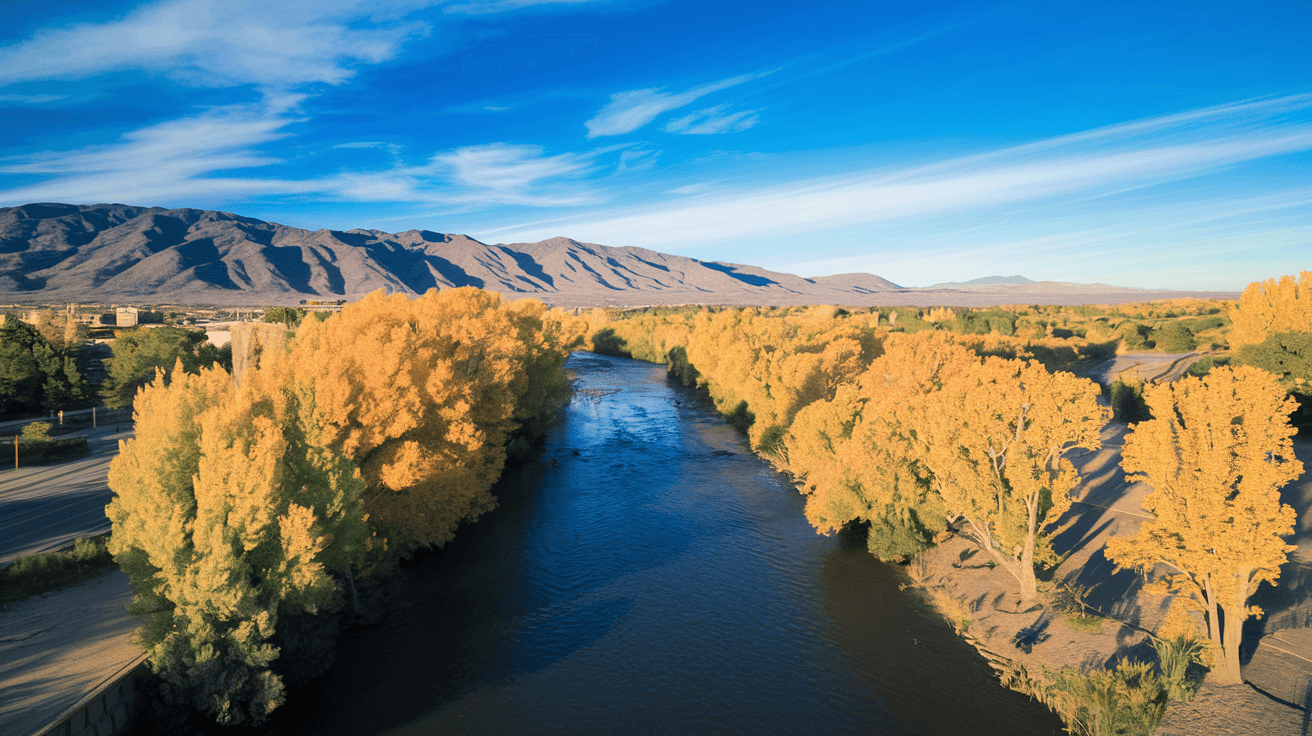
If you've ever driven down Corrales Road on a Saturday morning with the cottonwoods glowing gold and the Sandias turning pink behind you, you already understand why people pay a premium to live near the Rio Grande Bosque. Buying a home near the Rio Grande in Albuquerque is one of the most lifestyle-driven decisions a buyer can make in this market, and in 2026, that decision comes with a set of very specific financial and practical considerations that go well beyond square footage and school ratings.
This isn't a simple neighborhood guide. This is the real conversation about what trail access actually costs, what flood zone designation does to your insurance bill, and why that charming property with the acequia running through the backyard might be the best or most complicated purchase you ever make.
Buying a Home Near the Rio Grande Albuquerque: What the Bosque Premium Actually Looks Like
Let's start with the numbers, because they tell a story. While Albuquerque's metro median sits around $385,000 with homes averaging about 34 days on market, the communities that hug the bosque are playing a completely different game.
In Corrales, the median home price lands around $685,000, and that number reflects something real: you're buying into a village that has consciously resisted becoming a suburb. There's no Walmart on Corrales Road. There's Wagner Farms, there's Casa Vieja, and there are dirt lanes that dead-end at cottonwood groves. Buyers here aren't just purchasing square footage. They're purchasing a particular quality of silence.
The North Valley, which runs roughly from Montano Road down toward Bridge Boulevard along the west side of the river, offers a wider price range. You can find older adobes on large lots in the $450,000s, and you can find fully renovated compounds with guest casitas pushing well past $800,000. The common denominator is lot size and proximity to the Paseo del Bosque Trail, which is the 16-mile paved trail system that connects Paseo del Norte all the way south through the valley.
The South Valley tells a different story entirely. This is where generational New Mexican families have held land for decades, where you'll find properties zoned A-1 agricultural selling in the $300,000 to $500,000 range with acreage that would cost twice as much anywhere near the North Valley. The South Valley gets overlooked by buyers who haven't done their homework, and that's honestly where some of the best value near the bosque still exists in 2026.
“The bosque premium is real, but it's not uniform. A quarter mile can separate a flood zone nightmare from a dream property, and knowing which side of that line you're on changes everything.

Trail Access Pricing: What Direct Bosque Access Is Worth to Buyers in 2026
Here's something that doesn't show up cleanly in the MLS data but that we see consistently in negotiations: direct trail access adds measurable value, and buyers are willing to pay for it.
Properties that back directly to the bosque, meaning you can walk from your back gate onto the Paseo del Bosque Trail or into the cottonwood forest itself, command a premium of roughly 10 to 20 percent over comparable properties just a few blocks away. In Corrales, where the trail system connects to the bosque via several unpaved village paths, that premium shows up in days-on-market data as much as in price. Those homes move faster.
The insider tip that most buyers don't know: not all bosque access is created equal. The City of Albuquerque Open Space Division manages large sections of the bosque, but access points vary dramatically by neighborhood. In the North Valley, the Rio Grande Nature Center off Candelaria is a well-known public entry point, but residential properties near Griegos Road and Guadalupe Trail have informal access that longtime residents have used for years. That informal access has no legal guarantee and can be closed. When you're buying, ask specifically whether the access is deeded, whether it crosses Open Space land, and whether there are any recorded easements. We've seen buyers fall in love with a property because of a path through the neighbor's field that turned out to be entirely at the neighbor's discretion.
In Corrales, some properties along Corrales Road and the side streets west of it have direct ditch access that parallels the bosque. These properties often come with acequia rights, which is a separate and very New Mexico-specific layer of value and complexity that we'll get to shortly.
What Buyers Are Actually Paying for Trail-Adjacent Homes
- •Properties with deeded bosque access or backing Open Space in the North Valley: $550,000 to $950,000+ depending on lot size and condition
- •Corrales properties within walking distance of village trail connections: $600,000 to $1.2 million
- •South Valley agricultural parcels near the river with informal bosque access: $320,000 to $550,000 for 1 to 3 acre lots
- •North Valley properties on named streets like Guadalupe Trail or Rio Grande Boulevard with trail proximity: $480,000 to $750,000
The list-to-sale ratio across the broader metro is running at about 97.8 percent, which means buyers aren't getting massive discounts anywhere. Near the bosque, well-priced trail-adjacent homes are often receiving multiple offers within the first two weeks.
Flood Zone Considerations When Buying Near the Rio Grande in Albuquerque
This is the section that separates buyers who did their homework from buyers who found out the hard way.
The Federal Emergency Management Agency manages flood zone designations through its National Flood Insurance Program, and properties near the Rio Grande fall into a patchwork of zones that have real consequences for your mortgage and your insurance costs. The key zones to understand are Zone AE (high-risk, base flood elevation determined) and Zone X (moderate to low risk).
Here's the practical reality: a significant portion of the North Valley and South Valley sits in or near Zone AE. If your lender requires flood insurance, which they will if your property is in a high-risk zone and you have a federally backed mortgage, you're looking at $1,200 to $3,500 per year in additional insurance costs depending on the structure's elevation relative to the base flood elevation. That's not a dealbreaker, but it needs to be in your budget from day one.
“Flood zone designations in the North Valley can change from one side of a street to the other. We always recommend an elevation certificate before making a final offer on any bosque-adjacent property.
Corrales sits at a slightly higher elevation than much of the North Valley, and many Corrales properties fall into Zone X, which is one reason the village has historically attracted buyers who want the bosque lifestyle without the flood insurance burden. But this isn't universal. Properties along the Corrales bosque itself, particularly those west of Corrales Road closer to the river, should absolutely be checked against current FEMA flood maps.
The Middle Rio Grande Conservancy District also plays a role here. The Conservancy manages the irrigation infrastructure, including the drains and laterals that crisscross the valley. Their right-of-way can affect what you can build and where, and their maintenance access easements sometimes surprise buyers who didn't know the ditch behind the property came with strings attached.
Steps Every Buyer Should Take Before Closing on a Bosque-Area Property
- •Pull the current FEMA flood map for the specific parcel, not just the neighborhood
- •Request an elevation certificate if the property is in or near Zone AE
- •Ask the seller for documentation of any flood history or past claims
- •Verify the Middle Rio Grande Conservancy District assessment and any easements on the title
- •Confirm whether flood insurance is assumable if there's an existing policy
- •Check for any Open Space adjacency agreements that affect fencing or landscaping near the bosque boundary
Agricultural Zoning in Corrales and the South Valley: Opportunity and Obligation
One of the most misunderstood aspects of buying a home near the Rio Grande in Albuquerque is what agricultural zoning actually means for a buyer who just wants a big lot with horses and a garden.
In Corrales, the village zoning is intentionally protective of its rural character. A-1 zoning in Corrales allows for single-family residential use, horses and livestock, and agricultural activities, but it comes with minimum lot sizes and restrictions on subdivision. This is by design. The village has fought hard to prevent the kind of dense development that swallowed other Rio Grande communities, and that legal framework is part of what you're paying for when you buy in Corrales.
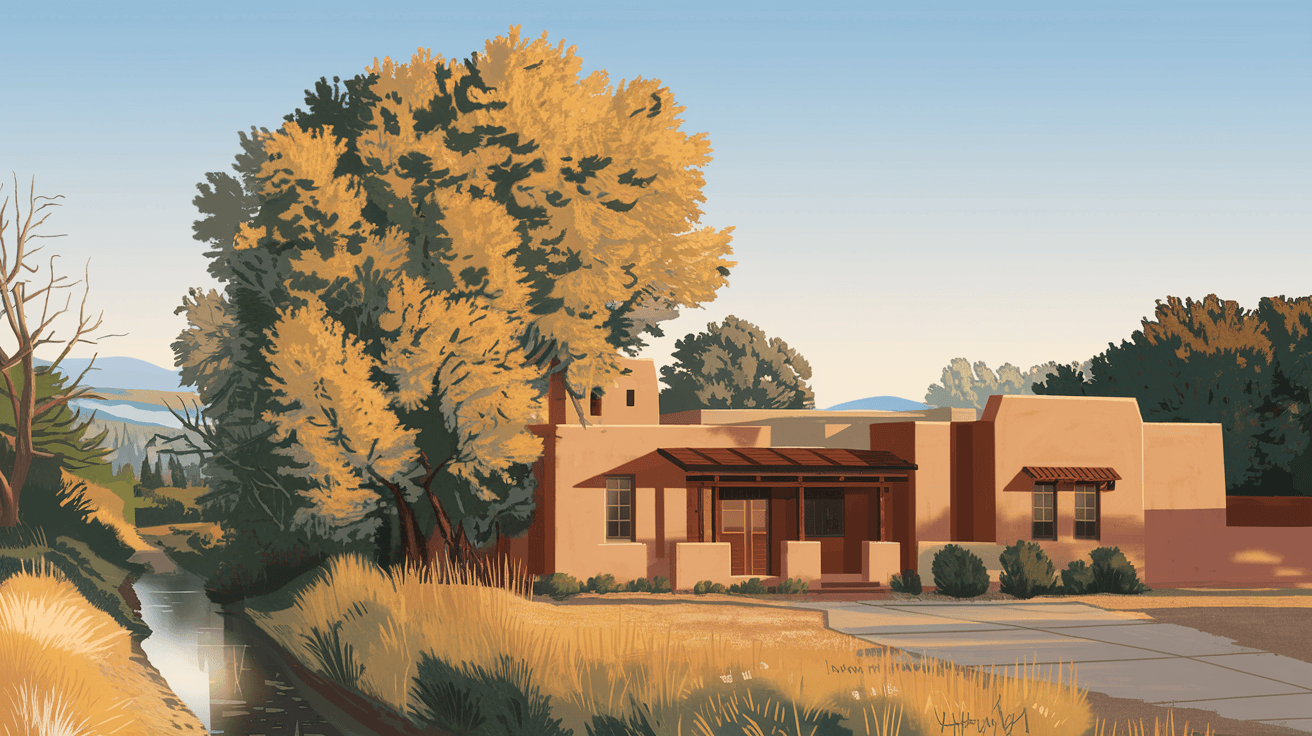
The acequia system is the piece that surprises most buyers who didn't grow up in New Mexico. Acequias are community-managed irrigation ditches with a history going back centuries in this valley. Some Corrales and North Valley properties come with water rights attached, which is a separate property right from the land itself. Those rights can be incredibly valuable in an arid state, and they can also come with obligations: membership in the acequia association, annual assessments, and the expectation that you'll participate in the community maintenance of the ditch.
In the South Valley, Bernalillo County's A-1 zone is somewhat different from Corrales's village zoning but similarly protective of agricultural use. South Valley properties on larger parcels near the river often have irrigation water rights through the Conservancy, and those rights transfer with the property. If you're buying a South Valley agricultural parcel and the listing doesn't mention water rights, that's a question your agent should be asking before you get to contract.
What Agricultural Zoning Means Practically for Buyers
- •You likely can keep horses, chickens, and other livestock without special permits
- •Building a guest house or casita may require a special use permit depending on lot size and zone
- •Subdividing is typically restricted or prohibited, which protects your investment from density changes but limits future flexibility
- •Agricultural property tax valuation can significantly reduce your annual tax bill if the land is actively farmed
- •Some properties qualify for New Mexico agricultural tax status, which can save thousands annually but requires actual agricultural use
With about 3.9 months of inventory in the broader Albuquerque market, the competition for well-priced bosque-area properties remains real. Agricultural properties with water rights in particular tend to attract buyers from outside New Mexico who underestimate how quickly they move.
What to Know Before Making an Offer on Any Bosque-Adjacent Property
Buying near the bosque requires a different kind of due diligence than buying in an established subdivision. The properties are more unique, the title histories are often more complex, and the regulatory layers, FEMA, the Conservancy, the acequia association, village or county zoning, sometimes stack up in ways that take time to sort through.
The good news is that with 3,850 active listings across the Albuquerque metro right now, there is inventory. The bosque communities represent a small slice of that inventory, but homes do come available, and buyers who are prepared move faster and make better decisions.
A few things worth knowing before you start touring:
- •Get pre-approved for a loan that accounts for potential flood insurance costs if you're targeting North Valley or South Valley properties
- •Work with an agent who has actually sold in Corrales and the North Valley, not just someone who knows how to pull the zip code in the MLS
- •Budget for a specialized home inspection that includes the irrigation infrastructure, any acequia-adjacent structures, and drainage patterns on the property
- •Understand that well and septic are common in Corrales and parts of the North Valley, which adds inspection complexity and ongoing costs
- •Ask about ditch assessments from the Middle Rio Grande Conservancy District, which are billed annually and vary by property
If you're seriously considering buying a home near the Rio Grande in Albuquerque and you want to talk through what's actually available in Corrales, the North Valley, or the South Valley right now, reach out to The Taylor Team at Berkshire Hathaway HomeServices. We know these neighborhoods the way you know your own backyard, and we'll give you the honest picture before you fall in love with a property that has surprises buried in the title.
The Bosque Lifestyle Is Real, and So Is the Research Required
Living near the Rio Grande bosque in Albuquerque is genuinely unlike anything else in the city. You can be at the Paseo del Bosque Trail in minutes, watching sandhill cranes work the fields in November, or riding horses down a Corrales back lane with the Sandias at your back. That lifestyle is real and it's worth pursuing.
But the buyers who end up happiest are the ones who went in with clear eyes about the flood zone their property sits in, what the acequia assessment costs each year, and exactly what their trail access rights actually are. The bosque premium is worth paying when you know what you're paying for.
Want more insider intel?
Subscribe to get market updates and new articles delivered to your inbox.