Buying Near the Bosque in Albuquerque 2026: Cottonwood Canopy, Trail Access, and Flood Zone Designations Explained
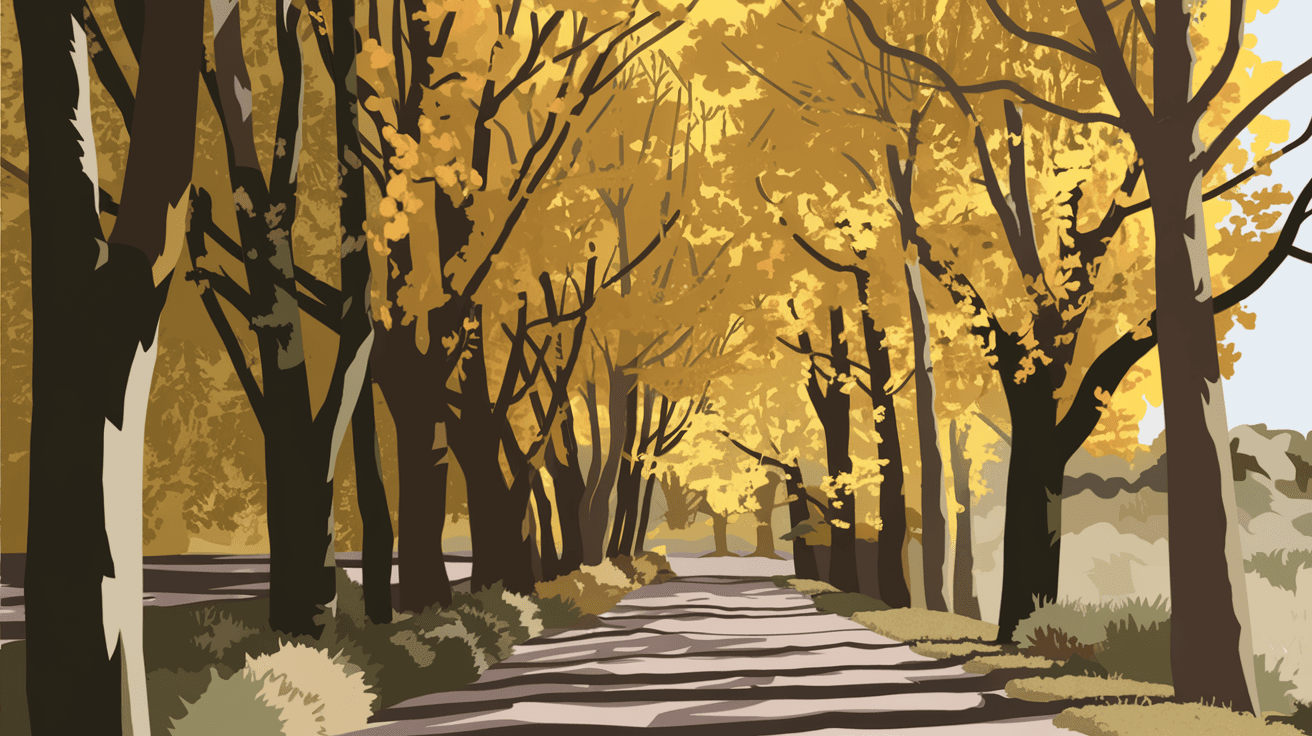
There's a moment every fall when you're driving down Corrales Road or cutting through the North Valley on Rio Grande Boulevard, and the cottonwoods turn that impossible shade of gold that doesn't exist anywhere else in New Mexico. The light comes through the canopy in long afternoon slants, the Sandias are pink behind you, and you think: I want to live here. That feeling is real, and it's exactly why buying near the Bosque in Albuquerque has become one of the most sought-after real estate decisions in the metro.
But buying near the Rio Grande corridor is not the same as buying in Nob Hill or on the East Side. There are layers to it. The canopy is gorgeous and it matters for property value. The trail access is a genuine lifestyle amenity. And the flood zone designations? Those are not fine print. They are a core part of the purchase decision, and understanding them before you make an offer will save you real money and real headaches.
This is what we walk our clients through every time someone falls in love with a property on Guadalupe Trail or off Montano Road. Here's the full picture.
Bosque Trail Homes for Sale: What Trail Access Actually Does to Property Value
The Paseo del Bosque Trail runs roughly 16 miles along the Rio Grande, connecting Alameda in the north down through Tingley Beach near Central Avenue. When a listing mentions "trail access," it can mean a few different things, and the distinction matters.
True trail-adjacent properties, meaning homes where you can walk out your back gate or cross the street and be on the packed gravel path within a minute, carry a measurable premium. In the North Valley, where the median home price sits around $520,000, you'll find that homes within two blocks of a Bosque trail entrance tend to sell faster and closer to asking price than comparable homes further east toward 4th Street or Rio Grande Boulevard without that access.
Here's what proximity to the trail actually delivers:
- •Morning walks through cottonwood forest before the city wakes up
- •Direct access to Tingley Beach, the Albuquerque BioPark, and the aquarium for residents south of Montano
- •A natural sound buffer from traffic on Rio Grande Boulevard
- •A sense of semi-rural living that you simply cannot replicate in the Journal Center or Four Hills
- •Consistent year-round use by cyclists, runners, and equestrians, which keeps the area active and watched
The cottonwood canopy itself is worth discussing as a feature. These are old trees. Some of the cottonwoods along the river corridor are decades old, and their presence signals that you're in a mature, stable neighborhood. They also provide meaningful summer shade that can actually affect your cooling costs when your lot sits under them. In a city where summer afternoons regularly hit 95 degrees, that matters.
The flip side, and every honest agent will tell you this, is that cottonwood root systems are aggressive. If you're buying a home with mature cottonwoods on the lot or directly adjacent to the property line, budget for periodic plumbing inspections. Root intrusion into older clay sewer lines is a known issue in the North Valley, particularly in homes built before 1980.
Flood Zone Designations for Homes Near the Rio Grande in Albuquerque
This is where buying near the Bosque in Albuquerque gets technical, and where buyers who don't do their homework end up surprised at the closing table.
The Federal Emergency Management Agency (FEMA) maintains flood zone maps, called Flood Insurance Rate Maps or FIRMs, that classify land by flood risk. In the Albuquerque metro, properties near the Rio Grande can fall into several designations:
- •Zone AE: High-risk flood zone with a 1% annual chance of flooding (the "100-year floodplain"). Flood insurance is required by most lenders.
- •Zone X (shaded): Moderate flood risk, 0.2% annual chance. Insurance is not federally required but is often recommended.
- •Zone X (unshaded): Minimal flood risk. Standard homeowner's insurance typically suffices.
- •Zone AO: Shallow flooding areas, often associated with sheet flow rather than riverine flooding.
The Middle Rio Grande Conservancy District has done significant levee and drainage work over the decades, and those levees do provide protection. However, FEMA accreditation of levees is not automatic, and the flood zone designation on a specific parcel depends on whether the levee protecting it meets current accreditation standards. This is not a static situation. Map amendments happen, and a property that was in Zone X five years ago may have been remapped.
“Flood zone designation is not a dealbreaker, but it is a budget line item that belongs in your offer math before you write the number, not after.
Here's what flood zone designation means in practical terms for your purchase:
- •If your lender requires flood insurance and you're in Zone AE, expect to budget $800 to $2,500 per year depending on the structure, elevation, and coverage level. Rates have shifted significantly since FEMA's Risk Rating 2.0 updates.
- •You can order a Letter of Map Amendment (LOMA) if you believe your property has been incorrectly mapped. This requires a licensed surveyor to document the Base Flood Elevation relative to your finished floor elevation. If successful, it can remove the flood insurance requirement entirely.
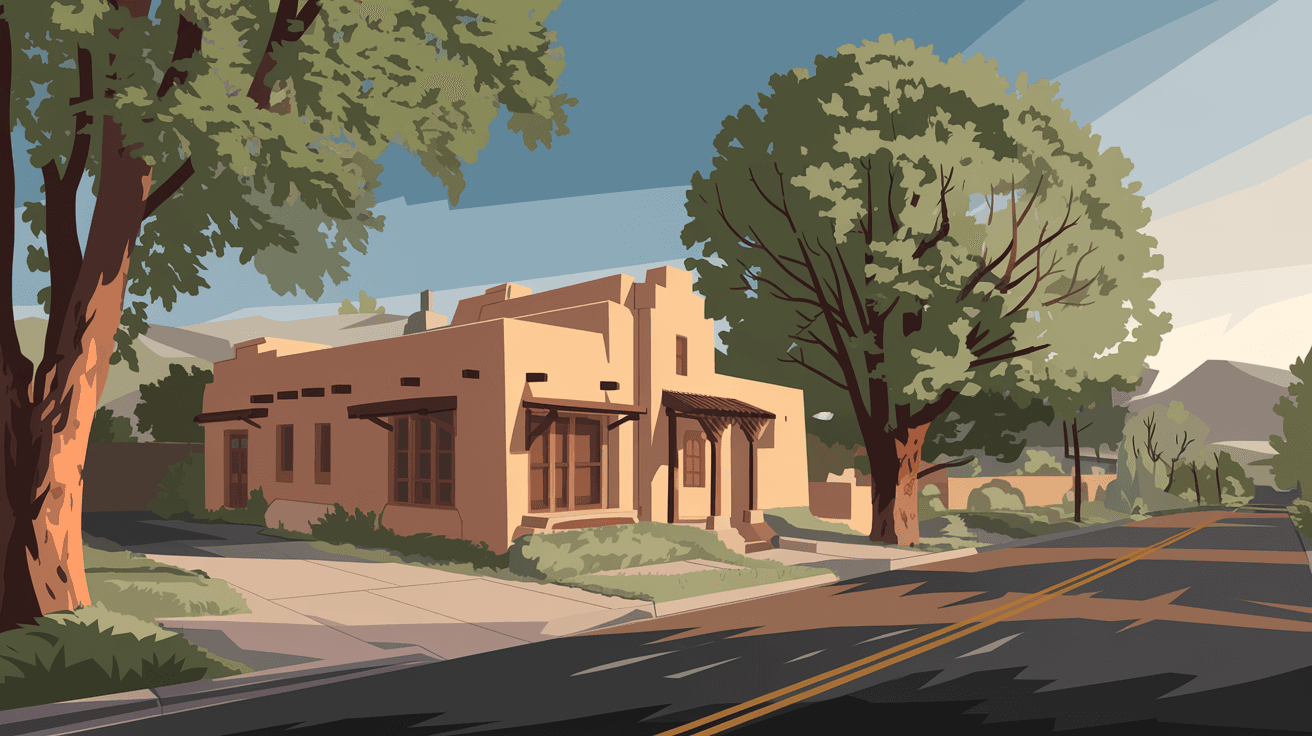
- •Some of the most charming properties in the North Valley, particularly older adobes on Guadalupe Trail NW or near the end of Montano Road where it approaches the bosque, sit in or near Zone AE. That doesn't make them bad purchases. It makes them purchases that require clear eyes about carrying costs.
The Albuquerque Open Space Division also maintains land along the Bosque that acts as a natural buffer. Homes adjacent to Open Space rather than directly on the riverbank often have more favorable flood designations, and that's a detail worth asking your agent to verify on the FEMA portal before you fall in love with a listing.
North Valley Neighborhood Context: Schools, Streets, and the Rural Feel That Commands a Premium
The North Valley is not a subdivision. It doesn't have an HOA newsletter or a neighborhood pool with a keypad entry. It's a patchwork of old ranchitos, mid-century homes, newer infill construction, and the occasional property with an acequia running through the backyard. That's part of its appeal, and it's also why the median price of $520,000 is notably higher than the metro-wide median of $385,000.
For families buying near the Bosque, the school picture runs through Albuquerque Public Schools. Elementary assignments vary by exact address, so always verify your specific parcel on the APS boundaries tool before assuming. Jefferson Middle School and Valley High School serve much of the North Valley corridor. Valley High, on Candelaria Road NW, has a long history in the community and a strong athletics program. As with any APS assignment, families also explore magnet and charter options throughout the district.
Street-level context helps orient buyers who are new to the area:
- •Rio Grande Boulevard NW is the main north-south spine through the neighborhood, lined with mature trees and modest commercial nodes near Montano and Alameda
- •Corrales Road at the north end connects to the Village of Corrales, which is a separate municipality with its own character and tax structure
- •4th Street NW runs parallel to Rio Grande Boulevard and offers more commercial activity, including local spots like Range Cafe in Bernalillo not far north
- •Montano Road is a key east-west connector and one of the few roads that crosses the Rio Grande in this part of the city
The acequia system is worth a specific mention. The Middle Rio Grande Conservancy District maintains a network of irrigation ditches that crisscross the North Valley. These acequias are part of the cultural fabric of the area, they've been here since Spanish colonial land grants, and they add to the rural character that buyers pay a premium for. They also come with maintenance assessments and, in some cases, water rights that transfer with the property. If a listing mentions acequia frontage or water rights, that language needs to be examined carefully in the title and purchase agreement.
What the 2026 Market Means for Buying Near the Bosque in Albuquerque
The broader Albuquerque market heading into 2026 is not frantic, but it is competitive in the right price ranges. With 3,850 active listings metro-wide and a months of supply at 3.9, buyers have more breathing room than they did in 2021 and 2022, but well-priced homes in desirable areas still move. The average days on market is 34, and the list-to-sale ratio of 97.8% tells you that sellers are not getting panicked into large concessions. Offers that come in 10% below asking on a clean Bosque-adjacent property are not going to land.
North Valley specifically tends to behave differently from the metro average. Inventory in the neighborhood is genuinely limited because the land base is constrained by the river, the Open Space, and decades of established development. When a well-maintained property on Guadalupe Trail or near Candelaria and Rio Grande Boulevard hits the market, it often generates multiple showings in the first weekend.
A few practical considerations for buyers targeting this area in 2026:
- •Get your flood zone research done before the offer, not after. Your agent should be pulling the FEMA FIRM panel number for any Bosque-adjacent property as part of standard due diligence.
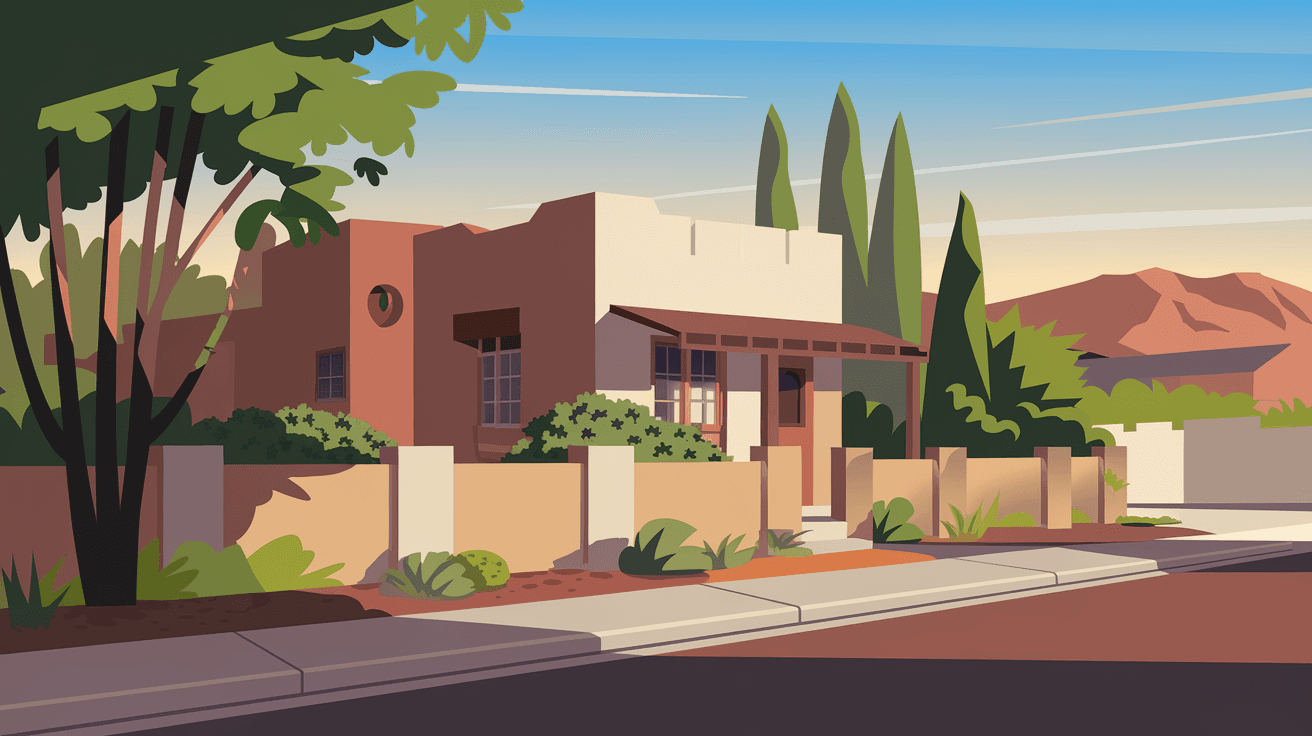
- •Budget for a four-point inspection on older homes. Many North Valley adobes and ranch-style homes were built in the 1950s through 1970s, and roof, electrical, plumbing, and HVAC condition can vary widely.
- •Ask about acequia assessments and water rights as a standard question on any North Valley property, even if the listing doesn't mention them.
- •Verify septic versus city sewer on a parcel-by-parcel basis. Some North Valley properties are still on septic, and that affects financing, maintenance costs, and future value.
- •Check with Bernalillo County or the City of Albuquerque on any open permits, especially on properties that show obvious additions or outbuildings. The North Valley has a long history of informal additions.
“The North Valley rewards buyers who do their homework. The ones who skip the details are the ones who call us six months later with expensive surprises.
If you're seriously considering a purchase in this corridor, the Taylor Team works this neighborhood regularly and can walk you through a specific property's flood designation, school assignment, acequia situation, and comparable sales before you ever write an offer. That kind of local knowledge is not available from an algorithm.
The Insider Detail Most Buyers Miss About Bosque Properties
Here's something that doesn't show up in listing descriptions and rarely comes up until you've already closed: the Bosque adjacent to the North Valley floods episodically, and the smell and mosquito activity in late spring and early summer can be significant. This is not a reason to avoid buying near the river. It's a reason to understand what you're buying into seasonally.
The cottonwood "snow," which is the cottony seed release that happens in late May and early June, blankets everything within several blocks of the river. It gets into window screens, HVAC intakes, and every open surface. Long-term North Valley residents treat it as a charming quirk of the season. First-time Bosque buyers sometimes don't expect it.
The real insider tip: the stretch of the Paseo del Bosque Trail between Montano and Alameda, accessible from the parking area off Paseo del Norte near the river, is far less crowded than the southern sections near Tingley Beach. If you're buying in the North Valley specifically for the trail lifestyle, that northern section gives you the full cottonwood experience without the weekend crowds that come from the BioPark parking lots. Properties that can access that stretch of trail from their neighborhood are genuinely undervalued relative to the experience they deliver.

Making the Decision: Is a Bosque-Adjacent Home Right for You
Buying near the Bosque in Albuquerque is one of those decisions that tends to stick. People who move into the North Valley and learn its rhythms, the cottonwood seasons, the acequia flow in spring, the sandhill cranes that come through in November along the river, they tend to stay. The resale data reflects that. Turnover in the neighborhood is lower than in many comparable Albuquerque price ranges.
The things that require attention before you buy, flood zone designation, older infrastructure, acequia assessments, septic versus sewer, are all manageable with the right preparation. None of them are reasons to walk away from the right property. They are reasons to walk in with accurate information.
The North Valley is genuinely one of the most distinctive places to live in New Mexico. There is nowhere else in Albuquerque where you can walk out your front door, be under a cathedral of cottonwoods within five minutes, and still be twenty minutes from Uptown or the Sunport. That combination has real value, and in a market where the metro median sits at $385,000 and the North Valley median is $520,000, the data confirms that buyers have agreed for a long time.
If you want to talk through a specific property, a specific street, or just get a clearer picture of what flood zone designation means for a home you've been watching, the Taylor Team is the right call. We know this neighborhood the way you know it when you've driven Guadalupe Trail a hundred times, not from a map.
Want more insider intel?
Subscribe to get market updates and new articles delivered to your inbox.