
Corrales vs North Valley Albuquerque: Rural Lifestyle Homes at Two Very Different Price Points
If you have ever driven up Corrales Road on a Sunday morning with the Sandia Mountains turning pink behind you and a rooster crowing somewhere off in the bosque, you already understand the pull of rural living inside Albuquerque's metro. Both Corrales and the North Valley offer that rare thing: genuine land, genuine quiet, and a pace of life that feels nothing like the Northeast Heights or the Westside. But sit down with the numbers and the neighborhood details, and you will quickly see that these two communities are not interchangeable. They serve different buyers, at very different budgets, with very different tradeoffs.
This is a comparison worth having honestly, because corrales real estate and North Valley Albuquerque homes both attract buyers who think they want the same thing — only to discover mid-search that they are actually shopping two separate worlds.
Corrales Real Estate: What You Are Actually Buying
Corrales is its own incorporated village, and that matters more than people realize. It sits in Sandoval County, not Bernalillo County, which changes your property taxes, your school district, and your sense of jurisdiction in ways that surprise buyers who assumed it was just another Albuquerque neighborhood. The village has its own mayor, its own ordinances, and a genuine small-town identity that the community protects fiercely.
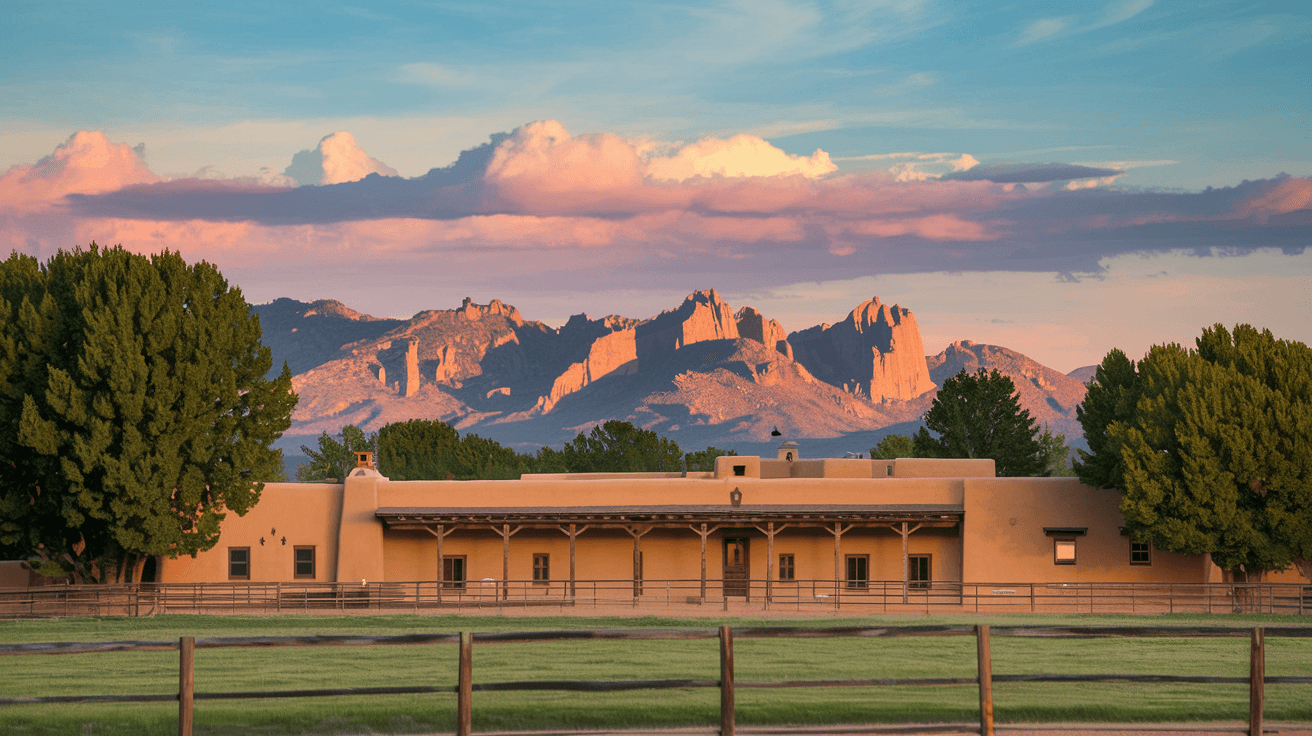
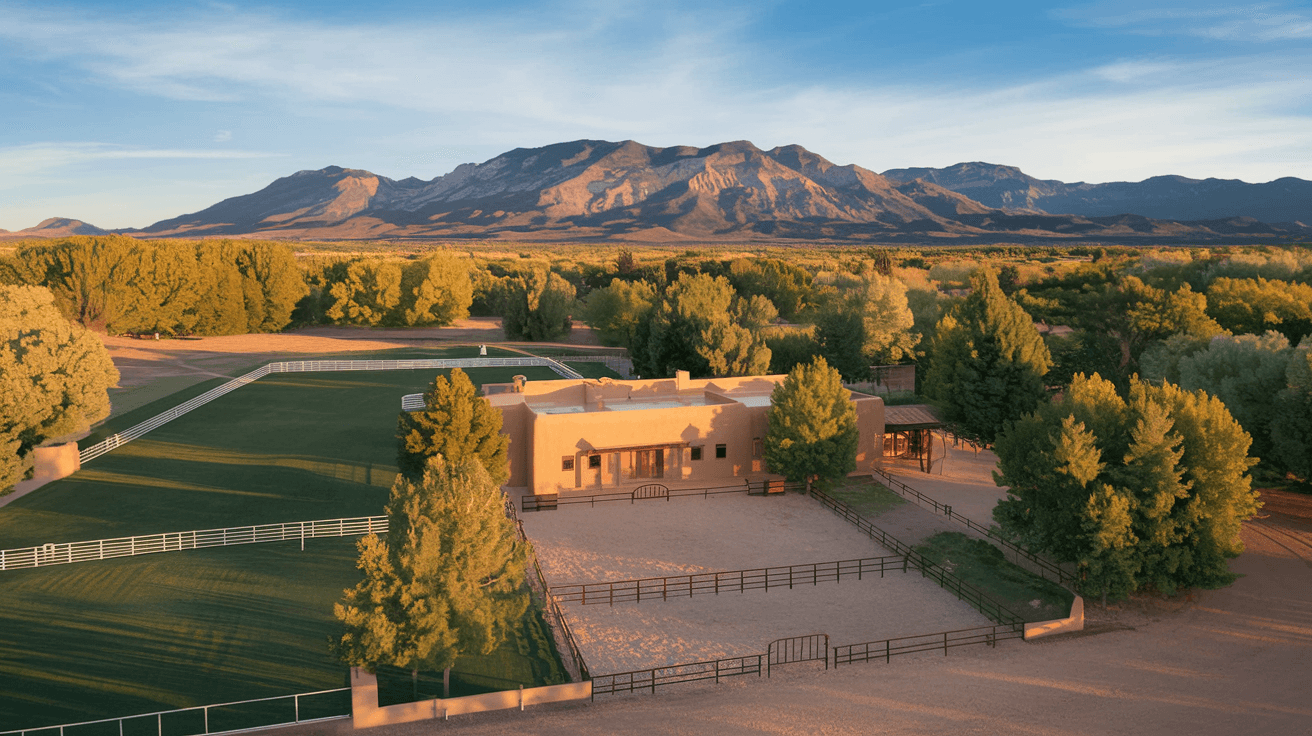
The median home price in Corrales sits around $899,000, which is more than double Albuquerque's metro median of $445,000. That premium buys you something specific: larger parcels, custom construction, and a level of architectural intentionality that is hard to find anywhere else in the metro. We are talking about true adobe and territorial-style estates on half-acre to multi-acre lots, horse properties with irrigated pasture fed by the Corrales acequia system, and custom homes where the builder and the buyer had actual conversations about ceiling height and portal orientation.
What Corrales Homes Typically Include
- •Lot sizes ranging from half an acre to five-plus acres
- •Horse facilities: stalls, arenas, tack rooms, irrigated pasture
- •Custom or semi-custom construction, often owner-built over time
- •Private wells or community water through the Corrales Water Company
- •Mature cottonwood and fruit tree plantings on irrigated land
- •Detached casitas or guest quarters on larger properties
- •Views of the Sandia Mountains to the east or the West Mesa volcanoes
Corrales Road is the spine of the village, running roughly north-south through the whole community. Off it, you find dirt lanes with names like Loma Larga, El Rincon, and Camino de Corrales that feel genuinely rural. The village has a small commercial strip near the southern end — Old Church Road area — where you will find Casa Vieja, the Corrales Bistro Brewery, and a handful of small galleries. There is one grocery option nearby (the Smith's on Corrales Road just south of the village limits), and that is intentional. Residents here are not looking for convenience. They are looking for separation.
“Corrales is not a neighborhood that happened to stay rural. It is a community that voted, repeatedly and deliberately, to stay exactly what it is.
The School District Situation in Corrales
This is the detail that catches buyers off guard more than any other. Because Corrales sits in Sandoval County, children in Corrales attend Rio Rancho Public Schools, not Albuquerque Public Schools. Corrales Elementary is the local K-5 option and has a strong reputation, but middle and high school students feed into the Rio Rancho system rather than APS. For families coming from other parts of Albuquerque, this is worth researching carefully before you fall in love with a property. For buyers who are already in Rio Rancho or are indifferent to district, it is a non-issue.
North Valley Albuquerque: Rural Feel at a More Accessible Price
The North Valley stretches roughly from Montano Road up through Alameda, hugging the west bank of the Rio Grande and the bosque. It is technically within Albuquerque city limits and Bernalillo County, which means APS schools, city services, and Bernalillo County property taxes. The vibe shares DNA with Corrales — horses, acequia irrigation, dirt driveways, chickens in the yard — but the price point is meaningfully different.
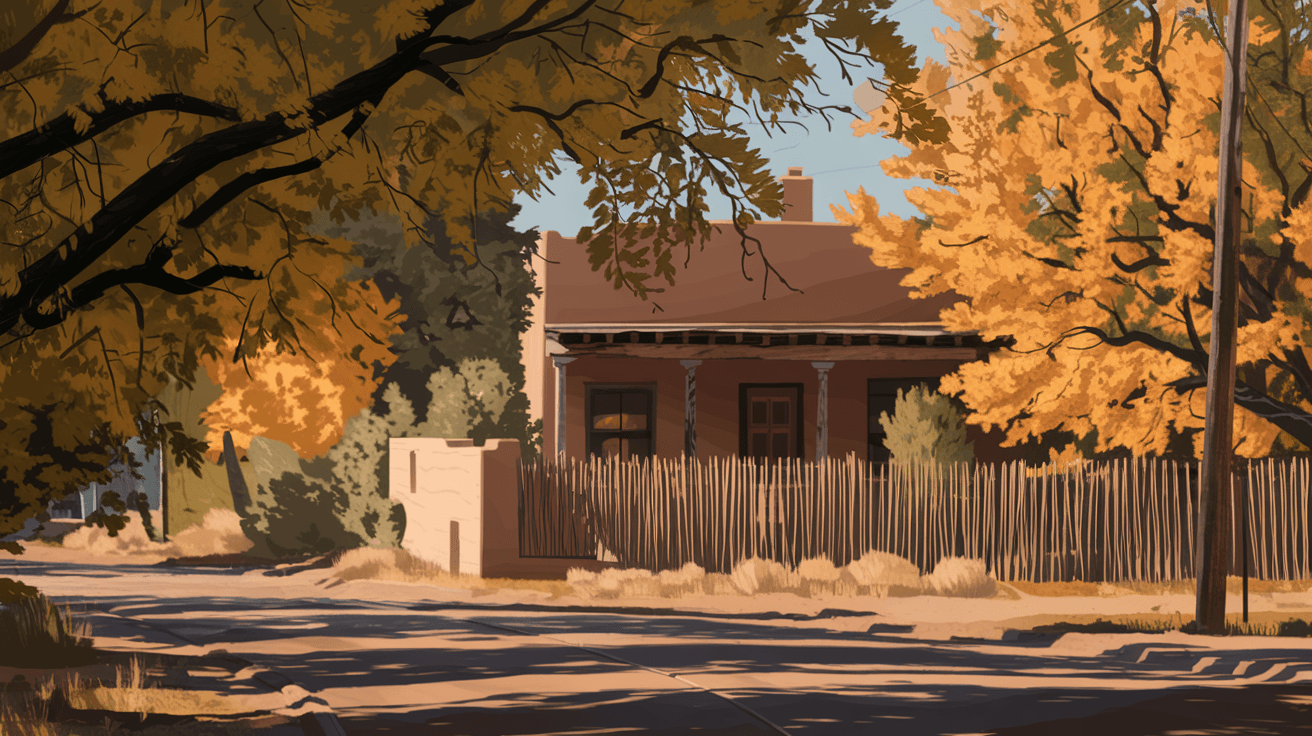
North Valley homes typically range from the mid-$400,000s up through the $700,000s, with true luxury outliers above that. You can still find older adobe homes on a third of an acre for under $500,000, which in today's market is genuinely rare for a property with land and a rural character. The tradeoff is that you are also closer to the city's infrastructure, for better and worse. Montano Road, Paseo del Norte, and Alameda Boulevard all cut through or border the area, and while the interior streets — places like Rio Grande Boulevard, Guadalupe Trail, and Corrales Road's southern reaches near the city limits — feel quiet and removed, you are never more than five minutes from a Sprouts or a Nob Hill coffee shop.
What North Valley Homes Typically Include
- •Lot sizes from a quarter acre to one-plus acres
- •Mix of original adobe, territorial, and updated ranch-style construction
- •Acequia-irrigated lots with mature trees, often multigenerational landscaping
- •City water and sewer (no well maintenance)
- •Proximity to the Paseo del Bosque Trail for walking, biking, and equestrian use
- •APS school boundaries, including options like Albuquerque High and La Cueva
- •Easier access to I-25, Uptown, and Downtown Albuquerque
The North Valley has its own cultural gravity. Los Ranchos de Albuquerque (a small incorporated village within the North Valley corridor) is home to Casa de Benavidez, one of the city's most beloved New Mexican food institutions. Flying Star on Rio Grande has been a neighborhood anchor for years. The North Valley Arts Market runs seasonally, and the whole area has a creative, deeply rooted New Mexican character that feels earned rather than curated.
“The North Valley is where multigenerational Albuquerque families have kept their land for a hundred years, and where newcomers who do their homework can still find a foothold in that tradition.
Corrales vs North Valley: The Real Differences Side by Side
Beyond price, here is where the two communities genuinely diverge in ways that matter to daily life.
Jurisdiction and taxes: Corrales is Sandoval County. North Valley is Bernalillo County, with Los Ranchos as a small incorporated exception. Property tax rates differ, and so do the services you receive.
School districts: Corrales feeds Rio Rancho Public Schools. North Valley feeds APS, with access to the full range of APS magnet and neighborhood school options.
Lot availability and size: Corrales tends to offer larger parcels with more consistent agricultural character. The North Valley has more variation — you can find a half-acre horse property next to a quarter-acre updated adobe that has been subdivided from a larger family parcel.
Distance from city core: Corrales requires a deliberate commute. If you work Downtown or in the Journal Center area, you are looking at 20 to 35 minutes depending on traffic on Corrales Road or Coors. The North Valley can put you on I-25 in ten minutes.
Price ceiling and floor: Corrales has a higher floor and a higher ceiling. You will rarely find a move-in-ready Corrales home under $600,000, and the top of the market pushes well past $2 million for estate properties. The North Valley has more entry-level options and a wider range overall.
Community character: Corrales has organized village governance and a very active community that shows up to planning meetings. The North Valley is more diffuse, a mix of city neighborhoods and small enclaves without a single governing voice.
What the Current Market Looks Like for Both Areas
Albuquerque's broader market is moving at a pace that surprises buyers who have not been tracking it. The metro median sits at $445,000, homes are averaging 22 days on market, and the list-to-sale ratio is running at 98.5% — meaning sellers are getting very close to what they ask. With only 2.7 months of inventory and around 48 active listings in the rural and semi-rural segments at any given time, well-priced properties in both Corrales and the North Valley do not sit.
For corrales real estate specifically, that low inventory situation is amplified. There are a finite number of horse properties with mature irrigation and mountain views, and new ones do not appear often. When a well-maintained Corrales property hits the market at a fair price, it typically draws multiple offers within the first week. Buyers who want to be competitive need to be pre-approved, know their must-haves versus nice-to-haves, and be ready to move.
The North Valley moves similarly, though with slightly more turnover simply because the price points are more accessible and the buyer pool is larger. That said, the truly special properties — original adobes on irrigated lots with bosque access — are just as rare and just as competitive as anything in Corrales.
The Insider Detail Most Buyers Miss
Here is something that does not show up in any listing description: acequia membership and water rights are not automatic, and they are not always transferred cleanly in a sale. Both Corrales and the North Valley rely heavily on the historic acequia irrigation system for keeping land green and horses watered. Before you fall in love with a property that has lush irrigated pasture, your agent needs to verify the acequia membership status, the annual assessment, and whether water rights convey with the property or are held separately. In some cases, a seller has let acequia membership lapse, and the new buyer has to petition for reinstatement. In others, the water rights have been severed from the land deed entirely. This is the kind of detail that a Realtor who actually knows these communities will flag immediately, and that a generalist agent might miss until it becomes a problem in escrow.

How to Decide Which Community Is Right for You
The honest answer is that budget will make the initial cut, but lifestyle will make the final call. If you need to be in APS schools, the North Valley is your answer regardless of price. If you want maximum land, maximum separation from city infrastructure, and you are willing to commute and pay the premium, Corrales delivers something the North Valley genuinely cannot replicate.
Ask yourself these questions before you start scheduling showings:
- •Do you have horses or plan to? Both areas work, but Corrales has more purpose-built equestrian infrastructure.
- •How important is school district? APS versus Rio Rancho is a real fork in the road.
- •Are you comfortable with a well, or do you want city water? Corrales has both options; the North Valley is almost entirely city water.
- •How often do you need to be in the city core, and how do you feel about a daily commute on Corrales Road?
- •Is a casita or income unit important? Corrales properties more commonly have them.
If you are seriously considering either area, the best thing you can do is spend a Saturday morning driving both. Park at the Corrales Bistro Brewery, walk down Old Church Road, and get a feel for what full village separation actually feels like. Then drive south, cross into the North Valley, park near the bosque trailhead off Montano, and walk the cottonwood canopy for twenty minutes. They are both beautiful. They are both distinctly New Mexican. But they feel different in ways that only make sense when you are standing in them.
The Taylor Team works with buyers and sellers in both communities regularly, and we know the acequia details, the school boundary nuances, and the off-market properties that never hit the portal. If you are trying to figure out which rural lifestyle actually fits your life, that conversation is worth having before you spend six weekends looking at the wrong zip code.
Want more insider intel?
Subscribe to get market updates and new articles delivered to your inbox.