First-Time Home Buyer Guide: Buying a Home in Albuquerque
Before You Start: The Mindset That Separates Successful First-Time Buyers
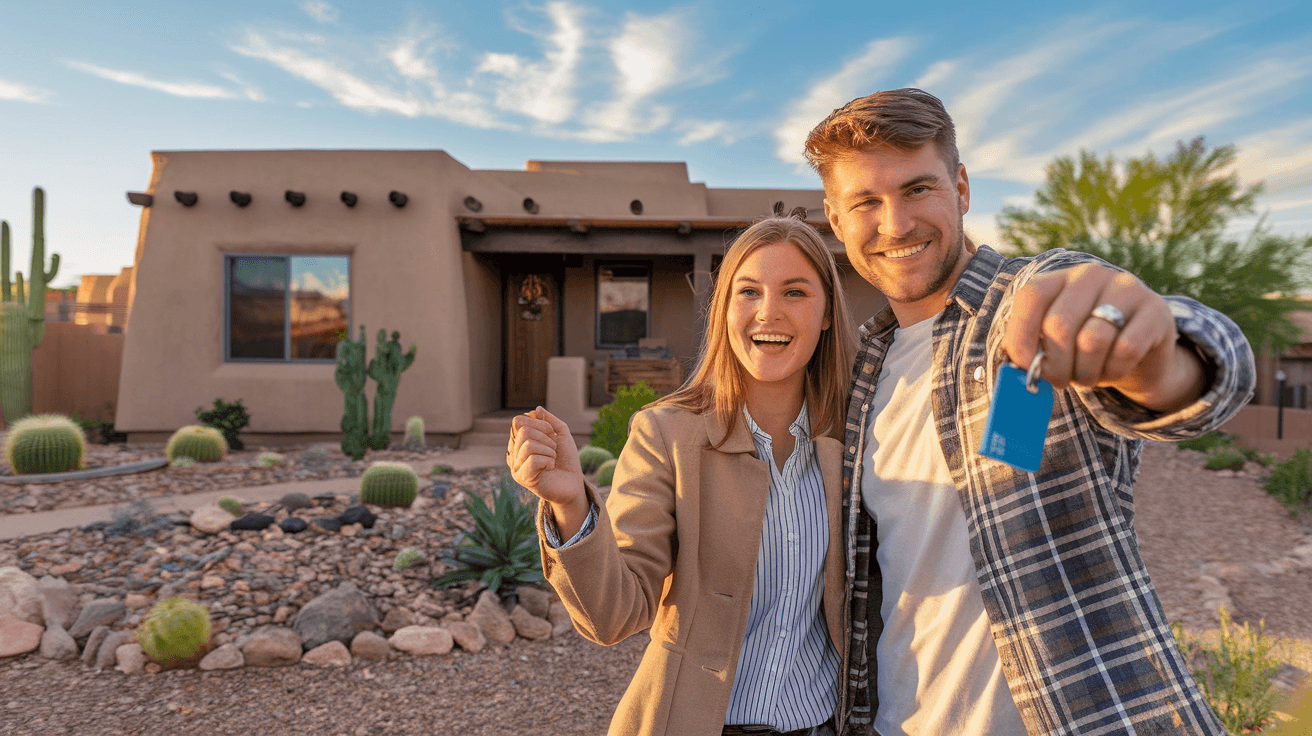
I have walked a lot of first-time buyers through the process in Albuquerque, and the ones who get to closing with their sanity intact almost always share one trait: they did their homework before they fell in love with a house. The ones who struggle tend to reverse the order — they start touring homes, they find one they adore on Zillow, and then they discover that their finances are not in the shape they assumed, that the neighborhood has a nuance they missed, or that New Mexico's closing cost structure added $8,000 they were not expecting.
This guide is built to prevent that. We are going to walk through the process in the order it actually needs to happen: finances first, market education second, active searching third. It is not the order that feels natural — looking at houses is more fun than reviewing your credit report — but it is the order that works.
Step 1: Get Your Financial House in Order
Know Your Credit Score Before Your Lender Does
Your credit score is the most direct lever you have over your mortgage rate, and in a market where a 0.5% rate difference on a $320,000 loan represents roughly $100 per month in payment difference, it is worth understanding precisely where you stand before you apply for pre-approval.
Pull your credit reports from all three bureaus — Equifax, Experian, and TransUnion — through annualcreditreport.com. Look for errors, look for accounts in collections, and look for high utilization on revolving credit. For a conventional loan, you generally need a minimum score of 620, though the best rates require 740 or above. For an FHA loan, you can qualify with a score as low as 580 with a 3.5% down payment, or as low as 500 with a 10% down payment.
If your score is below 680, spend 90 days actively working it upward before you apply. Pay down credit card balances below 30% of each card's limit. Do not open any new credit accounts. Do not close old accounts. These are not dramatic moves, but they consistently add 20 to 40 points over a few months.
Understand What You Can Actually Afford
The number your lender approves you for and the number that represents a comfortable mortgage payment are often different. Lenders in New Mexico will typically approve buyers at a debt-to-income ratio up to 43% to 50%, which means your monthly debts (including the proposed mortgage payment) can absorb nearly half your gross income. That approval number is a ceiling, not a recommendation.
A more sustainable guideline: keep total housing costs — principal, interest, property taxes, homeowner's insurance, and any HOA fees — at or below 28% of your gross monthly income. In practice, for a $320,000 home at a 6.75% rate with 5% down, you are looking at approximately $2,100 to $2,300 per month in total housing costs including taxes and insurance. That math works for a household earning $85,000 or more annually.
Albuquerque property taxes are among the lowest of any major city in the Southwest. New Mexico's effective property tax rate averages around 0.47% to 0.55% — on a $320,000 home, that translates to roughly $1,500 to $1,750 per year, or $125 to $145 per month added to your payment. Compare that to the average Texas homeowner paying three to four times as much in property taxes on a comparable home and you understand why people who relocate here from Austin are genuinely surprised.
Step 2: Get Pre-Approved — Not Just Pre-Qualified
Pre-qualification is a five-minute phone call where a lender asks about your income and debts and gives you a ballpark number. It is not worth much in a competitive market. Pre-approval is a formal underwriting review of your actual financial documents, and it is the only document that a listing agent in Albuquerque is going to take seriously when their seller is weighing competing offers.
For pre-approval, you will need:
- •Last two years of federal tax returns (all pages and schedules)
- •Last two years of W-2s or 1099s
- •Last 60 days of bank statements (all accounts, all pages)
- •Last 30 days of pay stubs
- •Current statements for any retirement or investment accounts
- •Your Social Security number for a hard credit pull
Fully underwritten pre-approval — where the underwriter actually reviews your file rather than just the loan officer — is the strongest version of this document. It takes longer to get (sometimes 3 to 5 business days) but it carries far more weight with sellers, particularly in multiple-offer situations.
Step 3: Understand Your Loan Options
FHA Loans
FHA loans are insured by the Federal Housing Administration and are the default choice for many first-time buyers because of their accessible down payment and credit score requirements. The minimum down payment with an FHA loan is 3.5% for buyers with a credit score of 580 or above. On a $300,000 purchase, that is $10,500 down — significantly less than the $15,000 to $60,000 a conventional loan might require.
The trade-off is mortgage insurance premium (MIP), which FHA requires regardless of your down payment size. You pay an upfront MIP of 1.75% of the loan amount at closing (which can be rolled into the loan), and an annual MIP that runs between 0.55% and 1.05% of the loan balance depending on your loan term and LTV. Unlike conventional PMI, FHA MIP stays on loans with less than 10% down for the life of the loan — it does not automatically drop off when you reach 20% equity. For buyers planning to stay in the home 5 or more years, refinancing into a conventional loan once you build equity is the standard strategy to shed that cost.
VA Loans
If you have served in the military or are currently serving, the VA loan is the most powerful financing tool available in the Albuquerque market. Zero down payment. No private mortgage insurance. Competitive rates. The VA funding fee (typically 1.25% to 3.3% of the loan amount for first use) can be rolled into the loan, and many veterans with service-connected disabilities are exempt from it entirely.
Kirtland Air Force Base is one of the largest employers in New Mexico, and VA financing is active throughout the Albuquerque metro. Sellers here are very familiar with VA loans — they are not the scary, complicated transactions they have a reputation for in some markets. A clean VA offer with a strong pre-approval letter will compete effectively against conventional financing in most situations.
Conventional Loans
Conventional loans — those not backed by the government — have historically required 20% down to avoid private mortgage insurance (PMI). But conventional loans are now available with as little as 3% down through Fannie Mae's HomeReady and Freddie Mac's Home Possible programs, which are designed specifically for first-time and low-to-moderate income buyers.
Conventional PMI, unlike FHA MIP, automatically cancels when you reach 20% equity based on your original purchase price, or you can request cancellation at 20% equity based on a new appraisal. For buyers who expect home values to appreciate (a reasonable bet in Albuquerque's current market), the timeline to eliminating PMI may be shorter than they think.
New Mexico MFA Programs
The New Mexico Mortgage Finance Authority (MFA) offers programs specifically for first-time buyers and buyers who have not owned a home in the past three years. These are worth knowing about before you sit down with a lender.
FirstHome is MFA's primary first-time buyer program. It offers a 30-year fixed-rate mortgage at a below-market interest rate, and can be paired with FirstDown, a down payment assistance loan of up to $15,000 at 0% interest, deferred for 30 years unless you sell or refinance. Income limits apply — for most New Mexico counties, the limit is around $120,000 for a household of two or more — and purchase price limits cap out around $480,000, which covers the majority of the Albuquerque market.
HomeNow is MFA's down payment assistance grant program — not a loan, an actual grant — of up to 3% of the purchase price. It does not need to be repaid as long as you keep the home for a minimum period. For a $300,000 purchase, that is $9,000 toward your down payment with no repayment obligation.
“The MFA programs are consistently underused, in my experience, because buyers either do not know they exist or assume the income limits will disqualify them. Check the current limits before you assume you do not qualify — they are higher than most people expect and the programs are genuinely valuable.
Step 4: Know the Neighborhoods Under $350,000
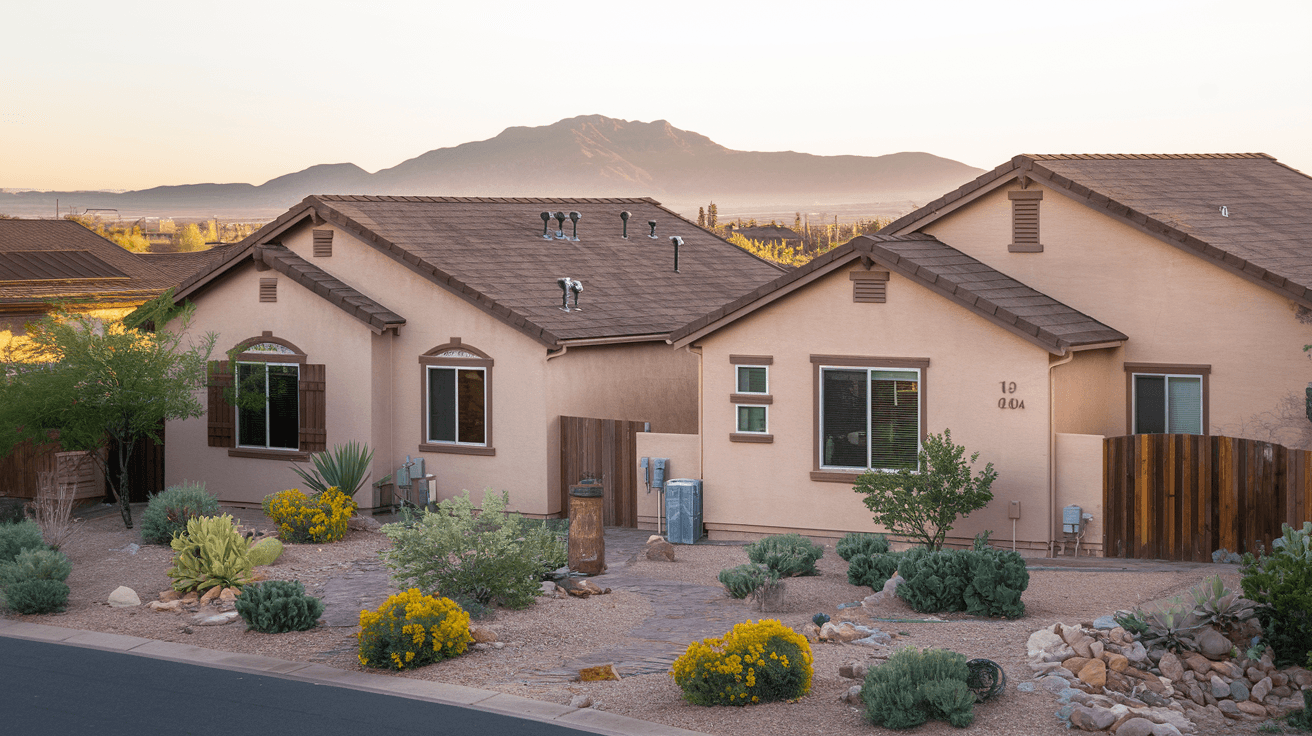
A first-time buyer budget of $350,000 puts you below the metro median, but it does not limit you to a narrow slice of the city. Here is where that budget realistically takes you in spring 2026.
The West Side — Taylor Ranch and older Westgate/Westgate Heights areas offer the most consistent value in this range. Three-bedroom, two-bathroom homes built in the 1980s and 1990s, solid construction, decent school zones, and proximity to Petroglyph National Monument trails. Expect $270,000 to $340,000 for a move-in ready home.
The Northeast Heights, further from Tramway — the neighborhoods around Montgomery Boulevard, Candelaria, and Menaul — have older ranch-style homes in the $280,000 to $360,000 range. These homes are typically on larger lots than West Side comparables and may need cosmetic updating, but the bones are good and the neighborhood infrastructure is mature.
The South Valley along Isleta Boulevard and the Rio Bravo corridor offers character-rich properties — older adobes, homes with acequias running through the property, and the kind of New Mexico authenticity that is hard to replicate — in the $220,000 to $320,000 range. Buyers need to be comfortable with older construction and some deferred maintenance, but the value per square foot is excellent.
Rio Rancho's older subdivisions near Southern Boulevard and Lomas offer newer construction (1990s to 2000s) at $280,000 to $360,000. The school district is separate from APS, the commute to Kirtland AFB is longer, but the homes are newer and the price-to-condition ratio is strong.
The International District near Kirtland AFB has seen quiet gentrification over the past several years. Properties in the $220,000 to $310,000 range in streets near Gibson Boulevard and Eubank are close to the base, close to Kirtland Community Services, and benefiting from neighborhood investment. It requires more due diligence on specific blocks, but the upside is real.
Step 5: Understand New Mexico's Closing Costs
New Mexico closing costs for buyers generally run 2% to 3% of the purchase price, and first-time buyers consistently underestimate this number. On a $310,000 purchase, that is $6,200 to $9,300 in closing costs — in addition to your down payment.
Here is where the money goes:
Origination fee and points: Your lender charges this for processing the loan. Typically 0.5% to 1% of the loan amount, though this varies significantly by lender. Shop at least three lenders before committing — differences of 0.25% in rate or 0.5% in origination fees add up to thousands of dollars.
Title insurance: New Mexico requires both a lender's title policy (paid by the buyer) and a buyer's owner's title policy (typically also paid by the buyer unless negotiated otherwise). Combined, these run 0.5% to 0.75% of the purchase price.
Escrow and settlement fees: The title company or escrow company charges for handling the closing. In New Mexico, closings are typically handled by title companies rather than attorneys. Fees run $800 to $1,500.
Appraisal: Required by your lender. Typically $450 to $600 for a standard single-family home in the metro.
Home inspection: Not required by lenders but absolutely required by common sense. Expect to pay $350 to $500 for a standard inspection, and budget an additional $150 to $200 if you add radon testing (which I recommend for all Albuquerque properties — the geology here produces elevated radon in some areas) or sewer scope inspection.
Prepaid items: Your lender will require you to prepay the first year of homeowner's insurance, plus establish escrow reserves for taxes and insurance. Budget $2,000 to $3,500 for these prepaids depending on your property tax rate and insurance premium.
Many sellers in the current Albuquerque market will contribute to buyer closing costs as part of a negotiated transaction, particularly on homes that have been sitting for more than 21 days. But do not count on it — plan your cash reserves as though you are covering your full down payment plus the full 3% in closing costs.
Step 6: Desert Climate — What to Look for in Your Inspection
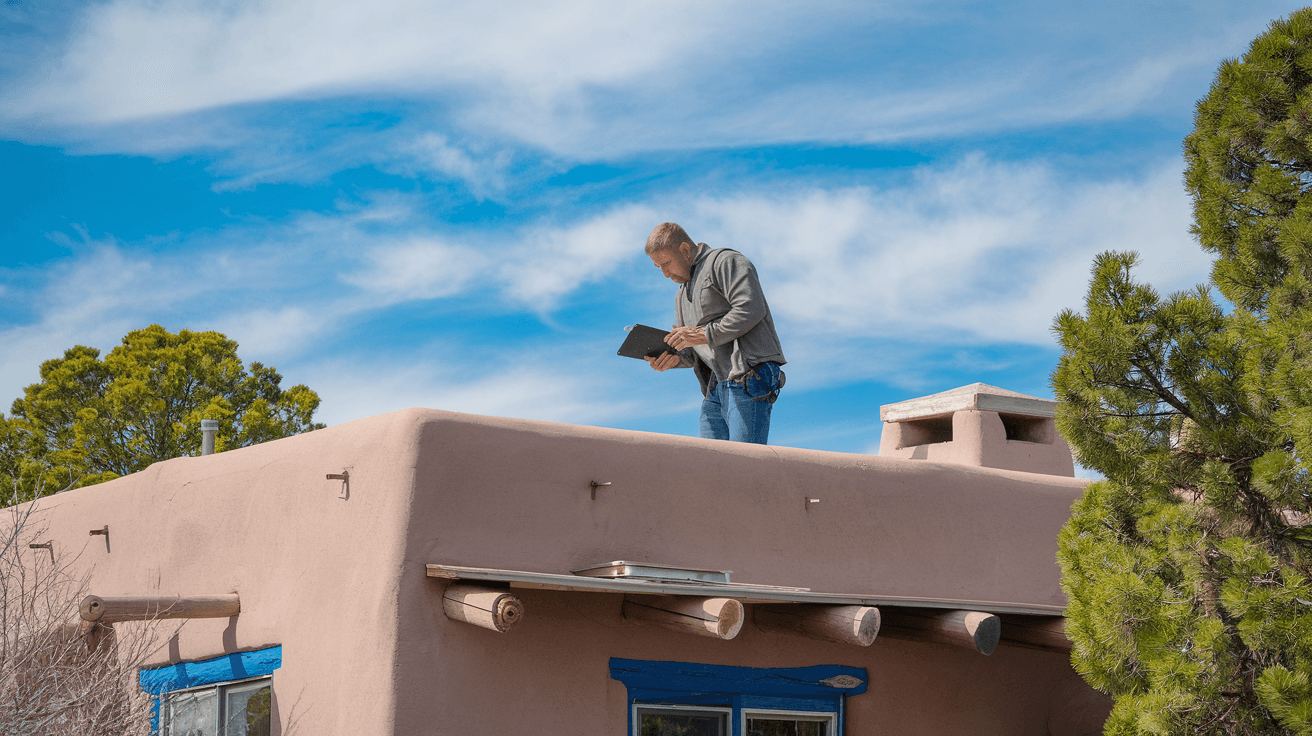
Albuquerque's high desert climate creates specific inspection considerations that buyers coming from wetter climates often miss. A good home inspector in Albuquerque will check these, but it is worth understanding what to watch for.
Stucco and exterior envelope: Most homes here are stucco over frame or masonry. Stucco cracks are common and often superficial, but they can also indicate foundation movement or water intrusion. Look for stucco cracks at corners, at window and door frames, and at the roofline transition. Horizontal cracks are more concerning than vertical hairline cracks.
Roof condition: Albuquerque has intense UV exposure and freeze-thaw cycles at higher elevations. Flat roofs — common on pueblo-style and adobe construction — need regular maintenance and can develop pooling issues. Pitched roofs should be inspected for granule loss on asphalt shingles and proper flashing at all penetrations and valleys.
HVAC and heating: Many older homes in Albuquerque have evaporative (swamp) coolers rather than refrigerated air conditioning. Evaporative coolers work well in low humidity but struggle during the monsoon season (July through September). If you are buying a home with evaporative cooling and you value summer comfort, budget $4,000 to $8,000 to add or convert to refrigerated air. The listing agent should disclose which type of cooling the home has.
Water heater and plumbing: Albuquerque's water is hard — high mineral content — and it accelerates water heater wear and leaves scale deposits in pipes and fixtures. A water heater that is more than 10 years old in Albuquerque is living on borrowed time.
Radon: New Mexico is geologically predisposed to elevated radon levels. It is colorless, odorless, and the second leading cause of lung cancer in the United States. Testing costs $150 and mitigation — if needed — costs $800 to $1,500. Do not skip this.
The First-Time Buyer Timeline
In Albuquerque's current market, a realistic timeline from "deciding to buy" to "keys in hand" is 60 to 90 days if your finances are in order from day one. Here is the rough breakdown:
- •Weeks 1-2: Credit review, financial assessment, gathering documents
- •Weeks 2-3: Lender shopping, pre-approval application
- •Week 3: Receive fully underwritten pre-approval
- •Weeks 3-8: Active home search, tours, offers
- •Offer accepted: 30 to 45 day escrow period standard in New Mexico
- •Escrow period: Inspection, appraisal, loan processing, final walkthrough
- •Day 30-45: Closing day
If your credit needs work or your financial documents are complicated (self-employment, recent job change, unusual income), add 60 to 90 days to the front of that timeline.
The buyers who succeed in Albuquerque's market right now are the ones who treat this process like the largest financial decision of their lives — which it is — and who invest the time upfront to understand it before they fall in love with the first house that has the right kitchen. That preparation does not eliminate the emotion of finding your home, but it protects that emotion from being crushed by a financing surprise at the worst possible moment.
Want more insider intel?
Subscribe to get market updates and new articles delivered to your inbox.