What a Home Inspection in Albuquerque NM Actually Reveals: Adobe Walls, Flat Roofs, and Swamp Coolers Explained
If you've ever sat across the table from a home inspector's report and felt like you were reading a foreign language, you're not alone. A home inspection in Albuquerque NM doesn't look anything like one in Chicago or Phoenix. Our homes are built differently, cooled differently, and they age differently. The high desert does things to a structure that inspectors in other parts of the country rarely encounter.
Whether you're buying your first place near Nob Hill or upgrading to something bigger out in Rio Rancho, understanding what an inspector is actually looking at, and what their findings mean for your offer, can save you thousands and a whole lot of heartache.
Home Inspection Albuquerque NM: Why Our Homes Are Different From the Start
Albuquerque sits at roughly 5,300 feet elevation. We get intense UV exposure, dramatic temperature swings between day and night, low humidity for most of the year, and then a monsoon season that dumps significant rain in a short window from July through September. That combination is brutal on building materials in very specific ways.
Add to that the fact that a huge portion of our housing stock is built with adobe, stucco over wood frame, or a combination of both, and you've got an inspection environment that requires someone who knows the difference between a hairline stucco crack that's purely cosmetic and one that's letting water into a wall cavity.
The three systems that trip up buyers most consistently in Albuquerque are:
- •Adobe and stucco exterior walls
- •Flat or low-slope roofs
- •Evaporative coolers (swamp coolers)
Knowing what inspectors look for in each one gives you a real advantage at the negotiating table.
Adobe Home Inspection New Mexico: What Inspectors Look for in Walls
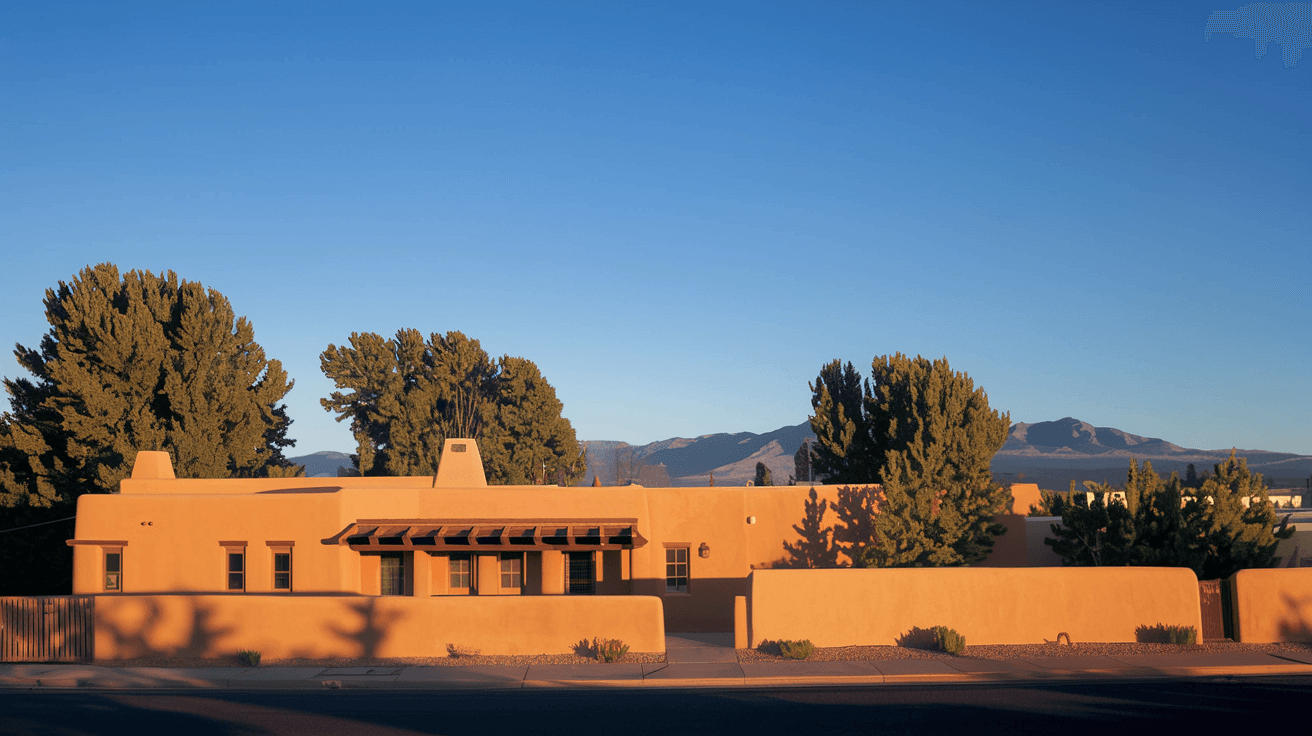
True adobe construction uses sun-dried mud bricks, and Albuquerque has plenty of it, especially in the North Valley, Old Town area, and the historic neighborhoods that fan out from Central Avenue. Many newer homes mimic the look with stucco over wood frame, which inspectors treat very differently.
Cracks: Cosmetic vs. Structural
Every adobe and stucco home in New Mexico has cracks. That's just the truth. The desert climate causes expansion and contraction that's relentless. What matters is the type, location, and pattern of those cracks.
- •Hairline cracks in stucco that run parallel to the wall surface are usually cosmetic and common after a dry summer
- •Diagonal cracks running from the corners of windows or doors often signal foundation movement or settling
- •Horizontal cracks in adobe walls can indicate lateral pressure and deserve serious attention
- •Stair-step cracks following the mortar joints in brick or block suggest differential settling
- •Wide cracks with separation anywhere near the roofline or foundation line are red flags
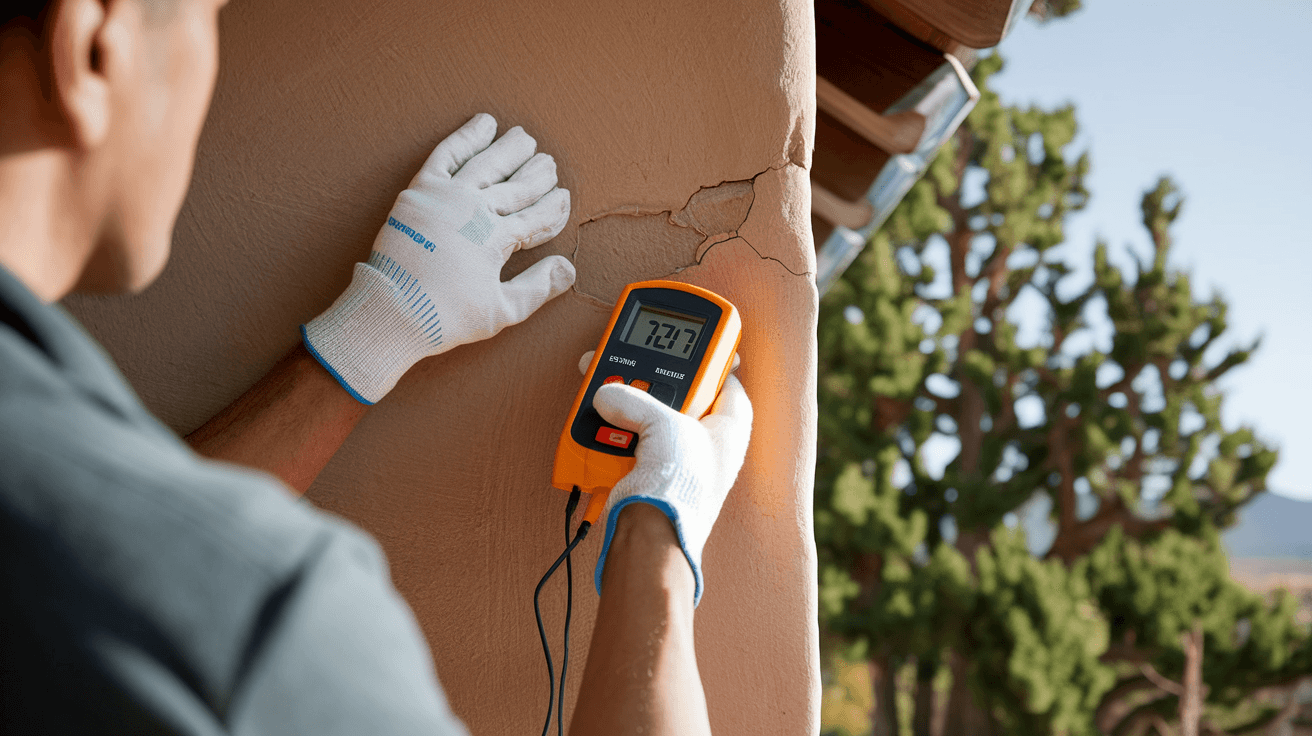
A good inspector will probe these cracks, sometimes with a moisture meter, to check whether water has been getting in. In a stucco over wood frame home, water intrusion behind the stucco is one of the most expensive repairs you can face. The wood sheathing and framing can rot without any visible exterior sign until it's significant.
Moisture and Adobe Walls
True adobe is surprisingly resilient when it stays dry, but it does not tolerate prolonged moisture. Inspectors in Albuquerque look carefully at:
- •Grade slope around the foundation (water should drain away from the structure)
- •Weep screeds at the base of stucco walls (they allow trapped moisture to exit)
- •Parapet walls on flat-roofed homes where water can pond against the stucco
- •Any areas where landscaping, irrigation, or downspout discharge pushes water toward the wall base
The North Valley is particularly worth watching here. Homes near the Rio Grande sometimes sit on soils with higher clay content, and that clay swells when wet. Combine that with irrigation-heavy yards and you can get foundation movement that shows up as cracking throughout the home.
“"An adobe home inspection in New Mexico isn't about finding problems. It's about understanding which issues are part of living in the desert and which ones actually need to be fixed before you sign."
Flat Roof Inspection Albuquerque: The System Most Buyers Underestimate
Flat roofs, or more accurately low-slope roofs, are everywhere in Albuquerque. They're part of the Pueblo Revival and Spanish Colonial architectural traditions that define so much of the city's character. They look beautiful. They also require a very specific kind of attention.
A flat roof that's been well maintained is not a liability. A flat roof that's been ignored for a few years can be a significant expense waiting to happen.
What the Inspector Is Actually Checking
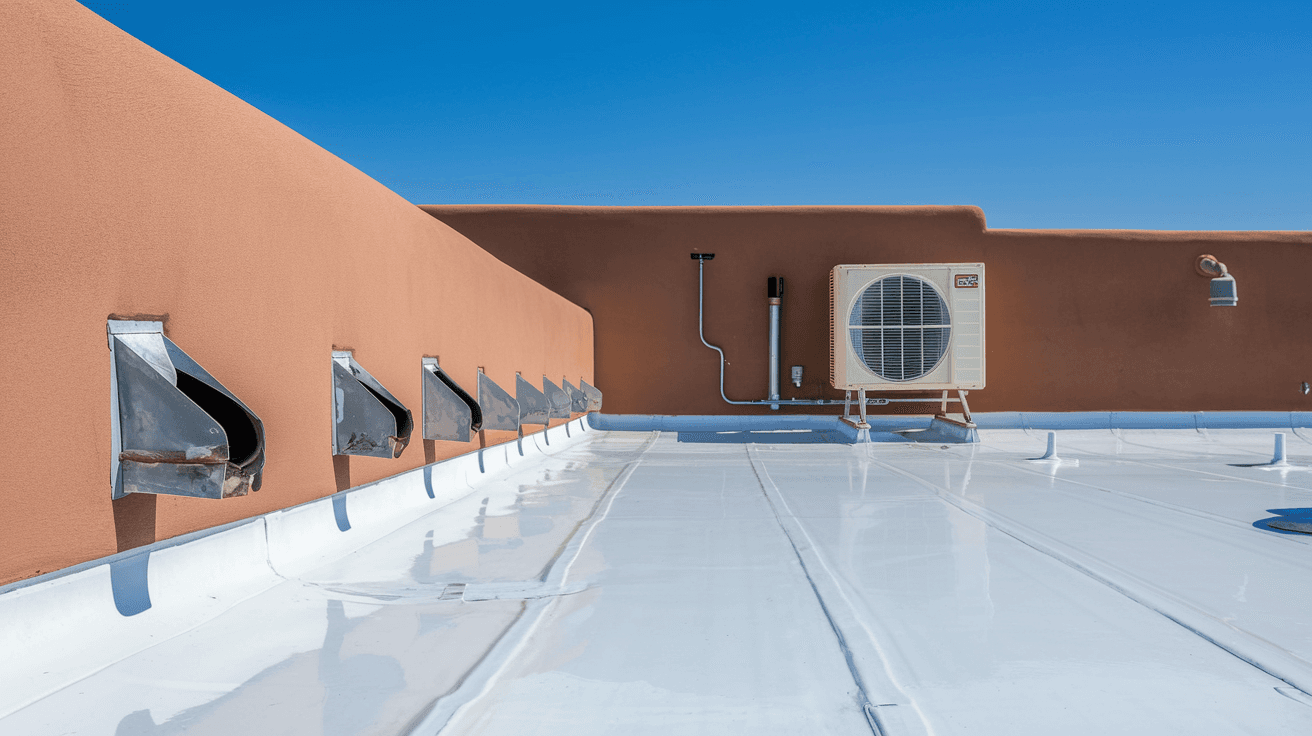
Drainage is the first thing. Flat roofs depend entirely on properly placed drains and scuppers (the openings in parapet walls that let water exit). When those get clogged with debris from the cottonwoods along the Bosque or the neighborhood elms, water ponds. Ponding water on a flat roof is the enemy.
Inspectors look for:
- •Evidence of past ponding (white mineral deposits or staining around drain areas)
- •Membrane condition on built-up roofs or TPO systems (bubbling, cracking, or separation at seams)
- •Elastomeric coating on older flat roofs and whether it's been applied correctly and maintained
- •Parapet wall cap condition, because water gets in at the top if the cap is cracked or missing
- •Penetrations where HVAC equipment, swamp coolers, or vent pipes come through the roof deck
The monsoon season is when flat roof problems become visible. If you're buying a home in spring or early summer and the inspector flags drainage concerns, take that seriously. Those summer storms can drop an inch of rain in under an hour, and a compromised flat roof will show you exactly where it's failing.
The Insider Tip on Flat Roofs
Here's something only locals tend to know: the elastomeric coating (that bright white or tan paint-like material you see on flat roofs all over the city) has a lifespan of roughly five to seven years depending on exposure. Many homeowners do it themselves, and the quality of application varies wildly. When you're reviewing inspection findings, ask specifically when the coating was last applied and whether it was done by a licensed roofing contractor. A DIY coating job over a membrane that needed replacement first is a problem that won't show up until the next monsoon.
Swamp Cooler Inspection: What Buyers Need to Know About Evaporative Cooling
If you're relocating from out of state, you may have never dealt with an evaporative cooler before. They're the dominant cooling system in older Albuquerque homes, particularly anything built before the 1990s, and they're still common in mid-century neighborhoods like Ridgecrest, Sandia Heights, and the heights neighborhoods along Tramway.
A swamp cooler works by pulling outside air through water-saturated pads. As the water evaporates, it cools the air. In a dry climate like ours, this is genuinely effective and far cheaper to operate than central air conditioning. The catch is that they require seasonal maintenance, and a neglected cooler can cause real problems.
What the Inspector Checks on an Evaporative Cooler
- •Water pan condition: Rust or mineral buildup in the pan is common and manageable, but severe rust can mean leaks onto the roof deck below
- •Pump function: The pump circulates water over the pads; a failing pump means the unit runs hot air
- •Pad condition: Old, calcified pads don't cool effectively and restrict airflow
- •Float valve: Controls water level in the pan; a stuck float can overflow and damage the roof
- •Ductwork connections: Coolers connect to the home's duct system, and poor connections mean energy loss
- •Roof penetration sealing: Where the cooler sits on the roof is a common water intrusion point if the flashing or sealant has failed
Inspectors will also note whether the home has a dedicated shut-off valve for the cooler's water supply. This matters because coolers need to be winterized every fall. You drain the water, cover or replace the pads, and close the damper inside the duct. Skip that step in Albuquerque and you'll deal with frozen supply lines or a cooler full of mold come spring.
The Seasonal Switchover Question
Many Albuquerque homeowners with older homes run swamp coolers in spring and early summer, then switch to a gas furnace in winter. Homes with both systems have what locals call a combination HVAC setup. The inspector should evaluate both systems independently. It's worth asking specifically whether the cooler has been serviced in the current season or the one prior. A cooler that's been sitting unused for two seasons without a checkup often needs new pads and a pump inspection at minimum.
“"Swamp coolers aren't a downgrade. They're a desert adaptation. A well-maintained evaporative cooler keeps an Albuquerque home comfortable from April through September for a fraction of what central AC costs to run."
Buying a House Albuquerque Checklist: Other Items Inspectors Flag Here That You Won't See Elsewhere
Beyond the big three, a home inspection in Albuquerque NM often surfaces a few other issues that are specific to our region.
Foundation and Soil Conditions
Albuquerque's soils vary considerably by neighborhood. The West Side and areas near the Rio Grande can have expansive clay soils that move with moisture changes. The East Side and foothills tend to have more stable, rocky substrates. Inspectors look at foundation cracks, door and window alignment (sticking doors are often the first sign of foundation movement), and any visible gaps between walls and ceilings.
Radon Gas
New Mexico has elevated radon levels in many areas, and Albuquerque is no exception. Radon is a naturally occurring radioactive gas that seeps up from uranium-bearing soils. It's the second leading cause of lung cancer after smoking. A standard home inspection doesn't always include radon testing; you typically have to request it as an add-on. Given our geology, this is worth the additional cost. Mitigation systems are effective and relatively affordable if levels come back high.
Electrical Systems in Older Homes
Homes built in the 1950s through 1970s, and there are a lot of them in the heights neighborhoods east of Louisiana Boulevard, sometimes still have aluminum wiring or older panel configurations that don't meet current code. Inspectors flag these for safety evaluation. It doesn't mean the home is dangerous, but it does mean you want a licensed electrician to review what the inspector finds.
Water Heaters and Hard Water
Albuquerque's water is famously hard. The mineral content accelerates sediment buildup in water heaters and can shorten their lifespan. Inspectors note the age and condition of the water heater, and it's worth asking when it was last flushed. A water heater that's been sitting full of sediment for years runs less efficiently and fails sooner.
How to Use Inspection Findings When Buying a House in Albuquerque
Getting the inspection report is just the beginning. The real skill is knowing which findings to act on and how.
Not everything in a report is a negotiating point. Inspectors are required to note everything they observe, and a thorough report on an older Albuquerque home can run thirty pages. That can feel alarming if you don't have context. Deferred maintenance items like aging cooler pads or minor stucco cracks are different from structural or safety concerns like active roof leaks, foundation movement, or electrical hazards.
A few principles that serve buyers well here:
- •Focus your repair requests on items that affect safety, habitability, or significant future cost
- •Get contractor bids on major findings before asking for a price reduction, so your request is grounded in real numbers
- •Consider asking for repair credits at closing rather than seller-completed repairs, especially on roofing and HVAC work where quality of the fix matters
- •Use the inspection period to bring in specialists if the general inspector flags concerns about the roof, foundation, or electrical system
If you're working through this process and want guidance on how to structure your repair requests or evaluate whether a specific finding changes the deal, that's exactly the kind of conversation The Taylor Team at Berkshire Hathaway HomeServices has every week with buyers across the metro. Getting the right advice before you respond to an inspection report can make a real difference in how the transaction goes.
Albuquerque homes have character precisely because of how they're built and how they've adapted to this landscape. Adobe walls, flat roofs, and swamp coolers aren't problems to overcome. They're features of living in the high desert Southwest, and once you understand them, they stop being intimidating. The inspection process is your chance to understand the specific home you're buying, not just the category of home it falls into. Go in informed, ask good questions, and trust the process.
Want more insider intel?
Subscribe to get market updates and new articles delivered to your inbox.