Investing in Albuquerque Real Estate: 2026 Investor Guide
Most serious real estate investors have never put Albuquerque at the top of their list. That is changing, and the investors who figured it out three years ago are now sitting on properties that cash flow consistently in a market that has not been hammered by the over-speculation that burned landlords in Phoenix and Austin. If you are looking at investing in Albuquerque real estate in 2026, this is the honest breakdown — cap rates by neighborhood, what the rental demand actually looks like, where cash flow beats appreciation and where the reverse is true, and the operational realities most investment content glosses over.
I work with investors regularly here, and the number one mistake I see is people importing assumptions from other markets. Albuquerque is not Phoenix. It is not Denver. It has its own drivers, its own tenant demographics, and its own supply constraints. Understand those and the investment thesis becomes very clear.
Why Albuquerque Makes Sense in 2026
Three structural factors set Albuquerque apart from most Sun Belt markets.
First, supply is genuinely constrained. The Sandia Mountains bracket the city to the east, Kirtland AFB and Sandia Labs control vast land parcels to the south and east, and the Rio Grande bosque and flood zones limit westward development. New housing construction has not kept pace with population and employment growth. That supply constraint supports both rents and home prices in a way you do not see in markets with unlimited land to the west.
Second, employment is anchored in federal and institutional spending. Sandia National Laboratories, Kirtland Air Force Base, and the University of New Mexico collectively employ tens of thousands of workers whose income does not disappear in a recession the way private-sector tech jobs do. This creates a tenant base that is stable, creditworthy, and present regardless of economic cycles. When the tech sector had its 2022-2023 contraction, Albuquerque's rental market barely noticed.
Third, prices have not run away from rents. In markets like Denver and Phoenix, home prices ran so far ahead of rents during 2020-2022 that cap rates compressed to 3 and 4 percent on even modest properties. Albuquerque appreciated but not at that extreme, meaning the rent-to-price relationship still supports real cash flow.
Cap Rates by Neighborhood: 2026 Reality
Cap rates in Albuquerque vary significantly by submarket, and understanding the range matters before you start underwriting deals.
South Valley: 7–9% Cap Rates
The South Valley — the corridor running south of Downtown along the Rio Grande, covering areas like Atrisco, the Barelas neighborhood, and the communities along Bridge Boulevard and Isleta Boulevard — offers the strongest gross cap rates in the metro. Prices for single-family rentals and small multifamily properties here are the lowest in the city, and rents, while below Northeast Heights levels, are solid relative to acquisition cost.
A typical South Valley single-family rental might purchase at $180,000 to $240,000 and rent for $1,200 to $1,500 per month. The math works. The trade-off is that property management is more active here — tenant screening discipline matters more, maintenance costs run higher on older housing stock, and vacancy periods require more marketing effort than in the Northeast Heights.
“If you are buying South Valley, do not cut corners on property management. The cash flow is real but it requires more operational attention than a turnkey Northeast Heights rental. An 8% cap rate with a good property manager beats a 6% cap with self-management and one bad tenant situation.
Northeast Heights: 5–6% Cap Rates
The Northeast Heights is where I put investors whose primary concern is sleep — as in, buying something they are not going to spend mental energy worrying about. Properties here are newer (1970s through 2000s), tenants are stable (Sandia Labs contractors, Kirtland personnel, UNM medical staff, young professional couples), turnover is lower, and the quality of the housing stock reduces maintenance surprises.
The trade-off is price. A Northeast Heights single-family rental typically acquires at $280,000 to $380,000 and rents for $1,500 to $2,200 per month depending on size, condition, and proximity to the Foothills. Cap rates land in the 5 to 6 percent range — acceptable in this rate environment, especially when you factor in appreciation that has consistently outpaced the South Valley over the past decade.
For investors who are optimizing for long-term wealth building rather than immediate cash flow maximization, the Northeast Heights foothills are compelling. Properties near the Sandia Open Space boundary appreciate driven by scarcity — there is genuinely nothing being built between these homes and the mountain.
Downtown/EDo: 6–8% Cap Rates
The EDo (East Downtown) and adjacent neighborhoods along Gold and Coal Avenues, and stretching into the Barelas and South Broadway corridors, represent the most interesting current opportunity in the Albuquerque market. The neighborhoods are gentrifying — not in a speculative bubble way, but in a genuine infrastructure investment, restaurant openings, arts district anchoring way. The City of Albuquerque has invested significantly in streetscape improvements along Central and 4th Street.
Prices for small multifamily properties here — duplexes, triplexes, small apartment buildings — have not yet caught up to the trajectory of the neighborhood. Cap rates on multifamily acquisitions in the 6 to 8 percent range are achievable, and the appreciation thesis is stronger here than in any other part of the city over a 5- to 10-year hold.
The risk is execution: these properties require active management, often need renovation, and the tenant base is more transient than the Northeast Heights. Experienced investors with operational capacity who understand the city will do well here. Passive investors looking for easy set-and-forget properties should start elsewhere.
The Rental Demand Profile
Who are your tenants in Albuquerque? Understanding the demand base is critical for underwriting.
UNM students represent a significant and perpetual rental demand segment, concentrated within roughly two miles of the university on Central Avenue — the Nob Hill corridor, the University neighborhood, the Mesa Vista and Student Ghetto areas east of Yale. Student rental properties tend toward higher turnover (annual lease cycles tied to the academic year), but demand is perennial and rents per bedroom can be strong in multifamily configurations. A four-bedroom house near UNM rented by the bedroom to students often outperforms the same house rented to a family on a per-square-foot basis.
Kirtland AFB military personnel represent a different profile: reliable income (BAH is predictable and stable), typically shorter tenancy (2-3 year PCS cycles), and strong preference for the neighborhoods southeast of Downtown — Four Hills, SE Heights, the area south of Central between Wyoming and Kirtland's eastern gate on Gibson. Military tenants screen well and pay consistently. The challenge is marketing: reaching this demographic requires being listed on MilitaryByOwner and networking with base housing offices.
Traveling nurses and healthcare workers from Presbyterian, UNM Hospital, and Lovelace have driven demand for furnished short-term and medium-term rentals. The furnished medium-term rental market (30-day minimum to comply with ABQ short-term rental regulations, discussed below) is an underexplored niche in Albuquerque. Healthcare workers on 13-week contracts need furnished housing repeatedly throughout the year.
Sandia Labs and Kirtland contractor employees, particularly those on clearance-required positions, tend toward the Northeast Heights and Foothills. These are among the most creditworthy tenants in any Albuquerque portfolio — six-figure incomes, stable employment, often dual-income households who rent by choice rather than financial necessity.
Cash Flow vs. Appreciation: Where Each Strategy Wins
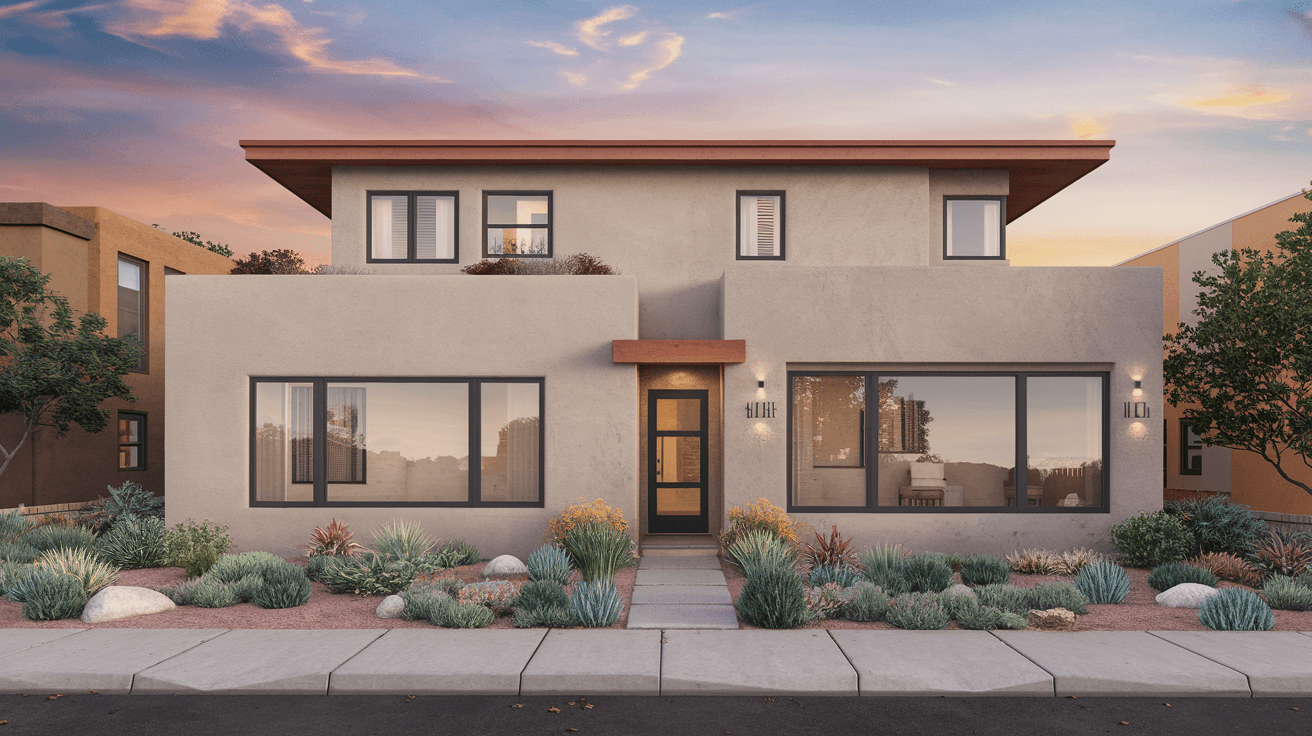
For investors optimizing cash flow, the South Valley and the older housing stock in the Southeast Heights and near-Downtown areas are the targets. Lower acquisition prices, solid rents, and gross cap rates in the 7-9 percent range. You will spend more time on property management and more money on maintenance, but the cash-on-cash returns are real.
For investors optimizing appreciation, the Northeast Heights foothills, Nob Hill, and the EDo corridor are the play. These neighborhoods are supply-constrained, demand is driven by high-income tenants and owner-occupants, and the price trajectory over the past decade has been consistent. Cap rates here are lower but total return including appreciation has outperformed the South Valley significantly on a per-year basis.
For investors who want both, the Northeast Heights mid-range — Menaul to Montgomery, Louisiana to Wyoming — is the sweet spot. These 1970s-1980s ranch homes acquire in the $280,000 to $320,000 range, rent for $1,600 to $1,900 per month, and sit in the path of appreciation pressure from the foothills pushing prices northward and westward.
1031 Exchange Considerations
Albuquerque has become an increasingly attractive 1031 exchange destination for investors cashing out of overheated California, Colorado, and Texas markets. The relative affordability means a $1.2 million California equity rollover can acquire three or four Albuquerque properties instead of one comparable unit, immediately diversifying the portfolio and improving cash flow.
Key 1031 timing note for Albuquerque transactions: the market for quality properties in desirable neighborhoods moves quickly. If you are operating under a 45-day identification deadline, you need boots on the ground or a local agent actively working your criteria before your relinquished property closes. I have worked with 1031 buyers who arrived with a deadline and found the right property; I have also worked with buyers who waited and had to scramble. Do not make the Albuquerque 1031 market your contingency plan — treat the identification period seriously.
Short-Term Rental Regulations in Albuquerque
This matters a lot and the rules are specific. Albuquerque requires a Short-Term Rental Operator Permit for any property rented for fewer than 30 consecutive days. As of 2024, the City of Albuquerque charges an annual permit fee and requires properties to be registered, inspected, and compliant with life-safety requirements. Owner-occupants operating hosted rentals (renting a room in their primary residence) face a different regulatory path than investors operating unhosted (entire property) short-term rentals.
The important practical point: HOAs and deed restrictions in many Northeast Heights subdivisions prohibit or severely restrict short-term rentals, regardless of city permitting. If you are buying a property with the intention to operate it on Airbnb or VRBO, review the CC&Rs carefully before closing.
For the traveling nurse and corporate housing market, a 30-day minimum lease term sidesteps the short-term rental permit requirement entirely and serves a real tenant demand pool. This is a more sustainable model for most investment properties than chasing Balloon Fiesta week rates.
Property Management Costs
In Albuquerque, expect to pay 8 to 10 percent of gross monthly rent for full-service property management from a reputable firm. That covers tenant placement, rent collection, maintenance coordination, and routine communication. Leasing fees (for tenant placement specifically) typically run one-half to one full month's rent, paid once at the start of a new tenancy.
A few names I see investors working with consistently: most established property management firms in Albuquerque maintain portfolios of 200 to 800 units and have established vendor relationships with contractors that meaningfully reduce maintenance costs. Ask for references from current clients and specifically ask about their average time-to-fill-vacancy — that number tells you more about quality than any marketing claims.
Maintenance reserves of 1 to 1.5 percent of property value per year are appropriate for 1970s-1980s housing stock. Newer construction can run lower. Roof, HVAC, and plumbing are your three largest line items here. Albuquerque's climate is dry, which is good for roofs and foundations, but the hard water from the municipal supply system is rough on water heaters and dishwashers.
Getting Started
The investors who have done best in Albuquerque over the past five years bought with a clear strategy, underwrote conservatively, and used local expertise rather than national investment platforms that treat Albuquerque the same as every other secondary market. The market has real nuance by neighborhood and by property type.
If you are evaluating specific properties, I can pull rental comps, neighborhood vacancy rates, and cap rate data for any address in the metro. If you are building a portfolio strategy, reach out and we can work through the numbers together before you start making offers.
Want more insider intel?
Subscribe to get market updates and new articles delivered to your inbox.