
Living in Corrales NM 2026: Acequia Water Rights, Horse Properties, and What Buyers Are Paying for Agricultural Character Along the Rio Grande
There is a moment, usually somewhere along Corrales Road between the old Wagner Farms orchard and the village's ancient cottonwood bosque, when you realize this place operates by a completely different set of rules than the rest of the metro. The speed limit drops. The road narrows. A horse trailer pulls out of a gravel easement ahead of you, and nobody honks. That is living in Corrales NM in 2026, and for buyers who understand what they are getting into, it is worth every complicated detail.
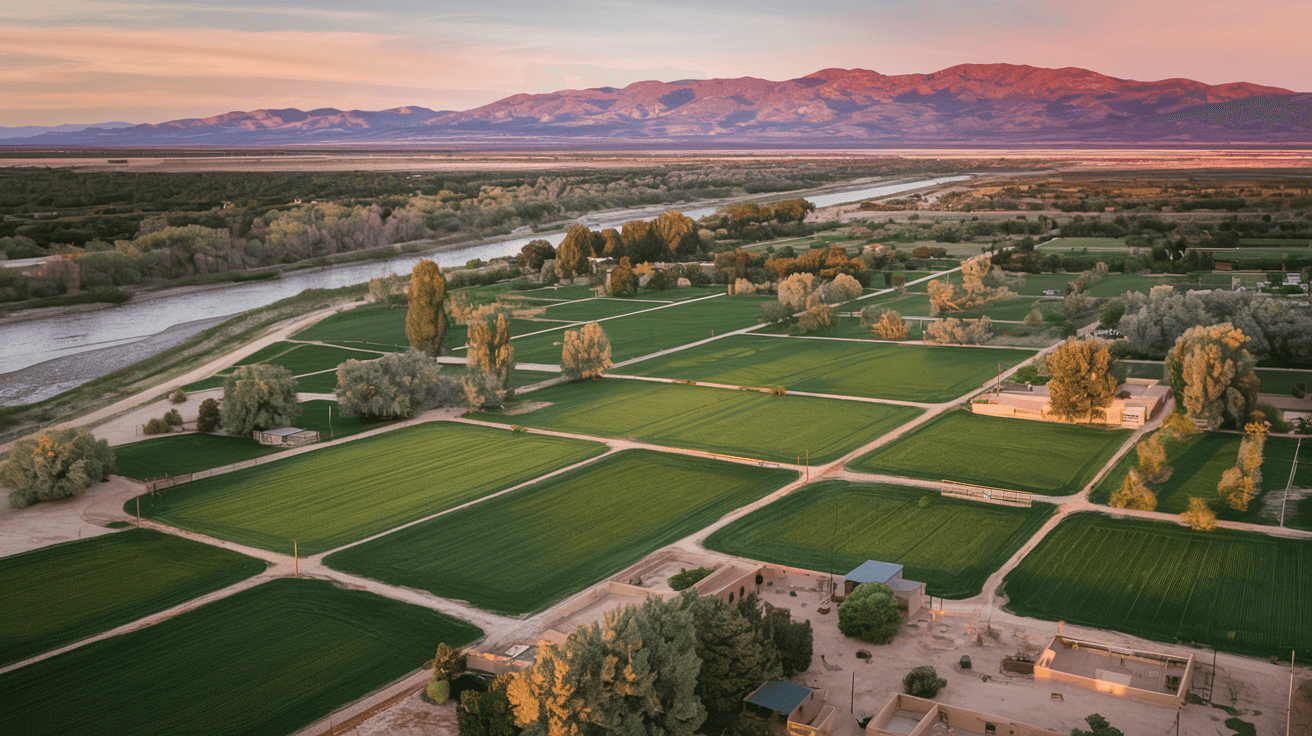
Corrales sits on a narrow strip of irrigated land between the Rio Grande and the West Mesa escarpment, just north of where Paseo del Norte dead-ends into the river. It is technically a village in Sandoval County, not part of Albuquerque or Rio Rancho, and that distinction is not administrative trivia. It shapes the zoning, the water law, the school assignments, and the entire culture of the place. The median home price here runs around $685,000, nearly double Albuquerque's metro median of $385,000, and that gap exists for reasons that go far deeper than square footage.
Corrales New Mexico Real Estate Market Conditions in 2026
The Corrales market is tight in a way that is structurally different from the broader metro. While Albuquerque proper is sitting at roughly 4.9 months of inventory with about 3,850 active listings across the region, Corrales rarely has more than a handful of properties available at any given time. When something comes on the market here, especially anything under an acre with a functional barn or irrigated pasture, it tends to move. The metro-wide average of 34 days on market does not always apply in Corrales. Well-priced horse properties with established water rights have gone under contract in under two weeks this year.
The list-to-sale ratio across the metro is hovering around 97.8%, which tells you buyers are not getting dramatic discounts anywhere right now. In Corrales, properties with desirable features like acequia shares, south-facing pasture, or Sandia Mountain views tend to close very close to or at asking price. Overpriced listings do sit, sometimes for months, because Corrales buyers tend to be experienced and patient. They know what the land is worth.
What Drives the Price Premium in Corrales
The short answer is scarcity plus complexity. There is a finite amount of land in Corrales. The village boundary is essentially fixed by the river on one side and the mesa on the other, and the zoning is aggressively protective of the agricultural character. You cannot subdivide a one-acre parcel into quarter-acre lots and build a subdivision. That is by design.
What buyers are actually paying for breaks down roughly like this:
- •Irrigated acreage with functional acequia access commands the highest premiums
- •Properties with established horse facilities (covered arenas, multiple stalls, tack rooms) add $75,000 to $200,000 or more depending on quality
- •Sandia Mountain views from the back of a property add measurable value, especially on the eastern side of Corrales Road
- •Bosque adjacency is desirable but comes with floodplain considerations that affect financing and insurance
- •Older adobe construction with authentic vigas and thick walls attracts a specific buyer who will pay above market for the real thing versus new construction mimicry
Acequia Water Rights in Corrales: What Every Buyer Must Understand
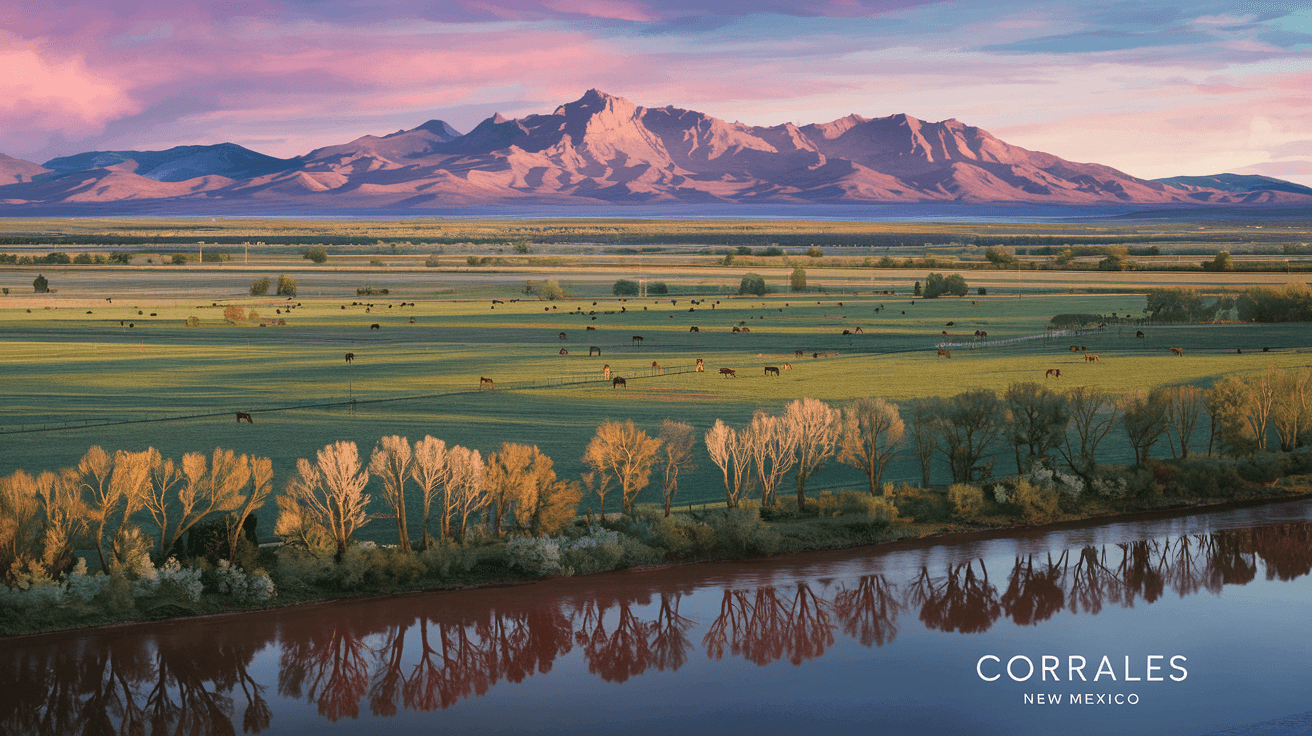
This is where a lot of buyers get tripped up, and where having the right agent matters enormously. Acequia water rights in Corrales are not automatically attached to a property deed the way mineral rights might be. They are administered separately through the Corrales Acequia, one of the oldest irrigation organizations in New Mexico, with roots going back to the Spanish colonial period.
When you buy a property in Corrales, you need to ask very specific questions:
- •Does the property have acequia shares, and if so, how many?
- •Are those shares actively used or have they been dormant (which can affect their status under New Mexico water law)?
- •What is the annual assessment to the acequia association?
- •Is the property's irrigation infrastructure, meaning the lateral ditches and headgates, in working condition?
- •Is the property within the acequia boundary at all, or is it on the mesa side of Corrales Road where surface irrigation is not available?
New Mexico operates under the prior appropriation doctrine, which means water rights are ranked by seniority. The Corrales Acequia holds some of the oldest rights on the Rio Grande, which is part of why the village has survived as an agricultural community when so many others have been absorbed into suburban development. But those rights are use-it-or-lose-it in a practical sense, and a property that has not been irrigated in years may have complications worth investigating before you close.
“The acequia is not just infrastructure. It is the reason Corrales exists. When buyers understand that, they start to understand why the community protects it so fiercely, and why properties with active water rights carry such a premium.
One thing most buyers do not know until they are already in the process: the Corrales Acequia holds a community ditch cleaning each spring, and parciantes (water rights holders) are expected to participate or pay a fee in lieu of labor. It is one of those traditions that sounds quaint until you show up with a shovel and spend a Saturday morning working alongside your neighbors in the ditch. Most people who do it once are glad they did. It is genuinely one of the better ways to meet the village.
Corrales Horse Property for Sale: What the Market Looks Like Right Now
If you are specifically searching for Corrales horse property for sale, you are competing in one of the most specialized micro-markets in the entire state. Equestrian buyers tend to know exactly what they want, and they are often willing to wait for it. That patience is warranted because the right property in Corrales does not come around frequently.
Functional horse properties in Corrales in 2026 are generally falling into a few categories:
Entry-Level Equestrian Properties ($550,000 to $750,000)
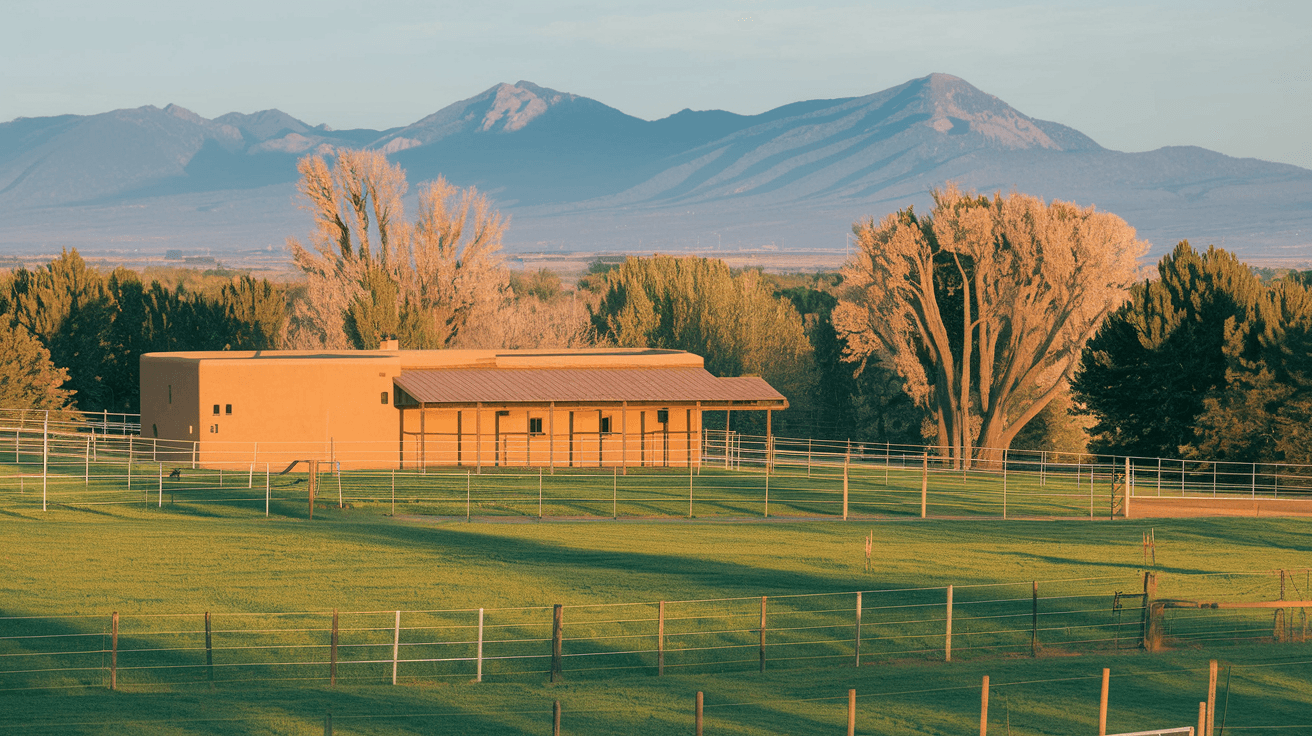
These are typically one to two acres with a small barn or run-in shed, one or two stalls, and either acequia access or a well for livestock water. The house is often older, sometimes in need of updating, but the land is what you are buying. These move quickly when priced correctly because they represent the lowest barrier to entry for horse ownership in one of the best equestrian communities in New Mexico.
Mid-Range Horse Properties ($750,000 to $1.2 Million)
This range is where you start seeing four-to-six stall barns, tack rooms, wash racks, small arenas or round pens, and two or more irrigated pasture acres. The houses are usually more updated, and the overall property has been set up intentionally for horses rather than adapted over time. These are the properties that generate the most competition when they hit the market.
Premium Equestrian Estates ($1.2 Million and Above)
Corrales has a genuine luxury tier that does not get enough attention outside of horse circles. Properties in this range often feature covered or lighted arenas, professional-grade barn construction, multiple irrigated pastures with rotational grazing capacity, guest quarters, and houses that would stand on their own merits even without the equestrian infrastructure. Buyers at this level are often relocating from larger markets and are frequently surprised that this quality exists this close to a major city.
Living in Corrales NM in 2026: The Daily Reality
Beyond the real estate mechanics, what is it actually like to live here? The honest answer is that Corrales requires a certain kind of commitment. It is not a neighborhood where you can walk to a coffee shop or grab dinner without getting in the car. The village has Casa Vieja for a special-occasion dinner and the Corrales Bistro Brewery for something more casual, and both are genuinely good, but the dining options are limited by design. The village has repeatedly declined commercial development that would change its character.
Grocery runs happen in Rio Rancho along Corrales Road's northern extension or down into the North Valley via Alameda. The Rio Rancho Walmart on Unser is the practical reality for most Corrales residents, though plenty make the longer trip down to Trader Joe's on Carlisle or the La Montanita Co-op on Rio Grande when they want something specific.
The school situation is worth understanding clearly. Corrales Elementary is the local K-5 school and has a strong reputation within the community. After that, students feed into the Rio Rancho school system rather than Albuquerque Public Schools, which surprises some buyers who assume that proximity to Albuquerque means APS. Middle and high school options through Rio Rancho are generally well-regarded, but families with specific programs in mind should research the pathways carefully before buying.
The bosque trail system that runs along the Rio Grande is accessible from multiple points in Corrales and connects south all the way through the North Valley. On any given weekend morning, you will see horses, dogs, cyclists, and walkers sharing those dirt paths under the cottonwoods. It is one of the genuinely special things about this stretch of the river, and Corrales residents have direct access that most Albuquerque residents drive to reach.
“Corrales is not a place you move to for convenience. You move here because you have decided that the quality of the land, the quiet, and the community are worth the trade-offs. The buyers who thrive here have made that calculation consciously.
The Insider Detail Most Buyers Miss
Here is something that does not show up in any listing description: Corrales Road floods. Not catastrophically, but predictably. The low-lying stretch near the river crossing at the south end of the village can become impassable during heavy monsoon events or high spring runoff. If your property is in that zone and you have animals, you need a plan. Long-time Corrales residents know which routes to take when the road is compromised, and they know which properties have drainage issues that do not reveal themselves until the first big July thunderstorm. This is exactly the kind of local knowledge that makes working with an agent who actually knows Corrales worth the effort.
What Buyers Should Know Before Making an Offer on Corrales Property
Buying in Corrales is not like buying a house in Four Hills or Ventana Ranch. The due diligence list is longer and the variables are more specific. Before you submit an offer, you want to have clarity on:
- •Well versus municipal water: Many Corrales properties are on private wells, and well testing, flow rate, and water quality reports are essential
- •Septic system condition: Most of the village is not on municipal sewer, and septic inspections and pumping records matter
- •Flood zone designation: FEMA maps and the village's own floodplain data should be reviewed, particularly for bosque-adjacent parcels
- •Acequia share documentation: Work with a title company experienced in New Mexico water rights to confirm what transfers with the property
- •Zoning and use restrictions: The village of Corrales has its own land use regulations separate from Sandoval County, and what you can build or operate on a property requires verification
- •Agricultural exemption status: Some properties carry a greenbelt agricultural tax exemption that significantly reduces property taxes. Confirm whether it transfers and what the requirements are to maintain it
If you are seriously considering a purchase in Corrales and want someone who has navigated these specifics with buyers before, the Taylor Team at Berkshire Hathaway HomeServices is a good place to start that conversation. The complexity here is real, but it is manageable with the right guidance.
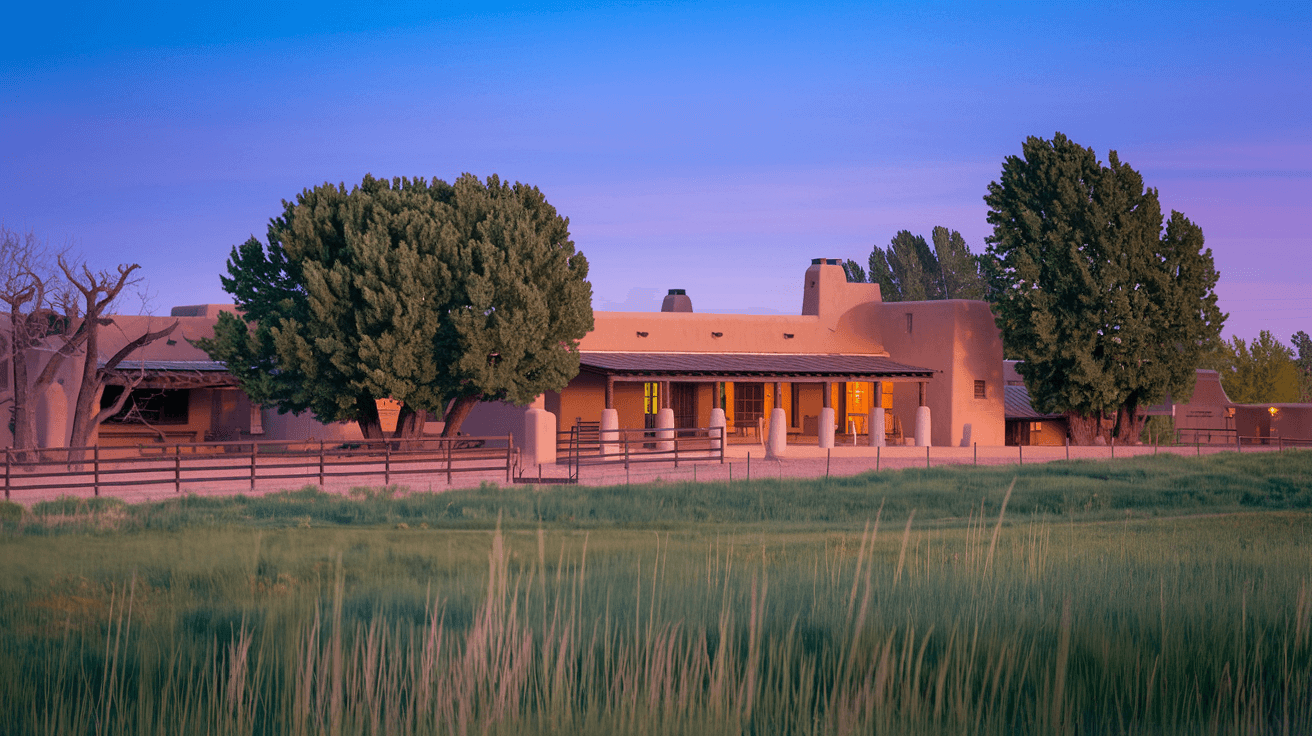
Corrales in 2026 is not for everyone, and that is precisely why the people who choose it tend to stay for decades. The combination of working agricultural land, genuine village governance, equestrian community, and proximity to Albuquerque without being absorbed by it is rare. There are very few places in the country where you can ride a horse to your neighbor's house, harvest apples from a tree your property shares with an acequia that has been flowing since the 1700s, and still make it to a meeting downtown in twenty minutes. The price premium is real. So is what you get for it.
Want more insider intel?
Subscribe to get market updates and new articles delivered to your inbox.