Living in Four Hills Albuquerque in 2026: Mesa Views, Mid-Century Homes, and What Buyers Are Paying for East Side Space Below the Sandias
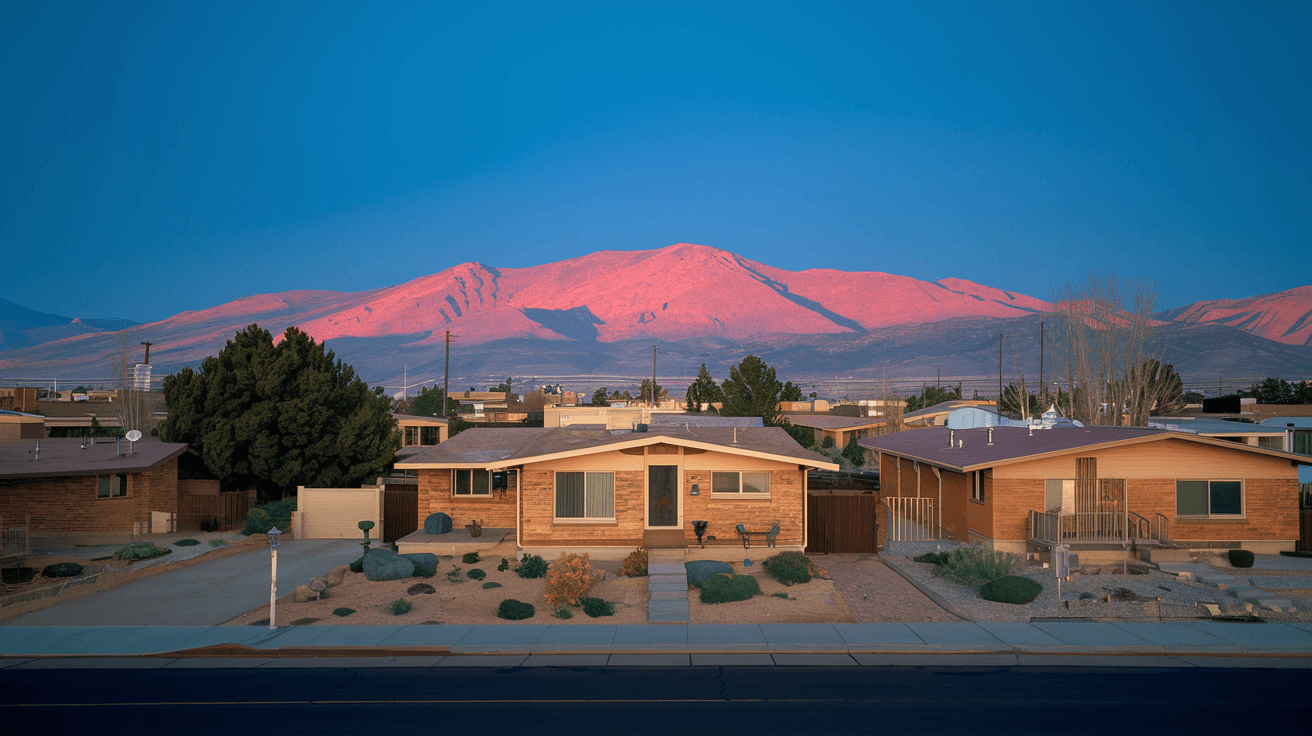
If you spend any time on the east side of Albuquerque, you eventually notice the way the land rises and rolls south of Central Avenue toward the base of the Sandias. That's Four Hills territory, and living in Four Hills Albuquerque has a particular quality that's hard to replicate in newer parts of the metro. The streets curve in ways that feel intentional. The lots are generous. And on a clear morning, which is most mornings here, you get that unobstructed view of the Sandia Mountains turning pink at sunrise from your own backyard.
This is an established neighborhood in the truest sense. Not frozen in time, but genuinely rooted. People who move here tend to stay, and that stability shapes everything from the housing stock to the feel of the streets on a Sunday afternoon.
Four Hills Albuquerque Neighborhood Character and Location
Four Hills sits southeast of Old Town and the I-40 corridor, tucked between Kirtland Air Force Base to the south and the Sandia Foothills to the north and east. The geographic anchors here are real and constant. You're a short drive from the Juan Tabo Picnic Area trailheads, close enough to hear the wind moving through the junipers if you open the windows. Tramway Boulevard is your eastern spine, and Central Avenue gives you the north boundary and the connection back toward the university and downtown.
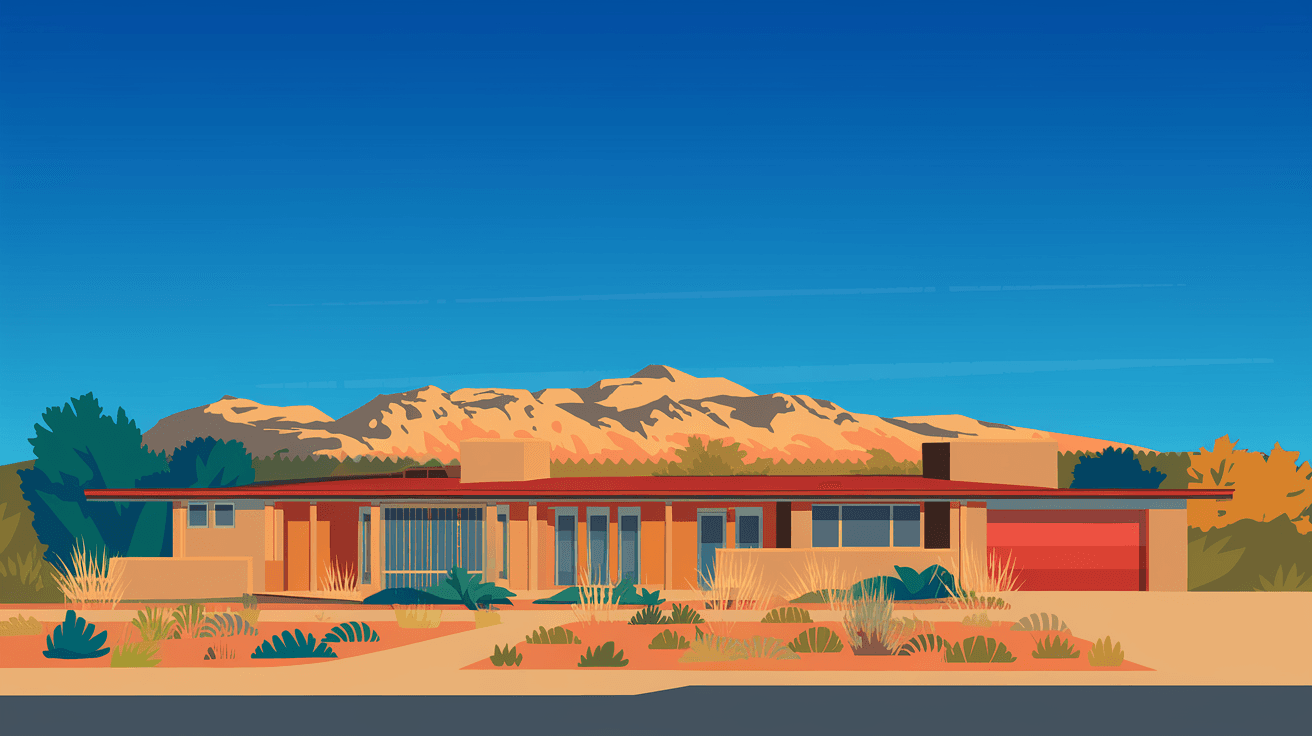
The neighborhood itself developed primarily from the late 1950s through the 1970s, which means the housing stock leans heavily into mid-century ranch architecture. Single-story brick and adobe construction. Wide eaves. Low-pitched roofs. Covered patios facing west or south to catch the afternoon light without baking in the summer heat. These houses were built before Albuquerque sprawled onto the West Mesa in earnest, and they reflect a time when builders paid attention to how a house sat on its lot relative to the sun and the mountains.
What surprises most buyers who are new to the area is how much square footage and lot size they get for the money compared to comparable east side neighborhoods. Properties here regularly offer 1,800 to 2,800 square feet on lots that give you actual yard, actual separation from your neighbors, and in many cases, actual views that no future development is going to block because you're looking at federally managed land.
Four Hills Homes for Sale 2026: What the Market Looks Like Right Now
The median home price in Four Hills sits at approximately $410,000 in 2026, which puts it meaningfully above the Albuquerque metro median of $385,000. That premium reflects a few things: the lot sizes, the mountain proximity, the school feeder pattern, and the simple fact that there's a finite amount of Four Hills inventory and people hold onto these homes.
Across the broader Albuquerque market, active listings have climbed to around 3,850, and months of inventory sits near 4.9, which is more breathing room than buyers had in 2021 and 2022. The average home is spending about 34 days on market before going under contract. But Four Hills operates a little tighter than those metro-wide numbers suggest. Well-priced homes here, particularly the ones that have been updated and are move-in ready, still generate multiple offers within the first two weeks.
The list-to-sale ratio metro-wide is running at 97.8%, meaning sellers are generally getting very close to asking price. In Four Hills, updated properties with good views and functional floor plans are routinely hitting that number or exceeding it. The homes that sit are typically the ones priced optimistically without the updates to back it up.
What you'll find in the current Four Hills homes for sale 2026 inventory:
- •Brick ranch homes from the 1960s and early 1970s, ranging from 1,400 to 2,200 square feet, often on lots of 8,000 to 12,000 square feet
- •Split-level and two-story homes from the late 1970s with more complex floor plans and often better views due to elevation
- •Fully renovated properties with updated kitchens, new HVAC, and modern baths that command $430,000 to $525,000 depending on the lot and view
- •Original-condition homes that represent genuine value-add opportunities for buyers willing to do the work, often priced in the $360,000 to $390,000 range
- •A smaller number of custom homes and larger properties on the hillside lots that push well above $550,000
“"Four Hills is one of those Albuquerque neighborhoods where the bones of the house and the bones of the land both work in your favor. You're not buying a spec home on a flat lot. You're buying into a place that already knows what it is."
Living in Four Hills Albuquerque: Daily Life, Commutes, and Getting Around
One of the practical questions buyers always ask is what daily life actually looks like from an address in Four Hills. The honest answer is that it's convenient in ways that matter and requires a car in ways that are just true of most of Albuquerque.
The commute picture is genuinely good for a neighborhood this far southeast. Kirtland Air Force Base is practically a neighbor, which is why you see so many military and DOE Sandia National Laboratories employees in Four Hills. The drive to Sandia National Laboratories on Eubank Boulevard runs maybe 15 minutes in normal traffic. Getting to Uptown near Louisiana and Indian School takes about 20 minutes. Downtown is 25 to 30 minutes depending on which way you cut through.
For day-to-day errands, the Four Hills Village Shopping Center on Central at Four Hills Road has been the neighborhood anchor for decades. There's a grocery option, a pharmacy, and the usual mix of local and national services. Serious grocery shopping takes most residents up to the Sprouts on Juan Tabo or the Smith's on Eubank. The Trader Joe's on Carlisle is a reasonable drive if you're already heading north.
For coffee and a slower morning, the Flying Star on Juan Tabo is the move. It's a proper Albuquerque institution, not a chain transplant, and the breakfast burritos are worth building your morning around.
The trail access is what really separates Albuquerque east side neighborhoods from anywhere else in the metro. From most Four Hills addresses, you can be parked at the Pino Trail or the Three Gun Spring Trail trailheads in under 15 minutes. These are serious Sandia Mountain trails, not paved walking paths. On weekday mornings especially, it's quiet enough that you'll mostly share the trail with roadrunners and the occasional coyote.
Four Hills Schools: APS Feeder Pattern and What Families Should Know
The school situation in Four Hills is one of the genuine selling points, and it's worth understanding the specifics rather than just taking a general impression at face value.
Most Four Hills addresses feed into Eisenhower Middle School for grades 6 through 8, then on to either La Cueva High School or Sandia High School for 9 through 12. Both high schools have strong academic programs and well-established athletics. La Cueva in particular has a reputation that draws families to the northeast heights specifically to be in that feeder zone, and parts of Four Hills give you access to it without the price premium of some of the neighborhoods closer to Tramway and Montgomery.
Elementary school assignments vary by specific address within Four Hills, so it's worth confirming your exact feeder school with Albuquerque Public Schools before making an offer if that's a priority for your family. The Taylor Team can help you cross-reference any property address against the current APS boundary maps.
Families also appreciate the proximity to Manzano Mesa Multigenerational Center and the broader network of parks and recreation facilities on the east side. The Bear Canyon Arroyo Trail system runs through and near the neighborhood and gives kids a genuine outdoor corridor that connects to larger open space.
Insider Knowledge: What Only East Side Residents Know About Four Hills
Here's the thing about Four Hills that doesn't show up in the listing descriptions. The neighborhood sits on a series of natural terraces and gentle ridgelines, and the elevation difference between the lowest streets near Central and the higher lots toward the foothills is significant enough to change your view entirely.
The insider tip: ask specifically about lot elevation and orientation before scheduling a showing. A home on the uphill side of a Four Hills street can have unobstructed mesa and mountain views from the backyard. The home directly across the street, lower on the grade, might look at rooftops and block walls. Both properties might be listed at similar prices, but the experience of living in them is completely different. Agents who don't know the neighborhood well often miss this entirely.
The other thing long-time residents know is that wind patterns matter on the hillside lots. The east side of Albuquerque gets reliable afternoon winds that funnel down from the Sandias, and on the more exposed ridgeline properties, that can be a feature or an annoyance depending on how the house and outdoor spaces are designed. Houses with covered, west-facing patios and natural windbreaks handle this beautifully. Open lots facing directly into the prevailing wind can make outdoor living less comfortable than the views would suggest.
“"The difference between a good Four Hills home and a great one often comes down to about 20 feet of elevation and which direction the backyard faces. That's the kind of detail that only matters once you're living there."
If you're seriously considering living in Four Hills Albuquerque, the Taylor Team would be glad to walk the neighborhood with you and point out these distinctions property by property. It's the kind of local knowledge that changes how you evaluate what you're looking at.
What Buyers Should Budget for and Expect in Four Hills in 2026
Beyond the purchase price, there are a few financial realities worth understanding before you make an offer in Four Hills.
The housing stock age means deferred maintenance is common. A home built in 1965 that hasn't had major system updates may look cosmetically appealing while carrying aging HVAC, original plumbing, or a roof that's nearing the end of its useful life. Budget for a thorough inspection and take the findings seriously. The good news is that the brick and adobe construction common in Four Hills tends to age well structurally. It's the mechanical systems and finishes that need attention, not the bones.
Property taxes in this part of Bernalillo County are manageable relative to the home values. New Mexico's property tax structure is generally favorable compared to national averages, and the homestead exemption available to primary residents helps further.
HOA situations vary. Some pockets of Four Hills have active homeowner associations with fees and CC&Rs. Many streets have no HOA at all. Check before you make assumptions either way.
For buyers coming from out of state, particularly from California, Colorado, or Texas, the value calculation in Four Hills is usually a pleasant surprise. The combination of mountain proximity, lot size, school quality, and established neighborhood character at a median price around $410,000 is genuinely difficult to match in comparable western metros.
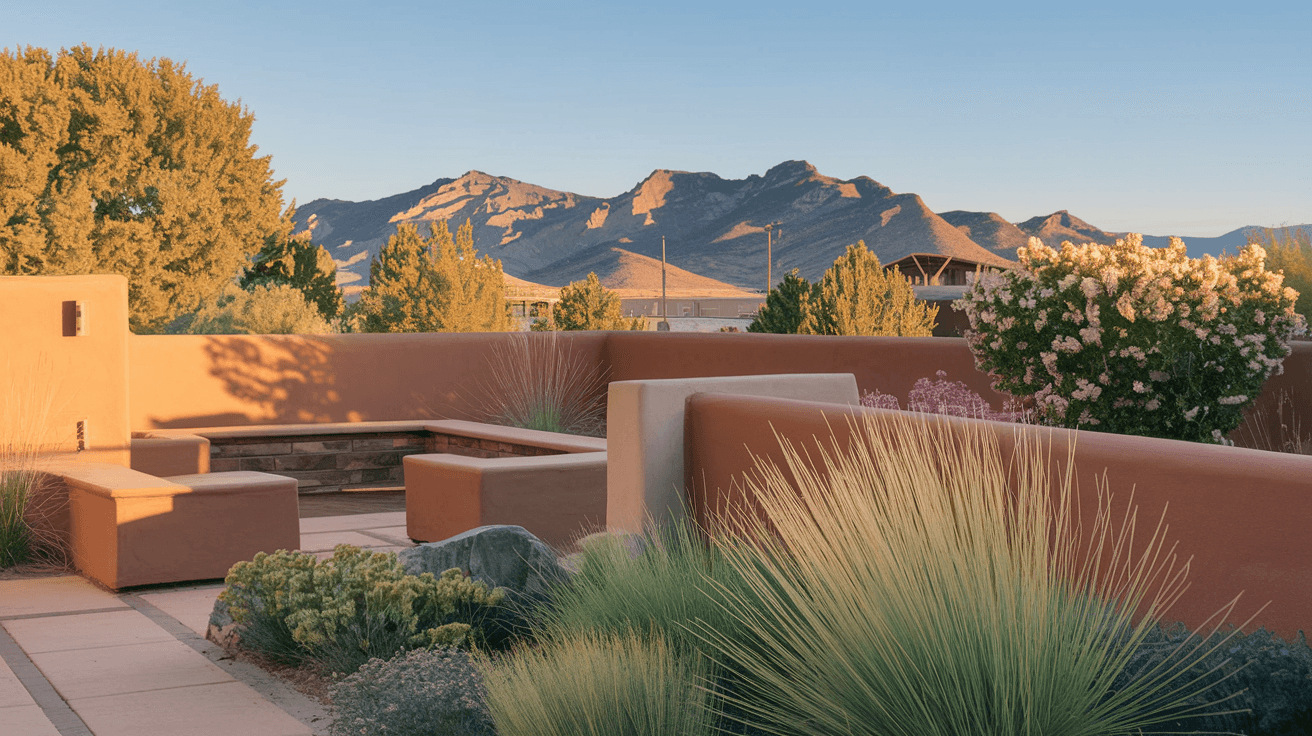
Four Hills is not a neighborhood that tries to be something it isn't. It's established, it's comfortable, and it has a relationship with the landscape around it that newer parts of Albuquerque are still working to develop. The views are real, the lots are real, and the community has a settled quality that comes from decades of people choosing to stay.
If you're weighing the east side options and want to talk through what's available, what's worth seeing, and what the numbers actually mean for your specific situation, reach out to the Taylor Team at Berkshire Hathaway HomeServices. We know Four Hills the way you know a neighborhood when you've been working it for years, street by street.
Want more insider intel?
Subscribe to get market updates and new articles delivered to your inbox.