
Living in North Valley Albuquerque in 2026: Acequia Culture, Adobe Estates, and What Buyers Pay for Green Space Along the Rio Grande
There is a moment, usually somewhere along Guadalupe Trail or heading north on Rio Grande Boulevard past the old horse properties, when you realize the North Valley does not feel like the rest of Albuquerque. The city fades. The cottonwoods close in. You can hear water moving through an acequia that has been flowing since before New Mexico was a state. If you are seriously thinking about living in North Valley Albuquerque, that feeling is exactly what you are paying for — and in 2026, buyers are paying quite a bit to get it.
This neighborhood sits between the Rio Grande on the west and 4th Street on the east, roughly from Montano Road up through Alameda. It is not a master-planned community. It does not have a homeowners association telling you what color to paint your portal. What it has is one of the last genuinely rural-feeling corridors inside a major New Mexico city, complete with working farms, historic irrigation infrastructure, and adobe walls that have been absorbing New Mexico sun for generations.
North Valley Albuquerque Home Prices and Market Conditions in 2026
The numbers tell a clear story. While the Albuquerque metro median sits at $401,000, the North Valley runs meaningfully higher, with a neighborhood median around $520,000. That premium is not random. It reflects lot size, mature landscaping, proximity to the Bosque, and the simple scarcity of land that cannot be replicated anywhere else in the city.
With roughly 92 active listings across the broader metro and only about 4 months of inventory, this is still a competitive market by historical standards. Homes here are averaging 27 days on market, and the list-to-sale ratio of 98.4% means sellers are landing very close to their asking price. If you find a North Valley property you love, the window to think it over is narrow.
What moves fastest tends to be the mid-century adobe ranch on a half-acre or larger, especially anything with a functional acequia right or direct Bosque access. Those properties sometimes go before an open house ever happens. What sits a little longer tends to be the updated spec build that got wedged into a subdivided lot — buyers here are discerning, and they know the difference between authentic North Valley character and something that just borrowed the aesthetic.
What Your Budget Gets You in the North Valley
Around the $400,000 to $450,000 range, you are typically looking at smaller lots, older homes that need updating, or properties on the eastern edge closer to 4th Street where the rural character starts to thin out. Still good value, but you are compromising on something.
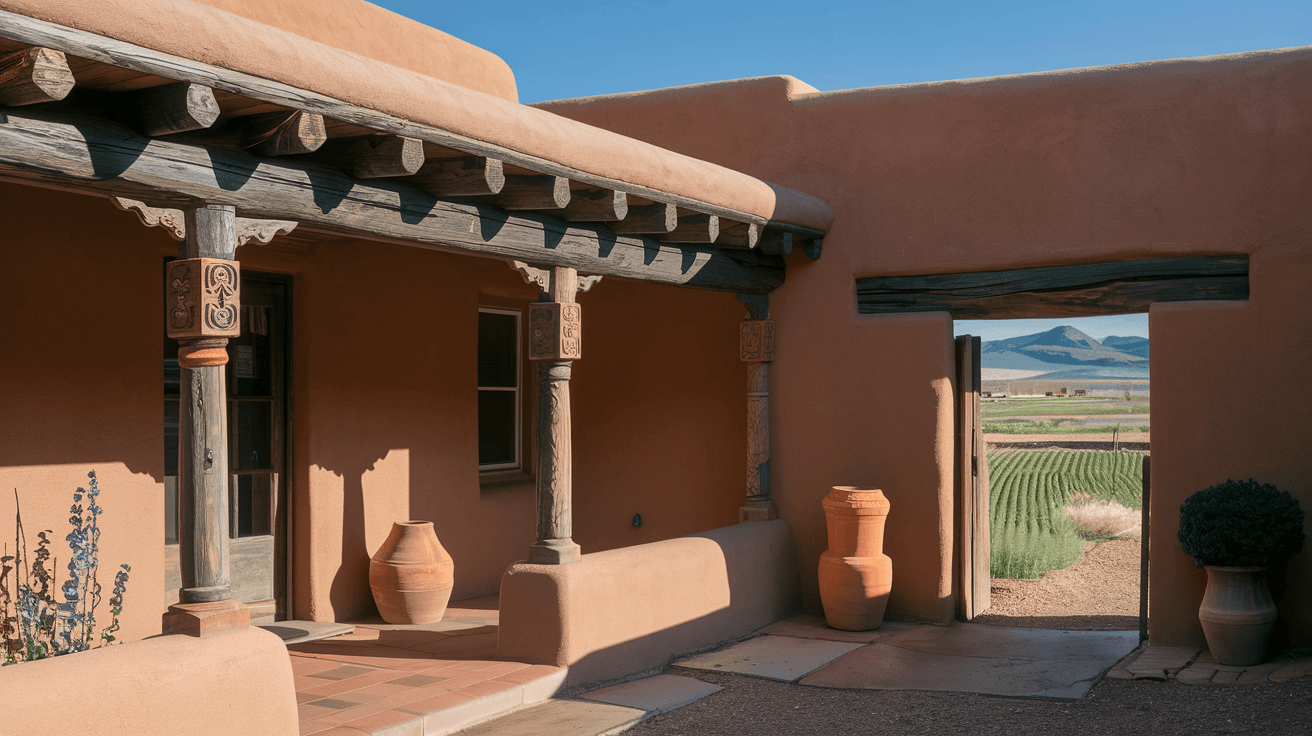
In the $500,000 to $650,000 range, the North Valley starts to open up. Think true adobe construction, vigas and latillas, a portal facing the Sandia Mountains, and enough land to keep a few chickens or a small garden fed by an acequia lateral. This is the sweet spot where most serious buyers land.
Above $700,000 and into the seven figures, you are looking at the generational estates — properties along Corrales Road, deep lots with mature cottonwoods, guest casitas, horse facilities, and the kind of quiet that genuinely surprises people who have only ever lived in subdivisions.
Acequia Culture and Why It Still Shapes Life in the North Valley
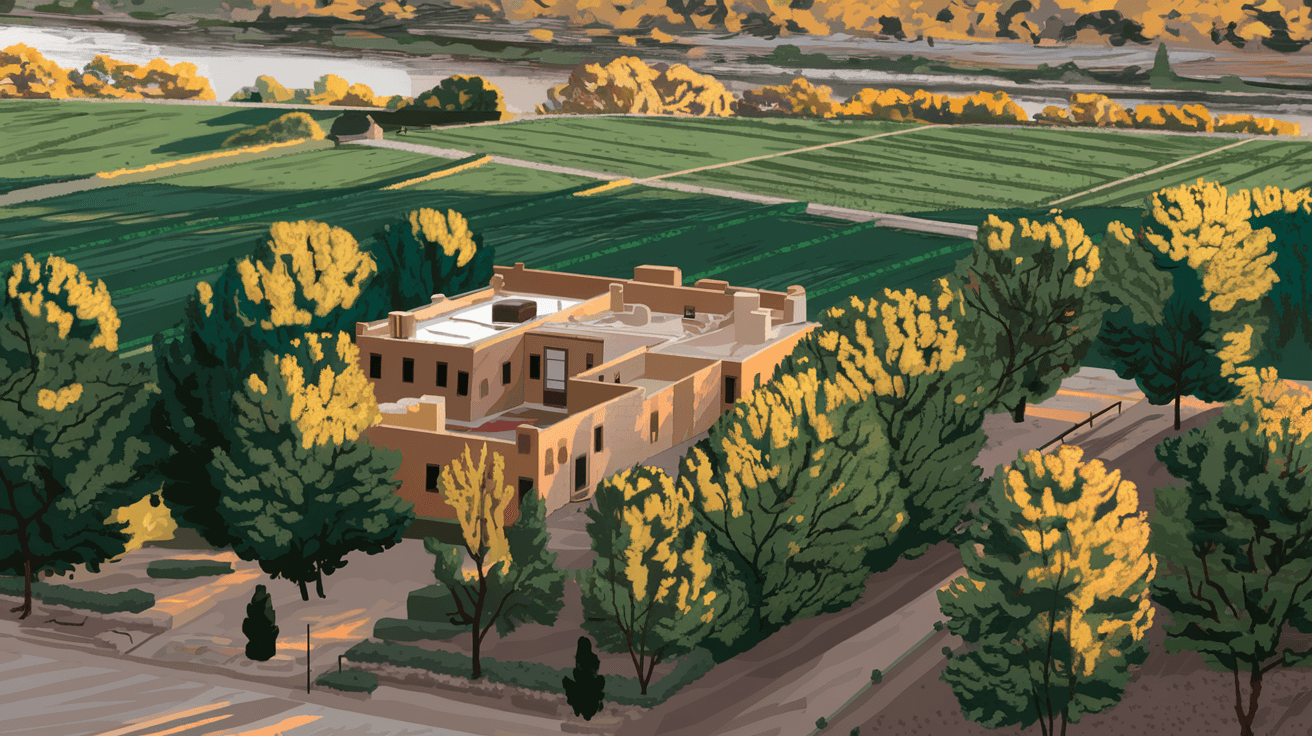
You cannot understand living in North Valley Albuquerque without understanding acequias. These are not decorative water features. They are a functioning, legally recognized irrigation system that predates the United States, governed by elected mayordomos and managed through acequia associations that hold real water rights under New Mexico law.
For buyers, acequia rights attached to a property are genuinely valuable. They provide irrigation water from the Rio Grande through a system of main canals and lateral ditches, which is why North Valley properties can sustain large trees, pastures, and gardens that would be impossible to maintain on municipal water alone at any reasonable cost. When you see a North Valley lot that looks impossibly green in June, that is acequia water at work.
Owning a property with acequia rights also comes with responsibilities. You are expected to participate in annual limpia (ditch cleaning), contribute to maintenance assessments, and respect the water schedule. Neighbors take this seriously. If you are moving from a subdivision background, it is worth having a real conversation with your agent about what acequia ownership actually involves before you fall in love with a property.
“The acequia system in the North Valley is not a historical curiosity. It is a living commons that shapes how neighbors interact, how water moves through the land, and ultimately how the neighborhood maintains its agricultural character against development pressure.
The North Valley acequia network connects to the Albuquerque Metropolitan Arroyo Flood Control Authority system and ultimately back to the Rio Grande, regulated through the Office of the State Engineer. Water rights transfers, when they happen, go through a formal legal process. This is one area where having an agent who knows North Valley transactions specifically — not just general Albuquerque real estate — matters enormously.
The Bosque and Rio Grande Bosque Trail Access
The Rio Grande Bosque is the cottonwood forest that lines both banks of the river, and in the North Valley you can be inside it within a few minutes of your front door. The Paseo del Bosque Trail runs the length of the city through this corridor, and North Valley residents use it the way other neighborhoods use a gym or a park. Early mornings you will see cyclists, joggers, people walking dogs, the occasional birdwatcher with binoculars trained on a great blue heron working a shallow stretch of the river.
Access points near Montano Road, Paseo del Norte, and Alameda Boulevard put you into the trail system quickly. The Bosque itself changes dramatically by season — bare and skeletal in February, almost tropical-feeling in July when the cottonwoods are fully leafed and the light through the canopy turns everything green-gold.
Schools, Local Businesses, and Daily Life in the North Valley
Albuquerque Public Schools serves the North Valley, with students feeding into Jefferson Middle School and Valley High School. Elementary options vary by exact address, so it is worth confirming your specific zone when evaluating a property. Some families in the area also use Bosque School, a private college-prep option tucked right into the neighborhood on Rio Grande Boulevard that has become a significant draw for families relocating from out of state.
For daily life, the North Valley has its own rhythm. You are not walking to a coffee shop on every corner, and that is partly the point. The Fruit and Vegetable Stand operations along 4th Street and the Los Poblanos Historic Inn and Organic Farm on Rio Grande Boulevard are genuine landmarks — Los Poblanos in particular anchors the neighborhood's identity as a place where agriculture and elegance coexist. Their lavender fields and farm shop draw visitors from across the city, but for North Valley residents they are just down the road.
Flying Star Cafe locations are accessible along Coors Boulevard to the west, and Old Town Albuquerque is a short drive south, which puts you close to the Albuquerque Museum, the National Hispanic Cultural Center, and the restaurants along Rio Grande Boulevard near Central. The North Valley is genuinely close to everything while feeling removed from it.
The Insider Detail Most Buyers Miss
Here is something that does not show up in any listing description: acequia laterals create informal property boundaries that sometimes differ from recorded survey lines. In the North Valley, it is not uncommon to find that a ditch running along the back of a property has been treated as the boundary by neighbors for decades, even if the actual legal line is different. Before you close on any North Valley property with acequia features, get a current survey. Not the one from 1987 in the disclosure packet. A current one. It has saved buyers from genuinely uncomfortable conversations with neighbors who have been farming up to that ditch for thirty years.
This is the kind of thing that a Taylor Team agent familiar with North Valley transactions will flag during due diligence. It is not a reason to avoid the neighborhood — it is just part of the texture of buying into a place with this much history.
What Makes North Valley Properties Different from Other Albuquerque Neighborhoods
Compare the North Valley to, say, Nob Hill or the Northeast Heights, and the differences are immediate. Lot sizes in the North Valley routinely run from a third of an acre to several acres. Walls are thick. Ceilings have actual vigas. Portals face specific directions because someone thought carefully about morning shade and afternoon light. Properties often have detached casitas that were originally built for extended family and now function as rental income, home offices, or guest quarters.
The neighborhood also has a visual coherence that comes from building in a specific climate with specific materials over a long time. Adobe and stucco construction dominates. Flat or low-pitched roofs. Mature landscaping that took decades to establish. Cottonwoods that were planted when the current owners were children. You are not buying a new house — you are buying into a landscape that has been shaped by many hands over many years.
This creates a specific kind of buyer. North Valley buyers tend to be people who want space without sprawl, who value privacy and quiet over walkability scores, and who are willing to take on the maintenance realities of older construction in exchange for character that simply cannot be built new. They are often people who have lived in Albuquerque for years and have been waiting for the right North Valley property to come available, or relocators who did their research carefully and decided this was the only Albuquerque neighborhood that matched what they were looking for.
“Living in North Valley Albuquerque in 2026 means accepting that you are not buying a product. You are buying into a place with its own logic, its own history, and its own expectations of the people who live there.
North Valley ABQ Homes for Sale in 2026: How to Navigate the Search
Finding the right North Valley ABQ home for sale in 2026 requires patience and local knowledge in roughly equal measure. The inventory is genuinely limited. Some of the best properties never hit the MLS at all — they move through relationships, through neighbors who know someone is thinking about selling, through agents who work the neighborhood consistently enough to know what is coming before it is listed.
When you are evaluating properties, a few things are worth paying particular attention to:
- •Water rights documentation: Confirm whether acequia rights are attached to the land and what the current water share is
- •Roof condition: Flat and low-slope roofs on adobe construction require regular maintenance; a deferred roof is a significant cost item
- •Septic versus municipal sewer: Parts of the North Valley are still on septic systems; know which you are buying
- •Flood zone designation: Proximity to the Rio Grande and the acequia system means some properties carry flood zone considerations that affect insurance
- •Zoning: The North Valley has agricultural zoning in parts that allows livestock and farming operations; verify what is permitted if that matters to you, or if a neighbor's chickens and goats are something you need to be prepared for
- •Age of electrical and plumbing: Many homes here were built or significantly modified in the mid-twentieth century; a thorough inspection is not optional
If you are serious about living in North Valley Albuquerque and want to understand what is actually available right now, the Taylor Team works this neighborhood specifically and can tell you what the active listings do not. Reach out and have a real conversation before you spend three months watching properties go under contract before you can schedule a showing.
The North Valley is one of those places that people either understand immediately or do not connect with at all. If you drove down Rio Grande Boulevard on a weekday morning, watched the light come through the cottonwoods, smelled the water in the acequia lateral running alongside the road, and thought — yes, this is what I want — then you already know. The market in 2026 is competitive but not impossible. The properties are expensive but defensible. And the lifestyle, once you are actually living it, tends to make the price feel entirely reasonable.
Want more insider intel?
Subscribe to get market updates and new articles delivered to your inbox.