Living in North Valley Albuquerque in 2026: Historic Adobes, Bosque Trails, and What Buyers Are Paying for One of the Metro's Last True Agricultural Corridors Inside City Limits
There is a stretch of 4th Street NW just north of Montano Road where the city seems to exhale. The strip malls thin out, the lots widen, and if you roll your window down in October, you can smell the cottonwoods turning. That is North Valley Albuquerque in a single sensory moment, and it is the reason buyers who find it rarely look anywhere else.
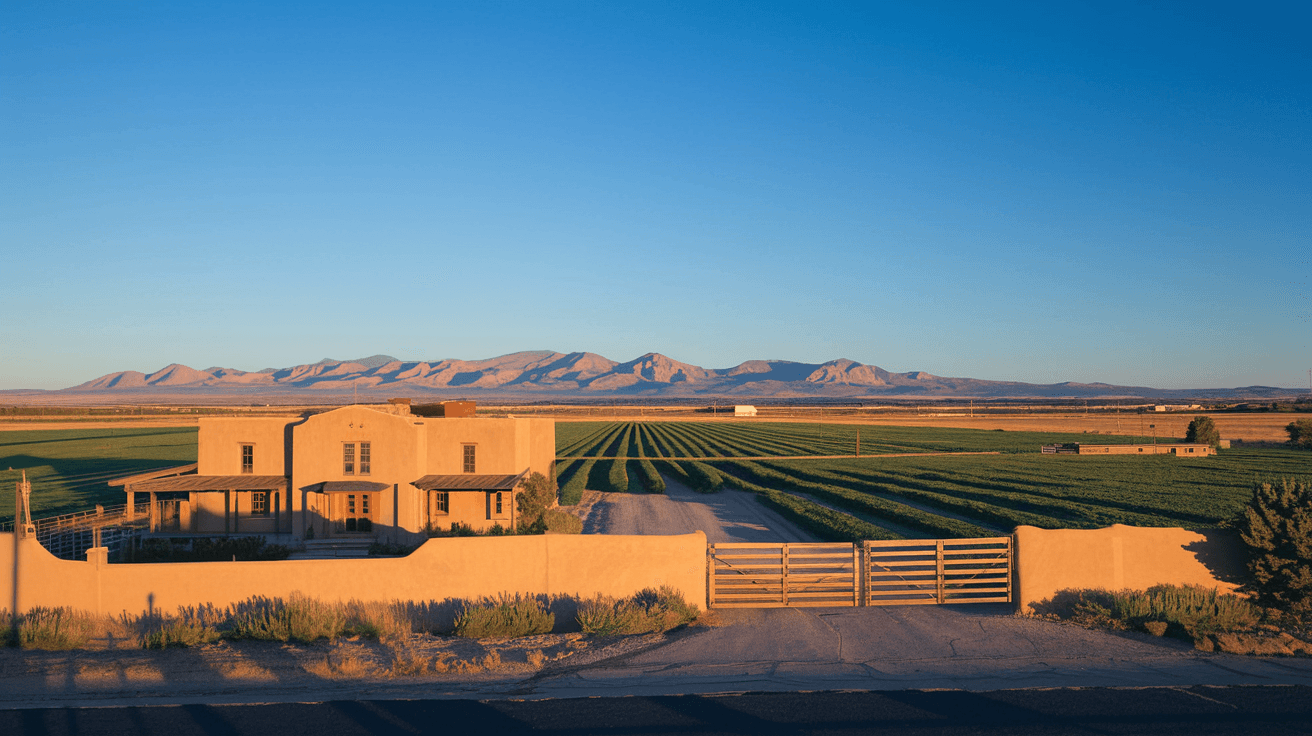
Living in North Valley Albuquerque is genuinely different from living anywhere else in the metro. We are talking about a neighborhood that still has working horse properties, centuries-old acequias running through back yards, and adobe walls that have been patched and re-patched by multiple generations of the same family. It is not a suburb pretending to be rural. It is the real thing, tucked inside city limits, with a Costco fifteen minutes south and the Paseo del Bosque trailhead practically at the end of your street.
If you are trying to understand the neighborhood before making a move, this is the honest, ground-level picture.
What Living in North Valley Albuquerque Actually Feels Like Day to Day
The North Valley runs roughly from Montano Road up toward Alameda Boulevard, bookended by the Rio Grande to the west and 4th Street to the east, though the cultural boundaries are a little more fluid than that. Some people extend it further north toward Corrales Road. The physical character of the neighborhood does not really care about those lines.
What you notice first is the scale of the lots. A quarter-acre is modest here. Half-acre and full-acre parcels are common, and it is not unusual to find properties with two or three acres that still carry an Albuquerque city address. Those larger parcels often come with water rights tied to the acequia system, which is something buyers from out of state have never encountered before and locals treat as seriously as a mortgage.
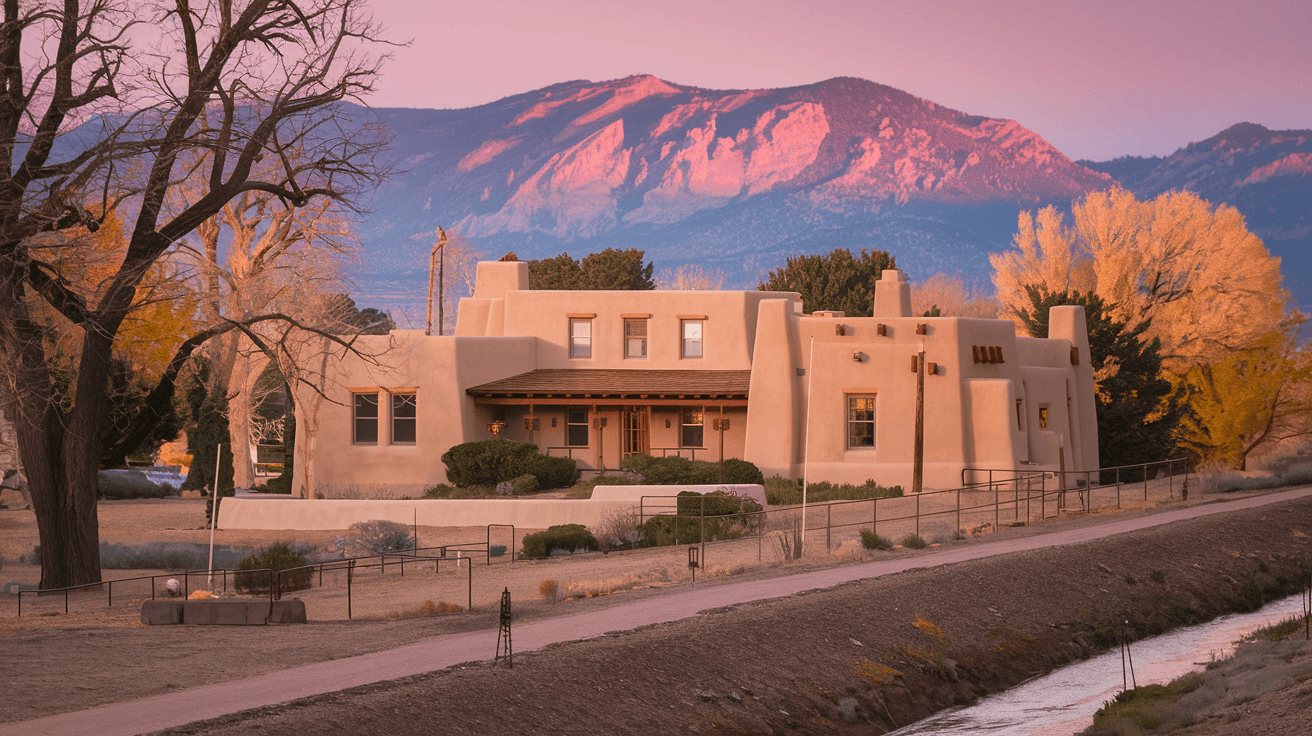
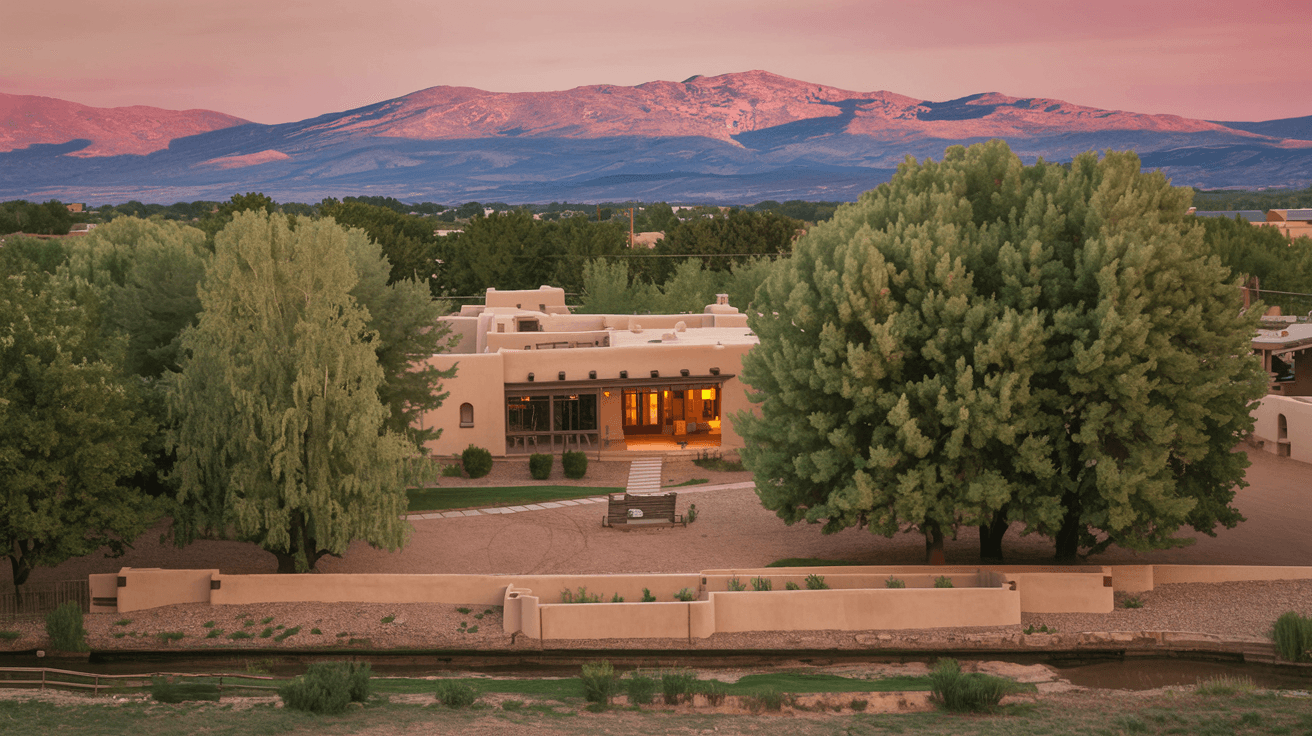
The architecture is predominantly territorial and pueblo revival adobe, though you will find mid-century ranches mixed in, and the occasional newer build that tried very hard to fit in. The older adobes have thick walls, low ceilings in the original rooms, and that specific quality of light you get when afternoon sun comes through a deep-set window. Winters in those walls are genuinely warm in a way that fiberglass insulation cannot replicate.
The neighborhood runs on a kind of informal rhythm. The Los Poblanos Historic Inn and Organic Farm on Rio Grande Boulevard is as close to a community anchor as the North Valley has, and the lavender fields in June draw people from all over the city. The Flying Star on 4th used to be a regular morning stop for half the neighborhood before it closed that location, and people still mourn it a little. These days, the coffee crowd migrates toward the Bosque Brewing taproom or drives down to Nob Hill depending on their mood.
The Paseo del Bosque Trail is the neighborhood's most democratic feature. It runs along the Rio Grande through the cottonwood forest, and on any given morning you will share it with serious cyclists, people walking dogs of improbable size, and older couples who have been doing the same two-mile loop since the trail opened. It connects north toward Corrales and south all the way through the city. For a lot of North Valley residents, it is the reason they never need a gym membership.
North Valley Albuquerque Homes: What the Architecture and Land Tell You About Value
Buyers coming from other parts of Albuquerque sometimes experience sticker shock in the North Valley, and they sometimes experience the opposite. The range is genuinely wide.
A small, updated adobe on a standard lot near Rio Grande Boulevard might list in the low $400s. A historic compound on two acres with a guest house, original vigas, and water rights can push well past $800,000. The median home price in the North Valley sits around $445,000 as of 2026, which is meaningfully above the broader Albuquerque metro median of $385,000, and that premium is almost entirely explained by land and authenticity.
Here is what drives value in this specific neighborhood:
- •Lot size and water rights — An acequia share can add real, quantifiable value and is a negotiating point in nearly every transaction on an irrigated property
- •Adobe construction authenticity — Buyers pay a premium for original adobe over block-and-stucco, especially when the walls are thick and the construction predates 1960
- •Bosque proximity — Properties within easy walking distance of the Paseo del Bosque trail consistently outperform those that require a drive
- •Rio Grande Boulevard address — The boulevard itself carries prestige; properties fronting or near it tend to hold value exceptionally well
- •Mature landscaping — Cottonwoods and fruit trees that took decades to grow cannot be replaced, and buyers know it
“The North Valley is one of the few places in Albuquerque where the land itself is part of the value proposition in a way that goes beyond square footage. You are buying into a landscape that took centuries to cultivate.
The condition of the adobe matters enormously. Deferred maintenance on an adobe is a different animal than deferred maintenance on a wood-frame house. Moisture intrusion in a poorly maintained adobe wall can mean rebuilding entire sections. Buyers should always include a specialist inspection on any older adobe, not just a standard home inspection. This is one of those things that experienced local agents will tell you upfront, and it is worth knowing before you fall in love with a property.
North Valley Real Estate 2026: What the Market Numbers Are Telling Buyers
The broader Albuquerque market in 2026 is running at about 3.9 months of inventory across roughly 3,850 active listings metro-wide. Average days on market sits at 34 days, and the list-to-sale price ratio is holding at 97.8 percent. That last number tells you that sellers are not giving much away, but buyers are not being asked to dramatically overbid either. It is a functional, relatively balanced market compared to what this city looked like in 2021 and 2022.
The North Valley operates within those metro trends but with its own layer of scarcity. North Valley real estate 2026 is constrained by the simple fact that there is not much vacant land left to develop. The agricultural corridor along the Rio Grande is protected by a combination of city zoning, the Middle Rio Grande Conservancy District, and the genuine difficulty of developing acequia-irrigated land. New inventory here means an existing home coming to market, not a new subdivision breaking ground.
That scarcity creates a dynamic where well-priced, well-maintained properties move quickly and the inventory of truly special homes is always thin. A restored adobe compound on a half-acre that comes to market correctly priced will not sit for 34 days. It will have multiple showings in the first week.
Schools and the Practical Side of North Valley Family Life
The North Valley falls within Albuquerque Public Schools, and the school picture here is worth understanding clearly rather than glossing over. Elementary schools vary by exact location within the neighborhood. Jefferson Middle School and Valley High School serve much of the area. Valley High has a long history in the community and a genuinely loyal alumni base, which is not nothing when you are trying to understand neighborhood identity.
Families who prioritize specific school options often look at APS magnet programs, which draw from across the district and are accessible from the North Valley. The neighborhood's position in the northwest part of the city also puts several well-regarded private and charter options within a reasonable drive.
Day-to-day practical life in the North Valley is comfortable but not walkable in the urban sense. You will drive to the grocery store. The Sprouts on Coors and the Smith's on 4th and Montano are the most common stops. The North Valley's proximity to I-25 via Paseo del Norte makes the commute to Uptown, Downtown, or the Journal Center corridor straightforward, and the Alameda Boulevard corridor connects east toward the Balloon Fiesta Park area without much drama.
The Insider Detail Most Buyers Miss
Here is something that does not show up in listing descriptions but matters enormously if you are buying on or near an acequia: the Middle Rio Grande Conservancy District assesses a tax on properties with water rights, and that assessment shows up as a separate line item, not folded into your standard property tax. It is not large, but it surprises buyers who did not know to look for it. More importantly, the water rights themselves have value and are transferable, but the process for managing, leasing, or changing those rights runs through the MRGCD, not the city. If you are buying a property with agricultural water rights and you intend to actually use them, plan a conversation with the district before closing, not after.
This is the kind of detail that separates a smooth closing from a confusing one, and it is exactly the sort of thing the Taylor Team flags early in the process when we are working with buyers on North Valley properties.
Why Buyers Keep Choosing North Valley Albuquerque Over Other Metro Neighborhoods
People who end up in the North Valley tend to have looked at other parts of the city and found them lacking something they could not quite name until they drove down a cottonwood-lined lane in October and understood immediately.
The competing neighborhoods are obvious. Corrales offers a similar rural character but sits outside Albuquerque city limits in a village with its own governance and a slightly longer commute. Los Ranchos de Albuquerque is a small incorporated village nestled within the North Valley's geography, with its own village character and zoning that many buyers find appealing, though inventory there is even tighter. The East Mountains offer land and space but trade the bosque for piñon and the acequia system for well water.
What the North Valley specifically offers is the combination of genuine agricultural heritage, the Rio Grande bosque as a backyard, and city services and infrastructure. You get trash pickup and a Trader Joe's and also the sound of irrigation water moving through a ditch that has been in continuous use since the Spanish colonial period. That combination is not available anywhere else in the metro.
“There is a version of Albuquerque that most visitors never see, where the Rio Grande actually shapes how people live. The North Valley is that version.
The buyers who thrive here tend to value quiet over convenience, character over newness, and outdoor access over nightlife proximity. They are often people who have lived in the city long enough to know what they are choosing and what they are giving up, and they have decided the trade is worth it. They are also, increasingly, remote workers and retirees from other parts of the country who found Albuquerque through its cost-of-living profile and then found the North Valley specifically because nothing else in the metro quite scratched the itch.
Working With an Agent Who Knows North Valley Real Estate
Buying or selling in the North Valley is not complicated, but it is specific. The acequia issues, the adobe inspection requirements, the water rights questions, the MRGCD assessments, the lot-size-driven valuation model — these are things that require an agent who has actually worked transactions here, not just someone who can pull a comp sheet.
The Taylor Team at Berkshire Hathaway HomeServices has been working Albuquerque neighborhoods including the North Valley long enough to know which questions to ask before an offer goes in and which details in a disclosure package deserve a closer look. If you are thinking about making a move into the North Valley, or if you own here and are trying to understand what your property is worth in this market, reach out directly. A conversation over coffee — maybe at the Bosque Brewing patio if the weather holds — is usually where the most useful information gets exchanged.
The North Valley is not for everyone, and that is precisely why the people who belong there find it so quickly. If the description of a cottonwood lane, a thick adobe wall, and a trail to the river sounds like home, it probably is.
Want more insider intel?
Subscribe to get market updates and new articles delivered to your inbox.