
Living in Sandia Heights Albuquerque in 2026: Mountain Trail Access, Larger Lots, and What Buyers Are Paying for Elevation Above the City
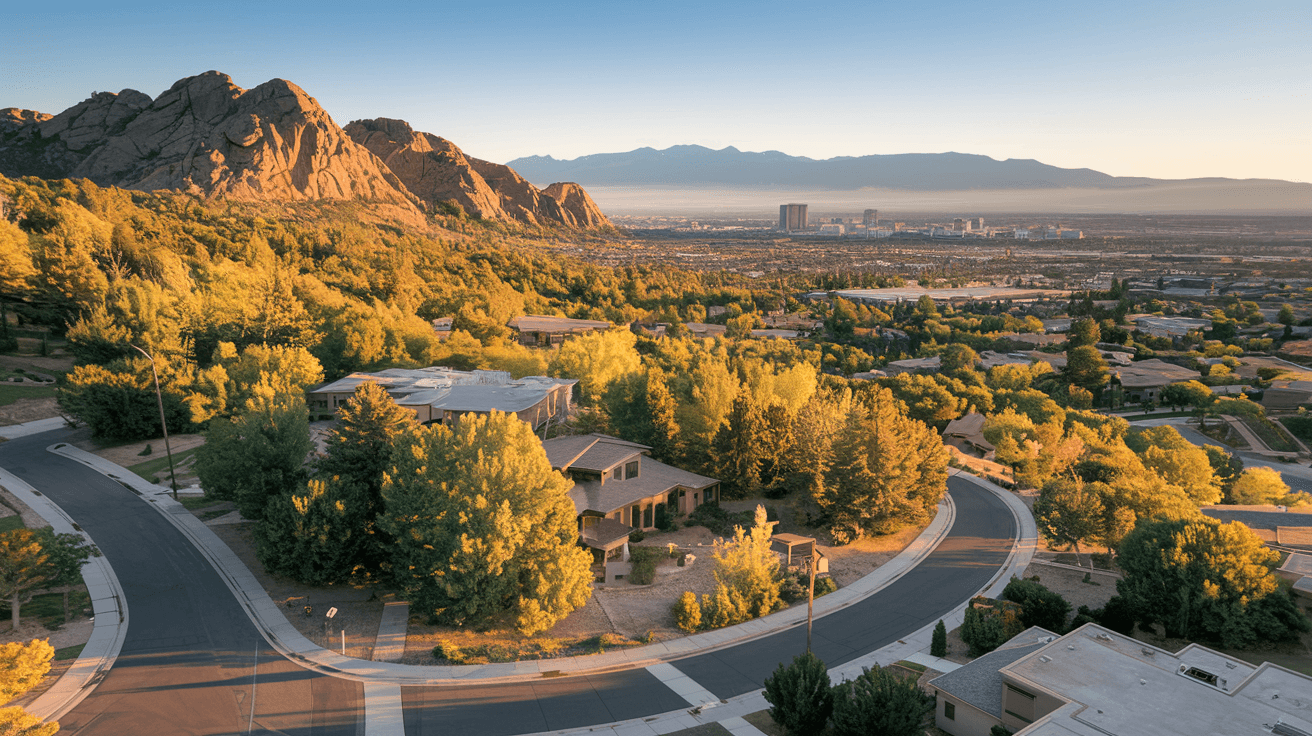
There is a moment, usually sometime in early morning, when you are standing on a back patio in Sandia Heights and the city below is still wrapped in a thin layer of haze while the Sandia Mountains behind you are already lit up in that particular shade of watermelon pink the locals call the Watermelon Mountains effect. You realize quickly that living in Sandia Heights Albuquerque is not just about square footage or a three-car garage. It is about a specific relationship with the land that very few neighborhoods in this city can actually deliver.
Sandia Heights sits in the northeastern foothills, tucked up against the Cibola National Forest boundary, roughly north of Tramway Boulevard and east of where the city grid starts to surrender to the terrain. The streets curve. The lots get big. The views get serious. And in 2026, buyers are paying attention in a way that makes this one of the more competitive pockets in the entire metro.
Living in Sandia Heights Albuquerque: What the Neighborhood Actually Feels Like
Drive up Tramway to Copper Avenue NE and keep going northeast, and the city starts to fall away behind you. By the time you are winding through the streets of Sandia Heights proper, past the adobe walls and the juniper-dotted lots, you are in a different Albuquerque than the one most visitors see.
The neighborhood has a distinct quietness to it. Not the quiet of an empty suburb, but the quiet of elevation and distance. You hear wind moving through ponderosa pines. You hear ravens. At night, the coyotes are not a surprise. This is the foothills, and the wildlife corridor that runs along the Sandia Mountains makes itself known regularly.
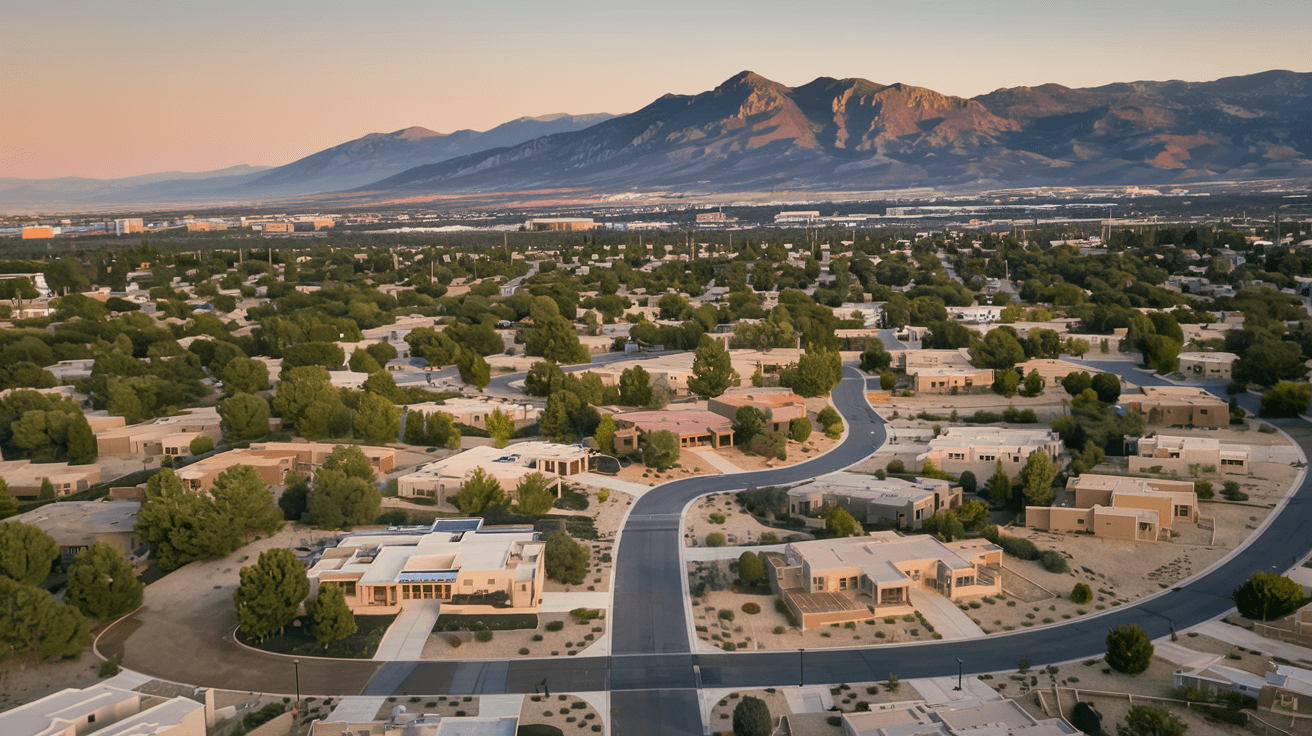
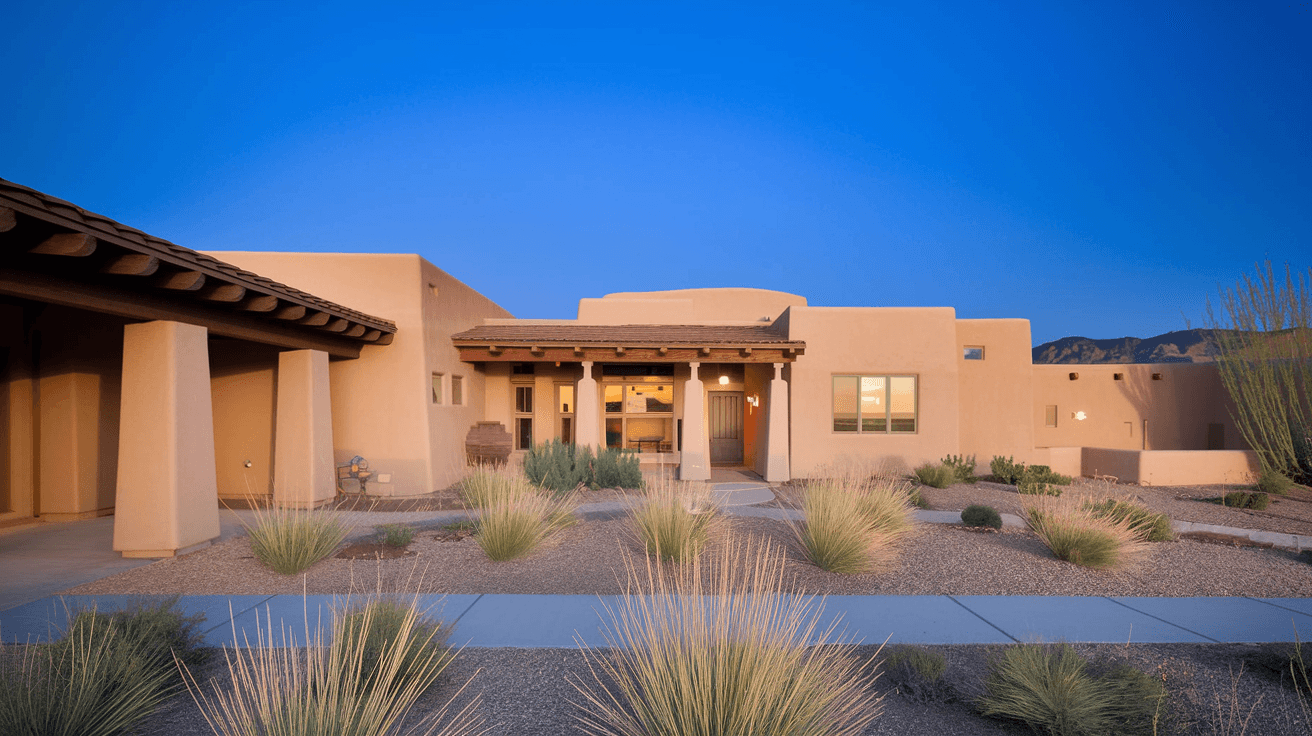
Sandia Heights developed largely through the 1970s, 1980s, and into the 1990s, which means the housing stock has that characteristic New Mexico blend: territorial-style homes with flat roofs and portales, updated contemporaries with walls of glass facing west toward the Rio Grande valley, and the occasional Pueblo Revival that looks like it grew out of the ground. Lots commonly run from half an acre to well over an acre, which is a significant departure from the tighter subdivisions you find closer to Paseo del Norte or in the North Valley.
The community has a homeowners association, the Sandia Heights Homeowners Association, that keeps the common areas maintained and enforces the architectural standards that help preserve the neighborhood's cohesive look. This is not a rigid, paint-your-door-only-beige situation. It is more like a shared agreement that the built environment should complement the natural one.
Sandia Heights Trail Access: The Real Reason People Move Here
Ask almost any Sandia Heights resident why they chose this neighborhood over, say, High Desert or the Four Hills area, and trail access comes up within the first two sentences. The Elena Gallegos Open Space sits right at the neighborhood's edge, and from several streets in the upper sections of Sandia Heights, you can walk out your front door and be on a maintained trail inside of ten minutes without ever touching a car.
Elena Gallegos connects into the broader Sandia Mountain trail system, which means you have access to:
- •The Pino Trail, which climbs steadily into the Sandias and connects to the upper tram terminal area
- •The Albert G. Simms Park trails for more moderate morning walks
- •The Embudo Trail corridor that runs south through the foothills
- •Direct connections into Cibola National Forest for longer technical routes
For trail runners, mountain bikers, and hikers, this is not a perk. It is the whole point. You are not driving to the trailhead. You are living at it.
There is also a less obvious benefit that the trail access provides: a permanent open space buffer on the eastern and northeastern edges of the neighborhood. That land is not being developed. It is not going to be developed. Which means the views and the quiet that define Sandia Heights homes today are structurally protected in a way that many Albuquerque neighborhoods simply cannot claim.
“Living in Sandia Heights Albuquerque means your backyard effectively extends into the Cibola National Forest. That is not a marketing line. That is the literal geography.
Sandia Heights Homes for Sale 2026: What the Market Is Actually Doing
The broader Albuquerque metro is sitting at a median home price of $401,000 in 2026, with homes averaging around 27 days on the market and a list-to-sale ratio of 98.4 percent. That last number matters. It means sellers are getting almost exactly what they ask for, and buyers who come in with lowball offers are learning that lesson quickly.
Sandia Heights operates in a different tier. The median home price in Sandia Heights is running around $595,000, which puts it well above the metro median but still accessible when you compare it to foothills neighborhoods in Santa Fe or the upper-end Scottsdale market. For what you get, the price-per-square-foot calculus in Sandia Heights is genuinely competitive.
Right now there are roughly 92 active listings across the Albuquerque foothills market, with about four months of inventory available. That inventory level puts buyers in a position where they have choices but not unlimited leverage. Well-priced Sandia Heights properties, particularly those with updated kitchens, mountain views from primary living spaces, and usable outdoor square footage, are not sitting.
What buyers are paying for in Sandia Heights specifically:
- •Lot size, often half an acre or more, which is increasingly rare in the metro
- •Elevation and the view corridor looking west over the city and toward Mount Taylor on clear days
- •Direct trail and open space adjacency
- •The relative privacy that comes from a curvilinear street layout and mature vegetation
- •Proximity to the Sandia Peak Tramway, which is roughly a ten-minute drive from most of the neighborhood
The homes themselves range from original builds that need updating to fully renovated properties with quartz countertops, radiant floor heating, and the kind of outdoor living setups that make sense when you have two hundred days of sunshine a year. Buyers who are willing to take on a cosmetic renovation are finding better value than in previous years, since the pool of buyers competing for turnkey properties is more concentrated.
Albuquerque Foothills Neighborhood Guide: Schools, Shopping, and Daily Life
Sandia Heights falls within Albuquerque Public Schools, and the relevant feeder pattern runs through Sandia High School, which sits on Wyoming Boulevard NE. Sandia High has long been one of the more competitive APS campuses academically, with strong AP program participation and athletics that draw serious attention in the city. For families, this is a meaningful part of the neighborhood's appeal.
Daily errands from Sandia Heights are centered around the corridor along Montgomery Boulevard NE and the shopping areas near Tramway and Academy. The Sandia Resort and Casino is a few minutes north on Tramway, which brings a hotel, spa, and dining options closer than most foothills residents expect. For grocery runs, the Sprouts on Montgomery and the Smith's near Paseo del Norte cover most bases. If you want the full Saturday morning experience, the Albuquerque Uptown area on Louisiana is a quick drive west.
The commute picture from Sandia Heights is worth being honest about. Getting downtown or to the University of New Mexico area requires navigating either Tramway south to I-40 or working through the surface streets along Montgomery or Candelaria. During morning rush, this adds time. Most Sandia Heights residents make peace with this trade-off quickly, because the alternative is living closer to the action and giving up everything that makes the neighborhood what it is.
One local insider tip: The parking situation at Elena Gallegos Open Space fills up fast on weekend mornings, especially between October and April when the weather is ideal. Sandia Heights residents who live in the upper sections of the neighborhood near Guadalupe Trail NE or Sandia Heights Road NE can access the trail system directly without ever touching the parking lot. This is one of the genuinely underappreciated advantages of buying in the higher-elevation streets rather than the lower sections of the neighborhood. The convenience gap between upper and lower Sandia Heights is real, and it is not always reflected proportionally in listing prices.
What Makes Sandia Heights Different from Other Albuquerque Foothills Neighborhoods
The Albuquerque foothills stretch from roughly the Four Hills area in the south up through High Desert, Tanoan, Sandia Heights, and into the North Domingo Baca area. Each of these neighborhoods has its own character, and buyers who are comparison shopping deserve a straight answer about how Sandia Heights fits in.
High Desert, which sits south of Paseo del Norte on the other side of the Embudo arroyo, is newer construction, generally tighter lots, and has a more manicured feel. It is a beautiful neighborhood, but it reads differently. The architecture is more uniform and the HOA is more structured.
Tanoan is a gated community with a country club and golf course, which appeals to a specific buyer and comes with fees and a lifestyle orientation that not everyone wants.
Sandia Heights sits in a middle space that many buyers find genuinely appealing: established neighborhood character, larger and more varied lots, a mix of architectural styles, and the kind of mature landscaping that only comes from decades of growth. The juniper and chamisa that frame the properties here did not come from a landscape contractor's truck last spring.
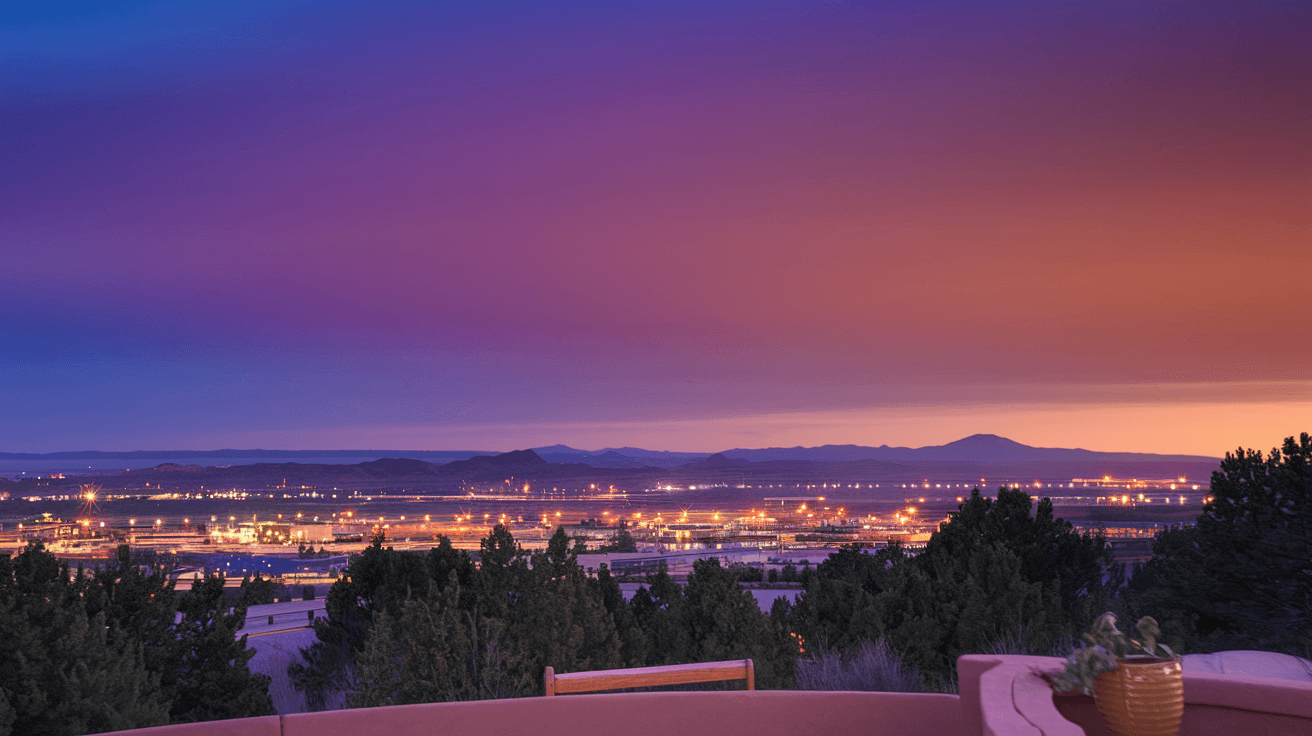
“The elevation in Sandia Heights is not just a selling point. It is a daily experience. Sunsets from up here hit different when you are looking west over twenty miles of Rio Grande valley.
The neighborhood also benefits from what it is not adjacent to. There is no commercial strip running through it. There is no high-traffic arterial cutting the community in half. The boundaries are defined by open space and the natural terrain, which gives Sandia Heights a coherence that purely platted subdivisions rarely achieve.
Working with a Local Agent Who Knows Sandia Heights
Buying or selling in Sandia Heights is not the same as buying or selling in a standard subdivision. The lot variations matter. The view corridors matter. The specific streets matter in ways that a price-per-square-foot analysis alone will not capture. Knowing that a property on the upper section of Sandia Heights Road will have trail access that a home three streets lower does not, or understanding which lots have the HOA open space buffer behind them and which back up to other homes, changes the analysis significantly.
If you are thinking about Sandia Heights homes for sale in 2026, whether you are relocating to Albuquerque, moving up from another part of the city, or trying to understand what your current Sandia Heights property is worth in this market, reach out to The Taylor Team at Berkshire Hathaway HomeServices. We work this neighborhood regularly and can walk you through what the numbers actually mean on a specific address, not just a zip code average.
Sandia Heights in 2026 is a neighborhood that rewards people who understand what they are buying. The mountain is right there. The trails are right there. The city is spread out below you every morning when you open the blinds. That combination, in this market, at this price point, is genuinely hard to replicate anywhere else in Albuquerque.
Want more insider intel?
Subscribe to get market updates and new articles delivered to your inbox.