
Living in Sandia Heights Albuquerque in 2026: Mountain Trail Access, Larger Lots, and What Buyers Are Paying for Elevation, Views, and Privacy on the East Side
If you've ever driven up Tramway Boulevard past the Sandia Peak Tramway base and felt that pull toward the mountains, you already understand what draws people to Sandia Heights. There's something about gaining that elevation, watching the city lights spread out below you, and hearing nothing but wind through the junipers that makes this neighborhood feel genuinely different from anywhere else in Albuquerque. Living in Sandia Heights Albuquerque in 2026 means paying a real premium over the metro median, but for buyers who want that specific combination of trail access, breathing room, and views that go all the way to the Jemez Mountains, the math tends to make sense pretty quickly.
The metro median sits around $401,000 right now. Sandia Heights is running closer to $618,000 as a neighborhood median, and that gap is not random. It represents a very specific set of things that this part of the east side delivers and that most of Albuquerque simply cannot replicate.
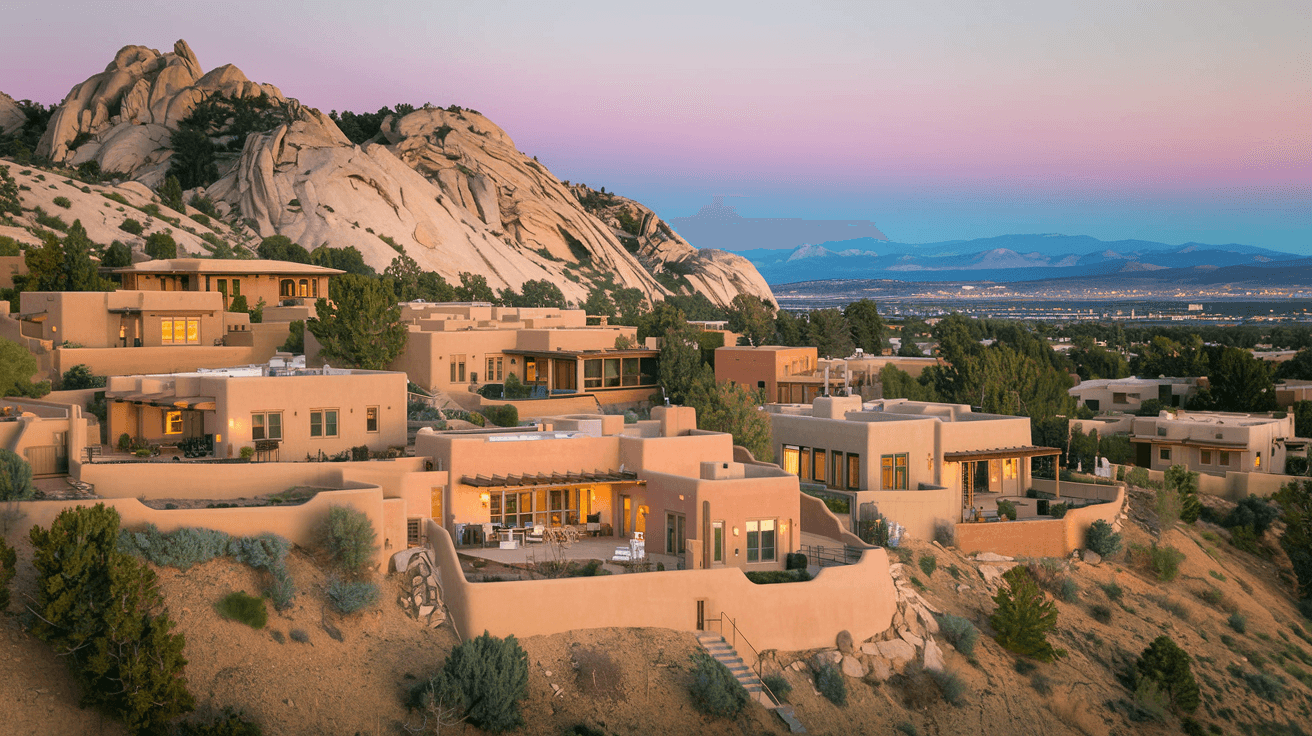
Living in Sandia Heights Albuquerque: What the Neighborhood Actually Looks Like
Sandia Heights sits tucked against the western face of the Sandia Mountains, roughly between Tramway Boulevard to the west and the Cibola National Forest boundary to the east. The streets wind. They climb. They dead-end at trailheads. This is not a grid neighborhood, and that is entirely the point.
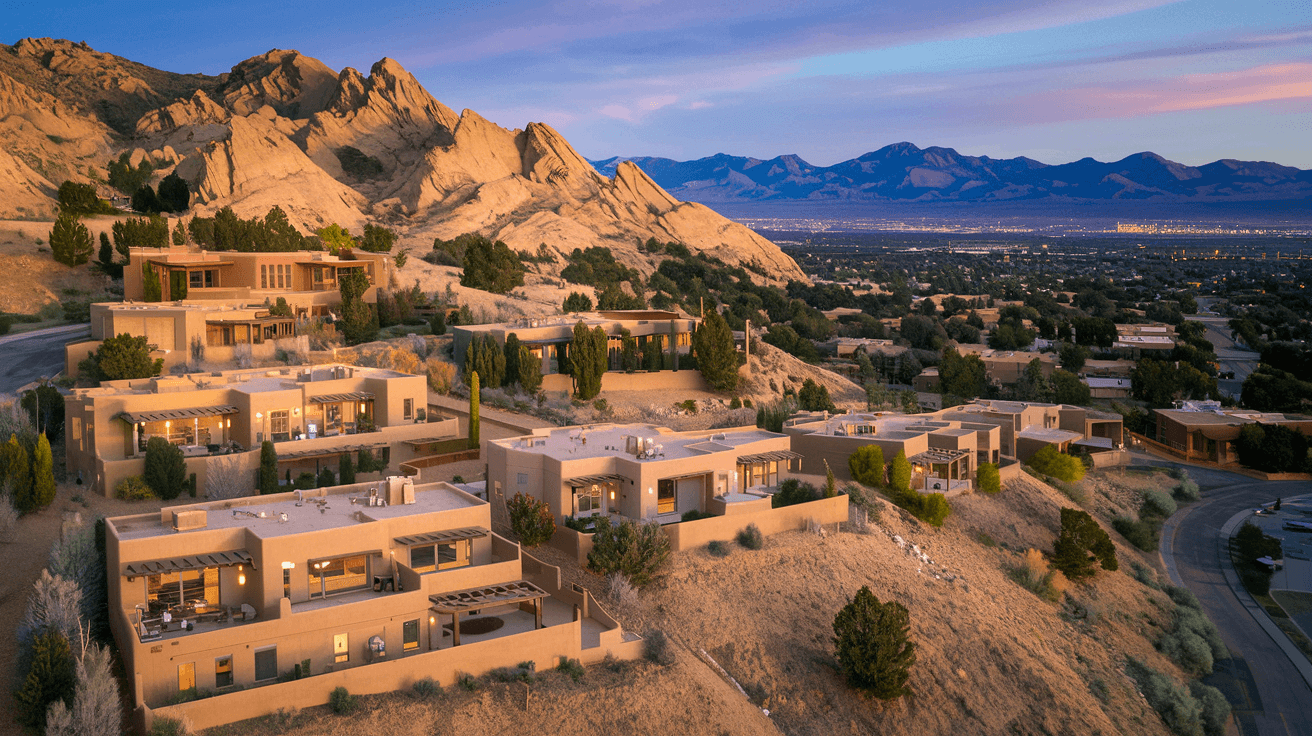
The housing stock here is mostly custom and semi-custom builds from the 1970s through the early 2000s, with a healthy mix of newer construction and heavily renovated homes scattered throughout. You'll find pueblo revival architecture, contemporary desert builds with walls of glass facing west toward the Rio Grande valley, and some genuinely unique mid-century designs that take full advantage of the rocky, sloped terrain. Lot sizes tend to run from about half an acre on the smaller end to well over an acre on the ridgeline streets, which is a completely different experience from the quarter-acre lots you'll find in most of the Heights or the Northeast.
The streets you'll hear come up most often are Tramway Road NE, Copper Avenue NE as it extends east toward the mountains, and the cluster of streets around Sandia Heights Drive and Juniper Hill Road. Each micro-pocket within the neighborhood has its own character. Some streets are more exposed and get those full 180-degree western views. Others sit in draws between ridges and feel more sheltered and forested.
The Trail Access Situation Is the Real Story
People talk about Sandia Heights being close to hiking, but it's worth being specific about what that actually means day-to-day. Several streets in the neighborhood have direct trail connections into the Cibola National Forest without needing to drive anywhere. You walk out your back gate, cross into national forest land, and you're on the trail system that connects to the Sandia Mountain Wilderness and eventually to the crest at over 10,000 feet.
The Embudito Trail is one of the most popular access points, and residents in the upper sections of Sandia Heights can reach it in a short walk from home. The Pino Trail is another. These are not paved recreational paths. These are legitimate mountain trails with serious elevation gain, technical terrain in places, and the kind of solitude that you typically have to drive an hour to find from most Albuquerque neighborhoods.
For buyers who prioritize outdoor access, this is genuinely difficult to replicate anywhere else in the metro. You can live in the North Valley and be near the Bosque, or in the South Valley near the Rio Grande Nature Center, but the mountain access that Sandia Heights offers is its own category entirely.
Sandia Heights Homes for Sale 2026: What the Market Data Is Telling You
The Albuquerque market overall is sitting at about 29 days on market and a list-to-sale ratio of 98.3%, which tells you that sellers are not giving much away and that well-priced homes are still moving with authority. Sandia Heights tracks with those dynamics but adds its own layer of low inventory pressure.
With roughly 102 active listings across the broader Albuquerque foothills real estate market and about 3.92 months of supply, this is still a seller-favoring environment, particularly at the upper price points. In Sandia Heights specifically, you're not seeing dozens of homes sitting. When a well-maintained home with good views and a functional floor plan hits the market here, it tends to generate real activity.
“Buyers who wait for a deal in Sandia Heights often wait a long time. The sellers here generally have the financial flexibility to hold for the right price, and the homes that are priced correctly don't linger.
What buyers are paying for in 2026 breaks down into a few distinct value drivers:
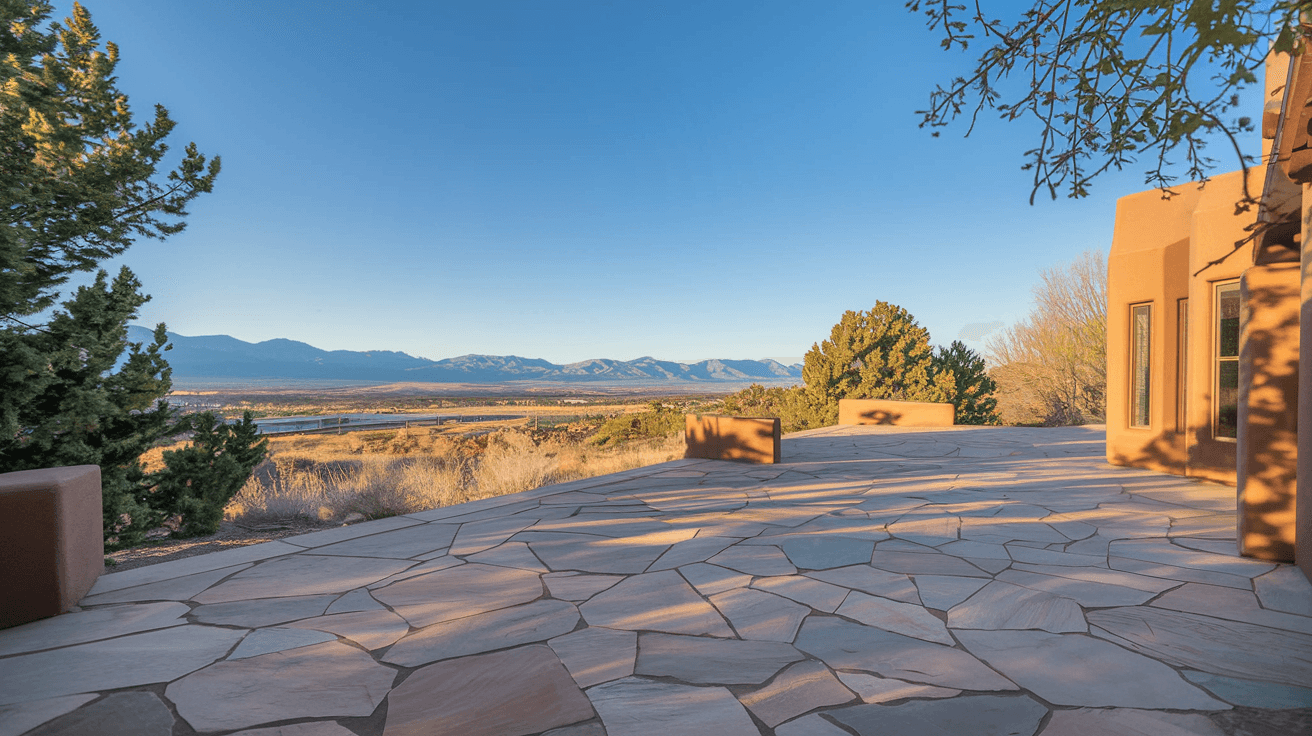
- •Elevation and views: Homes on the upper streets with unobstructed western views command the highest premiums. A comparable square footage home with views versus without can vary by $75,000 to $100,000 or more.
- •Lot size and privacy: A full acre or more with no visible neighbors is increasingly rare in the Albuquerque metro. Buyers are paying for that buffer.
- •Trail adjacency: Homes that back directly to national forest land carry a premium that has only grown as outdoor recreation demand has increased post-pandemic.
- •Custom finishes and architectural character: This is not a cookie-cutter neighborhood. Unique design features, quality construction, and thoughtful updates matter here in ways they don't in more uniform subdivisions.
- •Garage and workshop space: Many homes in Sandia Heights have three-car garages or detached workshops, which resonates strongly with the buyer profile here.
What the Buyer Profile Looks Like Right Now
The people buying in Sandia Heights in 2026 are not all the same, but there are some consistent threads. You're seeing a lot of move-up buyers from other parts of Albuquerque's east side who have built equity and are ready for more space and a different quality of daily life. You're also seeing relocation buyers, particularly from California, Colorado, and Texas, who are drawn by the value relative to comparable mountain-adjacent properties in those markets. A $618,000 home in Sandia Heights would cost considerably more in the foothills above Boulder or in the Scottsdale desert mountain communities.
Retirement-age buyers are another significant segment. The combination of single-level living options, views, quiet streets, and proximity to Presbyterian Rust Medical Center and Lovelace Women's Hospital makes this an appealing long-term home for people who want to age in a place that doesn't feel suburban in the conventional sense.
Albuquerque Foothills Real Estate: How Sandia Heights Compares to Nearby Options
If you're exploring Albuquerque foothills real estate broadly, Sandia Heights is one of several east side communities worth understanding in relation to each other. The foothills stretch from Four Hills Village in the southeast up through High Desert, Tanoan, Glenwood Hills, and into Sandia Heights at the northern end of that arc.
High Desert is probably the most direct comparison. It's a master-planned community with HOA amenities, a more consistent architectural palette, and strong infrastructure. Prices overlap significantly with Sandia Heights. The difference is character: High Desert feels more intentionally designed as a community, while Sandia Heights feels more organically grown over decades. Some buyers strongly prefer one over the other, and it tends to come down to whether you want community cohesion or individual character.
Tanoan is gated, has a country club, and appeals to a specific buyer who wants that level of security and amenity. It's more manicured than Sandia Heights and sits at a slightly lower elevation.
Sandia Heights has no HOA in most sections, which is a genuine draw for a certain buyer. You can have horses on the right lots. You can build a workshop. The rules are lighter, and the tradeoff is that your neighbors have the same freedom, which is either fine or not depending on your preferences.
Schools and the APS Connection
Sandia Heights feeds into Sandia High School, which sits on Wyoming Boulevard and has a long history in Albuquerque. It's one of the larger and more established high schools in APS. Families with kids in the system know the Sandia feeder zone well, and it's a factor in the buying decision for households with school-age children. Elementary and middle school assignments vary by specific address, so it's worth verifying your exact location with APS if school boundaries matter to your decision.
The Insider Reality of Living at Elevation in Albuquerque
Here's something that doesn't always make it into the listing descriptions: living at 6,000 to 7,000 feet in Sandia Heights is meaningfully different from living at 5,300 feet in the valley. The temperature differential is real. On summer afternoons when it's 97 degrees on Paseo del Norte, it can be 10 to 12 degrees cooler up in the heights. That matters for comfort, for utility bills, and for the general livability of outdoor spaces.
The flip side is winter. Snow is more common and stays longer up here. The roads on the steeper streets can be genuinely challenging after a storm. If you're coming from a flat-city background, driving Tramway Road or some of the upper neighborhood streets in icy conditions requires adjustment. Most long-term residents keep an all-wheel-drive or four-wheel-drive vehicle as a practical necessity rather than a preference.
“There's a local joke that you can always tell a new Sandia Heights resident in February because they're the one who drove their sedan up the hill after a snowstorm and ended up sideways.
The insider tip that most real estate searches won't surface: check the specific lot orientation before you fall in love with a home. Some of the most visually dramatic properties in Sandia Heights sit on north-facing slopes that get almost no direct sun in winter. The passive solar gain that makes a well-oriented desert home so comfortable becomes a significant liability if your main living spaces face northeast. It affects heating costs, snow melt on driveways, and the general feel of the home from November through February. This is the kind of thing that a good buyer's agent who actually knows the neighborhood will walk you through before you make an offer.
For grocery runs and daily errands, most Sandia Heights residents head down Tramway to the commercial corridors along Montgomery Boulevard or Menaul Boulevard, where you'll find Trader Joe's, Whole Foods, and the full range of Northeast Heights shopping. La Montanita Co-op on Menaul is a favorite for the kind of buyer who ends up in Sandia Heights. The driving distance feels slightly removed from the city's commercial core, which is exactly what most residents want.
What to Expect When You Make an Offer on a Sandia Heights Home
With that 98.3% list-to-sale ratio across the Albuquerque market, you're not walking into Sandia Heights expecting to negotiate 10% below asking on a well-priced home. The sellers here are typically long-term owners who know what they have. They've watched the neighborhood appreciate, they're not desperate, and they've usually had the home professionally prepared before listing.
That said, the market in 2026 is more balanced than the frenzied conditions of 2021 and 2022. With nearly four months of supply, buyers have more time to be thoughtful. Inspections matter here because custom homes built on rocky hillside lots can have foundation and drainage considerations that a standard inspection template doesn't always catch. Hiring an inspector who has genuine experience with foothills properties specifically is worth the extra effort.
If you're serious about Sandia Heights homes for sale in 2026, the best moves are fairly straightforward:
- •Get pre-approved before you start touring, because the good homes move fast and sellers here take financial readiness seriously
- •Tour the neighborhood at different times of day, particularly at dusk when the western views are at their most dramatic and you can assess light quality
- •Walk or drive the streets around any home you're considering to understand the immediate micro-environment
- •Ask specifically about utility costs, well and septic status if applicable, and the age of major systems
- •Pay attention to driveway grade and road access for winter conditions
The Taylor Team works with buyers in Sandia Heights regularly and knows the east side foothills market in detail. If you're trying to figure out whether a specific property is priced correctly for its lot position, views, and condition, that's exactly the kind of conversation worth having before you make a move.
Sandia Heights is not the right neighborhood for everyone, and that's actually part of what makes it right for the people who choose it. The elevation, the quiet, the mountain access, the larger lots, the slightly longer drive to the airport on a Sunday night. It's a specific trade that specific buyers make with clear eyes, and in 2026, that trade is still drawing serious interest from people who know Albuquerque well enough to understand what they're getting.
Want more insider intel?
Subscribe to get market updates and new articles delivered to your inbox.