
Living in Sandia Heights Albuquerque in 2026: Tramway Access, Custom Homes on the Mountain's Edge, and What Buyers Are Actually Paying for Elevation, Views, and Open Space Preserve Proximity
If you have spent any time driving up Tramway Boulevard toward the base of the Sandias, you already understand the pull. The city drops away behind you, the air gets a little crisper, and the granite face of the mountain fills your windshield in a way that never really gets old. Living in Sandia Heights Albuquerque is its own category of experience, and in 2026, buyers are paying close attention to exactly what that experience costs and what it delivers.
This is not a neighborhood you stumble into. You choose Sandia Heights deliberately, usually after ruling out other parts of the Northeast Heights and deciding that the extra elevation, the custom architecture, and the proximity to the Sandia Mountain Natural Area are worth the premium. Let's talk about what that premium actually looks like right now, what the neighborhood feels like day to day, and what you should know before you start making offers.
Living in Sandia Heights Albuquerque: What the Neighborhood Actually Feels Like
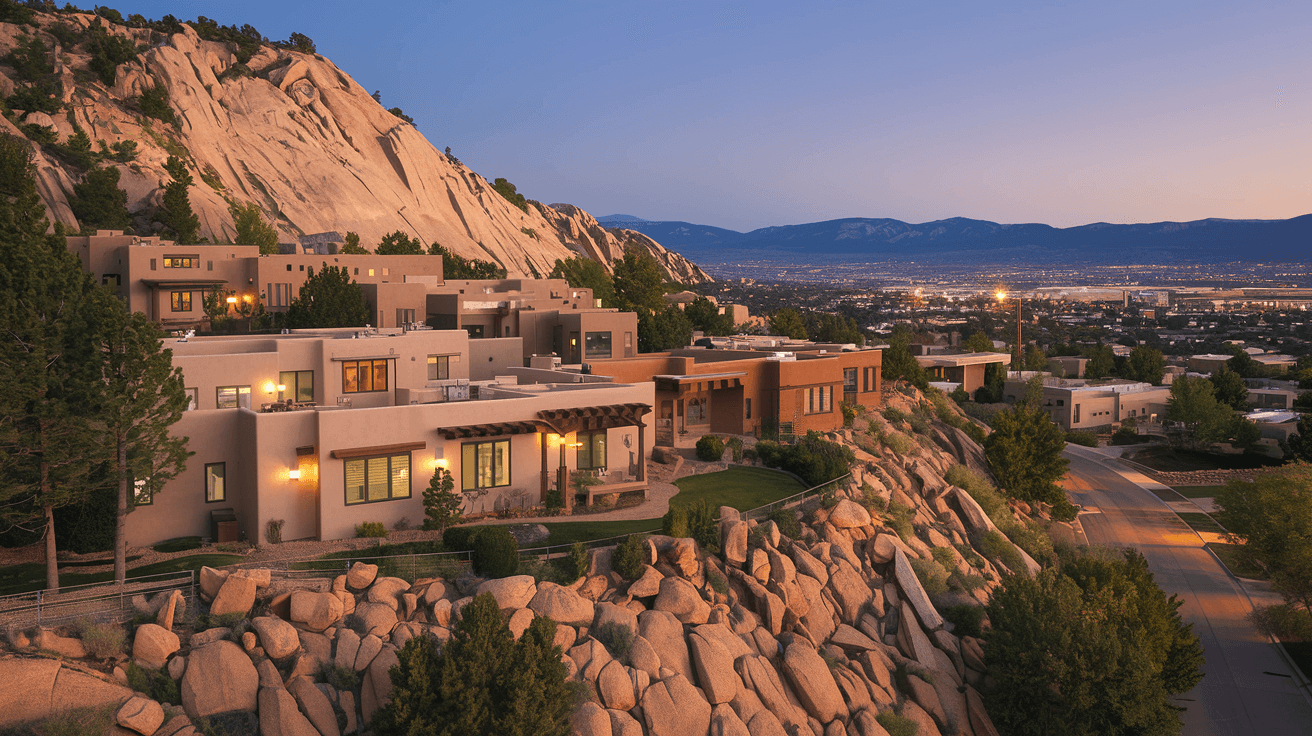
Sandia Heights sits at the northeastern edge of Albuquerque, tucked between Tramway Boulevard to the west and the Cibola National Forest boundary to the east. The neighborhood climbs from roughly 6,000 feet up toward 7,000 feet in elevation depending on where your lot sits, and that altitude difference matters more than people expect. Summers here are genuinely cooler than the flatlands of the city. When it hits 98 degrees down by Central Avenue, Sandia Heights might be sitting at 88 with an afternoon breeze rolling off the mountain.
The streets have a particular character. Tramway Road NE, Trumbull Drive NE, Copper Avenue NE as it winds up into the foothills, the curving sight lines along Sandia Heights Drive NE — these are not grid streets. The neighborhood follows the terrain, and that gives it a feel that is closer to a mountain community than a city subdivision. Lots are generous. Walls and fences are common but not oppressive. You hear birds more than traffic.
Day-to-day convenience runs along Tramway. Biscochito Bakery and the shops near Montgomery and Tramway are a short drive down the hill. The Lowe's and Sprouts corridor near Eubank and Comanche handles most grocery runs. For a proper breakfast before a hike, locals know that getting to Weck's on Juan Tabo early beats the weekend wait. The neighborhood is quiet enough that these small routines feel like a real departure from the city, even though you are technically still inside Albuquerque city limits.
The Sandia Peak Tramway at the end of Tramway NE is the neighborhood's most famous amenity and also its most underused one by actual residents. Locals tend to hike the La Luz Trail instead, which starts practically in the neighborhood and climbs through pinon and juniper into the higher terrain. The Tramway is for out-of-town guests and special occasions. The trail system is for Tuesday mornings.
Sandia Heights Homes for Sale 2026: Custom Architecture and What You Are Actually Buying
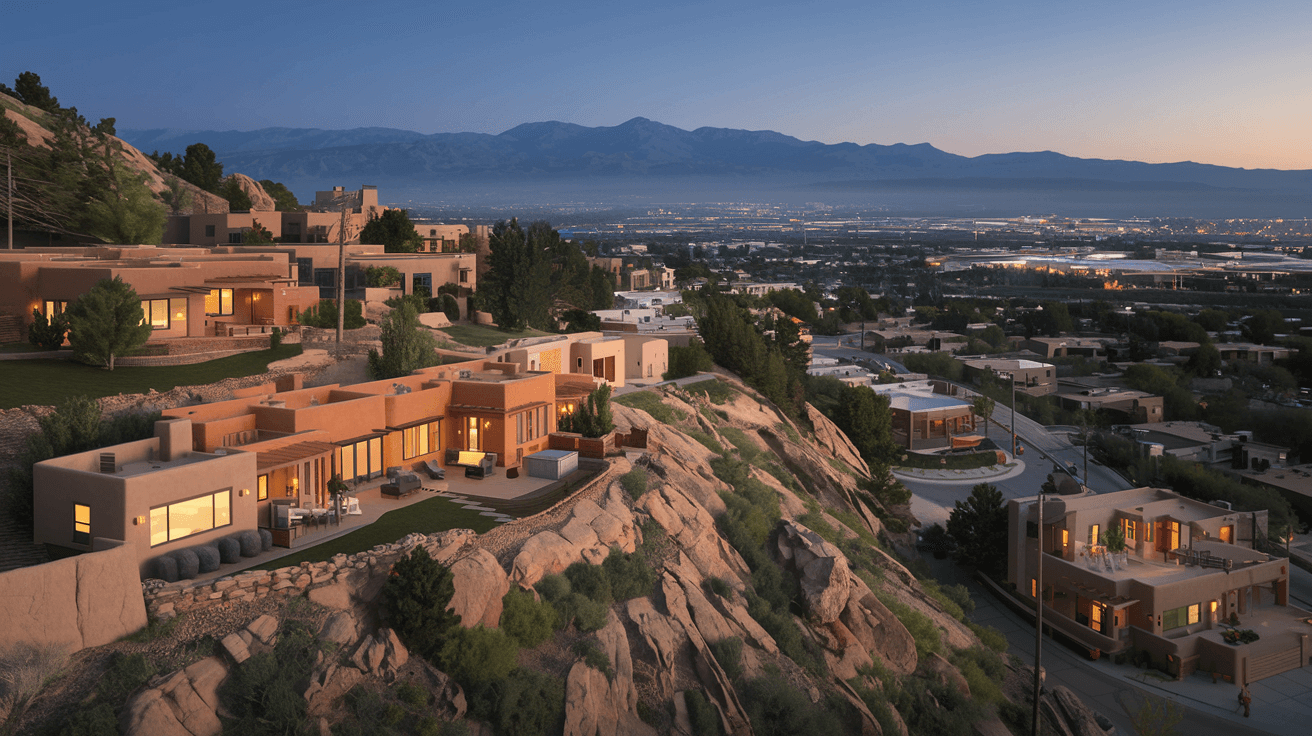
The housing stock in Sandia Heights is not uniform, and that is a big part of the appeal. You will find custom-built single-family homes that range from 1970s territorial-style adobe to contemporary designs built in the last five years with floor-to-ceiling glass walls oriented toward the city view. There are no cookie-cutter subdivisions here. Each home has its own story, its own footprint on its particular slice of rocky terrain.
Typical features across Sandia Heights homes for sale in 2026 include:
- •Lot sizes ranging from half an acre to several acres, with many backing directly to Open Space
- •Passive solar design that takes advantage of the southern exposure and high-altitude sun
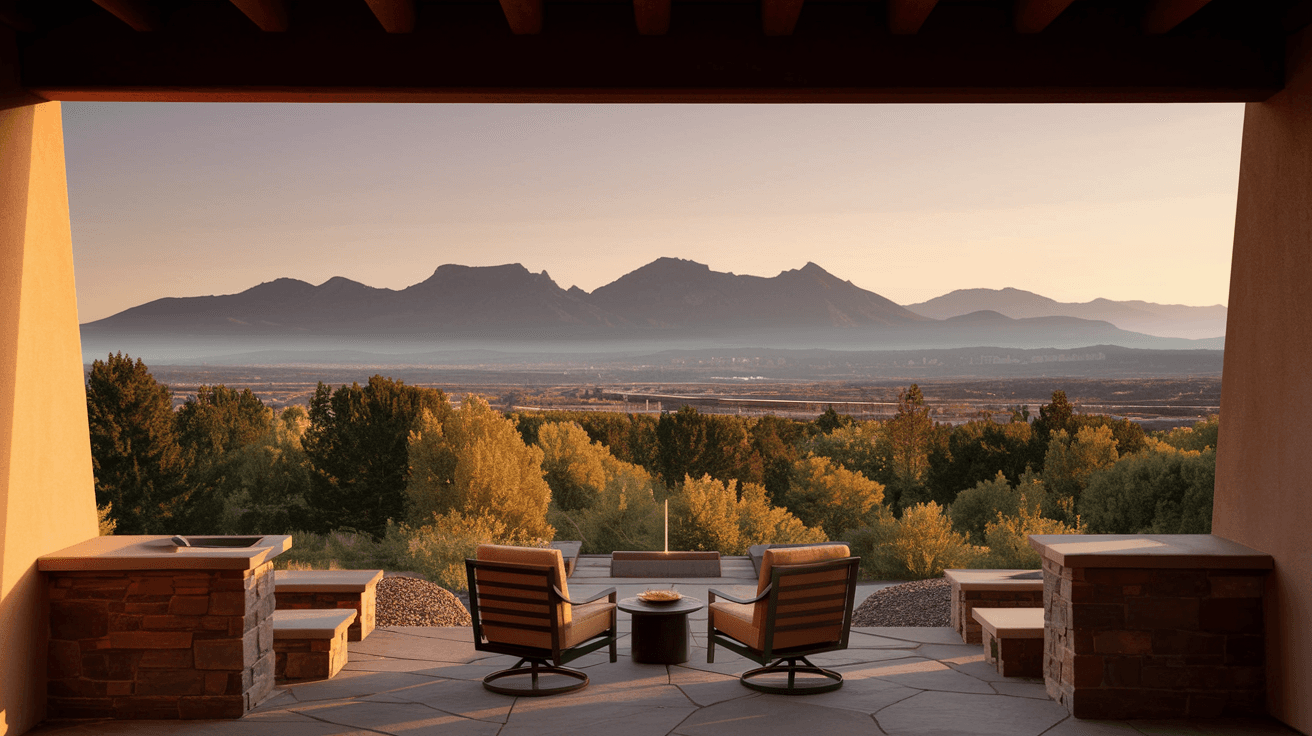
- •Multiple outdoor living areas, usually including a covered portal facing west toward the city
- •Two and three-car garages, often with workshop or storage space built in
- •Radiant floor heating, which is the right call at this elevation
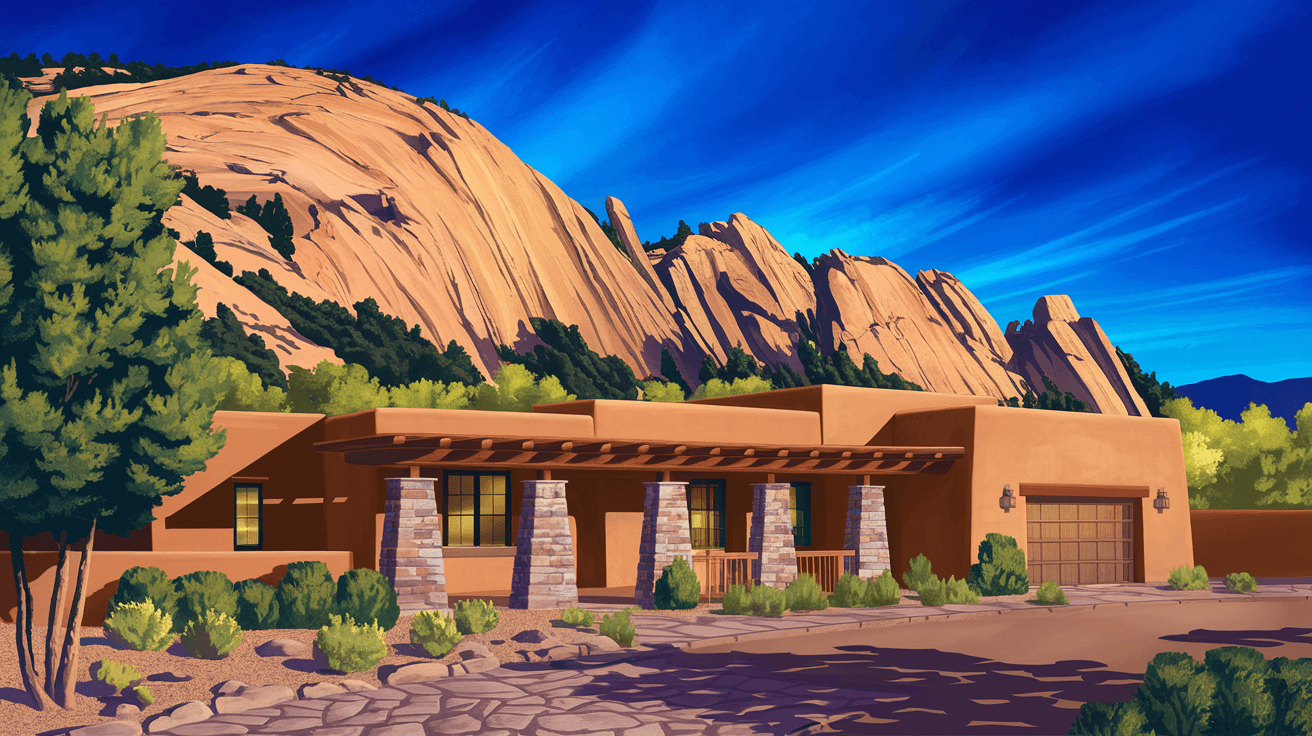
- •Natural stone and stucco exteriors that echo the granite of the mountain behind them
- •Mature landscaping with native plants: chamisa, Apache plume, Rocky Mountain juniper
The homes that command the highest prices are those with unobstructed western views across the Rio Grande valley toward the West Mesa volcanoes. On a clear evening, which is most evenings in New Mexico, you can watch the sun set behind those volcanic cones from your own back porch. That view is worth real money in this market, and buyers know it.
“Sandia Heights is one of the few places in Albuquerque where the lot itself — its elevation, its orientation, its proximity to the Open Space boundary — can swing a home's value by $100,000 or more independent of the structure sitting on it.
School assignment here falls under the Albuquerque Public Schools district with the Sandia High School feeder zone, which is a significant factor for families with older kids. The Sundevils have a long-standing reputation in the city, and the proximity to Eldorado High School as a boundary option depending on exact address is worth confirming if school assignment matters to your household.
Sandia Heights Real Estate Albuquerque: 2026 Pricing and What the Market Is Doing
The median home price in Sandia Heights sits around $572,000 as of 2026, which puts it well above Albuquerque's metro-wide median of $385,000. That gap is not a surprise to anyone who has spent time in the neighborhood, but it is worth understanding what is driving it.
Elevation is not just a lifestyle feature in Sandia Heights. It is a pricing variable. Homes that sit higher on the slope, with larger lot footprints and direct Open Space adjacency, consistently trade at premiums over homes at the neighborhood's lower elevations closer to Tramway Boulevard. The delta between a well-positioned view home and a comparable house without the western exposure can run $75,000 to $150,000 depending on the specific parcel.
Sandia Heights real estate in Albuquerque is also operating in a market that has tightened considerably. Metro-wide, active listings sit around 3,850 homes with roughly 3.9 months of inventory. In Sandia Heights specifically, inventory is thinner than the broader market, and well-priced homes are moving. The metro average days on market is 34 days, but correctly priced properties in Sandia Heights with strong view corridors and updated interiors have been going under contract faster than that. The list-to-sale ratio across the metro is running at 97.8 percent, which tells you that meaningful discounts below asking are not the norm right now.
For buyers, this means a few practical things:
- •Pre-approval needs to be current and specific to the price range you are targeting
- •Inspection contingencies are still standard and expected, but waiving them to compete is a real conversation in this market
- •Open Space adjacency is not just a lifestyle preference. It is a permanent boundary that protects your view and your quiet, and that permanence carries a price premium that has historically held its value
- •The Tramway access premium is real but not infinite. Buyers are paying for proximity, not just proximity's reputation
One thing worth knowing: property taxes in Bernalillo County on homes in this price range are generally manageable compared to what buyers relocating from California or Texas often expect. New Mexico's valuation methodology and available exemptions mean the annual tax burden on a $600,000 Sandia Heights home is often a genuine surprise to out-of-state buyers in a good way. Your agent can walk you through current mill levy rates and what to actually budget.
The Open Space Preserve Factor: Why Buyers Are Paying Attention to the Eastern Boundary
The Sandia Mountain Natural Area and the broader Cibola National Forest form the eastern edge of Sandia Heights, and this is the neighborhood's defining geographic feature. Homes that back to this boundary are not just buying a view or a quiet backyard. They are buying a permanent guarantee that nothing will ever be built behind them.
In a city that is still growing, that permanence is genuinely valuable. The Open Space boundary means the trail access that exists today will exist in ten years. The wildlife corridor that brings mule deer through the neighborhood at dawn will still be there. The absence of development noise, the darkness at night, the sound of wind in the juniper instead of construction equipment — none of that goes away.
Buyers in 2026 are specifically asking about Open Space adjacency when they tour Sandia Heights listings, and sellers with confirmed direct access or shared boundary to the Preserve are pricing accordingly. Lots that back to Open Space typically carry a premium of 8 to 15 percent over comparable homes without that adjacency, depending on the specific address and the quality of the access.
The insider knowledge that matters here: not all Open Space adjacency is equal. Some parcels have a dedicated access easement to the trail system. Others share a boundary with the Preserve but access the trails via a short walk on a neighboring property or a common area. When you are evaluating Sandia Heights homes for sale in 2026, ask specifically about the nature of the Open Space connection, not just whether it exists.
The La Luz Trail and Daily Mountain Access
The La Luz Trail is a serious hike. It gains roughly 3,600 feet over about 8 miles to the crest, and it is not a casual morning walk. But the lower portions of the trail and the connecting social trails through the neighborhood's Open Space interface are very much part of daily life for Sandia Heights residents. Early morning hikers, mountain bikers on the lower terrain, trail runners who know every switchback by feel — this is the neighborhood's actual fitness culture, and it happens before most of Albuquerque is awake.
For families, the proximity to this trail system is a quality-of-life feature that is hard to put a number on but impossible to ignore once you have lived with it. Kids who grow up in Sandia Heights grow up knowing the mountain in a way that is specific to this neighborhood.
What the Buying Process Looks Like in Sandia Heights Right Now
If you are seriously considering living in Sandia Heights Albuquerque, the buying process has a few wrinkles worth understanding before you start scheduling showings.
First, lot and terrain due diligence matters more here than in flatter parts of the city. Slope, drainage, and soil conditions affect both the current structure and any future improvements you might want to make. Retaining walls, drainage swales, and the engineering behind them are worth reviewing in inspection and sometimes worth an independent geotechnical opinion on older properties.
Second, utilities and water pressure at higher elevations can vary. Homes at the upper reaches of the neighborhood may have lower municipal water pressure than those closer to Tramway, and some properties have booster pumps to compensate. This is a normal feature of mountain-adjacent living in Albuquerque, but it is worth understanding before you close.
Third, HOA structure varies significantly across Sandia Heights. Some sections of the neighborhood have active homeowners associations with architectural review committees and common area maintenance. Others are entirely freestanding. The HOA situation affects both your monthly costs and your ability to modify the property, so it belongs in your early due diligence.
If you are ready to start looking at what is currently available, the Taylor Team works this neighborhood regularly and can give you a real-time picture of what is on the market, what has gone under contract recently, and where the actual value sits right now. A conversation costs nothing and usually saves a lot of time.
“The buyers who do best in Sandia Heights are the ones who have done enough homework to know what they are prioritizing — view, Open Space, elevation, school zone, lot size — before they start making offers. This is not a neighborhood where you figure it out as you go.
Sandia Heights in 2026: The Honest Summary
Sandia Heights is not the right neighborhood for everyone, and it does not try to be. The elevation means winter mornings require an ice scraper. The terrain means your landscaping budget is real and ongoing. The distance from the freeway means you are adding a few minutes to any commute that takes you west or south.
What you get in exchange is a daily relationship with the Sandia Mountains that changes every season and never gets routine. You get custom architecture on generous lots with views that photograph well but feel even better in person. You get trail access that most of the city has to drive to. You get a neighborhood that is genuinely quiet after dark, where the stars are visible most nights, and where the wildlife corridor behind your house is protected by federal land boundaries that are not going anywhere.
At a median price of $572,000 in a metro where the broader median sits at $385,000, Sandia Heights buyers are paying a real premium. The data suggests that premium has staying power, and the residents who live there will tell you over coffee that the math made sense the first morning they woke up to the mountain light coming through their east-facing windows.
That is a hard thing to put in a spreadsheet, but it is exactly what drives this market.
Want more insider intel?
Subscribe to get market updates and new articles delivered to your inbox.