Moving to Albuquerque from California in 2026: How LA and Bay Area Buyers Are Reshaping the ABQ Market
If you have spent any time scrolling Zillow from a California zip code lately, there is a good chance Albuquerque has popped up on your radar. The numbers make sense at a glance: a metro median home price of $385,000, sunshine that rivals anything the Pacific Coast offers, and a cost of living that feels almost illegal compared to what you left behind in Los Feliz or the Sunset District. But moving to Albuquerque from California is about more than a spreadsheet calculation, and the buyers who arrive here having done only the math are often the ones who need the most guidance once they land.
What is actually happening on the ground in ABQ right now is more nuanced, more interesting, and frankly more exciting than any headline will tell you. California transplants are not just buying houses here. They are reshaping entire pockets of the city, influencing what gets built, what gets renovated, and what local sellers can reasonably expect to put on their asking price. This is a market in real motion, and 2026 looks like it will be one of the most active relocation years the city has seen in a generation.
Moving to Albuquerque from California: What the Market Actually Looks Like Right Now
Let's talk numbers first, because they tell a story that goes beyond the sticker price. The Albuquerque metro is sitting at a median home price of $385,000 as we move through 2025 into 2026 projections. Homes are averaging 32 days on market, which is not the frenzied 48-hour chaos of the 2021 and 2022 peak years, but it is still a market where hesitation costs you. The list-to-sale ratio is holding at 97.8%, meaning sellers are getting very close to what they ask, and there are roughly 2,850 active listings across the metro with about 3.7 months of inventory on hand.
For a buyer coming from the Bay Area, where a comparable home might carry a $1.2 million price tag and sell in a weekend with twelve offers, this feels like breathing room. For a buyer coming from LA's Eastside or the South Bay, the reaction is similar. But here is what California buyers often misread: Albuquerque is not a buyer's market in the traditional sense. The inventory is tighter than those numbers suggest in the price ranges where California money tends to land, specifically the $450,000 to $750,000 range, because that is precisely where local move-up buyers and out-of-state transplants are competing for the same properties.
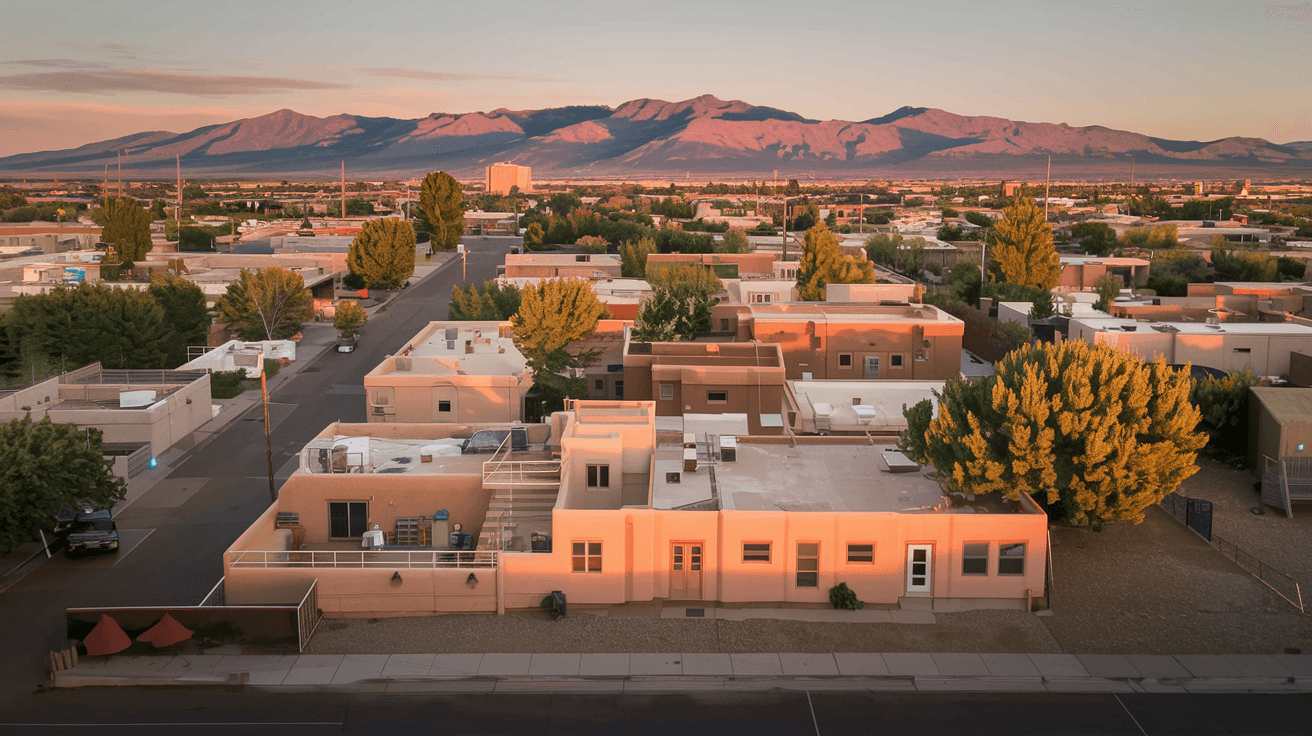
The neighborhoods that are seeing the sharpest California influence right now are High Desert, the North Valley, Nob Hill, and the emerging pockets of the South Valley that are attracting buyers who want land and character without paying Old Town prices. Each of these places has a completely different personality, and knowing which one fits your life is the first real decision you need to make.
Why California Buyers Keep Landing on High Desert
High Desert is the neighborhood that tends to close the deal for buyers coming from places like Marin County, Pasadena, or the hills above Burbank. It sits on the northeastern edge of the city, tucked up against the foothills of the Sandia Mountains, and it delivers something California buyers recognize immediately: elevation, views, and a sense of curated calm that feels expensive because it is.
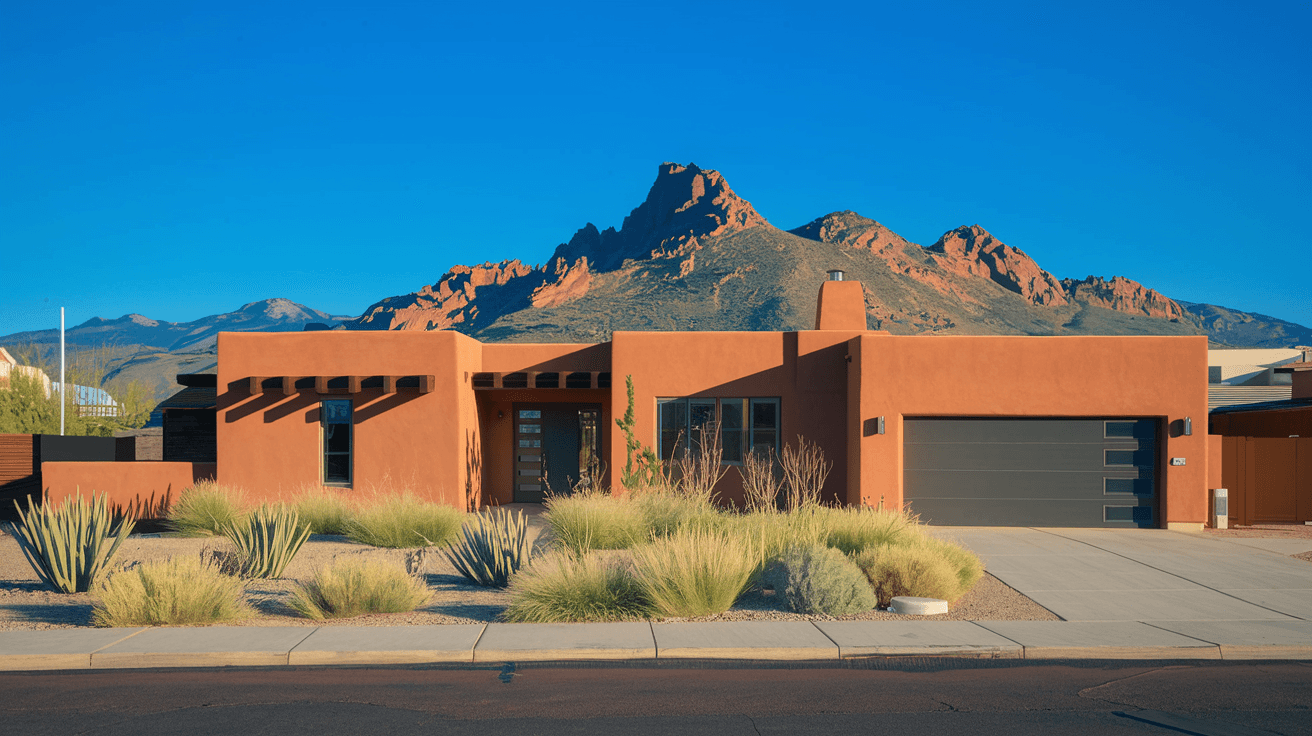
The median price in High Desert is $720,000, which places it firmly at the top of the Albuquerque market. Homes here are often custom builds on generous lots, with passive solar design, territorial-style architecture, and the kind of unobstructed mountain and city light views that would cost three times as much in Scottsdale or Santa Fe. The neighborhood feeds into the APS La Cueva High School district, which consistently draws families who are prioritizing public school quality alongside their real estate investment.
What California buyers appreciate about High Desert is that the lifestyle infrastructure is there. You can walk or bike into the Elena Gallegos Open Space before your first Zoom call of the morning. The Sandia Peak Tramway is practically in your backyard. And you are fifteen minutes from Trader Joe's on Carlisle or the Sprouts on Montgomery without fighting Pasadena-level traffic to get there.
The insider tip worth knowing: High Desert has a homeowners association, and it is not toothless. Buyers from California who are used to HOAs that exist mostly on paper are sometimes surprised by how seriously the covenants are enforced here. Before you fall in love with a specific lot or home design, have your agent pull the CC&Rs and read them. The architectural review process is real, and it is part of why the neighborhood looks the way it does.
“"The buyers I work with from the Bay Area tell me the same thing every time they stand in a High Desert backyard and look west toward the city lights: they cannot believe what their dollar buys here. Then they make an offer the same afternoon."
California to New Mexico Relocation 2026: The Lifestyle Shift Nobody Warns You About
The financial case for California to New Mexico relocation in 2026 is easy to make. New Mexico has no estate tax, a relatively modest income tax structure, and property taxes that will make a longtime California homeowner genuinely emotional. But the lifestyle adjustment is where people either fall deeply in love with Albuquerque or find themselves restless after eighteen months.
Albuquerque is not a city that performs for you. It does not have the relentless commercial energy of Los Angeles or the tech-campus polish of San Jose. What it has is authenticity that has not been monetized yet, and for a certain kind of California transplant, that is the whole point.
The food culture here is completely its own thing. You are not eating California-adjacent New Mexican food. You are eating the real version, and it will take you a few months to develop your chile heat tolerance and your strong opinions about which red or green you prefer. Locals will ask you that question constantly. It is not small talk. It is a genuine inquiry into your character. Duran's Pharmacy on Central, El Modelo on South Second, and Mary & Tito's on 4th Street are the kind of places that make you understand why people who grew up here never really leave, even when they try.
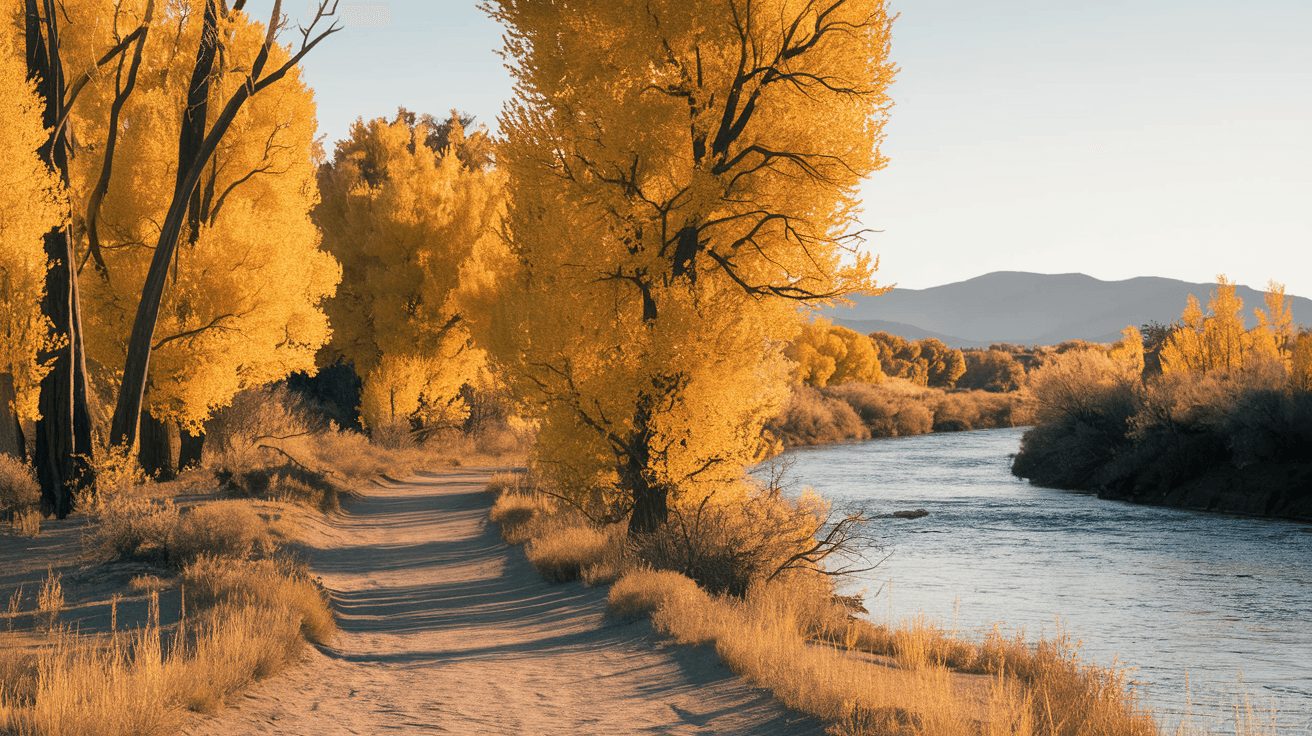
The Rio Grande runs through the city's western edge, and the Paseo del Bosque Trail along its cottonwood corridor is one of the genuinely underrated urban trails in the American Southwest. On a weekday morning in October, when the cottonwoods are fully gold and the air is carrying that particular high desert smell, it is the kind of thing that makes California feel very far away in the best possible sense.
What California Buyers Get Wrong About Albuquerque
The most common misconception California buyers bring with them is that Albuquerque is a stepping-stone city, a place you move to for affordability and then leave when you can afford something else. That framing misunderstands what the city is. The people who thrive here are the ones who arrive curious rather than comparative.
A few things worth calibrating before you arrive:
- •Altitude is real. Albuquerque sits at roughly 5,300 feet. Your first two weeks of cardio will humble you regardless of your fitness level in California.
- •The sun is intense. The UV index here is legitimately higher than coastal California, and the dryness accelerates everything from skin to wood furniture. Budget for a whole-house humidifier.
- •Distances are measured in minutes, not miles. When a local tells you something is "about fifteen minutes," believe them. Traffic here does not function like LA traffic. Getting from Nob Hill to Rio Rancho in under twenty minutes at 5pm is a normal Tuesday.
- •The arts scene is serious. The 516 Arts gallery on Central, Meow Wolf's presence in the broader region, and the density of working artists in the Barelas and EDo neighborhoods reflect a creative community that does not need coastal validation to feel legitimate.
- •Green chile is not a condiment. It is a food group. Plan accordingly.
Albuquerque Real Estate California Buyers: Which Neighborhoods Match Your California Life
One of the most useful exercises we do with California buyers in the Albuquerque real estate market is mapping their current neighborhood's personality onto the ABQ grid. It is not a perfect science, but it gives people a starting point that saves weeks of unfocused touring.
If your California life looked like Silver Lake or Los Feliz, walkable, eclectic, coffee-shop dense, and close to arts venues, Nob Hill and the UNM area along Central Avenue are worth your serious attention. The housing stock is older, often 1940s and 1950s bungalows with good bones and real character. Prices are more accessible, and you are walking distance from Humble Coffee, Tractor Brewing, and the Guild Cinema on Central.
If your life in California was closer to Marin or the Piedmont hills, premium zip codes with good schools and proximity to nature, High Desert and the Tanoan area are your natural landing spots. You will pay more, but you are buying into a different kind of lifestyle infrastructure.
If you came from Sacramento's Midtown or Oakland's Temescal, neighborhood-scale urbanism with a local business ethos and a little bit of grit, look seriously at Barelas, EDo (East Downtown), and the South Broadway corridor. These neighborhoods are in genuine transition, and buyers who arrive in 2026 are likely positioning themselves ahead of a significant appreciation curve.
If your California life was Thousand Oaks or Pleasanton, suburban, family-focused, newer construction, then Rio Rancho, Ventana Ranch, or the Far Northeast Heights will feel immediately comfortable. The schools, the infrastructure, and the neighborhood format will translate directly.
“"Albuquerque does not ask you to give up your standards. It asks you to recalibrate what those standards are based on. Most California buyers who stay more than a year realize the recalibration was the point."
How California Money Is Changing the ABQ Market in Real Time
This is worth being honest about, because it affects everyone in the market, including the people reading this who grew up here.
California buyers arriving with equity from home sales in markets where $900,000 was a starter home are entering Albuquerque with purchasing power that local first-time buyers simply cannot match. When a buyer from Redondo Beach sells a 1,400-square-foot house for $1.1 million and arrives in Albuquerque with $400,000 in cash, they are not competing with other California transplants. They are competing with local families who have been saving for years to buy in the same neighborhoods.
This is not a moral judgment. It is a market dynamic, and it is real. The effect is most visible in the $350,000 to $550,000 range, where Albuquerque real estate California buyers are most active and where local competition is also the fiercest. That 97.8% list-to-sale ratio and those 32-day average market times reflect a market where well-priced homes in good locations are not sitting.
For California buyers, the practical takeaway is this: come pre-approved, know your number, and do not assume you have time to sleep on a decision. The Albuquerque market is not as forgiving of hesitation as it might appear from the outside. Working with agents who know the specific inventory rhythms of each neighborhood, who know when a new listing on Tramway Boulevard is going to move fast and when a home on Rio Grande Boulevard in the North Valley has room to negotiate, is the difference between landing the right house and watching it go under contract while you are still thinking about it.
If you are beginning to map out a California to New Mexico relocation in 2026 and want to understand exactly what the market looks like for your specific budget and lifestyle, reaching out to a team that lives and works in Albuquerque every day is the most efficient first step you can take. The Taylor Team at Berkshire Hathaway HomeServices works with relocation buyers regularly and can give you a ground-level read on what is actually available, what is actually worth the price, and what questions you should be asking before you book a flight.
What to Expect When You Actually Arrive: The First Six Months
Most California transplants go through a predictable arc. The first month is pure euphoria: the space, the sunsets from the Sandia Crest, the fact that you can park anywhere, the shock of a grocery bill that does not require a moment of quiet reflection. The second and third months involve more honest discovery: figuring out which parts of the city feel like yours, navigating the quirks of NMDOT road construction on I-25, and learning that Albuquerque weather is genuinely four seasons in a way that coastal California never delivers.
By month six, the people who stay are the ones who have stopped comparing and started participating. They have found their coffee shop, their trail, their green chile dealer at the Corrales Growers Market on Sunday mornings. They have opinions about Balloon Fiesta crowds and strong preferences about which route to take through the Bosque when the weather turns. They feel, in the specific and unglamorous way that matters, at home.
The real estate decision is the foundation of that transition. Getting the neighborhood right, the house right, and the timing right makes everything that follows easier. Albuquerque in 2026 is a city that is growing into a broader awareness of itself, and the California buyers arriving this year are part of that story, not outside observers looking in.
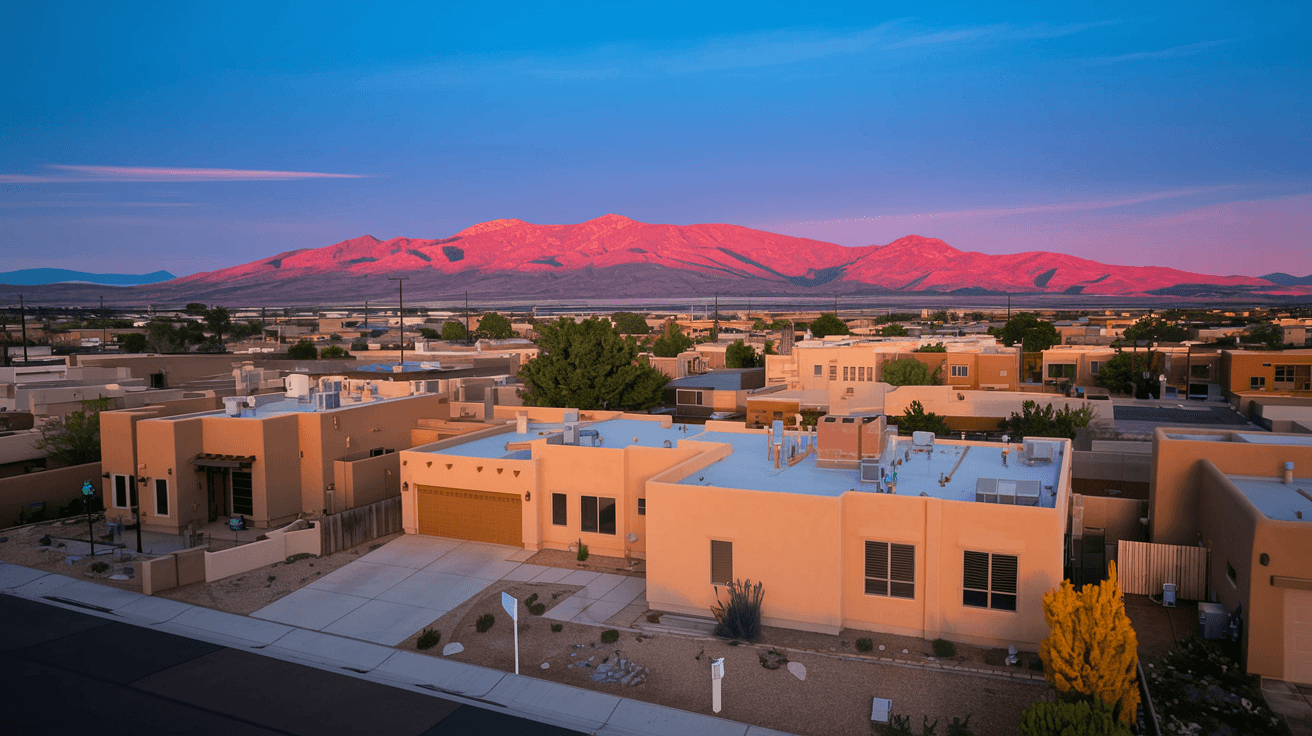
The Sandia Mountains turn watermelon pink every evening around sunset. From the right backyard, it never gets old. That is not a selling point. That is just Tuesday in Albuquerque, and it is worth the move.
Want more insider intel?
Subscribe to get market updates and new articles delivered to your inbox.