Moving to Albuquerque from Texas in 2026: What Dallas and Austin Buyers Find When They Compare Prices, Space, and Lifestyle
If you've been watching your Zillow alerts from a Dallas suburb or scrolling listings during your Austin lunch break, you already know something feels off about the Texas market. Prices that made sense in 2019 have stretched into territory that forces most buyers to compromise hard on either location, size, or condition. Moving to Albuquerque from Texas in 2026 is a decision more buyers are making with clear eyes and real math behind it, and what they find when they get here tends to surprise them in the best possible way.
This isn't a pitch. It's what we see on the ground every week, working with families and professionals who load up the moving truck and head west on I-40 looking for a reset.
Albuquerque vs Dallas Cost of Living: The Numbers That Change the Conversation
The headline comparison is straightforward. Albuquerque's metro median home price sits at $385,000 as of early 2026. In the Dallas-Fort Worth metro, comparable homes in desirable zip codes are routinely running $500,000 to $650,000, and Austin's median has hovered well above $500,000 even after the post-pandemic correction. The gap isn't marginal. It's the difference between a house you settle for and a house you actually want.
But the Albuquerque vs Dallas cost of living conversation goes deeper than the purchase price. New Mexico has no city income tax for Albuquerque residents, and property tax rates here are notably lower than what Texans are used to paying. A home assessed at $400,000 in Bernalillo County will generate a property tax bill that routinely shocks Texas transplants for how manageable it is. Texas has no state income tax, which is a real advantage, but the property tax rates in DFW and Austin are aggressive enough that the monthly carrying costs on a Texas home often exceed what buyers pay here even on a higher-priced New Mexico property.
Utility costs in Albuquerque also run lower on average. The high desert climate means you're not running central air at full capacity for six straight months the way you do in Dallas. Winters are real but dry, and the roughly 310 days of sunshine per year mean solar adoption here is genuinely practical, not aspirational.
“"The buyers who do the full monthly cost comparison, not just the purchase price, are usually the ones who move the fastest. The math is hard to argue with once you lay it all out."
What $385,000 Actually Buys You Here
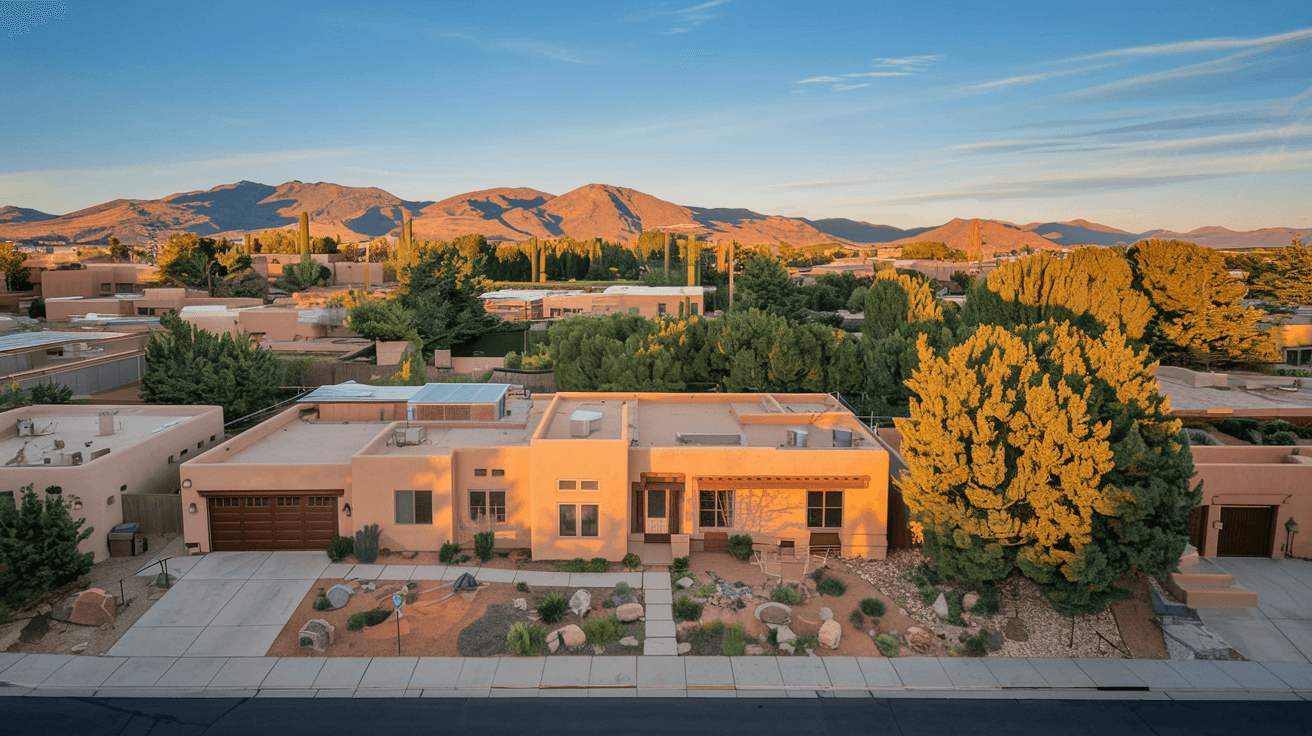
At the metro median of $385,000, Albuquerque buyers are looking at three-bedroom, two-bath homes with attached garages in established neighborhoods like Four Hills, Ventana Ranch, or the North Valley. These aren't starter homes with deferred maintenance. Many are move-in ready, with updated kitchens, covered patios, and mature landscaping.
The market is competitive but not chaotic. Active listings sit around 3,850, which gives buyers real choices, and the average days on market is 31 days, meaning well-priced homes move but you're not writing offers sight-unseen after a three-hour open house. The list-to-sale ratio of 98.1% tells you sellers are priced realistically and buyers are paying close to ask, not blowing past it by 10 or 15 percent the way Austin was demanding in 2021 and 2022.
Months of inventory at 3.3 puts Albuquerque in a balanced-to-slightly-seller-favored position. That's a healthy market. Not a feeding frenzy, not a buyer's market with distressed sellers. Just a functioning real estate environment where skilled representation actually matters.
Relocating to New Mexico from Texas: What the Lifestyle Shift Actually Looks Like
Relocating to New Mexico from Texas isn't just a real estate transaction. It's a cultural adjustment, and most people find it a pleasant one once they stop expecting Albuquerque to be a smaller version of Dallas.
Albuquerque operates on its own rhythm. The city is built around the Rio Grande, the Bosque trail system, and the Sandia Mountains, which means outdoor access isn't something you drive an hour to find. It's right here. Tramway Boulevard takes you to the Sandia Peak Tramway, the longest aerial tram in North America, and on a Saturday morning you'll see mountain bikers loading up at the Elena Gallegos trailhead before most of Dallas has finished its first cup of coffee.
The food culture is specific and serious. New Mexican cuisine is not Tex-Mex. The debate over red or green chile (or Christmas, if you want both) is not a marketing gimmick. It's a daily ritual. Duran's Pharmacy on Central has been serving posole and enchiladas since 1956. The Frontier Restaurant across from UNM is an institution that operates 24 hours and has fed generations of students, professors, and late-night regulars. Mary and Tito's on 4th Street won a James Beard Award. These aren't tourist spots. They're neighborhood anchors.
The Commute and Urban Footprint
One thing that genuinely surprises Dallas transplants is how navigable Albuquerque is. The city has about 565,000 residents in the city proper, with the metro closer to 900,000. It doesn't feel small, but it doesn't feel gridlocked either. Driving from the North Valley to Kirtland Air Force Base takes about 20 minutes on a normal day. Getting from the East Mountains to Uptown Albuquerque on a weekday morning is manageable in a way that the 635 or MoPac simply aren't.
Parking is not a crisis. Downtown Albuquerque has real walkability around the Convention Center, Old Town, and the Nob Hill stretch of Central Avenue. Nob Hill in particular has the kind of independent restaurant and retail density that Austin's South Congress used to have before national chains filled in every storefront.
“"People come expecting a sleepy desert town and find a city with a serious food scene, legitimate arts culture, and mountains they can hike before work."
High Desert: The Neighborhood Dallas and Austin Buyers Ask About First
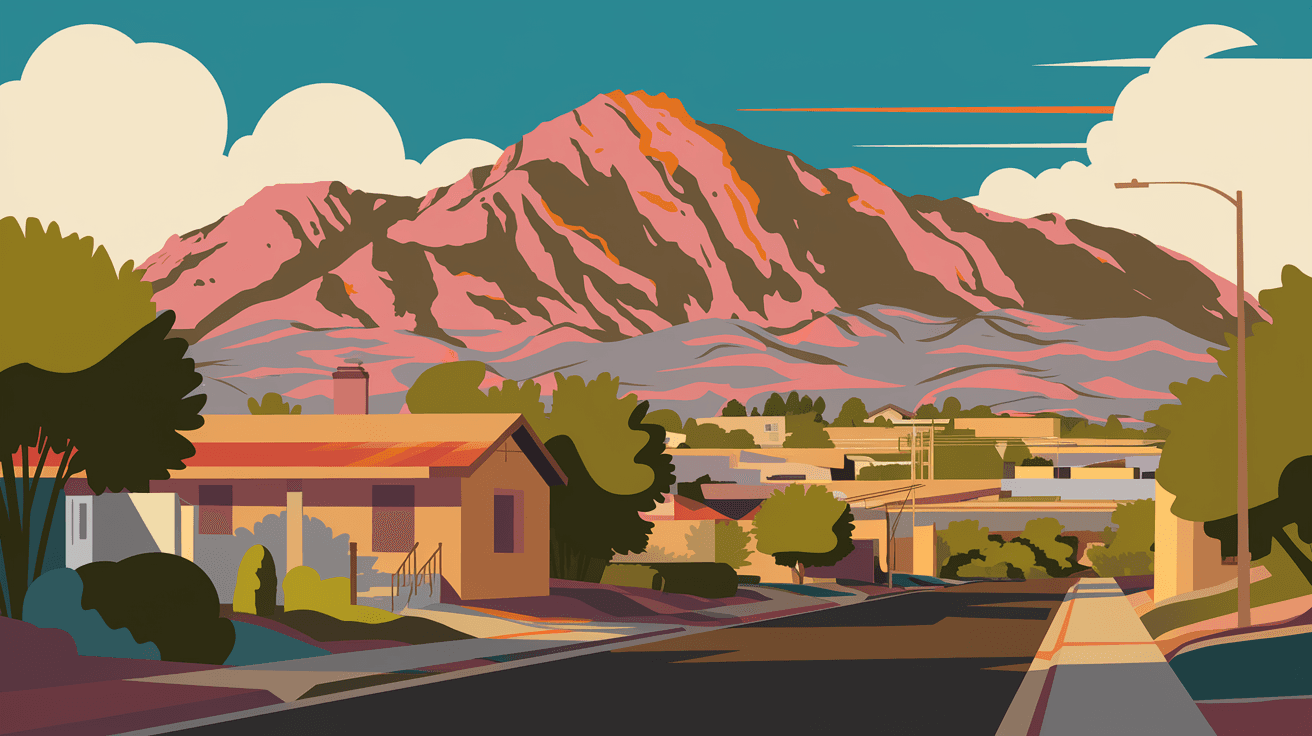
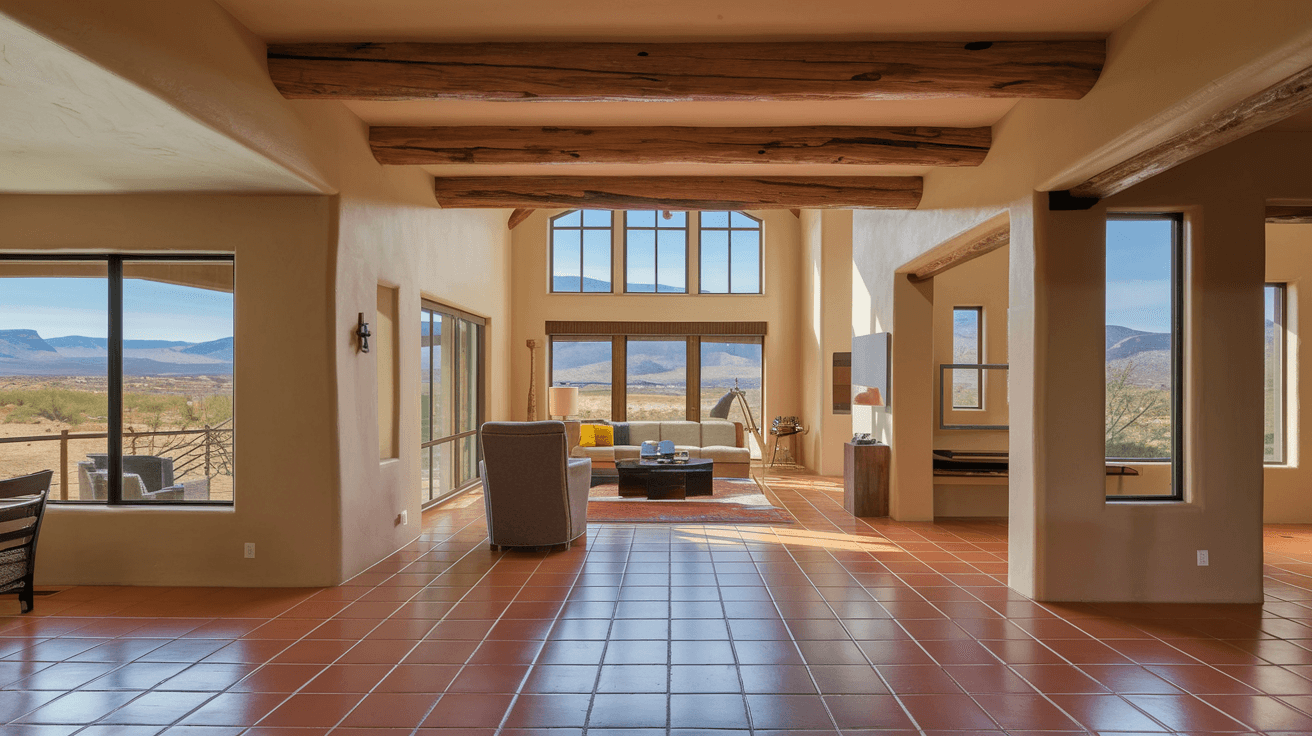
When buyers relocating from Texas want to know where the premium addresses are, High Desert comes up in almost every conversation. Tucked into the northeast foothills near the Sandia Mountain Open Space, High Desert is a master-planned community that delivers what its name promises: sweeping views, significant lot sizes, and an architectural standard that requires adobe or territorial-style exteriors. The result is a neighborhood that looks cohesive and feels intentional in a way that a lot of new Texas construction simply doesn't.
Median prices in High Desert run around $695,000, which positions it as Albuquerque's luxury tier without approaching the $1 million-plus baseline you'd need to enter comparable neighborhoods in Highland Park or Westlake Hills. For the buyer coming out of a $700,000 to $800,000 Texas home who wants to land in something truly premium, High Desert is often the direct comparison.
The school district here is Albuquerque Public Schools, with La Cueva High School as the assigned secondary school. La Cueva consistently ranks among the top public high schools in New Mexico and carries a strong academic and extracurricular reputation. For families making the move with kids in the picture, this matters significantly.
The trails from High Desert connect directly into the Open Space, meaning residents can walk out their back gate and be on legitimate hiking terrain within minutes. That's not a selling point on a brochure. It's a Tuesday morning before school.
The Insider Detail Most Out-of-State Buyers Miss
Here's something worth knowing before you start scheduling showings in High Desert: the neighborhood has specific design review requirements managed by the High Desert Property Owners Association. Exterior paint colors, landscaping plans, and structural additions all require approval. For buyers coming from Texas subdivisions with loose HOA oversight, this can feel like a surprise during the due diligence process. It's not a dealbreaker by any measure, and it's precisely why the neighborhood maintains its visual consistency, but it's worth understanding before you fall in love with a property and start planning a major exterior remodel.
The Taylor Team works with buyers in High Desert regularly and can walk you through exactly what the review process looks like and what timelines to expect.
The 2026 Market Timing Question: Is Now the Right Time to Buy in Albuquerque?
This is the question every Texas buyer asks, usually in the second conversation. The honest answer is that Albuquerque's market in 2026 is as stable as it has been in years. It didn't spike as violently as Austin in 2021 and 2022, and it hasn't corrected as sharply either. The trajectory here has been steadier, which makes planning easier.
The 3.3 months of inventory is the metric worth watching. Anything below four months typically sustains upward price pressure. Albuquerque has held in this range through fluctuating interest rate environments, which suggests that demand here isn't purely rate-sensitive. The city has a diversified employment base anchored by Kirtland Air Force Base, Sandia National Laboratories, Presbyterian Healthcare, the University of New Mexico, and a growing technology sector that has been drawing remote workers and startups out of higher-cost metros including Austin.
For buyers who have been sitting on the sidelines waiting for a dramatic price drop, the local data doesn't support that as a strategy. The 31-day average days on market means desirable properties don't wait. Buyers who are pre-approved, educated on neighborhoods, and working with agents who know the specific micro-markets are the ones closing on the homes they actually want.
If you're seriously considering moving to Albuquerque from Texas in 2026, the most useful first step is a real conversation about your specific timeline, budget, and priorities. The Taylor Team at Berkshire Hathaway HomeServices can put together a neighborhood-by-neighborhood comparison based on what you're actually looking for, not a generic relocation packet.
What Texas Buyers Should Know Before Making the Move
A few practical realities that come up in nearly every relocation conversation:
- •Altitude is real. Albuquerque sits at 5,312 feet. The first few weeks, especially if you're active, you'll notice it. Give yourself a month before you decide your fitness has collapsed.
- •The dryness is different from Texas dry. You will go through more lotion and lip balm than you have in your entire life. Your wood furniture may need a humidifier nearby. This is not a complaint from anyone who has survived a Houston August.
- •New Mexico vehicle registration requires an emissions test and a VIN inspection. Budget a day for this when you arrive. The MVD wait times are infamous, and the online appointment system is your best friend.
- •Green chile season in late summer is not optional. When you start seeing roasters in grocery store parking lots around August, you buy a bag. You just do. H-and-H Car Wash on Lomas actually does a roasting event. Yes, a car wash. This is Albuquerque.
- •The Bosque in fall along the Rio Grande is one of the genuinely beautiful things about living here. The cottonwoods turn gold in October and the Balloon Fiesta fills the sky for two weeks. Plan for both.
- •East Mountains living (Edgewood, Tijeras, Cedar Crest) is an option if you want acreage and a rural feel within 30 to 40 minutes of the city. Several Texas buyers who want land and privacy end up out there.
Albuquerque is not trying to be Austin or Dallas. That's exactly the point. It has its own identity, its own food, its own pace, and a housing market that still makes financial sense in a way that most Texas metros stopped making a few years ago. The buyers who thrive here are the ones who arrive curious rather than comparative, and who give themselves enough time to find their version of the city rather than looking for a replica of what they left.
If you're ready to start that process, the Taylor Team is here to help you find where you land.
Want more insider intel?
Subscribe to get market updates and new articles delivered to your inbox.