Moving to Albuquerque from Texas in 2026: What Dallas, Austin, and Houston Buyers Discover About Property Taxes, Home Size, and Quality of Life
Every week, The Taylor Team gets calls from buyers in Dallas, Austin, and Houston who have done the math and realized something the rest of the country is just starting to figure out: moving to Albuquerque from Texas can put thousands of dollars back in your pocket every single year, starting with the property tax bill. But this is not just a spreadsheet decision. People who make this move talk about it the way locals talk about their first green chile cheeseburger at Bob's Burgers on Eubank, that moment when something clicks and you think, why did I wait so long?
Albuquerque sits at 5,300 feet, flanked by the Sandia Mountains to the east and the Rio Grande bosque to the west, and it operates on its own rhythm. Before you pack the moving truck, here is what buyers from the Lone Star State consistently discover once they start seriously comparing the two markets.
Property Taxes Moving from Texas to New Mexico: The Numbers That Change the Conversation
This is usually the first thing that comes up, and for good reason. Texas property taxes are among the highest in the nation, with effective rates typically running between 1.6% and 2.5% depending on the county and municipality. On a $500,000 home in the Dallas-Fort Worth suburbs or a comparable place in the Houston metro, you could easily be paying $8,000 to $12,000 per year just in property taxes.
New Mexico property taxes work differently, and the difference is significant. The state's effective property tax rate hovers around 0.55% to 0.80% for most residential properties. On a home assessed at the same $500,000 value in Albuquerque, you might pay somewhere in the range of $2,750 to $4,000 annually. That gap, which can easily reach $6,000 to $8,000 per year, is real money that stays in your household budget.
New Mexico also offers a Head of Family Exemption that reduces the taxable value of your primary residence by $2,000, and if you are 65 or older and meet income requirements, there are additional valuation freezes available through Bernalillo County. These are not widely advertised, so most out-of-state buyers do not know to ask about them until a local agent brings it up.
New Mexico does have a state income tax, unlike Texas, with rates ranging from 1.7% to 5.9% depending on income bracket. For most buyers making the move, the property tax savings still outweigh the income tax difference, but every situation is personal and worth running through with a financial advisor who knows both states.
Albuquerque vs Dallas Cost of Living: What Your Housing Dollar Actually Buys
The Albuquerque real estate market right now is genuinely one of the more accessible markets in the Mountain West. The metro median home price sits at $401,000, which will immediately stand out to anyone who has been shopping in Austin, where median prices have been hovering well above $500,000, or in the more desirable Dallas suburbs where comparable numbers are similar or higher.
With 27 average days on market and roughly 92 active listings in key price ranges, the market is competitive but not the frenzied bidding war environment that defined 2021 and 2022. The list-to-sale ratio of 98.4% tells you that homes are selling close to asking price, so low-ball offers are not a winning strategy, but neither are you being forced into waiving every contingency just to get a deal done. At about 4 months of inventory, buyers have a bit more breathing room than they did a few years ago.
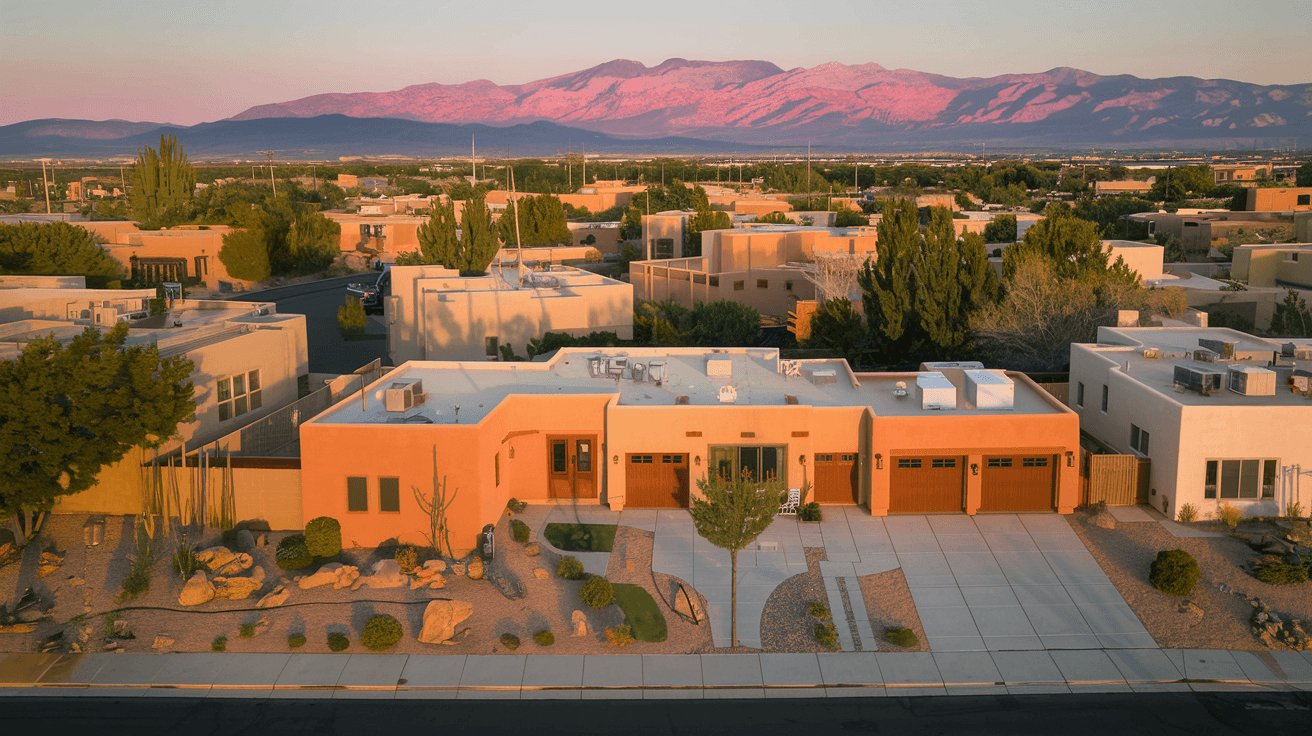
What does $401,000 actually get you in Albuquerque? In the Northeast Heights, which stretches from Tramway Boulevard west toward Wyoming, you are looking at three and four-bedroom homes with mountain views, two-car garages, and yards that back up to arroyos. In the Rio Rancho area just over the Bernalillo County line, the same money goes even further in terms of square footage. In Nob Hill or the Huning Highland Historic District near Central Avenue, you are looking at older homes with character, walkability to places like Tractor Brewing and Zinc Wine Bar, and neighborhoods with genuine architectural identity.
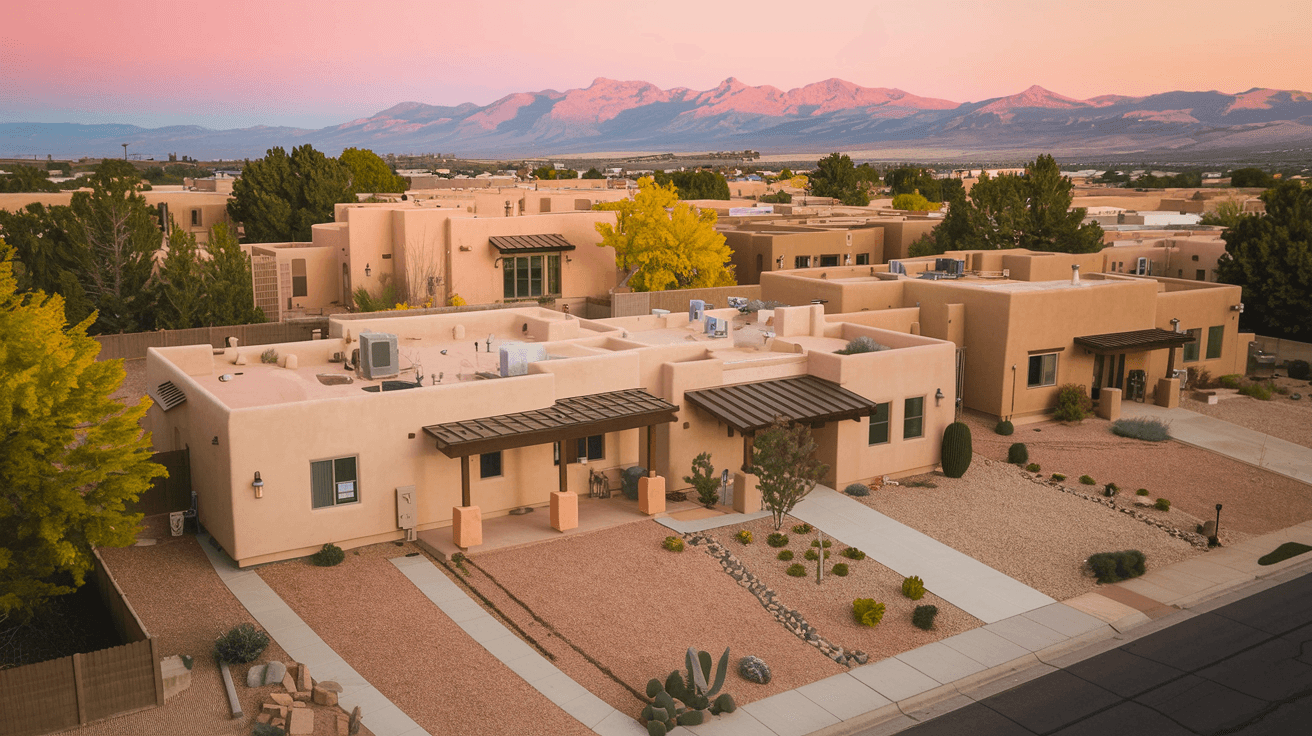
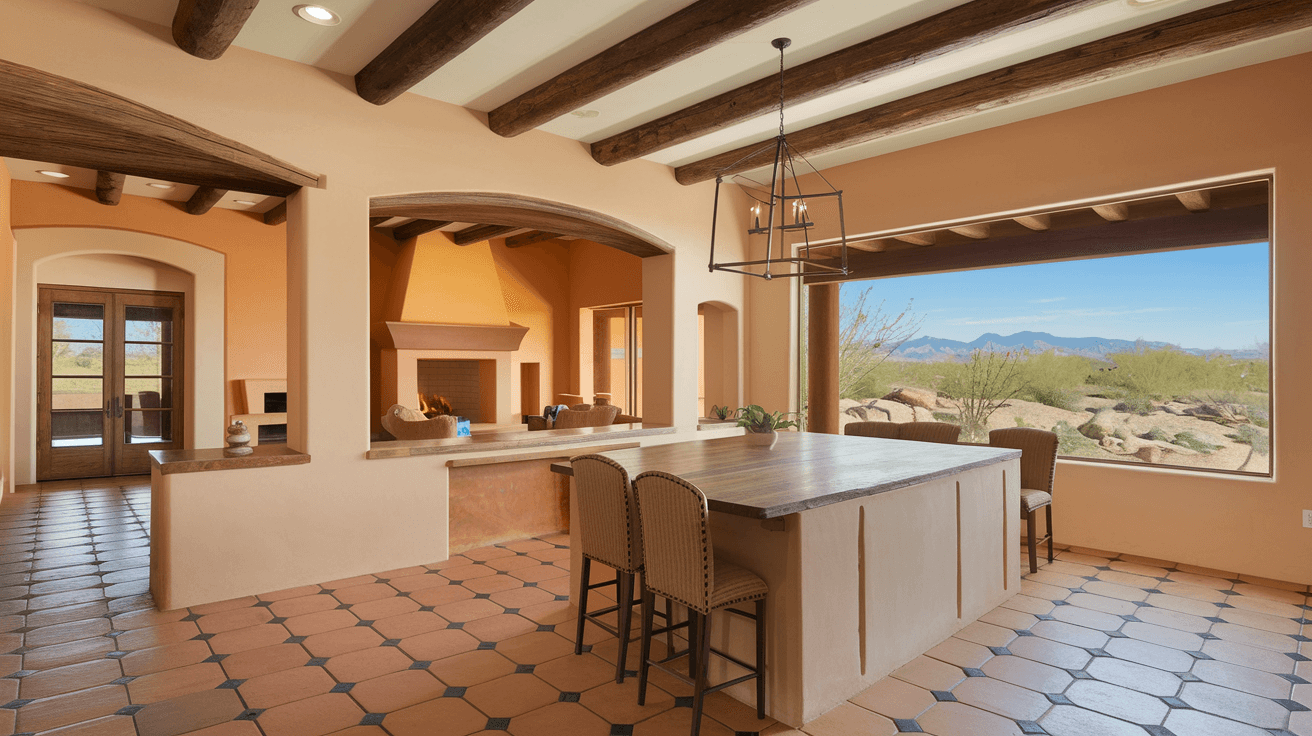
Texas buyers coming from newer construction in Plano or Sugar Land are sometimes surprised by the adobe and pueblo-style architecture that defines so much of Albuquerque's residential landscape. Flat roofs, vigas, kiva fireplaces, and stucco exteriors are not just aesthetic choices here, they are a building tradition rooted in the high desert climate and hundreds of years of regional history.
“"The first thing my clients from Houston say when they walk into a home in the Sandia Heights area is that they had no idea the houses were this size. They expected to downgrade. They ended up with more square footage and a view they could not have dreamed of affording back home."
What Texas Buyers Should Know About Albuquerque Neighborhoods in 2026
Not every part of Albuquerque is the same, and any honest local will tell you that. The city is laid out on a grid anchored by Central Avenue (old Route 66) running east-west and I-25 and I-40 creating the major corridors. Understanding where you want to be relative to work, schools, and daily life is worth spending real time on before you commit.
- •Northeast Heights and Sandia Foothills: Closest to the Sandia Mountains, popular with families, excellent access to hiking trails at Elena Gallegos Open Space, generally higher price points
- •North Valley and Corrales: Agricultural roots, horse properties, mature cottonwood trees along the Rio Grande, a completely different pace of life just 15 minutes from downtown
- •Nob Hill and UNM area: Walkable, eclectic, proximity to the University of New Mexico campus and Nob Hill's restaurant row on Central
- •Downtown and Barelas: Urban core, close to the Rail Yards Market, Old Town, and the Albuquerque Museum, seeing renewed investment and interest
- •Rio Rancho: Technically a separate city in Sandoval County, but functionally part of the metro, newer construction, lower price points, growing amenities
- •South Valley: More affordable, strong cultural roots, proximity to the Bosque Trail along the Rio Grande
Texas to New Mexico Relocation 2026: Quality of Life Factors That Surprised Our Clients
Property taxes and home prices are the hook. Quality of life is what makes people stay.
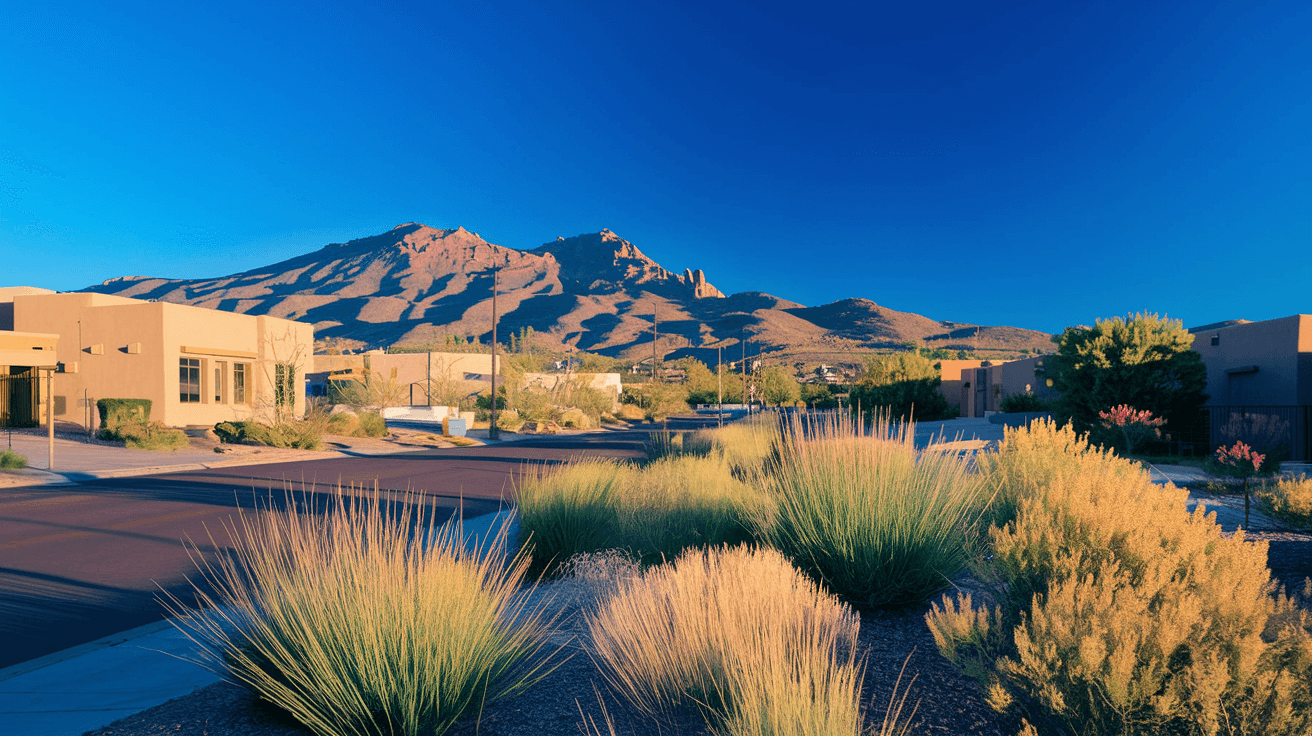
The weather in Albuquerque is genuinely different from what most Texans expect. Yes, it gets cold in winter, and the high desert can surprise you with late-season snow, but Albuquerque averages over 310 sunny days per year. Summers are warm but not Houston-level oppressive, largely because the elevation keeps overnight temperatures comfortable. The monsoon season from July through September brings afternoon thunderstorms that roll in over the Sandias and drop temperatures by 15 to 20 degrees within an hour, which feels like a miracle if you have spent a summer in Dallas.
Outdoor access is something Albuquerque does exceptionally well. The Sandia Peak Tramway on Tramway Boulevard NE is the longest aerial tramway in North America and takes you from 5,300 feet to 10,378 feet in about 15 minutes. The Bosque Trail runs 16 miles along the Rio Grande and is accessible from multiple trailheads throughout the city. The Petroglyph National Monument on Albuquerque's west side has more than 20,000 ancient rock carvings and trails you can walk on a Tuesday morning before work.
The food culture here is its own category. New Mexican cuisine is not Tex-Mex and it is not Mexican food, it is its own culinary tradition built around Hatch green chile and red chile from the Rio Grande valley. The question you will learn to answer immediately upon arrival is "red or green?" at every meal. The Frontier Restaurant on Central across from UNM has been feeding Albuquerque since 1971 and is the kind of place where you will sit next to a construction worker, a professor, and a film crew on any given morning. Casa de Benavidez on 4th Street NW has been a family institution for decades. Once you have had proper carne adovada on a cold morning in January, the conversation about whether you made the right move tends to end.
Healthcare, Education, and Infrastructure for Texas Relocators
These are practical questions that come up in every relocation conversation, and they deserve honest answers.
Healthcare: Albuquerque is the medical hub for the entire state of New Mexico. Presbyterian Hospital and UNM Health Sciences Center are the two anchor systems, with Presbyterian operating multiple facilities throughout the metro. Lovelace Health System also has a significant presence. For specialized care, Albuquerque has resources that smaller New Mexico cities do not, which matters if you are moving from a major Texas metro and want to maintain access to specialists.
Education: Albuquerque Public Schools is the largest district in New Mexico, and like any large urban district, quality varies by school and neighborhood. Many families moving from Texas research individual schools rather than the district as a whole, which is the right approach. There are strong magnet programs, charter options, and private schools including Albuquerque Academy on Wyoming Boulevard NE, which has a national academic reputation.
Traffic and commute: This is where Albuquerque genuinely shines compared to Dallas, Houston, or Austin. The metro area has roughly 900,000 people in the greater region, and while I-25 and I-40 have their congested moments, a 25-minute commute across town is considered a long one by local standards. People who moved here from Dallas and spent 45 minutes driving 12 miles will tell you this alone changes your daily quality of life in ways you cannot fully appreciate until you experience it.
Insider tip: If you are moving to the Northeast Heights and want to avoid the worst of the morning I-25 traffic heading toward downtown, learn to use Eubank Boulevard south to Gibson Boulevard and cut across. It adds two minutes and saves you ten on the days when the interstate stacks up near the Big I interchange. Locals know this. The GPS does not always tell you.
Working With a Real Estate Team Who Knows the Albuquerque Market
The Texas to New Mexico relocation process has some mechanics that differ from what buyers are used to in Texas. New Mexico uses attorneys and title companies in ways that are slightly different from the Texas closing process, and the disclosure requirements and contract timelines have their own structure. Working with agents who handle out-of-state relocations regularly means you are not learning these differences at the closing table.
The Taylor Team at Berkshire Hathaway HomeServices works with Texas buyers throughout this process, from the first video call where we walk through neighborhoods on a screen share, to the two or three day in-person tour where we drive Tramway, cut through Nob Hill, walk a few properties in the North Valley, and let you feel the difference between what the data shows and what a neighborhood actually feels like at street level.
“"Moving to Albuquerque from Texas is not a compromise. For the buyers we work with, it is almost always an upgrade in space, in affordability, and in the pace of daily life."
If you are seriously considering moving to Albuquerque from Texas in 2026 and want to talk through neighborhoods, price ranges, and what the buying process actually looks like on the ground here, reach out to The Taylor Team. A conversation costs nothing and we are genuinely good at helping people figure out whether this move makes sense for their specific situation, not just in general terms.
The market here moves. With 27 average days on market and a 98.4% list-to-sale ratio, the homes worth buying do not sit around waiting. Getting your questions answered early means you are ready to move when the right property comes up, not starting from scratch.
Albuquerque is one of those places that rewards people who take the time to understand it before they dismiss it, and punishes no one for showing up curious. The Sandias turn pink every evening at sunset, the green chile harvest smell drifts through the North Valley every fall, and the sky here is a color of blue that does not exist in the Texas flatlands. Most people who make this move say the same thing after a year: they wish they had done it sooner.
Want more insider intel?
Subscribe to get market updates and new articles delivered to your inbox.