Moving to Albuquerque from Texas in 2026: What Dallas and Austin Transplants Need to Know About ABQ Real Estate
If you are packing up a Texas zip code and pointing the moving truck west on I-40 toward Albuquerque, you are joining a wave of Texans who have been quietly discovering what locals here have known for decades. This city does not shout about itself the way Austin does. It does not sprawl endlessly like Dallas. But moving to Albuquerque from Texas tends to surprise people in the best possible way, especially when they start comparing what their housing dollar actually buys here.
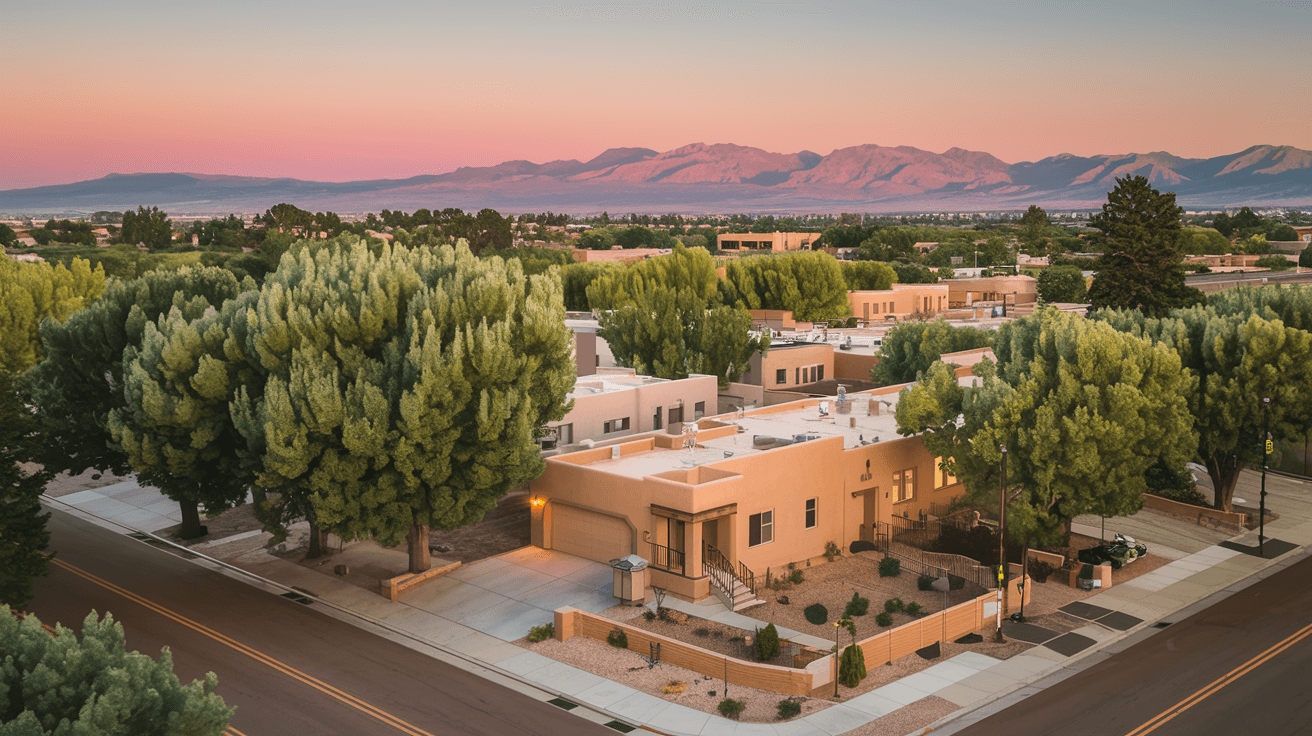
Before we get into the numbers, understand something: Albuquerque has a personality. The Sandia Mountains turn watermelon pink at sunset. Central Avenue still has that old Route 66 energy. Old Town smells like red chile and piñon smoke in the fall. This is not a generic Sun Belt city. It is a place with deep roots, and if you are relocating here from Dallas or Austin, knowing how the real estate market actually works will save you time, money, and a lot of frustration.
Albuquerque vs Dallas Cost of Living: The Housing Numbers That Matter
Let's talk money first, because that is usually what gets Texans looking at Albuquerque in the first place.
The metro median home price in Albuquerque sits at $385,000 as of early 2026. If you are coming from Dallas proper, that number might feel familiar. But if you have been priced out of Austin, or watching North Dallas suburbs climb past $550,000 for a three-bedroom, Albuquerque is going to feel like someone turned back the clock five years in the best possible way.
Here is what the Albuquerque vs Dallas cost of living comparison actually looks like on the ground:
- •Property taxes in New Mexico are significantly lower than Texas. New Mexico has a state income tax, but your annual property tax bill on a $385,000 home will likely be thousands of dollars less per year than a comparable Texas property.
- •Homeowner's insurance tends to run lower here. No hurricane risk, no flood plains in most neighborhoods, and hail events, while they happen, are less frequent than on the Texas plains.
- •Utilities in Albuquerque are generally more manageable. Summers are hot but dry, and the elevation means you are not running air conditioning on full blast from April through October the way you might in Dallas.
- •Gasoline and groceries are comparable, though some specialty items cost slightly more given the supply chain distance from major distribution hubs.
The honest answer to the Albuquerque vs Dallas cost of living question is this: if you are a homeowner or aspiring homeowner, the math usually works strongly in Albuquerque's favor once you factor in total housing costs over time.
How the Albuquerque Real Estate Market Actually Works in 2026
Texans moving here often expect either a sleepy small-town market or a bidding war frenzy. The reality is somewhere more nuanced, and understanding the mechanics will help you move fast when the right house comes along.
Right now, Albuquerque has approximately 3,200 active listings across the metro, with a months of supply sitting at 3.9. That puts the market in balanced-to-seller-favoring territory. It is not the frantic 2021 market, but it is not a buyer's paradise either. Good homes in desirable neighborhoods still move.
Average days on market across the metro is 34 days, but that average is doing a lot of heavy lifting. A well-priced home in the Northeast Heights or the North Valley can go under contract in a weekend. A home that needs work or is priced above comparable sales might sit for 60 or 90 days.
The list-to-sale price ratio is 97.8%, which tells you that sellers are getting close to asking price but buyers do have some room to negotiate, particularly on homes that have been sitting or that need updates.
“"In Albuquerque, the homes that are priced right and show well are still moving fast. The homes that linger are usually telling you something. Learn to read what the days-on-market number is saying before you make an offer."
A few things that catch Texas buyers off guard:
- •Disclosure standards in New Mexico are thorough, but the process feels different from Texas. Work with a local agent who knows what to look for in an ABQ inspection, particularly around flat roofs, swamp coolers, and adobe construction.
- •Swamp coolers (evaporative coolers) are common here and work beautifully in our dry climate. If you are from Houston or Dallas humidity, you may be skeptical. Trust the locals on this one.
- •Acequia rights and water rights can occasionally appear in property disclosures, especially in the North Valley and older areas near the Rio Grande. These are not deal-breakers but they require understanding.
- •The MLS here moves quickly on desirable properties. If you are relocating to Albuquerque NM in 2026 and trying to buy remotely, you need an agent who can walk properties for you on short notice and give you an honest read.
Northeast Heights: The Neighborhood Most Texas Transplants End Up Loving
If you are coming from a Dallas suburb like Plano, Richardson, or Frisco, the Northeast Heights is probably going to feel like home faster than anywhere else in Albuquerque.
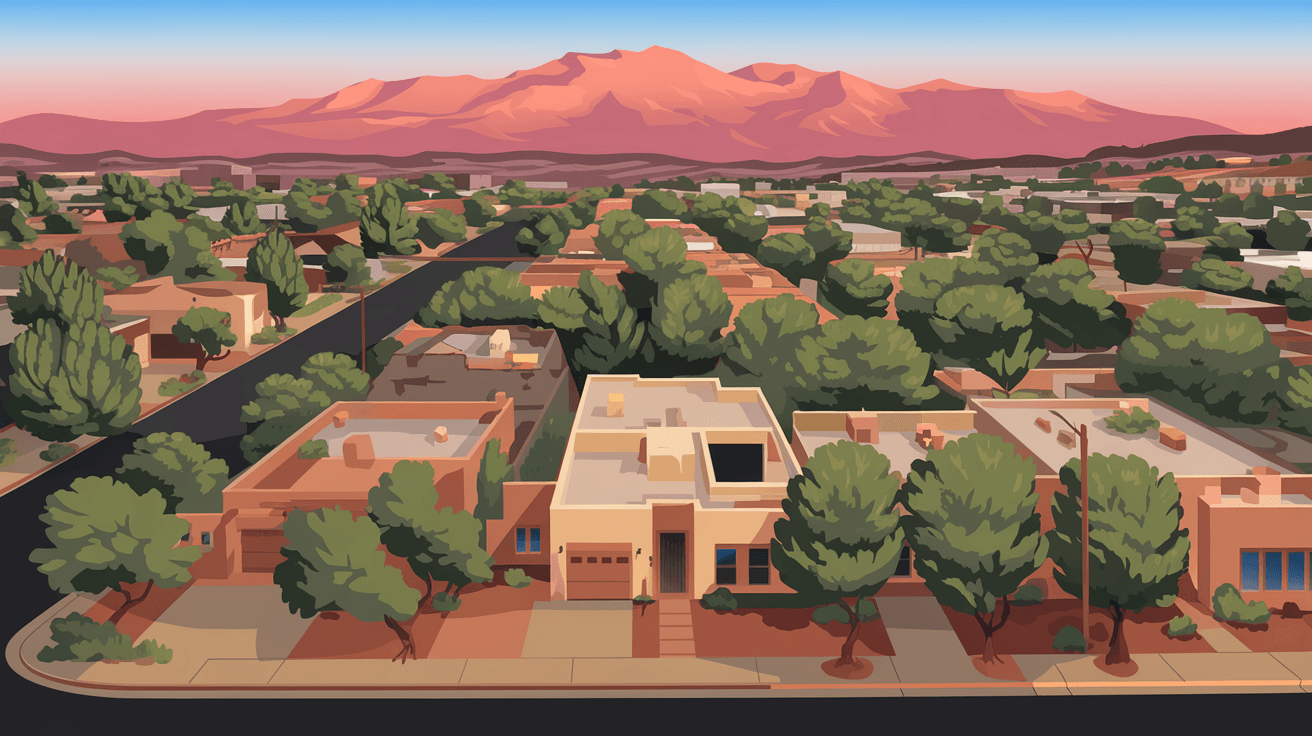
This is an established, well-maintained part of the city that runs roughly between Tramway Boulevard on the east, Menaul Boulevard on the south, Eubank on the west, and Academy Road and beyond to the north. The streets are lined with mature cottonwoods and elms. The homes are mostly from the 1960s through the 1990s, with solid bones and a wide range of sizes.
Median home price in the Northeast Heights is $355,000, which means you can find well-kept three and four-bedroom homes with good yards for less than the metro median. That is a meaningful value proposition.
The school situation here is one of the strongest selling points. The neighborhood sits within Albuquerque Public Schools, with standout campuses including Eisenhower Middle School and La Cueva High School, which consistently ranks among the top public high schools in New Mexico for academics and extracurriculars.
For daily life, the Northeast Heights has everything you need without requiring a freeway trip:
- •Trader Joe's on Carlisle and Whole Foods on Eubank for grocery runs
- •Nob Hill is a short drive south on Central, with local restaurants, coffee shops, and boutiques that give the neighborhood a genuinely walkable feel
- •Sandia Peak Tramway is practically in your backyard, with the tram base station just off Tramway at the end of Tramway Road
- •Uptown shopping along Louisiana and Indian School for everyday retail needs
- •Easy access to I-40 and I-25 for commuting to Kirtland Air Force Base, Sandia National Laboratories, or downtown
Insider tip: The stretch of Montgomery Boulevard between Tramway and Eubank has a cluster of locally owned restaurants and small businesses that most newcomers do not discover for months. Skip the chains on Juan Tabo and go find your regular spot on Montgomery. You will thank yourself later.
What Relocating to Albuquerque NM in 2026 Actually Feels Like
Beyond the spreadsheet comparison of relocating to Albuquerque NM 2026 versus staying in Texas, there are things about living here that no data set captures.
Albuquerque sits at 5,312 feet elevation. Your first week you may feel slightly winded going up stairs. By week three, you will forget about it. But your skin will be drier than you are used to, and you will drink more water than you think you need. Keep lotion in every room for the first month.
The green chile situation requires immediate orientation. Hatch green chile season runs late summer into fall, and the smell of roasting chiles on parking lot propane drums is one of those sensory experiences that marks you as a New Mexican once you start craving it. Every grocery store will ask you "red or green?" when you order anything. The correct answer, at least until you develop a preference, is "Christmas" (both red and green). You are welcome.
The cultural calendar here is unlike anything in Texas. Balloon Fiesta in early October shuts down parts of the city in the best possible way. The State Fair in September is a genuine community event, not just a county fair scaled up. Old Town is a living neighborhood, not just a tourist stop, and the Indian Pueblo Cultural Center near 12th and Indian School NW is a world-class institution that most new residents do not visit until someone makes them go.
For Texas transplants specifically, a few practical notes:
- •New Mexico driver's licenses require a REAL ID-compliant process. Start this early after your move.
- •Vehicle registration here involves an emissions test for most of the metro area. Budget time for this in your first month.
- •The Sunport (Albuquerque International Sunport) has grown its direct routes significantly. You can get direct flights to Dallas, Houston, and Austin without connecting, which matters when you are maintaining family ties back in Texas.
- •Remote work infrastructure is solid in the Northeast Heights and most established neighborhoods. Fiber internet is available through multiple providers across most of the city.
“"People who move here from Texas often say the same thing after six months: they did not expect to love it this much, this fast. Albuquerque has a way of getting into you."
What to Watch Out For When Buying a Home in ABQ
Every market has its quirks. Here are the ones that matter most for buyers moving to Albuquerque from Texas.
Flat roofs are common in older Albuquerque homes, particularly those with traditional adobe or territorial-style architecture. They require different maintenance than the pitched roofs most Texans are used to. A good home inspector here will walk the roof and check the drainage scuppers. Do not skip this step.
Water is the defining resource issue in New Mexico and always has been. The city of Albuquerque has actually done impressive work on water conservation and now draws more from the Rio Grande surface water system than from the aquifer, which was the concern for many years. But water rights, water fees, and xeriscaping requirements are real considerations in this market.
Adobe and stucco construction requires specific inspection knowledge. Cracks in stucco are not automatically alarming, but some patterns indicate settling or moisture intrusion. An inspector who specializes in New Mexico construction types is worth seeking out specifically.
The North Valley is a beautiful area with horse properties, mature cottonwood bosque, and genuine old New Mexico character. It also has specific flood zone and acequia considerations. If you fall in love with a North Valley property, make sure your agent and lender are both familiar with how those factors affect financing and insurance.
Crime statistics in Albuquerque get discussed a lot, and often without geographic context. Like any city, ABQ has neighborhoods that are safer and neighborhoods that have real challenges. The Northeast Heights, the Sandia foothills area, High Desert, and Rio Rancho (a separate city that many consider part of the metro) all have strong safety profiles. Do not let headlines about downtown or the International District color your view of the entire city.
Working With a Local Agent When You Are Buying from Out of State
Buying a home in a city you do not yet live in is genuinely challenging, and the 34-day average days on market in Albuquerque means you cannot afford to be slow. The best properties do not wait for you to schedule a visit three weeks from now.
Here is what a good relocation process looks like from the Texas side:
- •Start the pre-approval process before you start seriously browsing listings. Albuquerque sellers want to see financing in order, and a local lender who understands New Mexico's specific property types can be a real advantage.
- •Virtual tours and video walkthroughs are standard practice now, but they are not a substitute for having an agent physically walk a property and give you an honest read on condition, street feel, and neighborhood context.
- •Plan one dedicated house-hunting trip of three to four days rather than multiple short visits. You will see more, get a feel for different neighborhoods, and be ready to write an offer before you fly home.
- •Understand the New Mexico purchase contract differs from the Texas contract you may have used before. The timelines, contingency structures, and earnest money norms are different.
The Taylor Team works with relocating buyers regularly and knows how to make a long-distance purchase feel manageable rather than chaotic. If you are starting to think seriously about moving to Albuquerque from Texas in 2026, reaching out early in your process, even just to ask questions, is the best way to make sure you are ready when the right house appears.
Albuquerque in 2026 is a city in a genuinely interesting moment. It is growing, but it has not lost its character. The real estate market rewards buyers who are prepared and move decisively. And the lifestyle, once you settle in and find your green chile preference and your favorite trail up in the Sandias, has a way of making the move feel less like a relocation and more like an arrival.
Want more insider intel?
Subscribe to get market updates and new articles delivered to your inbox.