Nob Hill Albuquerque: Neighborhood Guide & Homes for Sale
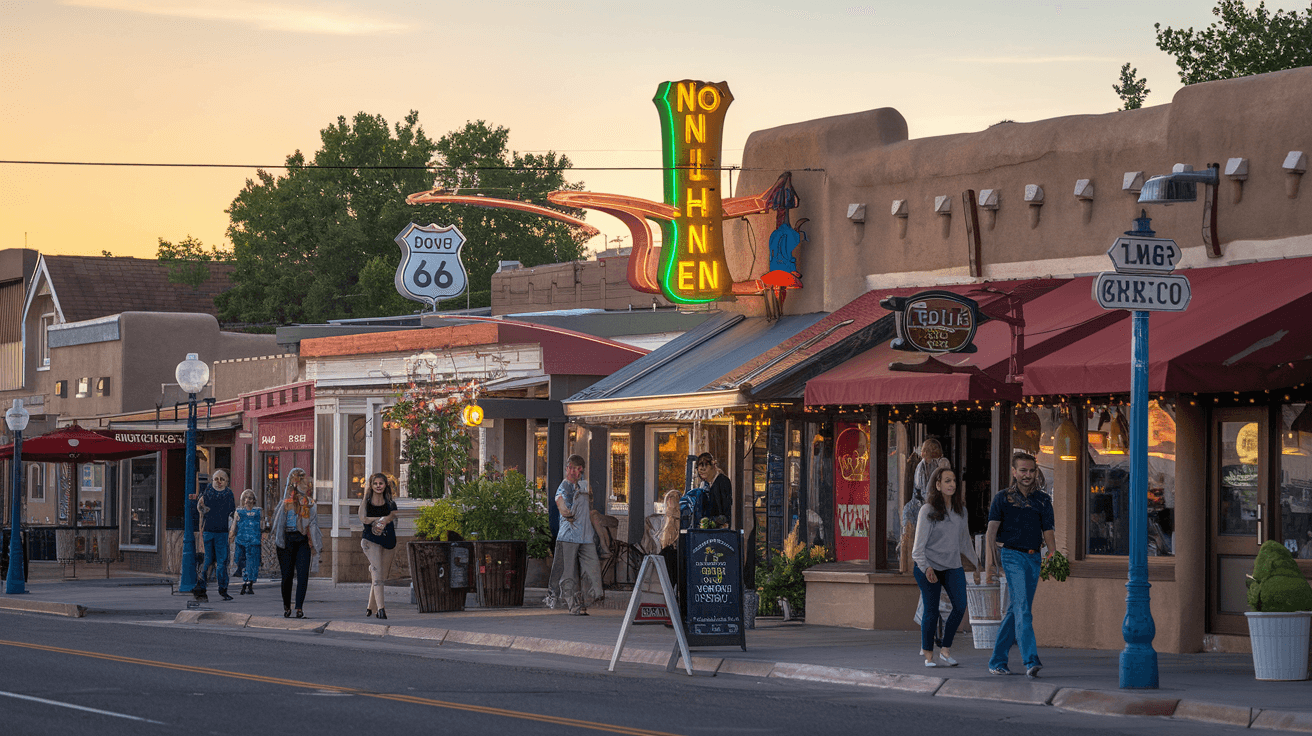
There is a stretch of Central Avenue in Albuquerque — roughly between Girard Boulevard on the west and Washington Street on the east — where the sidewalks are actually full on a Wednesday evening. People are walking dogs, grabbing dinner, arguing about where to get dessert, and sitting outside with drinks even when it is 58 degrees and probably a little too cold for the patio. In a city that is mostly a driving city, this block-by-block stretch of walkable urban life is unusual enough that it has its own gravitational pull. That is Nob Hill.
If you are looking at Nob Hill Albuquerque real estate — whether to buy, rent, or just understand whether this neighborhood matches your lifestyle — this is the honest guide from someone who has sold homes here and watched the market for years. Not just the nice parts, but the parking situation, the noise on Friday nights, and the type of buyer who chooses this neighborhood and stays.
The History: Route 66 and the 1940s Build-Out
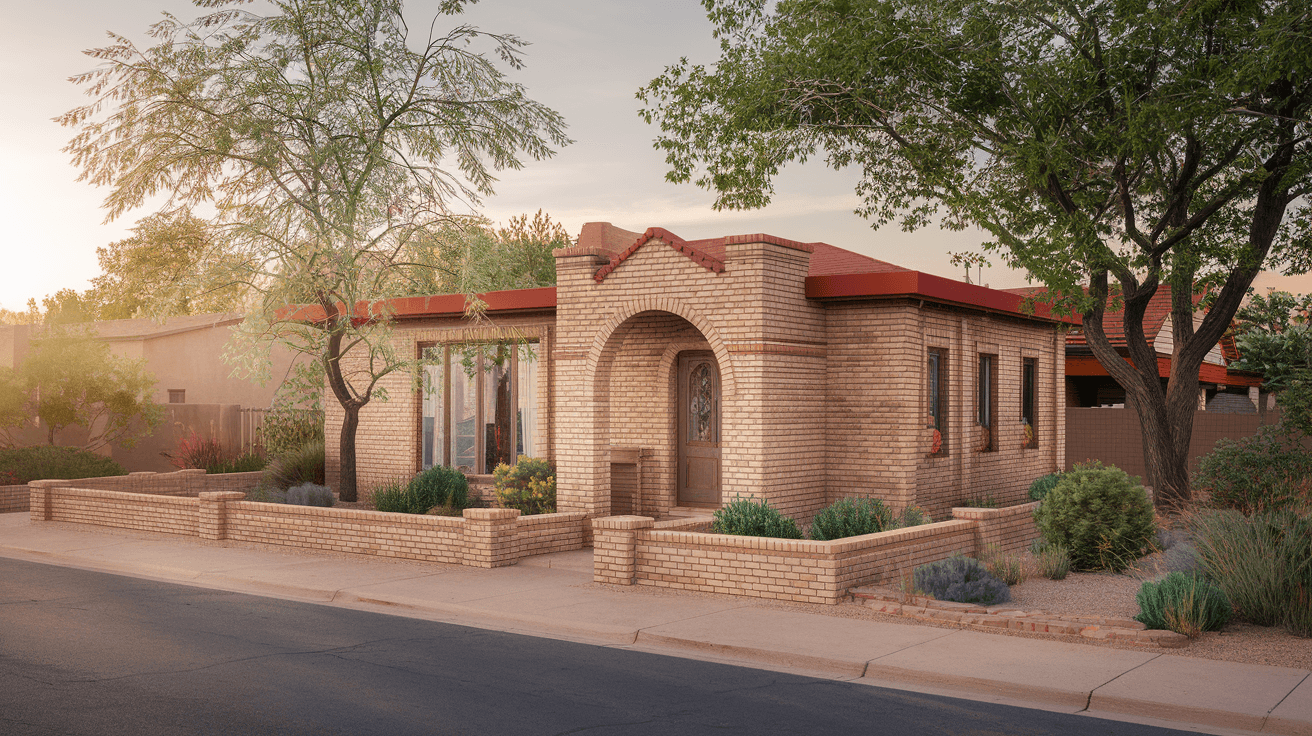
Nob Hill developed primarily in the 1940s and 1950s as Albuquerque's first true suburb — a streetcar-era neighborhood built for a generation of middle-class families who wanted a lawn, a sidewalk, and easy access to the retail corridor on Route 66, which ran directly through as Central Avenue. The neighborhood takes its name from Nob Hill, San Francisco's famous hilltop district, a bit of aspirational naming by early developers that has aged better than most such borrowings.
The architectural DNA of the neighborhood is eclectic and dense. You will find Spanish Pueblo Revival homes with flat roofs, vigas, and stucco walls next to Territorial-style homes with brick coping and symmetrical facades next to 1940s bungalows with covered porches and original oak floors. Mid-century ranch homes and a few 1960s apartment complexes fill in the gaps. There is nothing uniform about the streetscapes, and that variety is part of what gives the neighborhood its character.
Route 66's commercial strip on Central saw the same arc that most American Main Streets experienced in the 1970s and 1980s — suburban sprawl pulled retail and residents toward the Northeast Heights, vacancy crept in, and the corridor fell into a long period of disinvestment. The revival that has been ongoing since the early 2000s — anchored by restaurants, bars, indie retail, and the cultural energy that comes with proximity to UNM — has brought Central back without homogenizing it. The vintage neon signs on the old motels are still there. The Nob Hill Business Center, with its streamlined Moderne architecture, is still the visual anchor at the intersection of Central and Carlisle.
The Current Market
As of early 2026, Nob Hill's median home price is approximately $430,000. That figure covers a wide range — a 900-square-foot 1940s bungalow on a tight lot on one end, and a fully renovated 1,800-square-foot Pueblo Revival on a corner lot with a finished backyard on the other. The middle of the market is occupied by well-maintained 3-bedroom, 1.5-bath homes from the 1950s and 1960s, typically in the $375,000 to $475,000 range.
Days on market runs approximately 18 days for properties priced correctly. Nob Hill does not sit. When a home in good condition is listed at market value, it typically receives multiple showings in the first weekend, and competitive offers within the first week are common. Buyers who see a Nob Hill listing on Thursday and decide to wait until Monday to schedule a showing often find it is already under contract.
The market here is driven heavily by owner-occupants rather than investors, which keeps the neighborhood quality consistent and the community stable. Rental properties exist — many of the smaller bungalows and apartment-conversions are investor-held — but the dominant buyer profile is someone who wants to live here, often for years.
Price appreciation in Nob Hill has tracked above the broader Albuquerque metro average over the past decade. The supply constraint is real: the neighborhood is geographically bounded, there is almost no vacant land for new construction, and the city's historic preservation overlay adds friction to teardowns. When you buy in Nob Hill, you are buying into a fixed-supply inventory.
Walkability: Walk Score 78
Nob Hill's Walk Score of approximately 78 makes it the most walkable residential neighborhood in Albuquerque by a significant margin. For context, most of the Northeast Heights, Taylor Ranch, and the West Side score in the 30s and 40s. Downtown Albuquerque scores higher, but Downtown has far fewer owner-occupied single-family homes.
From most addresses in Nob Hill, you can walk to a coffee shop, a restaurant, a pharmacy, a grocery store (the Nob Hill Sprouts on Central), and a bar without getting in a car. For people moving from walkable urban neighborhoods in other cities — Capitol Hill in Denver, Hyde Park in Chicago, Montrose in Houston — Nob Hill is the closest thing Albuquerque has to a comparable urban residential experience.
The ABQ Ride bus runs along Central with frequent service, and the neighborhood is genuinely bikeable on the side streets. Several dedicated bike lanes connect to UNM campus and the broader trail network.
The Dining and Bar Scene
This is what most people want to know about, and Nob Hill delivers.
Zinc Wine Bar and Bistro on Central is the neighborhood's anchor restaurant — a consistently excellent kitchen serving seasonal American food with an outstanding wine list, in a former bank building with the original vault still visible. It is the place you take out-of-town guests who doubt that Albuquerque has real restaurants.
Flying Star Cafe has multiple locations across the metro but the Nob Hill location on Silver, just off Central, is the original and still the most characterful. Breakfast and lunch, strong coffee, the lemon ricotta pancakes, and a back patio that gets full on weekend mornings.
Frontier Restaurant, just west of Nob Hill at Central and Cornell near the UNM campus, is one of Albuquerque's genuine institutions — open 24 hours, enormous portions, green chile stew, and sweet rolls that people make special trips for. It is not fine dining. It is the place you end up at midnight and the place you send every visitor.
Thai Vegan on Central is deceptively good, consistently ranked among the best Thai in the state, with a menu that works for both vegetarians and everyone else.
The Brew (previously the Marble Brewery taproom) on Central anchors the western end of the strip, with a rotating tap list and a patio that fills up on summer evenings. Canteen Brewhouse further up Central provides competition. For a neighborhood of its size, Nob Hill has a disproportionate density of good drinking options.
For late nights: the Anodyne bar on Central is the neighborhood's longest-running dive bar in the best sense — cheap drinks, pool tables, a genuinely mixed crowd, and no pretension. It has survived multiple waves of neighborhood evolution by simply not changing.
What It's Really Like to Live Here
No neighborhood guide is complete without the honest version. Here is what nobody puts in the listing description.
Parking is a daily negotiation. Nob Hill's streets were designed for a 1940s car ownership rate, not 2026 households with two cars per person. On-street parking on the streets closest to Central — Morningside, Carlisle, Amherst, Stanford — fills up from dinner service onward on weekends, and occasionally on weekday evenings during special events. If you are buying, look carefully at whether the property has a driveway, a garage, or alley access. A home with a one-car garage in Nob Hill commands a meaningful premium for this exact reason. A home with no off-street parking is livable but requires a philosophical acceptance of circling the block sometimes.
Noise from Central Avenue is real on the eastern and western ends of the neighborhood. Properties within two or three blocks of Central will hear traffic, the occasional loud vehicle, and on weekend nights, the ambient sound of bars closing at 2 a.m. The blocks further north from Central — off Monte Vista, Grand, and Indian School — are quieter. Buyers who are sensitive to noise should prioritize those streets.
The neighbors are eclectic. This is meant as a compliment, but it is also a real description. Nob Hill draws UNM professors, artists, longtime Albuquerque families who have owned their homes since the 1970s, young professionals who want walkability, and retirees who moved back into the city from the suburbs. The result is a neighborhood that does not have a monolithic demographic or social profile. Some buyers find this energy exactly what they want. Others who expected a more homogeneous suburban experience are sometimes surprised. Know which you are before you buy.
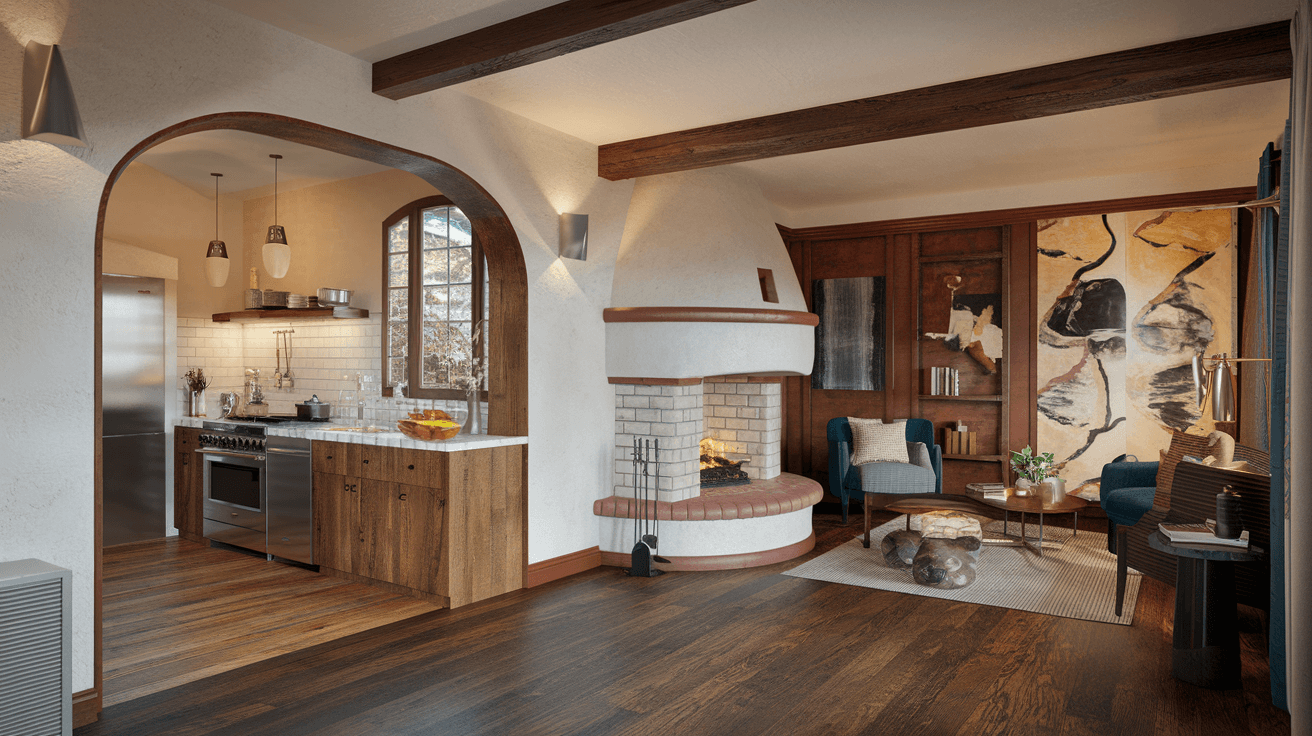
Home maintenance is real on older stock. A 1940s bungalow in Nob Hill is charming and has character that new construction cannot replicate. It also has original plumbing from 1948, a roof that has been patched twice, and a crawl space situation that requires an inspector who knows what they are looking at. Get a thorough inspection from someone familiar with this era of construction. Budget for surprises. The good news: Albuquerque's dry climate is hard on stucco finishes but gentle on wood framing and foundations — you are less likely to find structural rot here than in wetter climates.
Who Buys in Nob Hill
After selling properties in this neighborhood for years, the buyer profile is consistent enough to describe.
UNM-affiliated buyers — faculty, physicians from UNM Health, administrators — make up a significant slice. The walkability to campus is a genuine draw, and the cultural and intellectual character of the neighborhood aligns with their preferences.
Young professionals and couples who moved here from other cities specifically because they wanted an urban, walkable neighborhood and found Nob Hill as the Albuquerque answer. These buyers have often lived in neighborhoods like this elsewhere and know exactly what they are choosing.
Creative and arts-sector professionals who value the neighborhood's non-corporate aesthetic, the proximity to the arts corridor, and the general tolerance for the unconventional that Nob Hill has always had.
Longtime Albuquerque natives who grew up in the city, left for a while, came back, and specifically chose Nob Hill over the suburbs because they want the city version of Albuquerque life. This buyer is often in their 40s or 50s, has no school-age children at home, and knows what they are getting.
What these buyers have in common is that they are not buying in Nob Hill by default. They chose it specifically, usually after seriously considering and rejecting the alternatives. That deliberateness shows up in how long people stay — Nob Hill has lower turnover than most Albuquerque neighborhoods, because the people who buy here are the people who actually want to be here.
“My honest take after years of working this neighborhood: Nob Hill is the closest thing Albuquerque has to a neighborhood that people form a genuine identity around. When someone tells you they live in Nob Hill, it says something about who they are and what they value in a way that "I live in the Northeast Heights" or "I live in the West Side" simply does not. That intangible quality has real economic value, and it is why the neighborhood holds its price premium through market cycles.
Practical Buying Advice for Nob Hill
If you are serious about buying here, a few things to know before you start.
Move fast. The 18-day median DOM reflects a market that does not wait for slow decision-making. If you see a property you like, you need to be in a position to make an offer within 24 to 48 hours. Have your pre-approval current and your priorities clear before you start touring.
Pay attention to lot orientation and outdoor space. Nob Hill lots are small by Albuquerque standards — typically 50 by 100 feet or smaller. How the home sits on the lot, whether there is a usable backyard, and whether there is south or west sun exposure (critical for outdoor living in the shoulder seasons) all matter a lot in terms of daily quality of life.
The Historic Overlay has real implications. Large portions of Nob Hill fall under Albuquerque's Historic Overlay Zone, which requires City review for exterior modifications visible from the street. This protects the neighborhood character — which is part of why you are paying the Nob Hill premium — but it also means that replacing windows, painting in new colors, or adding an addition involves a review process. Not a dealbreaker, but know it going in.
Do not skip the infrastructure inspection. Original galvanized steel plumbing, aluminum wiring in some 1960s homes, and flat roofs on Pueblo Revival properties are the three most common issues I see in pre-purchase inspections here. Hire an inspector with specific experience in pre-1970 New Mexico residential construction.
If you want to see what is currently active in Nob Hill or want a list of recent sales to get a feel for where pricing is right now, reach out. This is a neighborhood I know block by block, and I can help you figure out whether it is the right fit.
Want more insider intel?
Subscribe to get market updates and new articles delivered to your inbox.