
Relocating from California to Albuquerque in 2026: What LA, San Diego, and Bay Area Buyers Actually Find Here
If you've spent the last few years watching your California property tax bill climb, refreshing wildfire evacuation maps, or sitting in traffic on the 405 wondering if there's another way to live, you're not alone. Relocating from California to Albuquerque has quietly become one of the more significant migration stories in the Southwest, and 2026 is shaping up to be the year that trend accelerates.
This isn't a post full of vague promises about "affordable living" and "wide open spaces." You can find that anywhere. This is a ground-level look at what California buyers, specifically people coming from Los Angeles, San Diego, and the Bay Area, actually encounter when they land in Albuquerque and start driving neighborhoods. What surprises them. What they didn't expect to love. And what they should know before they make the move.
Relocating from California to Albuquerque: The Real Cost-of-Living Shift
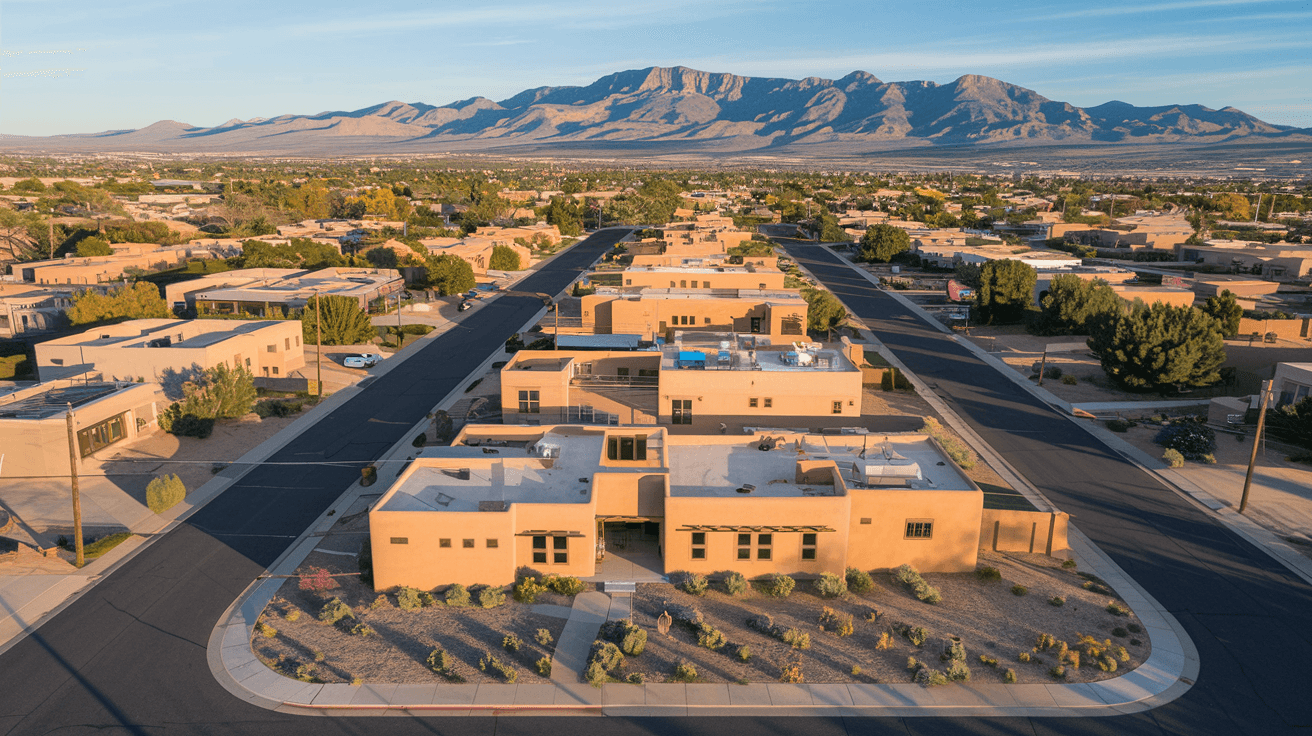
Let's start with the number that stops most California buyers mid-conversation: the metro median home price in Albuquerque sits around $385,000. For someone selling a 1,200-square-foot bungalow in Eagle Rock or a condo in Mission Hills, that number can feel almost disorienting. We're talking about genuine square footage, a real yard, and in many neighborhoods, a mountain view that would cost you seven figures in the Bay Area.
The Albuquerque market right now has about 3,850 active listings and is sitting at 3.9 months of inventory, which means it's still a seller's market but not the frenzied, waive-everything environment that California buyers often come braced for. Homes are averaging 34 days on market, and the list-to-sale ratio is running at 97.1%, so there's room to negotiate without feeling like you're insulting anyone. That's a meaningful shift from competing in multiple-offer situations on homes priced at $1.2 million in San Jose.
Beyond the purchase price, the day-to-day cost difference compounds fast. New Mexico's property taxes are among the lowest in the country. State income tax rates are significantly more manageable than California's. And if you're 65 or older, New Mexico offers a full exemption on Social Security income and meaningful deductions on other retirement income, which matters a lot to the wave of retiring Californians looking at this market.
What Your California Equity Actually Buys in Different Albuquerque Neighborhoods
This is where it gets specific, and specifics matter. A Bay Area buyer selling at the median San Jose price and arriving with $600,000-$700,000 in equity isn't just buying a house here. They're choosing a lifestyle zip code.
- •Nob Hill and the University area offer walkable, eclectic neighborhoods with independent restaurants on Central Avenue, proximity to the Nob Hill Business District, and older homes with character that California buyers recognize from Silver Lake or North Park
- •High Desert and Glenwood Hills deliver the elevated, contemporary homes with Sandia Mountain views that appeal to buyers coming from La Jolla or Marin County
- •Rio Rancho's master-planned sections give San Diego suburbanites the newer construction, HOA amenities, and clean streetscapes they're accustomed to at a fraction of the price
- •the North Valley along Rio Grande Boulevard surprises almost everyone, with its horse properties, cottonwood bosque access, and genuine agricultural feel within 15 minutes of downtown
- •Corrales, technically its own village, offers the kind of rural-feeling acreage with ditch-irrigated lots that California buyers have to drive to Temecula or Sonoma to find, and even then it's not the same
Moving from Los Angeles to Albuquerque: What the Drive-Around Day Feels Like
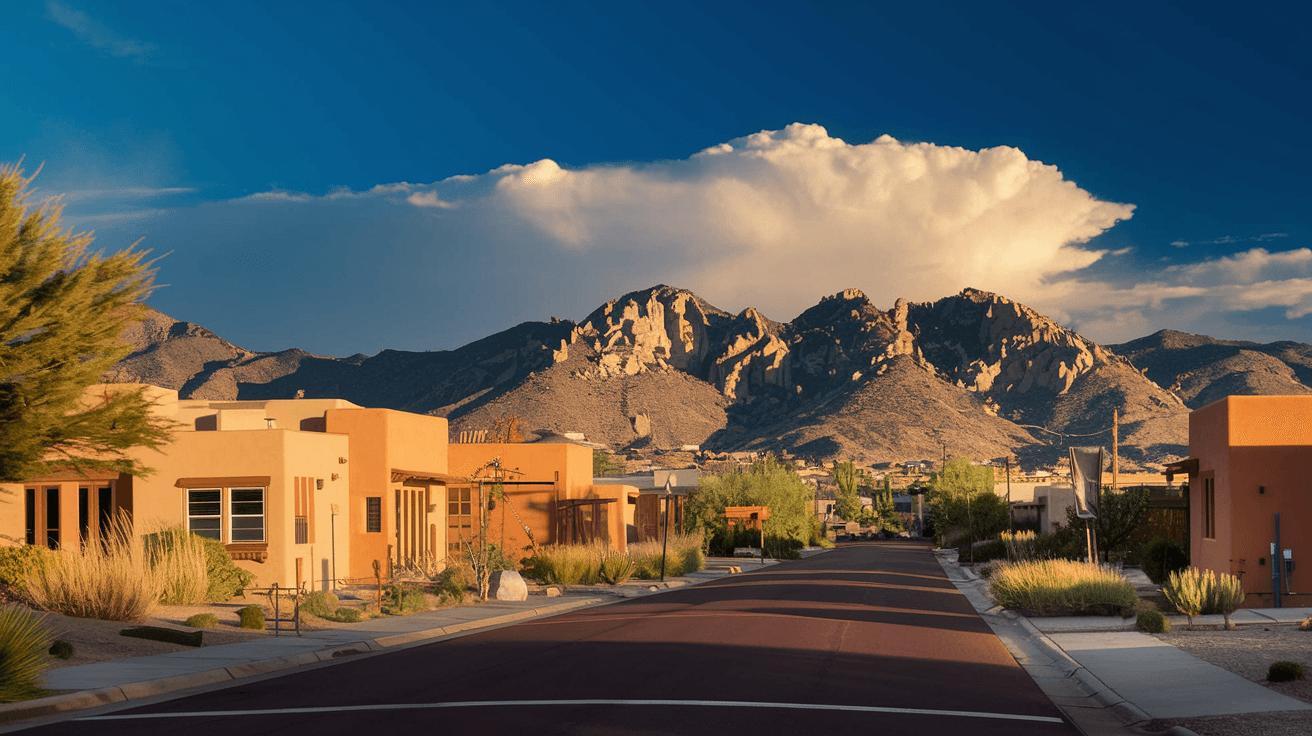
Most California buyers do a scouting trip before committing. They fly into Sunport, rent a car, and spend two or three days driving around. The first thing almost everyone comments on is the sky. It sounds cliche until you're standing in a parking lot off Tramway Boulevard watching a thunderstorm build over the East Mountains while the west side stays completely sunny. That's not marketing copy. That's a Tuesday afternoon in July.
The second thing that hits people moving from Los Angeles to Albuquerque is the traffic, or the relative lack of it. The morning commute on I-25 through downtown can get genuinely congested between 7:30 and 8:30 a.m., and the Paseo del Norte interchange is a known frustration for the Northwest Side. But "Albuquerque traffic" and "Los Angeles traffic" are not the same category of experience. Getting from the Westside to Uptown in 20 minutes at 5 p.m. still feels like a small miracle to anyone who spent years on the 10 freeway.
The third observation, and this one takes a little longer to articulate, is the human scale of the place. Albuquerque has about 570,000 people in the city proper, with the metro pushing close to a million. It's a real city with real urban texture, but it doesn't grind you down the way dense coastal metros do. You can get a table at Mary and Tito's on 4th Street on a Friday night without a reservation if you know to go before 6. You can park for free at the Botanic Garden. You can hike the Embudo Trail off Montgomery and be completely alone in the Sandia foothills 25 minutes after leaving your house.
“"The thing nobody tells you before you move here is that Albuquerque rewards the people who actually explore it. The best stuff isn't on the first page of Google results."
Green Chile, Altitude, and the Cultural Learning Curve
Some California buyers arrive expecting a Southwest-themed version of wherever they came from. What they find instead is a city with its own deeply rooted identity, one that's been shaped by Pueblo, Spanish Colonial, and Mexican cultural traditions for centuries before it was anyone's relocation destination.
Food is the fastest on-ramp. The green chile cheeseburger at the Owl Bar in San Antonio, New Mexico (worth the 90-minute drive south, full stop) or the breakfast burrito smothered at Duran's on Central will recalibrate your understanding of what New Mexican cuisine actually is. This is not Tex-Mex. It is not California Mexican. It is its own thing, and most people who move here spend the first year trying to figure out which local spot has their favorite red.
The altitude adjustment is real. Albuquerque sits at roughly 5,300 feet. Bay Area buyers especially notice it in the first few weeks, during workouts, after a couple of glasses of wine, and while gardening in the spring wind. It passes. But drink more water than you think you need.
California to New Mexico Relocation 2026: Wildfire Risk and Climate Reality
This is a conversation that comes up on nearly every call with a California buyer, and it deserves a straight answer rather than reassurance for its own sake.
Albuquerque's wildfire risk is real but structurally different from coastal California's. The Cibola National Forest and the Sandia Mountains do carry fire risk, and the 2022 Hermit's Peak/Calf Canyon fire in the Las Vegas, New Mexico area was a sobering reminder that the whole state is in a dry, warming climate. Buyers purchasing in the East Mountain communities like Tijeras, Cedar Crest, or Edgewood are making a different risk calculation than buyers purchasing in the Heights or the North Valley.
For most of Albuquerque's urban neighborhoods, the wildfire risk profile looks significantly different from living in the Santa Monica Mountains, the Oakland Hills, or anywhere along the San Diego County backcountry interface. Home insurance in those Albuquerque neighborhoods is still obtainable, still reasonably priced, and not subject to the non-renewal notices that have become routine for California homeowners.
- •Urban Albuquerque neighborhoods generally carry lower wildfire risk than California WUI zones
- •East Mountain communities require the same thoughtful defensible-space conversations that California buyers are already familiar with
- •New Mexico's fire seasons have been trending longer and more intense, consistent with regional climate patterns, so this isn't a topic to dismiss
- •Home insurance availability in most Albuquerque zip codes remains stable compared to the California market, where carriers have been pulling out of entire counties
The honest framing is this: California to New Mexico relocation in 2026 involves trading one risk profile for a different one, not escaping risk entirely. But for buyers in coastal California who are watching their insurance options evaporate and their evacuation routes get memorized, Albuquerque's situation looks meaningfully more manageable.

What the Albuquerque Real Estate Market Actually Looks Like Right Now
California buyers who've been conditioned by years of extreme seller's market dynamics sometimes arrive here expecting either a fire sale or a bidding war. The current Albuquerque market is neither.
With a 97.1% list-to-sale ratio, sellers are getting close to asking, but buyers aren't routinely being forced to waive inspections or write love letters to win a home. The 34-day average on market means well-priced homes in desirable neighborhoods move quickly, but overpriced listings sit. That's a functional market, not a panicked one.
For California buyers, the strategic insight is this: your equity is your leverage. Coming in with a strong down payment or the ability to make a cash offer, which many California sellers can do after liquidating their coastal equity, puts you in a genuinely competitive position in Albuquerque without the desperation that characterized California buying in 2021 and 2022.
Neighborhoods Getting the Most Attention from Out-of-State Buyers
Based on what we're seeing and hearing from buyers actively searching right now, a few areas consistently come up:
- •Tanoan and Gated High Desert for buyers coming from gated communities in Southern California who want security, views, and larger lots
- •Los Ranchos de Albuquerque for buyers from Marin or Montecito who want the feel of a small, affluent village inside a larger city
- •Downtown and EDo (East Downtown) for buyers from urban Los Angeles or San Francisco who want walkability, arts access, and proximity to the Albuquerque Museum and the emerging food scene on Gold Avenue
- •Paradise Hills and Taylor Ranch for families coming from the San Fernando Valley or Inland Empire who want newer homes, good schools, and suburban practicality
The insider tip that most California buyers don't hear until they're already here: the North Valley is deeply underrated and consistently underpriced relative to what it offers. Rio Grande Boulevard between Montano and Paseo del Norte has stretches that look like the rural Southwest version of a Provence back road, with old cottonwoods, irrigation ditches, and properties that haven't been widely marketed because the people who live there don't want to sell. When those homes do come available, they go fast and they go to buyers who already know the neighborhood. Get out there and drive it before you think you need to.
“"The North Valley doesn't photograph well enough to go viral on Instagram, which is exactly why it's still one of the best-kept secrets in Albuquerque real estate."
Making the Move: Practical Steps for California Buyers Relocating to Albuquerque
If you're in the research phase right now, here's what the process typically looks like for out-of-state buyers approaching this market thoughtfully.
Get pre-approved before your scouting trip. The Albuquerque market moves fast enough that showing up without financing in order means you'll spend your visit falling in love with homes you can't move quickly on. Local lenders who understand New Mexico's specific programs, including first-time buyer assistance and rural loan products for East Mountain properties, can be a meaningful advantage.
Plan for at least two trips. The first trip is for neighborhoods. Drive Lomas, drive Rio Grande Boulevard, drive up into the High Desert on a weekday morning and watch the city wake up below you. The second trip is for houses. By then you'll know which neighborhoods feel right and which don't, and you won't waste time touring homes in areas that don't fit your life.
Understand the New Mexico-specific contract terms. The purchase agreement here has some differences from California's forms, including how earnest money is handled and what the inspection period looks like. Working with agents who regularly handle relocation buyers, and who can walk you through the comparison clearly, saves a lot of confusion.
Time your move around the seasons. Spring in Albuquerque brings wind, and not gentle breezes. March and April can be genuinely brutal for people used to the coastal marine layer. Summer monsoon season from July through September is spectacular and something most California transplants end up loving. Fall is objectively the best time to be in New Mexico. If you can arrange your move to arrive in September or October, you'll be here for the Balloon Fiesta, the golden cottonwoods along the bosque, and the first cool nights that make you feel like you made exactly the right decision.
If you're at the point where you're ready to talk specifics, whether that's a particular neighborhood, a price range, or just someone to answer the questions you're embarrassed to Google, The Taylor Team at Berkshire Hathaway HomeServices works with California relocation buyers regularly and knows this market from the ground up. Reach out and have an actual conversation. No pressure, no pitch, just straight answers.
Albuquerque is not going to be the right move for every California buyer. If you need the ocean, you'll miss it. If you need a world-class public transit system, you'll need to adjust your expectations. But if what you're looking for is a city with real cultural roots, genuine affordability, a functioning real estate market, and the kind of light and landscape that makes people stay for decades once they arrive, then what you'll find when you get here is that it was worth looking into a lot sooner than you did.
Want more insider intel?
Subscribe to get market updates and new articles delivered to your inbox.