
Relocating to Albuquerque from California in 2026: What LA and Bay Area Buyers Discover About Cost of Living, Climate, and New Mexico Real Estate
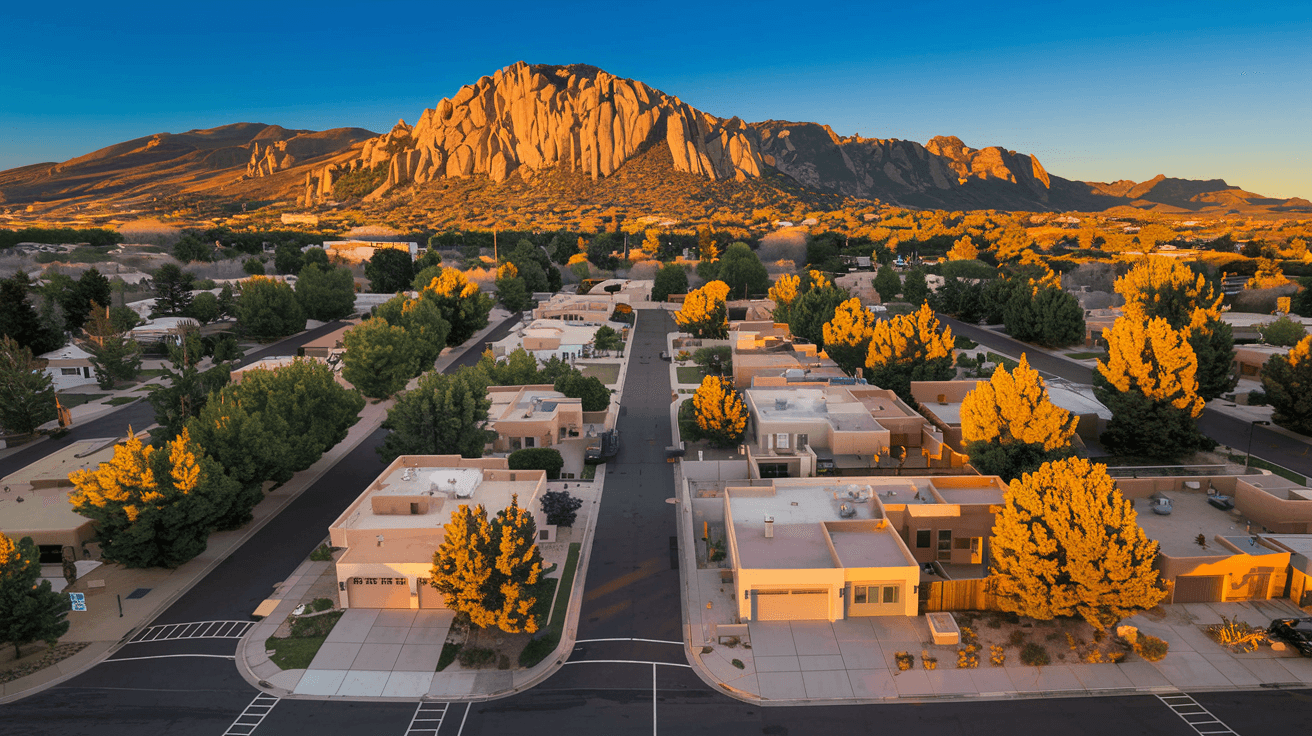
Every week, we talk to buyers who have just landed at Sunport, driven north on I-25 past the Sandia Mountains for the first time, and said some version of the same thing: "I had no idea it looked like this." If you are seriously considering relocating to Albuquerque from California, that reaction makes complete sense. The mental image most people carry of New Mexico does not include a city of 560,000 people with a thriving food scene on Central Avenue, world-class hiking thirty minutes from any front door, and home prices that feel like a different planet compared to what you left behind on the 405 or in the South Bay.
This post is for the buyer who has done the initial Google search, seen the price comparisons, and is now ready to go deeper. We are going to talk about what the California to New Mexico real estate 2026 market actually looks like on the ground, which Albuquerque neighborhoods are drawing the most California transplants, what the cost of living shift really feels like after six months here, and a few things you simply will not find in any relocation guide.
Relocating to Albuquerque from California: The Real Cost of Living Comparison
The headline number that stops most California buyers cold is the metro median home price of $385,000. In Los Angeles County, the median sits north of $800,000. In Santa Clara County, you are well past a million. So when buyers from Silverlake or Palo Alto see what $385,000 buys in Albuquerque, the instinct is to wonder what the catch is.
There is no catch. There is context.
Albuquerque has always been a mid-sized city with a genuine working economy anchored by Kirtland Air Force Base, Sandia National Laboratories, the University of New Mexico, and a growing healthcare sector centered around Presbyterian and UNM Hospital. That economic base keeps demand steady without the speculative fever that drove California coastal markets into the stratosphere. What you are buying here is stability, not a lottery ticket.
Beyond housing, the cost of living difference compounds quickly:
- •State income tax in New Mexico tops out at 5.9%, compared to California's 13.3% marginal rate
- •Property taxes in Bernalillo County run roughly 0.8% of assessed value, a fraction of what many California counties charge
- •Groceries and utilities run 10-15% lower than the California average, and with 310 days of sunshine annually, your heating and cooling bills are more predictable than most people expect
- •No vehicle property tax, which surprises almost every California transplant at their first registration renewal
The honest conversation we have with buyers is this: the salary you earned in San Francisco will likely not transfer dollar-for-dollar to an Albuquerque job market. But the purchasing power of whatever you do earn stretches significantly further. A household income of $120,000 in Albuquerque genuinely lives like a comfortable upper-middle-class life. In San Jose, that same income puts you in a studio apartment.
“"The first time I filled my gas tank and bought groceries on the same day without doing math in my head, I knew we had made the right call." -- A recent transplant from Encino, now living in the Northeast Heights
Albuquerque Climate vs. California: What Sunshine Actually Means Here
California buyers, especially those moving to Albuquerque from Los Angeles, often assume the climates are similar. Both sunny, both dry, right? The reality is more interesting and, for most people, more appealing than they expected.
Albuquerque sits at 5,312 feet above sea level. That elevation does several things. It keeps summer highs in the low-to-mid 90s rather than the triple digits you get in the Inland Empire or Central Valley. It creates genuinely cool nights even in July, so you almost always sleep with the windows open. And it delivers an actual four-season experience that most of Southern California simply does not have.
Winter in Albuquerque is mild in the city itself. Snow falls, sticks for a day or two, and melts. You are not shoveling your driveway every week. But you are forty-five minutes from Ski Santa Fe and an hour from Taos Ski Valley, which means you get the ski weekend without living in it. That trade-off is one of the most underrated features of this city.
Monsoon season, which runs roughly July through September, is the climate feature that surprises Californians most. Every afternoon in late summer, dramatic thunderstorms build over the Sandias, roll through the valley, and clear out by evening. The air smells like wet desert creosote. The light turns gold. Locals call it the best time of year, and after one monsoon season, most transplants agree.
The one genuine adjustment is low humidity. At 15-20% average relative humidity, your skin, sinuses, and wood furniture will all tell you that you have moved. A good humidifier in the bedroom and a serious moisturizing routine take care of most of it within a few weeks.
California to New Mexico Real Estate 2026: Understanding the Albuquerque Market
The Albuquerque real estate market in 2026 is in a genuinely interesting position. It is not the frenzied seller's market of 2021 and 2022, but it is also not soft. With 3,850 active listings across the metro and 3.9 months of inventory, buyers have real choices without the desperation that characterized peak pandemic buying. That is a meaningful change from the California markets many of our clients are leaving, where inventory remains historically tight.
Average days on market sit at 31, which tells you that well-priced homes move quickly but do not disappear overnight. You have time to do a proper inspection, think clearly, and negotiate from a position of information rather than panic. The list-to-sale ratio of 97.8% reflects a market where sellers are pricing realistically and buyers are paying close to asking, not dramatically over it.
For California buyers coming in with equity from a sold property, that cash position is genuinely powerful here. A buyer who sold a modest bungalow in Pasadena or a condo in the Mission District often arrives in Albuquerque with enough to purchase outright or put down 40-50%, which changes their monthly payment math entirely.
A few things to understand about how this market works:
- •New construction is active in the far Northeast Heights along Paseo del Norte, in the Rio Rancho corridor, and in the emerging Westside communities near Unser Boulevard
- •Older established neighborhoods like Nob Hill, the North Valley along Rio Grande Boulevard, and Country Club offer character and mature landscaping that new builds simply cannot replicate
- •The West Side (west of the Rio Grande) tends to offer newer homes at lower price points, while the East Side and Northeast Heights command premiums for proximity to the mountains and top-rated schools
- •Contingent offers are common and generally accepted, unlike the California market where contingency-free offers became the norm during the frenzy years
Northeast Heights: The Neighborhood Most California Buyers End Up Choosing
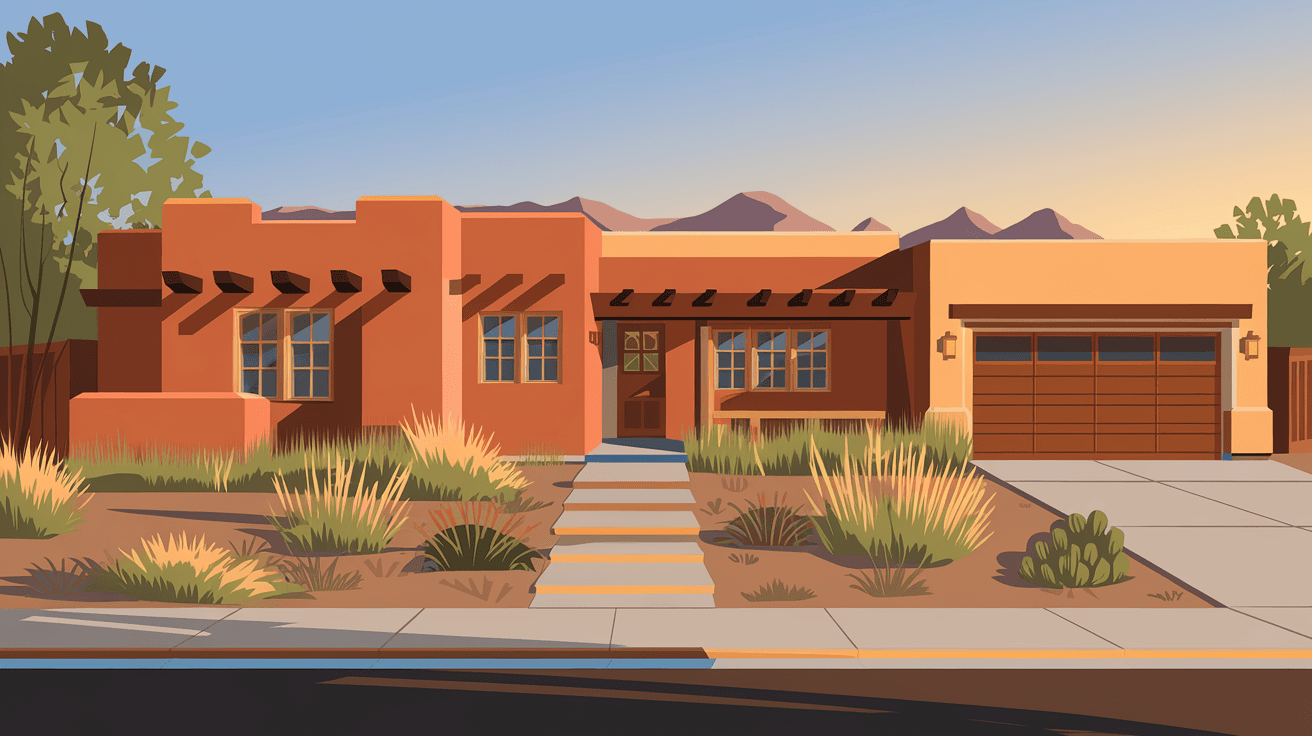
If you talk to California transplants who have been in Albuquerque for a year or two and ask them where they landed, the Northeast Heights comes up more than anywhere else. There are good reasons for that.
The Northeast Heights is the kind of established neighborhood where the streets are wide, the trees are mature, and you can walk to Trader Joe's on Carlisle or grab breakfast at the Frontier Restaurant on Central without getting on a freeway. Median home prices here run around $355,000, which means you are slightly below the metro median while being in one of the most desirable zip codes in the city.
The school situation is a significant draw. Albuquerque Public Schools serves this area, with Eisenhower Middle School and La Cueva High School consistently ranking among the top public schools in New Mexico. For families leaving California with kids in middle or high school, that continuity of quality matters.
The neighborhood also has a practical geography that California buyers appreciate. You are ten minutes from Uptown, the commercial corridor along Louisiana Boulevard with the Albuquerque Sunport nearby. You are fifteen minutes from Downtown and the historic Old Town Plaza. And you are right at the base of the Sandias, which means the Tramway trailhead on Tramway Boulevard is a quick drive for morning hikes before work.
Insider tip: The stretch of Montgomery Boulevard between Eubank and Juan Tabo has some of the best neighborhood coffee shops and locally owned restaurants in the city, including a few spots that have been feeding Northeast Heights families for thirty years. Buyers who land in this part of town almost never regret it, and they almost never leave.
What Moving to Albuquerque from Los Angeles Actually Feels Like After Six Months
We ask our clients to check back in with us after they have been here through a full season change, and the feedback patterns are consistent enough to be worth sharing.
The first thing most people notice is traffic, or the lack of it. A cross-town commute in Albuquerque on I-40 or I-25 during rush hour might add fifteen minutes to your drive. Not an hour and a half. That recovered time changes daily life in ways that are hard to quantify but immediately felt.
The second thing is community scale. Albuquerque is big enough to have everything you need, from a legitimate restaurant scene anchored by places like Duran's Pharmacy on Central (yes, it is a pharmacy with a legendary New Mexican food counter in the back, and yes, that is a very Albuquerque thing) to a performing arts scene at Popejoy Hall on the UNM campus. But it is small enough that you recognize faces at the farmers market at Nob Hill or at the Balloon Fiesta grounds on October mornings.
The International Balloon Fiesta in October deserves its own mention. It is not a tourist gimmick. It is the thing that makes every Albuquerque resident stop, look up, and remember why they live here. Seven hundred hot air balloons launching at dawn from the Balloon Fiesta Park near Alameda is a spectacle that does not get old after twenty years.
The adjustment that takes the most time is building a social network. Albuquerque is friendly but not aggressively social in the way that some Sunbelt cities are. People here have deep roots and long friendships. Breaking in takes intentionality: joining a hiking group through the Sandia Mountain trails, getting involved with a church or neighborhood association, showing up consistently at the same coffee shop until you become a regular. It happens, but it takes a year.
“"Nobody tells you that the hardest part of moving from California is not the logistics. It is learning to slow down enough to actually enjoy where you are."
Working With a Local Real Estate Team When You Are Buying from Out of State
Buying a home in Albuquerque from California presents a specific set of logistical challenges. Most buyers can only visit in person once or twice before making a decision. The neighborhood context that a local agent carries in their head, built from years of showing homes on streets like Academy Road, Osuna, and Lomas, is genuinely irreplaceable when you are trying to compress months of local knowledge into a two-day visit.
The Taylor Team at Berkshire Hathaway HomeServices works with California relocating buyers regularly, and the process looks different than a local purchase. Virtual tours, detailed neighborhood video walkthroughs, and honest conversations about which zip codes align with your actual lifestyle priorities are all part of how we help out-of-state buyers make confident decisions without feeling like they are buying blind.
If you are beginning to seriously map out a California to New Mexico real estate move for 2026, reaching out early gives you the advantage of understanding the market before you are under the pressure of a hard move deadline. We are happy to walk through neighborhoods, price ranges, and timing in a no-pressure conversation before you ever set foot on a plane.
Albuquerque in 2026 is not a secret anymore, but it is not overrun either. The people arriving from Los Angeles and the Bay Area who do their homework, work with agents who actually know the city, and approach the move with realistic expectations tend to land well here. The Sandias are still there every morning. The green chile is still on everything. And the cost of living still feels like a gift compared to what most of them left behind.
Want more insider intel?
Subscribe to get market updates and new articles delivered to your inbox.