Relocating to Albuquerque from Texas in 2026: What Houston, Austin, and Dallas Buyers Find When They Trade Heat, Traffic, and Rising Property Taxes for the Rio Grande Valley
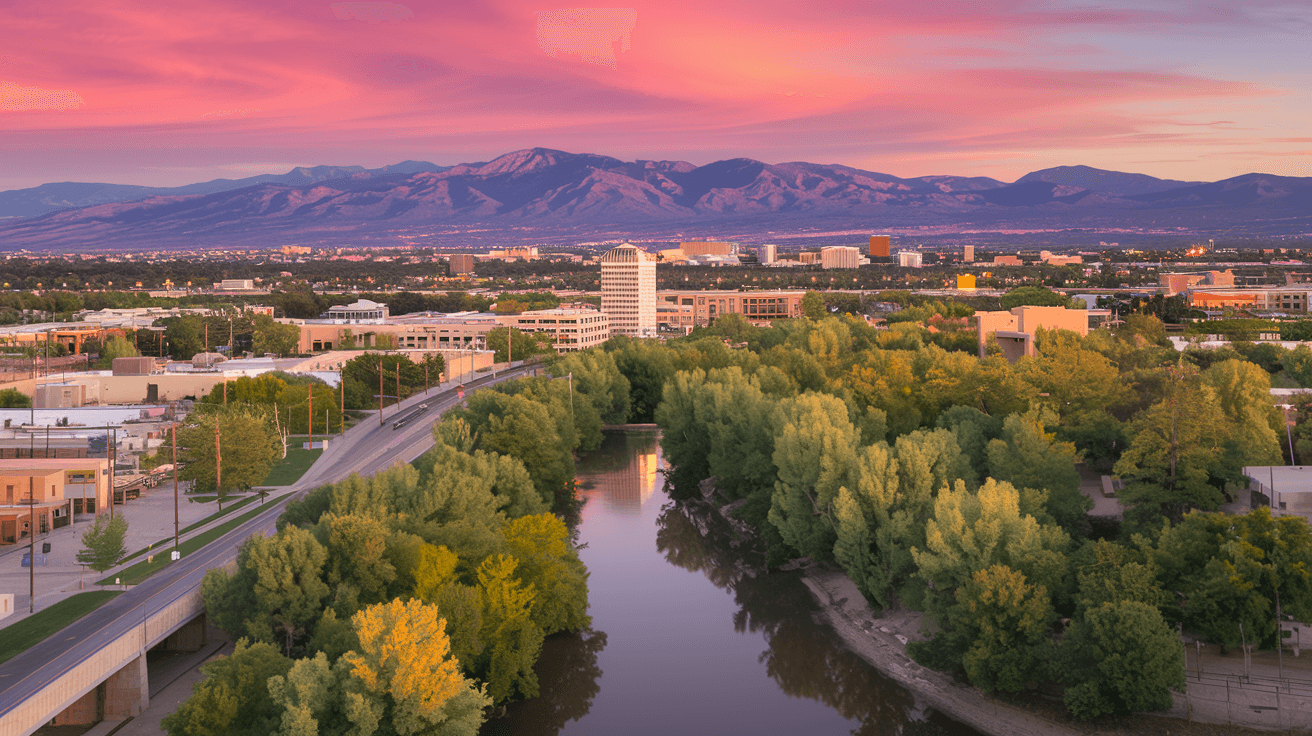
If you have been watching your Travis County or Harris County property tax bill climb every year while sitting in gridlock on I-35 or the 610 Loop, you are not alone in wondering what else is out there. A growing number of Texas buyers are relocating to Albuquerque from Texas, and what they find when they get here tends to surprise them in the best possible ways.
This is not a pitch. It is more like what a friend who moved here five years ago would tell you over green chile cheeseburgers at the Owl Bar in San Antonio, NM, on your way into town. Real talk about the market, the neighborhoods, the things nobody puts in the brochure, and a few things that take some getting used to.
Albuquerque vs Texas Cost of Living: The Numbers That Actually Move People
The conversation usually starts with property taxes, and for good reason. Texas has no state income tax, which sounds great until you see an effective property tax rate hovering between 1.6% and 2.5% depending on the county. New Mexico's effective property tax rate sits considerably lower, typically in the 0.55% to 0.80% range for residential properties. On a $500,000 home, that difference can mean $8,000 to $10,000 per year back in your pocket.
New Mexico also has a state income tax, but the graduated rates are moderate, and the state offers a number of exemptions that matter to retirees and remote workers especially. The overall tax burden when you stack income tax, property tax, and sales tax together tends to favor New Mexico for most households coming from the Dallas-Fort Worth or Houston metro areas.
Then there is the housing market itself. The Albuquerque metro median home price currently sits at $385,000, with an average of 34 days on market and roughly 3,850 active listings. The months of inventory at 3.9 means this is still a seller-leaning market, but it is not the frenzied chaos that defined 2021 and 2022. A list-to-sale ratio of 97.8% tells you that homes are selling close to asking, so lowball offers are not going to get you far, but there is room for thoughtful negotiation in a way that Austin buyers have not seen in years.
For a Houston buyer accustomed to paying $450,000 for a four-bedroom in Katy with a $10,000 annual tax bill, finding a comparable home in the East Mountains or the North Valley for less money, with a fraction of the tax burden, tends to stop the conversation cold.
Moving from Texas to Albuquerque 2026: What the Neighborhoods Actually Feel Like
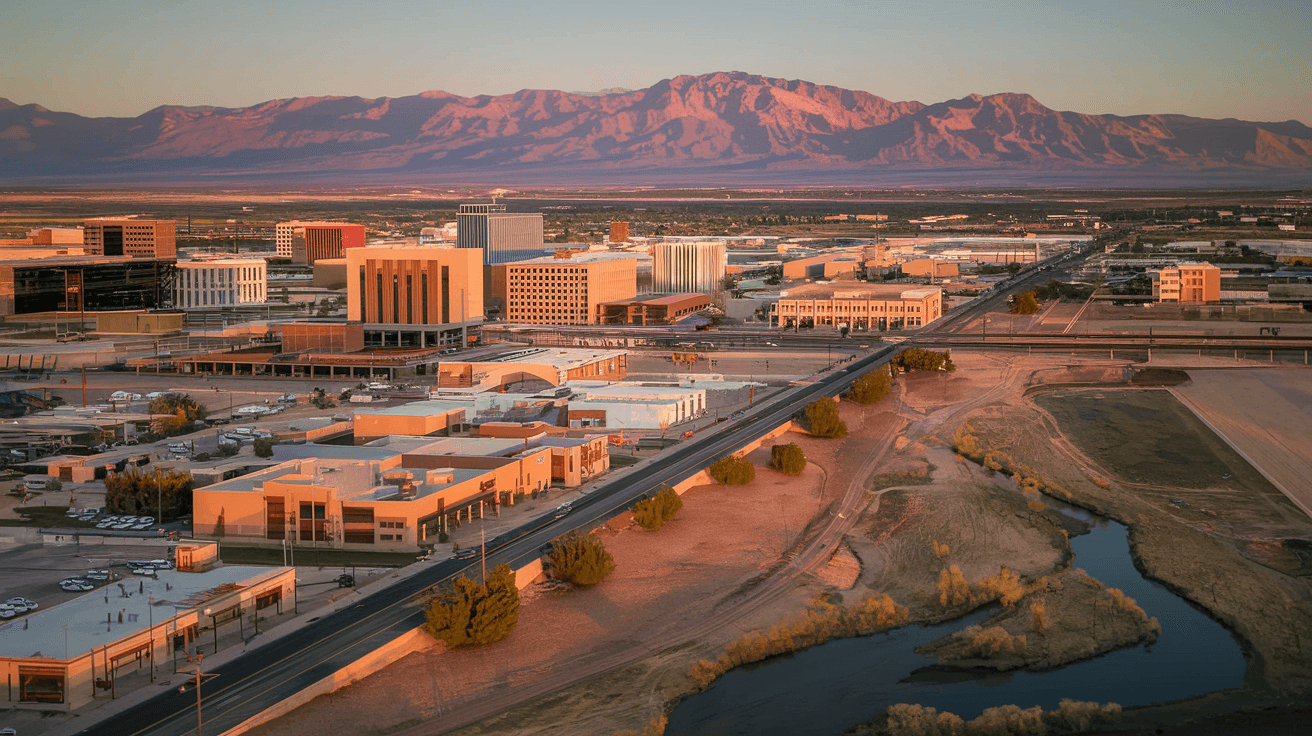
Albuquerque is not one city. It is more like six or seven distinct towns that grew into each other over decades, and where you land matters enormously.
High Desert: The Premium Option With Views That Justify the Price
If you are coming from a neighborhood like Westlake Hills in Austin or Tanglewood in Houston and you want that same sense of elevation, privacy, and visual drama, High Desert is the first place to look. Tucked into the foothills of the Sandia Mountains on the northeast side, this neighborhood sits above the city in every sense. You get views of the entire Rio Grande Valley stretching west toward the volcanoes, and on clear days you can see all the way to Mount Taylor near Grants.
The median price in High Desert is $762,000, and it earns that number. Homes here tend to be custom or semi-custom, built into the terrain with large lots, passive solar design, and architecture that respects the landscape rather than fighting it. The neighborhood feeds into the APS La Cueva High School district, which is consistently one of the top-performing public schools in the state. For families with high schoolers, that matters.
The insider detail most people miss: High Desert has its own trail system that connects directly into the Sandia Mountain Open Space. You can walk out your back gate and be on a legitimate hiking trail within minutes. Dallas buyers who are used to driving to a park find this almost disorienting at first.
North Valley: Green, Quiet, and Genuinely Old New Mexico
If High Desert feels too polished, the North Valley along the Rio Grande is the antidote. This is old Albuquerque, with horse properties, acequia irrigation ditches that are still functioning, cottonwood bosque trails, and adobe homes that have been added onto by three or four generations of the same family. Corrales Road and Rio Grande Boulevard give you a sense of what the whole city looked like before the suburban grid took over.
Prices in the North Valley vary wildly depending on lot size and condition, but you can find genuine character and acreage here that would cost triple in the Texas Hill Country.
Nob Hill and the University Area: Walkability That ABQ Does Not Advertise Enough
Texas transplants who come from Midtown Houston or the Mueller neighborhood in Austin sometimes assume Albuquerque is entirely car-dependent. Nob Hill on Central Avenue will reset that expectation. The stretch from Girard to Washington is genuinely walkable, with local restaurants like Frenchish and Zacatecas Tacos and Tequila, independent shops, and the kind of neighborhood energy that develops organically over decades rather than being manufactured by a developer.
This is not a neighborhood for everyone, especially families with young kids who need larger lots, but for remote workers and couples relocating to Albuquerque from Texas urban cores, it often becomes the unexpected favorite.
“"Most of our Texas clients assume they are trading urban energy for suburban quiet. What they actually find is a city with deep cultural roots, an arts scene anchored by the 516 Arts district and the National Hispanic Cultural Center, and a food culture built around the Hatch green chile that has no equivalent anywhere else in the country."
What Texas Buyers Get Wrong About Albuquerque Before They Visit
There are a few persistent misconceptions worth addressing directly.
The altitude is real. Albuquerque sits at 5,312 feet above sea level. Houston is essentially at sea level. Dallas is around 430 feet. The first week you are here, you will notice it, especially if you try to go for a run. Give yourself a month and you will stop thinking about it, but do not schedule your first hike up the Sandia Peak Tramway for day two.
The sun is intense. New Mexico gets over 300 days of sunshine per year, which sounds like a pure win until you realize that UV exposure at elevation is significantly higher than at sea level. Sunscreen is not optional here. Neither is good window film on your south-facing windows.
The city is larger than it looks on a map. Albuquerque proper has around 560,000 people, and the metro area is closer to 900,000 when you include Rio Rancho, Corrales, Bernalillo, and the East Mountains communities like Tijeras and Edgewood. Getting from High Desert to the Westside on Unser Boulevard during afternoon traffic is not San Antonio bad, but it is not nothing either.
The green chile question is not a joke. When you order a burger or a breakfast burrito at any local spot, someone will ask you "red or green?" This refers to chile sauce, and the correct answer is "Christmas" if you want both. The local obsession is real, the Hatch Chile Festival happens every Labor Day weekend in Hatch (about 150 miles south), and within six months of living here you will have a strong opinion about whose green chile is best.
Relocating to Albuquerque from Texas: The Practical Logistics
The drive from Houston is roughly 12 hours on I-10 West through Las Cruces and up I-25 North. From Dallas, it is about 10 hours on I-40 West through Amarillo, which has its own nostalgic Route 66 quality if you take it slow. From Austin, you are looking at about 11 hours going through El Paso or slightly longer through Lubbock and Santa Rosa.
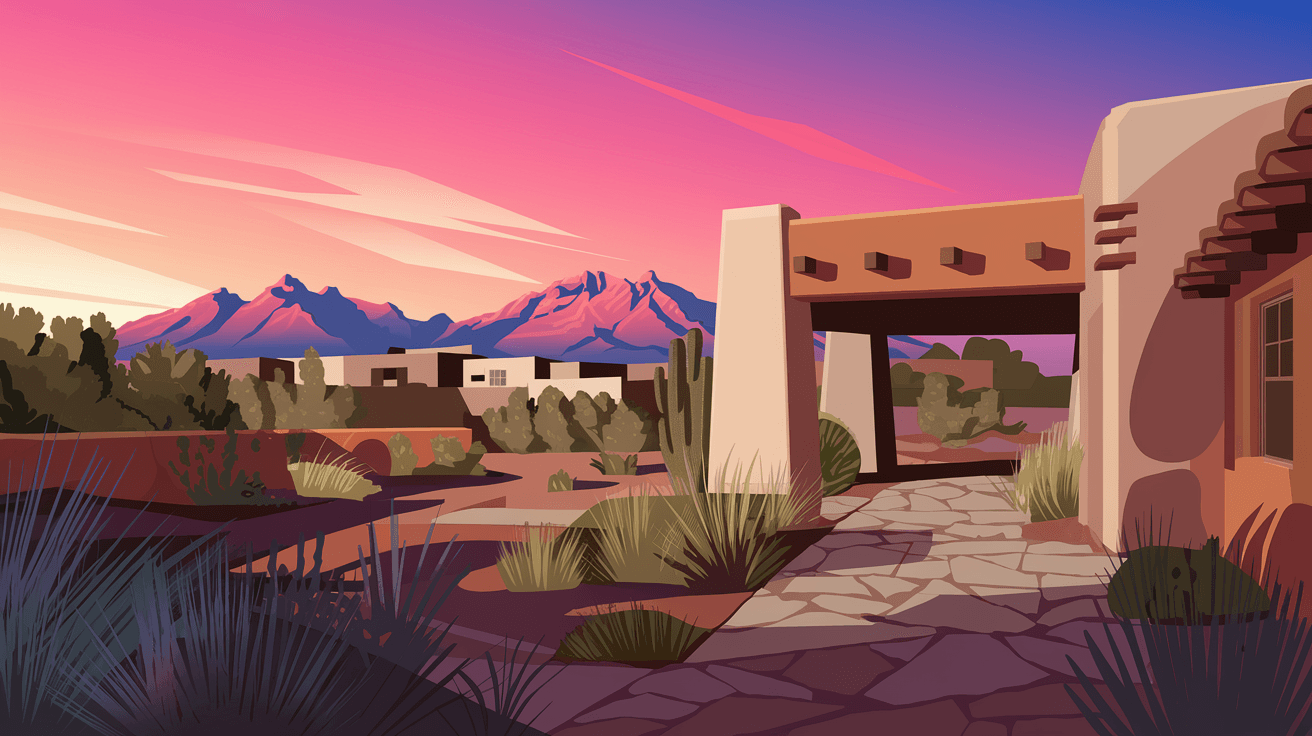
Many Texas buyers making this move do a scouting trip first, which is the right call. Three days in Albuquerque is enough to get a real feel for the city if you structure it well: spend a morning in High Desert and the northeast heights, an afternoon in the North Valley and Old Town, a morning in Nob Hill, and at least one sunset from the west mesa near Paseo del Volcan Road where you can see the entire Sandia range light up pink. That view alone has closed more than a few deals.
For the 2026 market, inventory has been gradually improving from the historic lows of 2021 and 2022, but this is not a buyer's market in the traditional sense. Homes in desirable school districts and established neighborhoods are still moving quickly. The buyers who do best are the ones who arrive pre-approved, have done their neighborhood research, and are ready to move when the right property appears.
If you are weighing this move and want a straightforward conversation about what the market looks like right now and which neighborhoods fit your specific situation, the Taylor Team at Berkshire Hathaway HomeServices works with Texas relocators regularly and can walk you through the numbers without the sales pressure. That conversation costs nothing and tends to be genuinely useful.
What to Know About New Mexico Home Insurance
One thing Texas buyers often overlook until it is too late: homeowner's insurance in New Mexico is generally less expensive than in Texas, particularly for buyers coming from coastal Houston or flood-prone areas of Dallas. The main considerations here are hail (the storms that come off the Sandia Mountains in July and August can be intense), and for some areas, wildfire proximity. The East Mountains communities require a more careful insurance conversation than the city proper.
Schools, Healthcare, and the Things Families Ask About
Albuquerque Public Schools is the district that covers most of the city, and like any large urban district, quality varies significantly by school. The La Cueva High School zone on the northeast side is the benchmark for families with college-bound students. Presbyterian and UNM Hospital are both strong regional medical centers. The University of New Mexico anchors a research and healthcare ecosystem that is larger than most people expect for a city this size.
“"The thing nobody tells you before you move here is how quickly the city gets under your skin. The light is different. The mountains are always there on the east side. You start planning your weekends around the Bosque trails and the farmers market on Menaul and you stop thinking of it as a temporary situation."
The Honest Tradeoffs: What Albuquerque Is Not
Fairness requires saying this clearly. Albuquerque is not Austin. It does not have the same concentration of tech employers, the same nightlife density, or the same rate of new restaurant openings. The food scene is excellent but specific, deeply rooted in New Mexican cuisine with a growing layer of international influence, not a rotating cast of celebrity chef concepts.
Property crime rates in Albuquerque have historically been higher than the national average, and this is not a secret. The city has been working on this for years with some measurable progress, and neighborhood choice matters enormously. High Desert, the North Valley horse properties, Corrales, and the East Mountains communities have very different day-to-day realities than some of the central city neighborhoods. This is something to research honestly and discuss with a local agent who will give you a straight answer.
The job market is growing but not booming. If you are a remote worker, a retiree, or someone in healthcare, government, or the university ecosystem, Albuquerque works very well. If you need to plug into a large private sector tech or finance job market, the options are more limited than in Dallas or Austin.
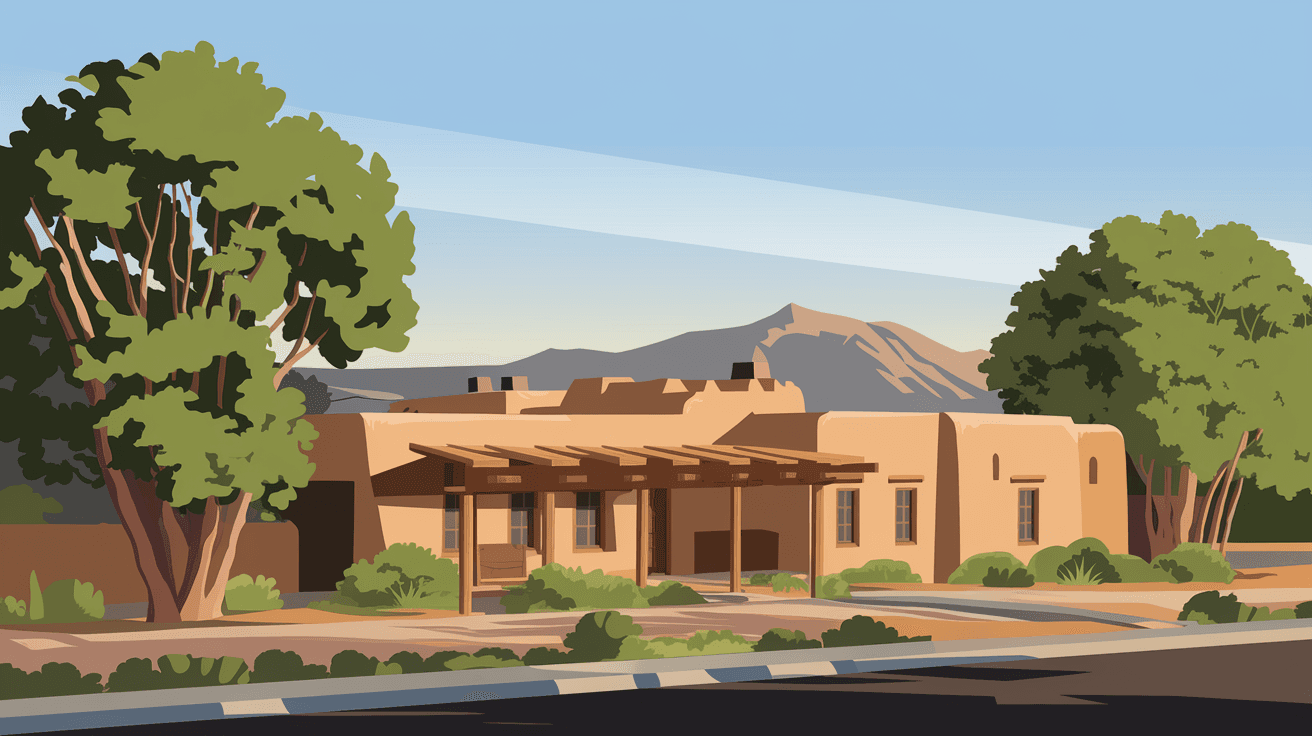
What Albuquerque offers in return for these tradeoffs is something harder to quantify: a genuine sense of place. The city has a cultural identity that was not invented by a marketing department. The adobe architecture, the chile, the acequia system, the Pueblo and Spanish colonial history, the Route 66 legacy, the International Balloon Fiesta every October when the sky over Balloon Fiesta Park fills with hundreds of hot air balloons at dawn. These things are real and they do not exist anywhere else.
For the right buyer coming from Houston, Austin, or Dallas, relocating to Albuquerque from Texas is not a compromise. It is a deliberate trade, and most of the people who make it stop second-guessing it pretty quickly once they watch their first Sandia Mountain sunset from their own backyard.
Want more insider intel?
Subscribe to get market updates and new articles delivered to your inbox.