
Retiring to Albuquerque NM in 2026: Cost of Living, Climate, and the Best Neighborhoods for Active Adults
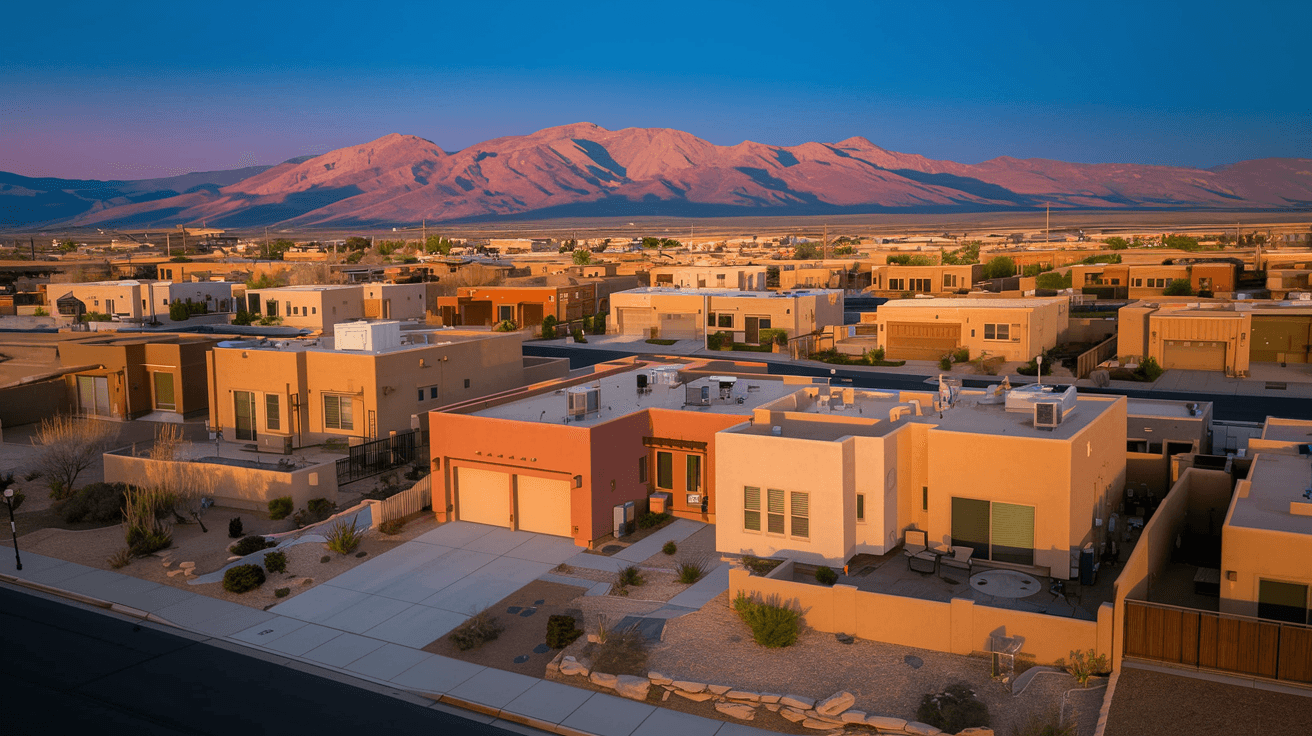
If you have been researching retiring to Albuquerque NM, you have probably already noticed that the numbers look surprisingly good compared to Phoenix, Denver, or the California markets most people flee. But numbers on a spreadsheet do not tell you what it feels like to drive up Tramway Boulevard on a Tuesday morning with the Sandias turning pink behind you, or to grab a green chile breakfast burrito at Weck's before a hike. That is the part we want to talk about.
Albuquerque is having a moment, and it is not manufactured hype. Real retirees from across the country are quietly making the move, drawn by a combination of genuine affordability, a high-desert climate that is far more livable than people expect, and a cultural richness that surprises nearly everyone who arrives. Here is what you actually need to know heading into 2026.
Albuquerque Cost of Living for Retirees in 2026
Let's start with the number that matters most to anyone on a fixed income or drawing down a retirement portfolio: what does it actually cost to live here?
New Mexico is one of the most tax-friendly states for retirees in the entire country. Social Security income is exempt from state income tax for most retirees, and the state offers significant deductions on pension and retirement account income for residents over 65. Property taxes are low by national standards, and there is no estate tax. When you sit down with your financial planner and run the comparison against Colorado or California, the difference is often eye-opening.
On the housing side, the Albuquerque metro median home price sits around $385,000 as of early 2025, which is a fraction of what that same square footage costs in comparable sunbelt cities. The market is active but not frenzied. With roughly 2,850 active listings and about 3.7 months of inventory, buyers have real choices and real negotiating room. Homes are averaging 32 days on market, and the list-to-sale ratio of 97.8% tells you that sellers are pricing realistically. This is a healthy, balanced market, not a panic-buy situation.
Day-to-day expenses skew lower as well. Utilities in Albuquerque are reasonable, especially if you design your lifestyle around the climate (more on that shortly). Groceries, dining, and healthcare costs all track below the national average. The University of New Mexico Health Sciences Center and Presbyterian Healthcare Services mean you are not sacrificing access to quality medical care for the lower cost of living, which is a real concern in some retirement destinations.
“"New Mexico's tax structure and Albuquerque's home prices create a retirement scenario that is genuinely difficult to replicate in most Western cities. The math tends to speak for itself."
Albuquerque Climate: What 300 Days of Sunshine Actually Means
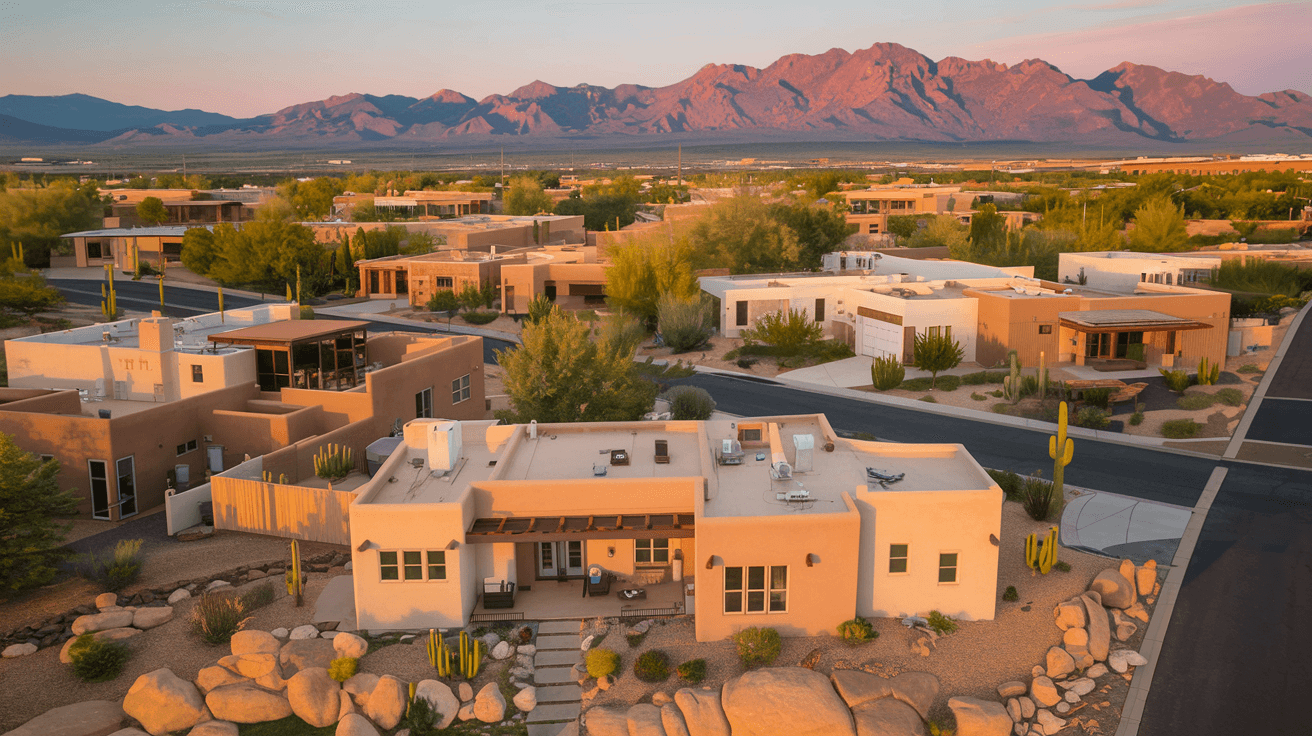
Every sunbelt city claims 300 days of sunshine. Albuquerque actually delivers it, and the quality of that sunshine is different from what you get in Phoenix or Las Vegas.
Sitting at 5,312 feet elevation, Albuquerque enjoys a high-desert climate that keeps summer temperatures genuinely comfortable compared to lower-elevation desert cities. July highs typically run in the low-to-mid 90s rather than the 110-plus you get in the Valley of the Sun. Evenings cool down dramatically, often dropping 30 degrees after sunset, which means you can actually sit outside after dinner in August. That is not a small thing when you are thinking about quality of daily life.
Winters are mild and sunny. Yes, it snows occasionally, but a typical Albuquerque winter delivers more clear, 55-degree afternoons than it does shoveling days. The snow that does fall in the city tends to melt within a day or two. If you want to ski, the Sandia Peak Ski Area is a 30-minute drive up the mountain. If you want to avoid snow entirely, you largely can.
Spring and fall are exceptional. The Bosque along the Rio Grande turns gold in October in a way that stops traffic on Paseo del Norte. The Balloon Fiesta in early October, which fills the sky over the North Valley every morning for nine days, is something you stop taking for granted after about the second year. You just never quite get used to it.
For active adults, the climate is the whole game. The Paseo del Bosque Trail runs 16 miles along the Rio Grande and is accessible year-round. The Sandia Foothills Open Space off Tramway offers hundreds of miles of trails that are genuinely usable 10 months out of the year. Pickleball courts at Manzano Mesa and Jerry Cline are packed on weekday mornings with retirees who moved here specifically because they can play outside in February.
Insider tip: Most newcomers do not realize that Albuquerque sits in a natural bowl surrounded by mountains on three sides. The East Mountains block cold air from the plains, and the city gets a micro-climate that is noticeably warmer than the surrounding region in winter. The locals call it the "Albuquerque effect" informally, and it is a real reason why the winters feel milder than the elevation would suggest.
Best Neighborhoods in Albuquerque for Retirees
Albuquerque is not one neighborhood. It is a collection of genuinely distinct communities, each with its own personality, price point, and lifestyle profile. Here are the areas that come up most often when we work with active adult buyers.
Sandia Heights: Mountain Views and Upscale Quiet
Sandia Heights sits at the base of the Sandias on the northeast edge of the city, and it is the kind of neighborhood that makes people gasp when they first drive up. Homes here are custom and semi-custom, the lots are generous, and the views are legitimately extraordinary. You are looking west across the entire Rio Grande Valley, and on clear days you can see the volcanoes on the West Mesa.
The median home price in Sandia Heights runs around $595,000, which reflects both the land value and the quality of construction. Most homes were built for permanence, with thick walls, serious landscaping, and layouts designed for entertaining. The neighborhood is quiet, the streets are wide, and the proximity to the Elena Gallegos Open Space and the Pino Trail means world-class hiking is literally at your back door.
This is a neighborhood for retirees who want space, privacy, and the feeling of living in the mountains without actually being remote. You are 20 minutes from Uptown shopping, 15 minutes from Trader Joe's on Carlisle, and close enough to the Sandia Resort and Casino that a nice dinner out requires almost no planning.
Nob Hill and the UNM Area: Walkable Urban Retirement
For retirees who want walkability and cultural energy, the Nob Hill corridor along Central Avenue delivers something most of Albuquerque does not: genuine pedestrian life. The stretch between Carlisle and Washington has independent restaurants, coffee shops, galleries, and boutiques that are locally owned and genuinely interesting. Scalo Northern Italian Grill, Twisters, Flying Star Cafe on Central, and a rotating cast of newer spots make this an area where you can walk to dinner on a Tuesday without it feeling like a special occasion.
Homes here range from historic adobe bungalows to updated mid-century ranches, typically priced below the metro median. It is a neighborhood that rewards buyers who appreciate character over square footage.
Rio Rancho and Cabezon: Newer Construction, Master-Planned Living
Just across the Paseo del Norte bridge, Rio Rancho has grown into a legitimate city of its own, and the Cabezon area in particular has attracted significant 55-plus and active adult development. If new construction, low-maintenance living, and HOA-managed amenities are priorities, this corridor deserves serious attention.
The Intel campus and associated commercial development have brought real infrastructure to Rio Rancho, including medical facilities, grocery options, and dining that did not exist 15 years ago. Home prices here tend to run below the Albuquerque median, giving buyers more house for the dollar.
North Valley: Green, Quiet, and Distinctly New Mexican
The North Valley along the Rio Grande is Albuquerque's most authentically New Mexican neighborhood, and it has a devoted following among retirees who want acreage, mature cottonwoods, and the kind of quiet that is hard to find inside a city. Properties here often include irrigated land, horse facilities, and historic adobe architecture. It is not for everyone, but for the right buyer, it is irreplaceable.
Albuquerque Retirement Communities and 55-Plus Options in 2026
The Albuquerque retirement communities 2026 landscape has expanded meaningfully, and buyers have more purpose-built options than they did even five years ago.
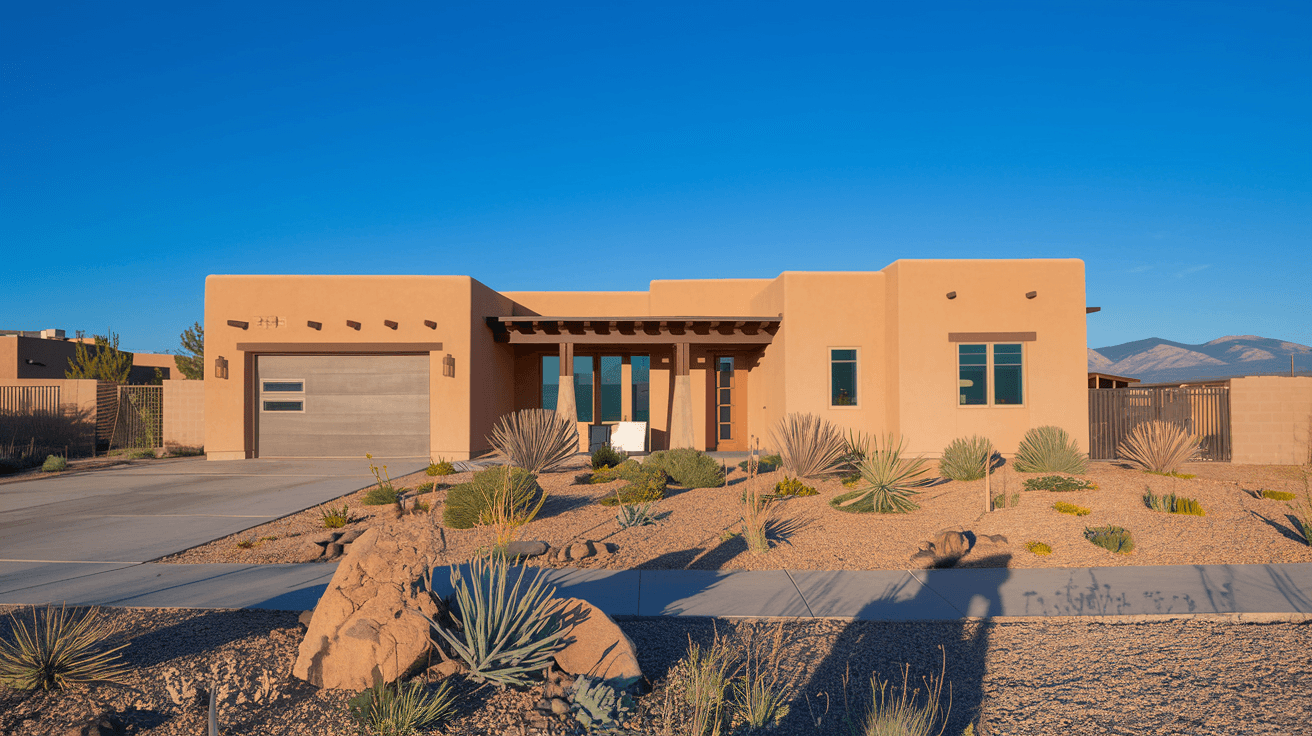
On the independent living and active adult side, communities in the High Desert neighborhood near the Tramway and Academy corridor offer lock-and-leave convenience with serious views. Several newer developments along Paseo del Norte in the Northwest Mesa have been built specifically for the 55-plus buyer, with single-level floor plans, attached garages, and community amenities like clubhouses and pools.
For buyers who want something closer to a full-service retirement community, La Vida Llena on Wyoming Boulevard NE has been a respected option in Albuquerque for decades, offering a continuum of care in a campus setting. The Pines and several newer communities in the Four Hills area on the southeast side offer alternatives with different price points and lifestyle orientations.
The key thing to understand about the best neighborhoods for Albuquerque retirees is that the city's geography means you are almost never more than 20 minutes from whatever you need. Choosing a neighborhood is really about lifestyle preference, not access. The medical facilities, airports, shopping, and cultural venues are distributed enough that location decisions are driven by views, walkability preference, and price rather than proximity to necessities.
“"Albuquerque's size is genuinely one of its underrated advantages for retirees. It is large enough to have everything you need and small enough that you never feel like a stranger in your own city."
What the Albuquerque Real Estate Market Means for Buyers in 2026
Understanding the market mechanics matters whether you are buying a primary residence or rightsizing into something more manageable.
The current inventory picture, with 3.7 months of supply and 2,850 active listings, means this is not the desperate scramble of 2021 and 2022. Buyers can take their time, do proper inspections, and negotiate reasonable terms. The 97.8% list-to-sale ratio indicates that well-priced homes are still selling close to ask, but the days of waiving inspections and offering $50,000 over list on a whim are largely behind us.
For retirees relocating from higher-cost markets, the buying power differential is often significant. Equity from a California, Colorado, or Pacific Northwest home frequently purchases a Albuquerque property outright or with a very small mortgage, which changes the retirement income calculation entirely.
A few practical notes for out-of-state buyers:
- •Elevation matters for construction. Homes in Albuquerque are built for the high desert, but buyers from humid climates should understand that wood, leather, and plants behave differently at altitude.
- •Water rights and irrigation are real considerations in the North Valley and anywhere with agricultural land history.
- •HOA structures vary widely between neighborhoods. The Northeast Heights and planned communities tend to have active HOAs; older established neighborhoods often have none.
- •New Mexico disclosure laws require sellers to disclose known material defects, but a thorough inspection is always worth the investment.
- •The International Sunport (Albuquerque's airport on Yale Boulevard SE) has direct service to most major hubs, which matters if you have family spread across the country.
Making the Move: Working With Local Experts Who Know ABQ
Retiring to Albuquerque NM is a decision that rewards local knowledge. Neighborhoods that look similar on a map can feel completely different in person. A street in the Northeast Heights that backs up to open space and a street two blocks over that backs up to a commercial corridor are not the same investment, and you will not know the difference from a Zillow listing.
The Taylor Team at Berkshire Hathaway HomeServices has worked with relocating retirees across all of these neighborhoods, and we understand the specific priorities that matter when you are making what may be your last major move. That means being honest about what a neighborhood feels like at 7 a.m. on a Saturday, which HOAs are well-run versus problematic, and where the value is genuinely strong versus where the price reflects marketing more than reality.
If you are seriously considering the move, reach out to us directly. A conversation costs nothing, and we would rather spend an hour helping you think through your options than have you make a decision based on information that does not reflect how Albuquerque actually works.
Albuquerque rewards the people who take the time to understand it. The ones who arrive knowing only the Breaking Bad references tend to leave pleasantly confused by how much they underestimated the place. The ones who arrive with real information and real expectations tend to stay, and they tend to be happy they did.
Want more insider intel?
Subscribe to get market updates and new articles delivered to your inbox.